VideoPocketGamer.biz
Panel: Bridging The Gap: Dissecting The East's & West's Ad Monetization Playbooks.
17 Aug 202624 min video
Transcript
[music] [music]
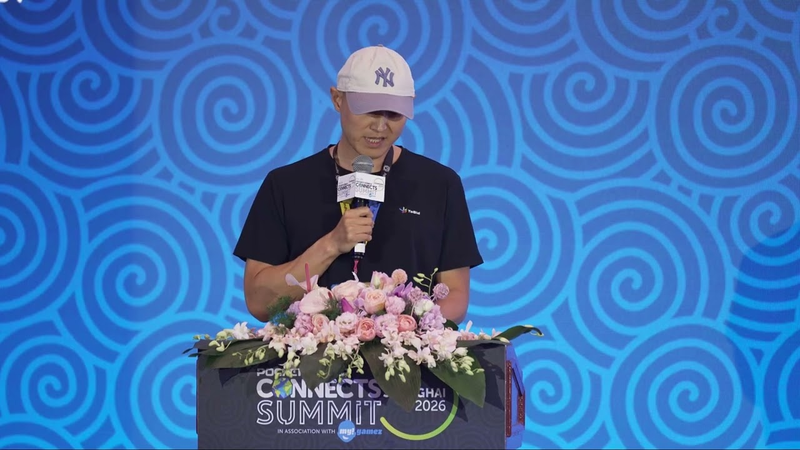
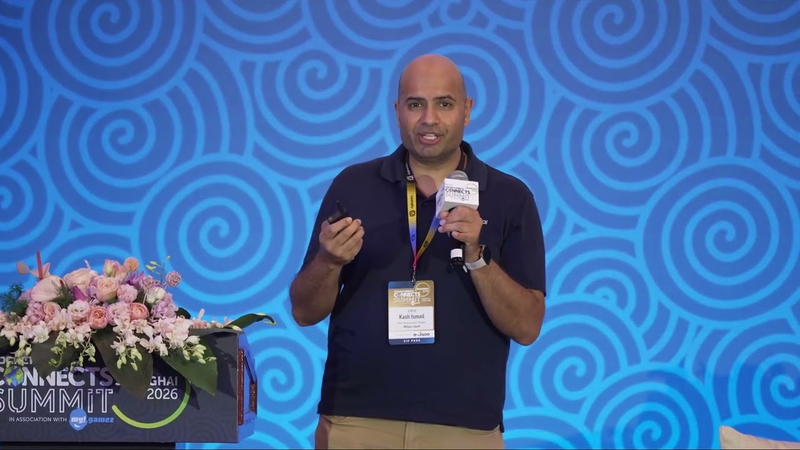
Our next panel bridges East and West on the topic of ad monetization. Bridging the gap, dissecting the West and the West East and West ad monetization playbooks. Please join me in welcoming our expert panelists to the stage. Bo May from Stonegate Games as our moderator. Aaron Nolan from App Harbor. Shang Nan Ren from AudioMob. Berkeley Egenes from Xsolla. Let's give them a big round of applause.
Thank you for attending this panel. So, my name is Bo. I'm the founder of Good
Day Solution, a cross-border advisory for the gaming industry. So, join me with join me today with a bunch of guest speakers from the industry, the leaderships, who are have the first-hand experience. So, I think before we dive in the panel and the discussion, probably it might be best for them to give a sentence or or two for themselves and for their companies. Please, Bruce.
Okay. Hello. Yeah, very happy to be here. So, my name is Shang Nan. You can just call me Bruce. I'm the head of research and development at AudioMob. And I lead my work across the intelligent ad delivery system, recommendation systems, like inventory forecasting, and also the internal process optimization by AI automations. So, basically, my keywords around AI and machine learnings. and happy to be here. Thank you.
Hey everybody, I'm Berkeley Egenes, the Chief Marketing and Growth Officer at Xsolla. Great to be back here in Shanghai. Xsolla is a global video game commerce company. We help support mobile games, PC, console across the the spectrum of the platforms, but really why we're here at Pocket Gamer is really to talk about the mobile games and help monetization strategies and build, you know, with the platforms and beyond the platforms and then also looking at how ad monetization integrates into that overall ecosystem with less friction, more simplicity, more transactions and making that possible so that you can go do what you're successful at. Go build creative games and let us help you support from the back end to make that a successful business.
Hi everyone. My name is Eran. I'm the VP APAC for AppHarbor. AppHarbor is a service provider for ad quality for
app developers. Basically, what we do is we help enforce uh ad quality across your entire user session. So, we aim at detecting malicious content, behavior that doesn't match the expected behavior of ads and basically make sure that uh your operations do not interfere with user sessions and user experience.
Perfect. Perfect. All right. So, um since the topic is about bridging the gap, let's talk about the gap directly, right? So, looking specifically at China or Eastern Asia and the Western market that you know the best, what's the most important structural difference in how publishers
approach ad monetization? Who wants to kick off?
Okay, I can I can start.
Of course.
And then and then we'll make our way back. Um So, our power bar basically we are again an ad quality service provider. We have an SDK and basically app developers deploy us in order to be able to monitor every single bid response and every every single ad that is serving on the their ecosystem. So, it's it's very distinct when we look at the kind of difference between Western developers and Asian developers. I think the first word that comes into mind is speed. The speed in Asia is significantly faster. We're seeing that Chinese and Southeast Asian developers are not afraid to experiment and a lot of this comes because Asian
developers a lot of times are located away from from innovation, away from technology and services. And so, what they make up they make up for that distance with speed and more kind of move fast and break things kind of corporate culture. And another very important aspect that we see is that app developers in in Asia, in China they're very fast to onboard services. They're very fast to adopt and test technology, but they kind of uh, AB test the the hell out of those services throughout the usage cycle. So, they complete they continue optimizing and they continue trying to find
kind of the equilibrium point and the the optimization for services that they use. Whereas, we're seeing that Western developers a lot of times when it comes to integrating services and integrating technology they're looking for kind of more corporate and more stable type of performance. And once they reach that performance, they're a bit, let's say, they like to be a bit more hands-off when it comes to services that are integrated within their ecosystem. It's it's it's a very distinct kind of difference between approaches of different developers.
Sounds good. Awesome.
Please.
Now, these are all great points. I think one thing that you kind of hit on, there's no magic sauce. That is like the truth and you do it universally everywhere the same way because you don't. You need to localize and put things together and do your campaigns. I
think that's the one thing the East or here in China specifically has figured that out and really looking at the right channels, obviously in WeChat and different conversations where you're doing ad units and putting that together, but also into your game. But making that ad part of the game. I think the West has been slower to adapt that and is very just numbers heavy and like what's going on. But to really understand what the user or players are doing in the game. Here in the East, you know what they're buying because it's in one platform. You know what where they're buying clothes, they know where they're buying gas, they know where they're paying their rent and like everything in all that whole ecosystem. And they collaborate those different aspects together and can really use those data points to understand how to go market it directly to it. I think in the West we're still trying to figure some of that out cuz we're not used to the marketplaces. We go separately to different places to go make purchases. It's not fully integrated together in one platform. You're starting to see that adoption be a little bit slower.
Um and then you're seeing more things like from offer walls and different campaigns and putting it together and giving those unique opportunities. It's starting to happen in the West when it's been here in the
East for years if not decades um and putting it together. So I think the West has a little bit to catch up on and we are and we're going to help figure it out.
Yeah, so uh in AudioMob we run our business across the whole world for both East and West and based on our observation and I think there's one point very obvious we just catch. You know, is what we notice is for a lot of Chinese and Eastern publishers uh they do mentions or consider the uh ad monetization in the early stage of the overall product strategies. And that is quite different from what we have seen in the East in the Western publishers. Because for Western publishers
uh the uh especially for the well-established brands, they usually emphasis a lot or prioritize the brand protections, the player trust, the privacy, and the uh yeah, the overall player's experience. And uh that leads to a very cautious monetization strategy. Um so I think you know, there's no it is not like a binary answer who is correct, who is not. So in my opinion, if we talk about uh the advantages for both sides. I think for Eastern sides, what we feel like, which also more or less reflects the points mentioned by uh by by you guys, is uh we're seeing the faster pacing for the Eastern publishers. For example, they can make a faster uh product iterations, uh and experimentations, etc. But for for Western sides, you know,
it's more take more precaution and it's more cautious. Yeah, so that's our observations.
Awesome. Uh thank you so much for sharing, guys. I think, you know, uh all of them are making sense. I especially wants to uh following on the Bruce point regarding the differences that you observed, right? I think, you know, most of the time, not uh sorry, sometimes, Chinese ads uh monetization can be easily seen as, you know, simply be more aggressive, right? Like more ad loads, you know, uh much much earlier pushing to the players, and then, you know, they even argue that the Chinese players have higher tolerance, right, regarding those uh ad strategy. So, you know, I think but my view on that is, you know, the ad load is only on the on the service level. You to a point, really needs to think about the the meta uh holistically. You need to think about the reward, the progression curve, right, the the um you know, the acquisition model, and then kind of
consider the ads as a part of the feature that I can really ultra straight, and then really accommodate the local players' preference, right? So, I think, you know, I just I just wanted to raise that point and then to hear you guys' thoughts, right? What's your take on this? And, you know, for example, what's the key differences that you think between an ad that is integrated uh smoothly into the player journey versus the one that is, you know, simply added to the ad inventory. Okay. Yeah, I I think that's a very interesting questions and again, I I do not want to give a final judgment who is better, who is not who is worse. So, just in my opinion is kind of like reflects the philosophies or maybe even the social perspective like uh the reason why Chinese market or Chinese publishers or Eastern publishers they their pacing is faster maybe due to the higher competitions, more selective
markets and that push them to make the faster iteration of their product strategy decision-makings. So, that is my I would say this is not my this is kind of like my bold statement. So, I'm not sure this is correct or not, but it's just my intuitions. So, and for for Western developers, you know, the the consideration I would say for the game side is more comprehensive. So, they do emphasize more the player experience and beyond that, you know, there are also some other objective reasons. For example, like in Europe, you have you have the GDPR and these regulations restrict the pacing to be too fast. So, the game developers and publishers, they have to slow down their steps to make sure, you know, every steps has been made in a correct directions. So, I
think probably that's what I what what I see about this problem.
I think simply put you're going to start seeing for games that have ads that are integrated into the overall experience versus just adding inventory, you're going to see one thing conversion. And which one's going to convert more? Obviously, you're going to look at one that's more integrated into it. It makes sense. There's a reason why that ad's being served versus hey, I was playing a mobile game last night um after coming off the airplane and I got these random ads that were like video content that had nothing to do with the game, nothing to do with my profile, and I was like clicked out of the game, went back in, ad went away, and I'm back into my next level. It I did I convert there? Obviously not. Like, what's going on? If you just add it, our players know why that ad's there. It's so that you can make money as the game. Ones that are integrated into the experience that's relevant to what is happening on in the game experience or part of my
profile and experience, they understand it. Eastern players understand and are expecting to see ads. In the West, we're used to that's the time when we go raid the kitchen. Like when the ad plays, and what we're used to and it's been culturally there from a television perspective, sports and entertainment, you see what's going on, why they have a commercial breaks. You get up and go get another Coke. You go get a water, chips, or whatever. And going into it, that's the same thing that happens when it comes to video games. These players that we are serving around the world know why something's happening, and if it's part of their experience, that's going to be additive and additional value, then you're going to win in that overall experience. If it's subtractive, you're going to lose out.
Mhm. Um ju- just to kind of uh complement over what you said, uh I I like to use the word intent in in kind of uh looking at the the difference between ads that are simply kind of uh thrown the users between sessions and ads that are strategically placed in
significant parts because um ads that are kind of integrated within the user journey, they're meant to accelerate a part of your engagement. You're either out of lives and you want to continue playing, you want to speed up your advancement within the game. Uh and um a another aspect of this is that we we all know that user acquisition is kind of it's the the landscape is different from what it used to be 5 years ago and definitely what it used to be 15 years ago. It's much like we publishers are paying more for every user and even when they have those budgets, they're not necessarily going to be able to get those users. So, a lot of publishers are slowly or or even fast kind of making the the transition from looking at the users as a resource that should be monetized, used, and kind of moving forward to the next
user with a different game for hyper-casual games for example, to really building your brand and bring building a kind of affinity between a user and the game, between a user and the the app, the brand, and the and the and the community. So, I expect to see more publishers that are kind of famous for dumping ads on users to gradually make the transition over to ads that are integrated within the user journey that are strategically placed in in key areas of of the app. Just because at the end of the day we're all looking to create more sustainable ecosystem for ourselves. And again, at Harbor, our kind of service, we work with publishers that have a hybrid kind of business models, both IAA and IAP. And
what we see is that when publishers apply ad quality enforcement over the IAA part of their business, meaning blocking intrusive content, sexually explicit content, or deceptive content, and kind of streamlining the the experience of the user, it complements in-app purchase metrics. Users tend to be more engaged with in-app purchase if the in-app advertising experience is well defined and makes sense and and they have intent on on that side of the monetization. So, I I I really think that these two type of or parts of the monetization ecosystem are complementing rather than a kind of opposing elements.
Yeah, this is great. Aaron, I do want to do follow with starting follow with you regarding the next question. Because, you know, from you guys sharing I heard a bunch of keywords, right? For example,
I heard about the so-called product market fit, you know, I heard because between the ads monetization strategy versus the the players' preference and expectations, right? I heard about sustainability. I heard about the long-term success for a game, right? Regarding the features that we wanted to integrate into a game. No matter from the ads or from the whole meta level. So, Aaron, you talk about the ads quality, right? Cuz sometimes, you know, a team can improve their eCPM, you know, fill rate, or short-term app down, but still damaging the game in the long run, right? How do you think, you know, those publishers can balance the short-term yield with the ads quality, the player trust, and the long-term LTV?
Thank you. So, um this also correlates to the kind of the metric that we introduced that that that I just mentioned. We have tangible metrics that show that publishers that are actively We have a case study with with Voodoo, for
example, that are using us to kind of monitor and assure ad quality across their entire ecosystem. And what we see over several years of uh of a kind of a measuring this is that when a publisher kind of gives up a part of their eCPM in order to avoid ads that really hurt user experience and really kind of you know all those dodgy content that mislead users or fake provide fake services so on and so forth
fake anti-viruses. When you get rid of that layer, it cuts into your eCPM and short-term it cuts into your ARPDAU, but long-term again, we have the metrics with Voodoo and other partners. These partners measure
on average a 5% increase in ARPDAU long-term after you kind of have that you know
sink in the beginning. And and the reason is that better user experience, better ad content really buys user trust and user engagement and user intent.
Thank you. And no, I think that was very well said. I mean if you focus on the long-term experience, that's what we all want. You don't want a game that's going to last 6 months. You know, because you you are focusing on the short-term and just making money to get to the next iteration or whatever. Focus on the long-term game and the overall experience and then you'll win and you create a successful business and the ads can contribute to that.
Yep.
Cool.
Yeah, so uh what I want to talk about is the you know, for Audiomob, um we we do have a conclusion or I would say a statement.
You know, the eCPM and fill rates, they do not eval- they only evaluates the value of a single impressions. And they do not reflect the value of the long time lifetime value of the of the users. So and we keep this in mind. And we have build uh cooperations with our partners like Tap Nations or Voodoo Games, you know, in our corporate corporations. So and you know, comes to the practical execution how we how we can do this. I think there's no shortcut. You have to, you know, like theoretically monitor several key metrics like the you know, like the IAP, like the user complaints, uh the saturations, uh etc. And based on that you know, we can understand what's going on under the hood and keep improving our products.
Yeah. And here I want to give some interesting number what we have observed from Tap Nations. You know, with the ways the solution we provided, we have seen 5% increase of the average daily active average revenue for daily active active users and without any negative impact on the user retentions. And we have seen another 10% increase for Lockwood also 10% increase of the revenues. Yeah.
Perfect. Perfect. Awesome. I think we're almost running out of time. So I think, you know, for the last question regarding introducing the game from east to west and vice versa, you know, which part can be transferred or which part can be rebuilt. I think most of you guys have basically touched base on that part already, you know, during your sharing. So I think I will just leave the time the rest of the time to the audience to see if you guys have any questions for the for those guest speakers. No? Cool. Awesome. Thank you so much, guys.
Thank you.
Thank you.
[music] [music]
Auto-generated captions from YouTube — names and numbers may be misheard.
Key insights
6 takeaways · ~2 min read- 01Eastern publishers typically integrate ad monetization into their product strategy during the early development stages, whereas Western publishers tend to be more cautious and reactive.
- 02Enforcing strict ad quality to block malicious or deceptive content can lead to a long-term increase in ARPDAU, with data from partners like Voodoo showing an average 5% increase after an initial adjustment period.
- 03Eastern markets benefit from highly integrated digital ecosystems like WeChat, which allow developers to leverage comprehensive user data for targeted ad monetization, a model Western markets are still working to replicate.
- 04AudioMob reports that implementing non-intrusive ad solutions has driven revenue increases of 5% for TapNation and 10% for Lockwood Publishing without negatively impacting user retention.
- 05Western developers often prioritize player experience and are constrained by stricter regulations like GDPR, which necessitates a slower, more deliberate approach to ad pacing compared to the faster, high-load iterations common in China.
- 06Successful monetization relies on shifting from viewing users as a short-term resource to building long-term engagement, where ads are strategically placed to provide value rather than acting as a subtractive experience.
Ask AI about this video
Cite this video
Citation
Generating citation…





















Comments