1 free read left. Create a free account for unlimited reading + AI research.
Create free accountPresentation Quantic Foundry
1 free read left. Create a free account for unlimited reading + AI research.
Create free accountPresentationQuantic Foundry
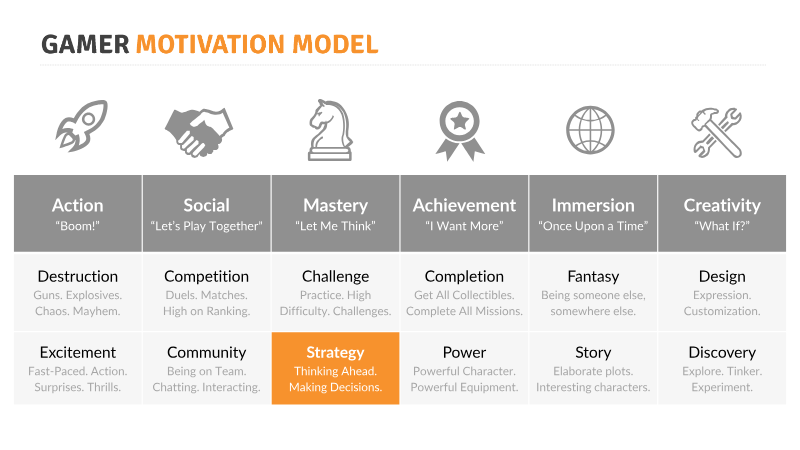
These domains include Action, Social, Mastery, Achievement, Immersion, and Creativity. This model helps understand individual player preferences.
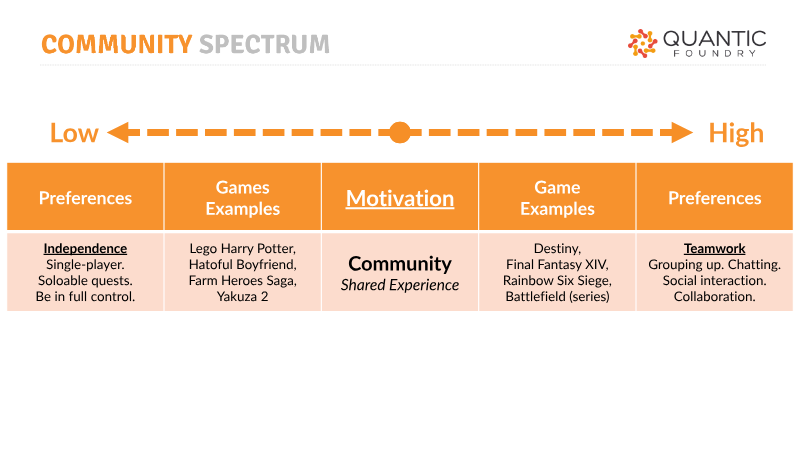
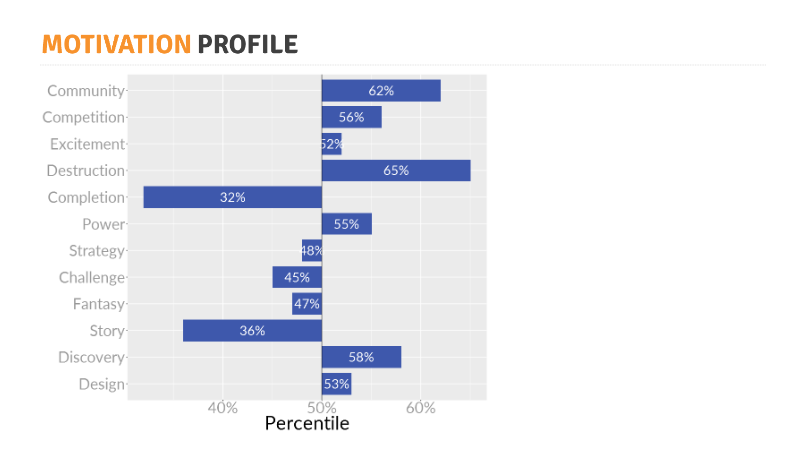
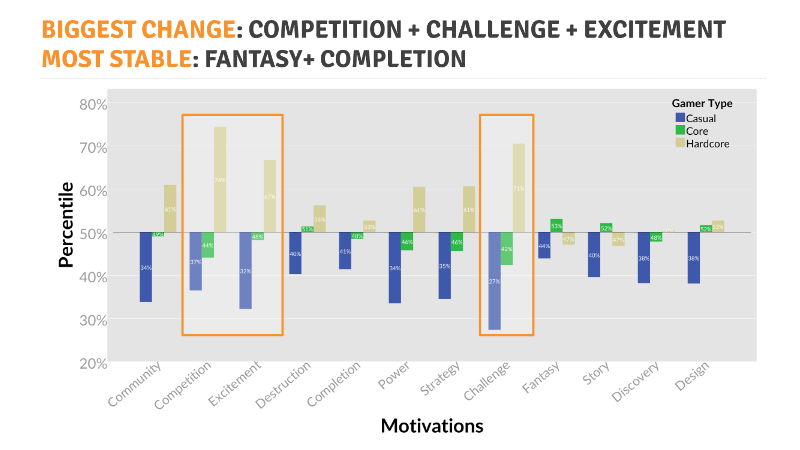
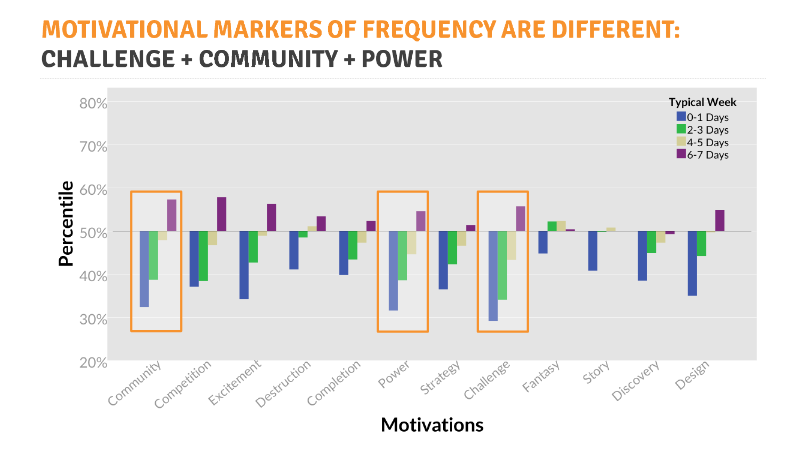
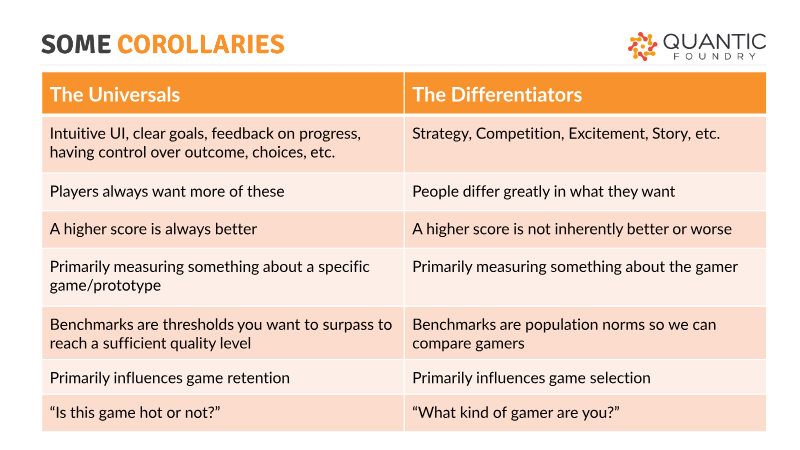
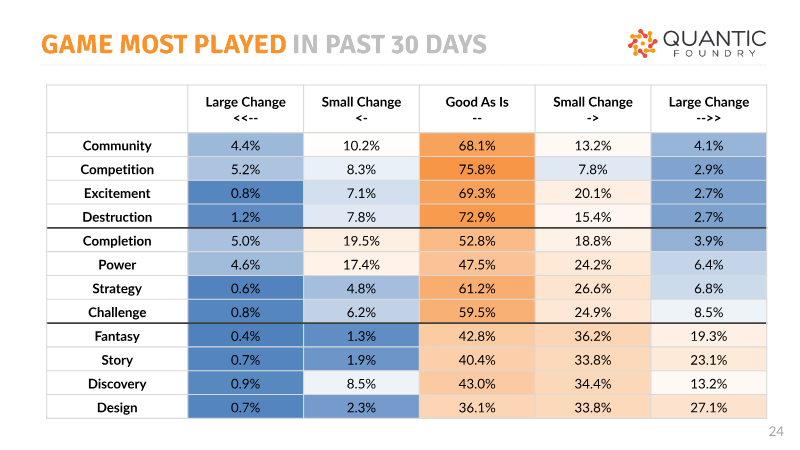
The Gamer Motivation Model provides a comprehensive framework for understanding player behavior by categorizing individual preferences into 12 distinct drivers organized across six core domains: Action, Social, Mastery, Achievement, Immersion, and Creativity. By analyzing data from 400,000 participants, this research maps these psychological drivers onto specific gameplay spectra, such as strategy, design, and excitement. The primary thesis posits that gaming preferences are not monolithic but are instead rooted in measurable personality traits, allowing developers to predict how specific mechanics—ranging from destruction and competition to fantasy and world-building—align with diverse player profiles.
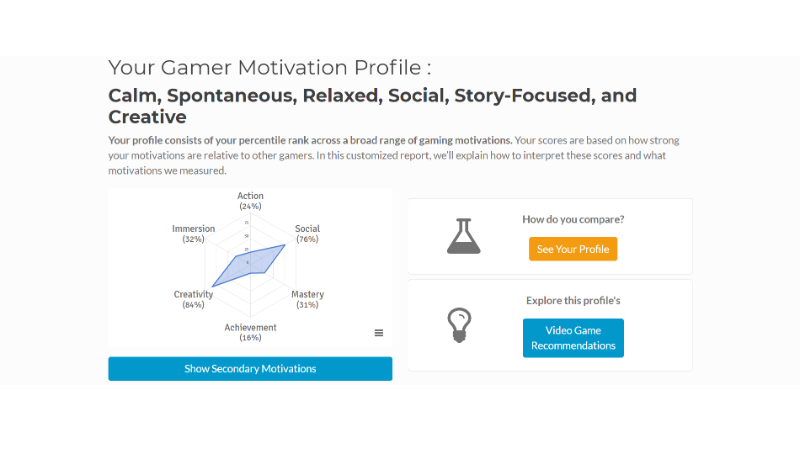
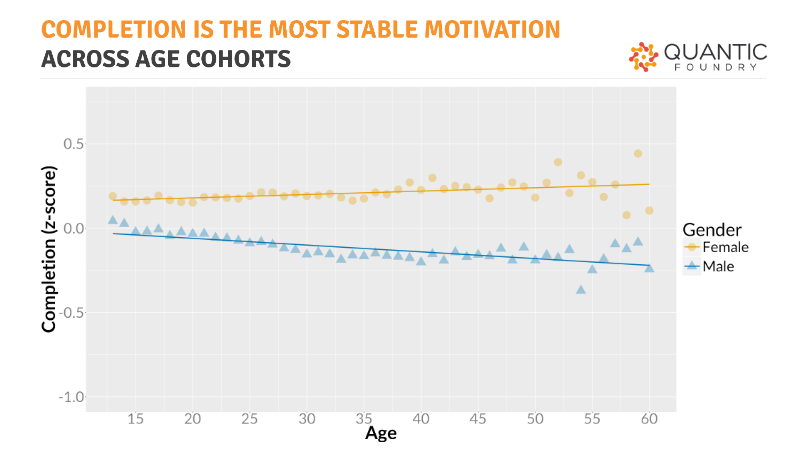
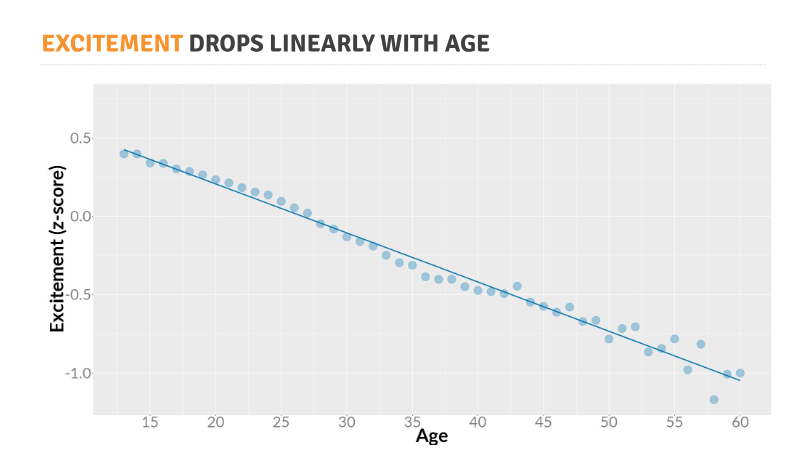
The research highlights significant demographic and psychological nuances in how individuals engage with digital entertainment. While the desire for completion remains a remarkably stable motivation across all age cohorts, other drivers fluctuate significantly based on geography, gender, and life stage. Notably, the study identifies a unique trend regarding the desire for challenge, which serves as the only motivation that experiences a rebound in intensity among players over the age of 45. Furthermore, the model correlates these gaming preferences with established psychological frameworks like the Big Five and MBTI, demonstrating that inherent personality traits, such as introversion or extraversion, directly influence social behaviors and engagement styles within virtual environments.
Covering a broad international scope with a focus on U.S. and Chinese player bases, the findings offer a granular look at how different mechanics cater to varying needs for progression and intensity. By defining these 12 motivations, the model serves as a diagnostic tool for the industry, illustrating how specific design choices—such as the balance between discovery and structured achievement—can be optimized to satisfy the psychological requirements of different player segments. Ultimately, the data underscores the necessity of moving beyond broad demographic labels to focus on the underlying psychological drivers that dictate long-term player retention and satisfaction.
Quantic Foundry · 2026
Quantic Foundry · 2025
Quantic Foundry · 2025
Quantic Foundry · 2025
Quantic Foundry · 2025
Quantic Foundry · 2024
Quantic Foundry · 2023
Quantic Foundry · 2023
Quantic Foundry · 2023
Quantic Foundry · 2021
Quantic Foundry · 2021
Quantic Foundry · 2021