1 free read left. Create a free account for unlimited reading + AI research.
Create free accountWhitepaper DiGRA
1 free read left. Create a free account for unlimited reading + AI research.
Create free accountWhitepaperDiGRA
It studies Mia and Rose, whose bodies and minds blur the human/monster boundary, and Mother Miranda and Eveline, who are openly inhuman final bosses.
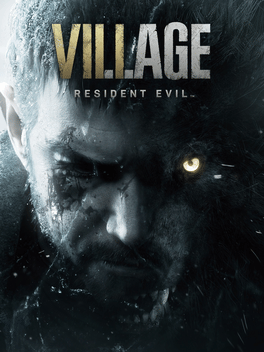
This work-in-progress paper examines how Capcom's Resident Evil VII: Biohazard (2017), Resident Evil Village (2021), and its DLC Shadows of Rose (2022) construct monstrous representations of mothers and daughters. It focuses on four women: Mia and Rose, whose bodies and minds blur the boundary between human and monster, and Mother Miranda and Eveline, who are openly inhuman final bosses. The author applies Jessica Benjamin's concepts of intersubjectivity and recognition as a framework for assessing how successfully each character engages with others and her environment, with the aim of clarifying the foundations of their monstrosity.
The theoretical grounding draws on Barbara Creed's notion of the monstrous-feminine, Rosi Braidotti's argument that monsters and devalued female bodies both police the boundaries of normativity, and Jeffrey Jerome Cohen's view that the monster has a dialectical relation to the intelligible figures inside cultural limits. Creed's archaic mother and the danger of motherhood that either enacts or defies traditional roles are central concepts. The paper argues that the monstrous mother must be read against her intelligible counterpart, using Judith Butler's idea of coherent gender norms, in order to reveal both what is prohibited and the shared anxieties and desires the monster expresses.
The paper's central claim is that Mia and Rose, like Eveline and Miranda, are infected by the same mold that grants the others their powers, so their monstrosity should be understood as a shared condition rather than a clear division between human and monstrous women. The analysis is presented as preliminary, and the paper does not yet report a full comparative assessment of each character's success or failure in achieving recognition. Its sources are primarily theoretical works in gender and monster studies, alongside the three game texts as primary material.
DiGRA · 2023