1 free read left. Create a free account for unlimited reading + AI research.
Create free accountArticle DiGRA
1 free read left. Create a free account for unlimited reading + AI research.
Create free accountArticleDiGRA
Distilling the key insights…
The paper argues that game studies has emerged as a growing but still poorly defined academic field in Latin America, and that the identities adopted by players and gamers, often imported from the Global North, have not been critically examined in regional contexts. Its central claim is that games continue to be treated as instruments for other disciplinary interests rather than as sociocultural artifacts in their own right, and that the consolidation of a local field is hindered by this instrumentalization, by a lack of regional identity, and by the persistent expectation that scholarly work be read, written, and published in English.
The authors trace the recent institutionalization of the field through the appearance of specialized publications between 2019 and 2021, including Chile's "Ludology," Argentina's "Ludorama," and the "Game Studies Notebooks" published by the University of Palermo. They also note a range of historical and cultural works, such as efforts to reconstruct the regional video game industry and analyses of the relationship between Latin American culture and games. Despite this activity, the paper contends that the field has not yet been characterized, in part because research on technology and games in the region is shaped by asymmetries of capital, unequal access to technology, gender-based violence, and linguistic, ethnic, and racial exclusion.
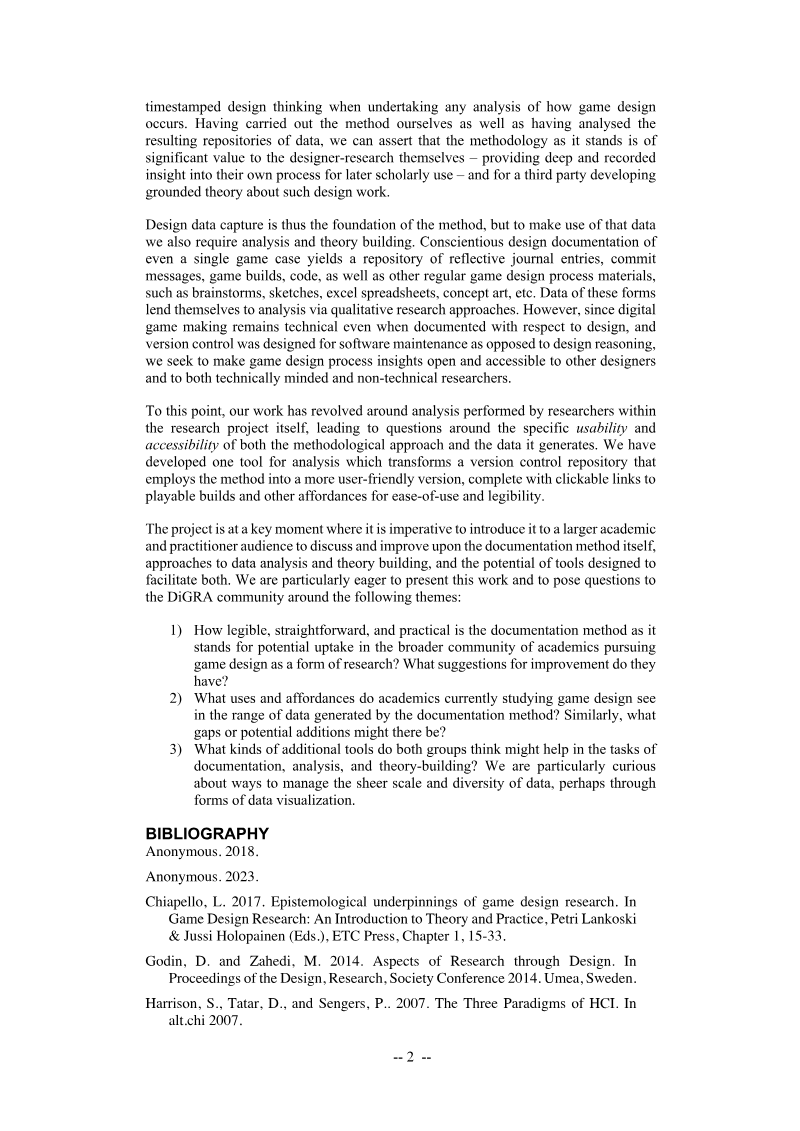
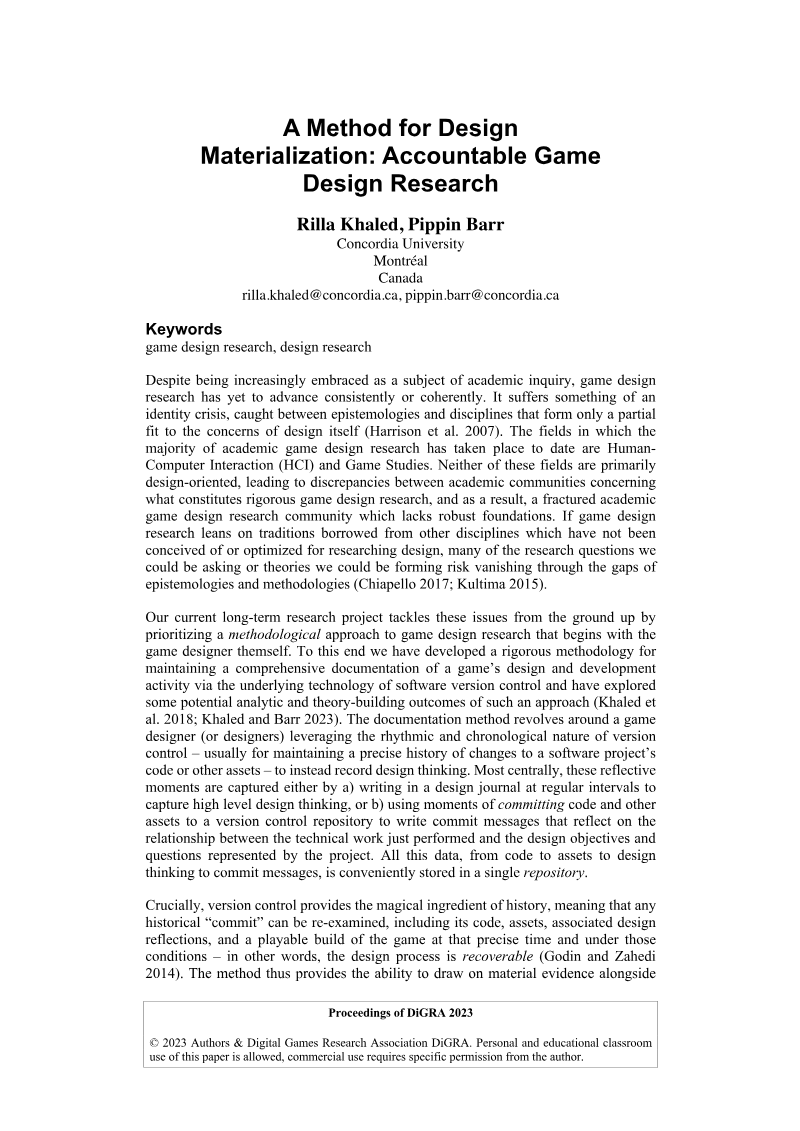
The study's methodology is a systematic review of the bibliography on games in Latin America from 2013 to 2023, with a particular focus on Spanish-speaking South American countries, complemented by the authors' own research on video games and tabletop role-playing games. The review is intended to characterize academic production, clarify what is meant by "game studies," and examine how researchers in the region position themselves relative to existing disciplinary tensions and to gaming communities. Four working assumptions guide the inquiry: that games are seldom studied as sociocultural artifacts, that the region lacks a distinct identity for studying games and its players, that English-language requirements impede knowledge production, and that leisure-oriented game research is undervalued unless games serve another academic purpose.
The paper concludes that game studies faces substantial challenges in Latin America regarding its definition, its conceptual approaches to games, and its acceptance within academic communities. Rather than offering definitive answers, the authors aim to open questions and underscore the importance of examining play practices and the identities of players and gamers in the region.
DiGRA · 2023
DiGRA · 2023
DiGRA · 2023
DiGRA · 2023
DiGRA · 2023
DiGRA · 2023
DiGRA · 2023
DiGRA · 2023

DiGRA · 2023
DiGRA · 2023
DiGRA · 2023
DiGRA · 2023
Extra Credits · 2024