1 free read left. Create a free account for unlimited reading + AI research.
Create free accountWhitepaper DiGRA
1 free read left. Create a free account for unlimited reading + AI research.
Create free accountWhitepaperDiGRA
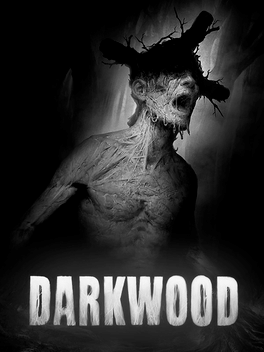
This paper argues that video game scholarship should extend the Non-Human Turn from Animal Studies into a "Vegetal Turn," treating plants as agents of radical alterity rather than as inert background scenery. Using Blair Witch (Bloober Team, 2019) and Darkwood (Acid Wizard Studio, 2017) as case studies, the author contends that these games use the horror genre to make hidden plant life visible and affectively powerful, challenging the "plant blindness" that characterises Western culture and much of game studies discourse.
The analysis centres on how each game stages vegetal agency. In Blair Witch, wood is rendered as both inert material and something that seems to shape itself, with sculpted log figures and overgrown, obstructive forests that reclaim human architecture and disorient the player. Darkwood goes further: its top-down perspective frequently obscures the player's view, trees project into the third dimension to loom over the player character, and hybrid bark-and-root forms violate the boundaries of the human body. Through these devices, the paper argues, vegetal horror subverts temporal, spatial, and perspectival conventions and displaces the human from the centre of the hierarchy of being.
Methodologically, the paper draws on philosophical botany (Hall, Marder), plant science (Wohlleben), and game studies scholarship on horror and phenomenology (Perron, Keogh). Its central methodological claim is that games' non-interactive props and environmental assets deserve analytical attention, since the leafless, massed trees of these titles resist fading into the background and thereby challenge the privileging of players, mechanics, and narrative. The work is presented as an extended abstract outlining a planned research programme, published in the proceedings of DiGRA 2020.
Each row is a game or company this document names, each column a document, oldest first. A mark means that document names it. Select a row to see those documents.
DiGRA · 2022
DiGRA · 2022
DiGRA · 2022
DiGRA · 2022
DiGRA · 2022
DiGRA · 2022

DiGRA · 2022
DiGRA · 2022
DiGRA · 2022
DiGRA · 2022
DiGRA · 2022
DiGRA · 2022
Thomas Brush · 2026