1 free read left. Create a free account for unlimited reading + AI research.
Create free accountWhitepaper DiGRA
1 free read left. Create a free account for unlimited reading + AI research.
Create free accountWhitepaperDiGRA
This paper examines Vampyr, a 2018 horror role-playing game by Dontnod Entertainment set in early twentieth-century London, through the lens of ludonarrative dissonance and the construction of monstrosity in play. Its central argument is that Vampyr places the player in the position of a monster, a doctor-turned-vampire whose dual identity as healer and predator creates a persistent tension between what the game mechanically rewards and what its story asks the player to feel. The author positions this tension as a site for analysing the game as a "technology of subjectivity," drawing on Halberstam's theory of monstrous bodies, and asks how the game directs players to act monstrously and what aspects of monstrosity its design draws upon.
The analysis focuses on specific mechanics that complicate conventional role-playing norms. Although the player can avoid killing, doing so makes the game markedly harder, while the most efficient means of gaining experience is draining named civilians who have personal bonds with the protagonist, often after first healing them and exploiting private information about their lives. The game further divides London into districts with health ratings, rewarding the protagonist for maintaining ecological balance through care while punishing neglect with chaos, roaming monsters, and the disappearance of non-player characters along with their questlines.
The paper's broader claim is that Vampyr deliberately makes morally ambiguous options the only available choices, inverting the hero archetype and asking players to set aside the violence-as-default logic common in digital games. Rather than treating the resulting sense of detachment, or "emersion," as a design failure, the author frames it as the core of the play experience, arguing that embracing the incongruity of the monstrous protagonist is what the game requires of its player.
Each row is a game or company this document names, each column a document, oldest first. A mark means that document names it. Select a row to see those documents.
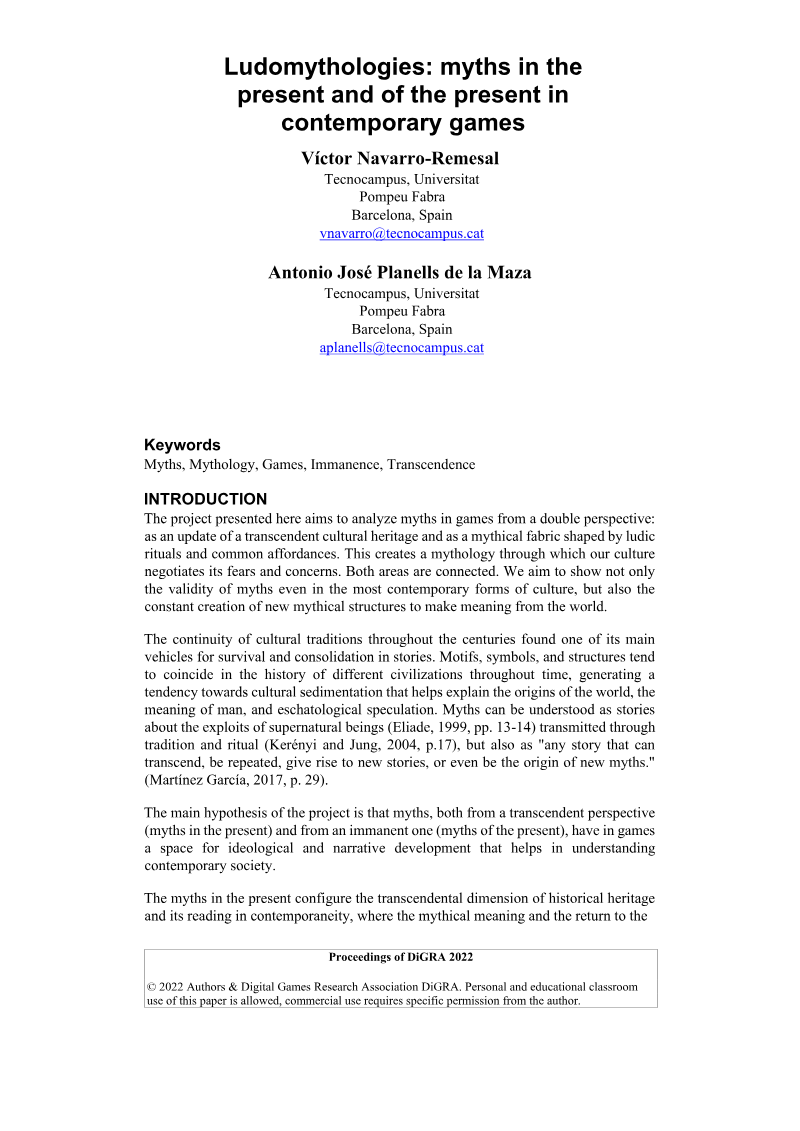
DiGRA · 2022
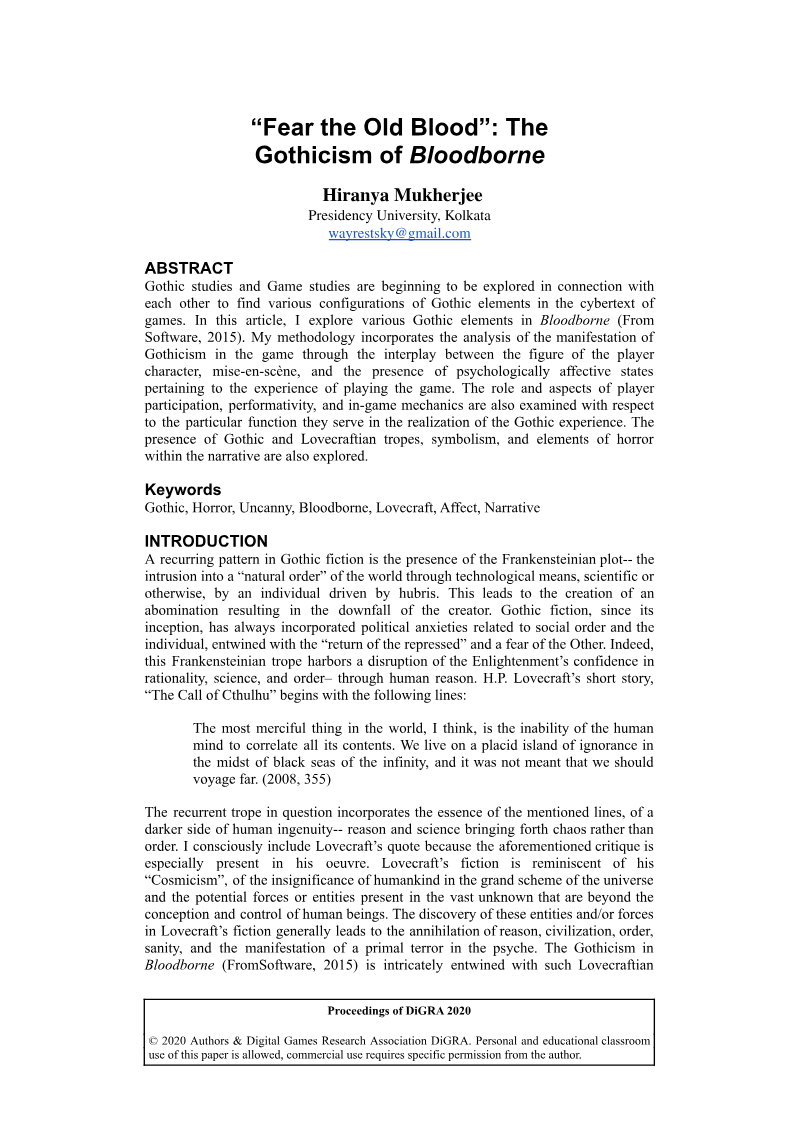
DiGRA · 2022
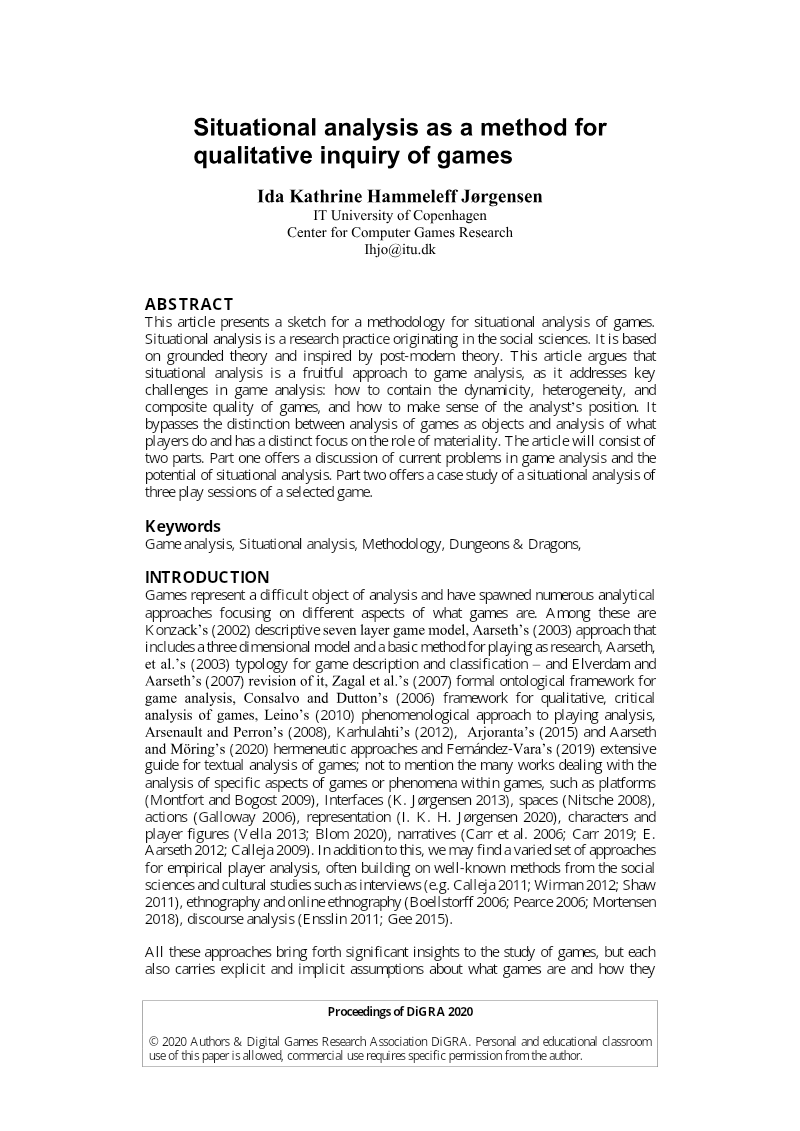
DiGRA · 2022
DiGRA · 2022
DiGRA · 2022
DiGRA · 2022

DiGRA · 2022
DiGRA · 2022
DiGRA · 2022
DiGRA · 2022
DiGRA · 2022
DiGRA · 2022
DiGRA · 2009