1 free read left. Create a free account for unlimited reading + AI research.
Create free accountWhitepaper DiGRA
1 free read left. Create a free account for unlimited reading + AI research.
Create free accountWhitepaperDiGRA
Distilling the key insights…
This paper addresses the fragmented state of academic game design research, arguing that the field's reliance on methodologies borrowed from Human-Computer Interaction and Game Studies, disciplines not oriented toward design, has produced inconsistent standards and risks losing important research questions. In response, the authors present a designer-centred documentation method that uses software version control as a record of design activity. Designers capture reflective design thinking through regular design journal entries and commit messages that connect technical changes to design objectives, while code, assets, and playable builds are stored together in a single repository. Because version control preserves history, any commit can be revisited with its associated materials, making the design process recoverable for analysis.
The authors report that they have applied the method themselves and analysed the resulting repositories, finding it valuable both for designer-researchers reflecting on their own practice and for third parties building grounded theory about design work. They note that the data generated, including journals, builds, code, brainstorms, sketches, and concept art, is suited to qualitative analysis, but that version control was built for software maintenance rather than design reasoning, which limits accessibility. To address this, the team has developed a tool that converts a repository into a more legible format with clickable links to playable builds.
The work is presented as a case at an early stage, with analysis so far performed within the research team. The authors frame the paper as an invitation to the DiGRA community to evaluate the method's legibility and practicality for wider academic uptake, to identify uses and gaps in the generated data, and to suggest tools, including data visualization, for managing the scale and diversity of design data.
DiGRA · 2023
DiGRA · 2023
DiGRA · 2023
DiGRA · 2023
DiGRA · 2023
DiGRA · 2023
DiGRA · 2023
DiGRA · 2023
DiGRA · 2023
DiGRA · 2023
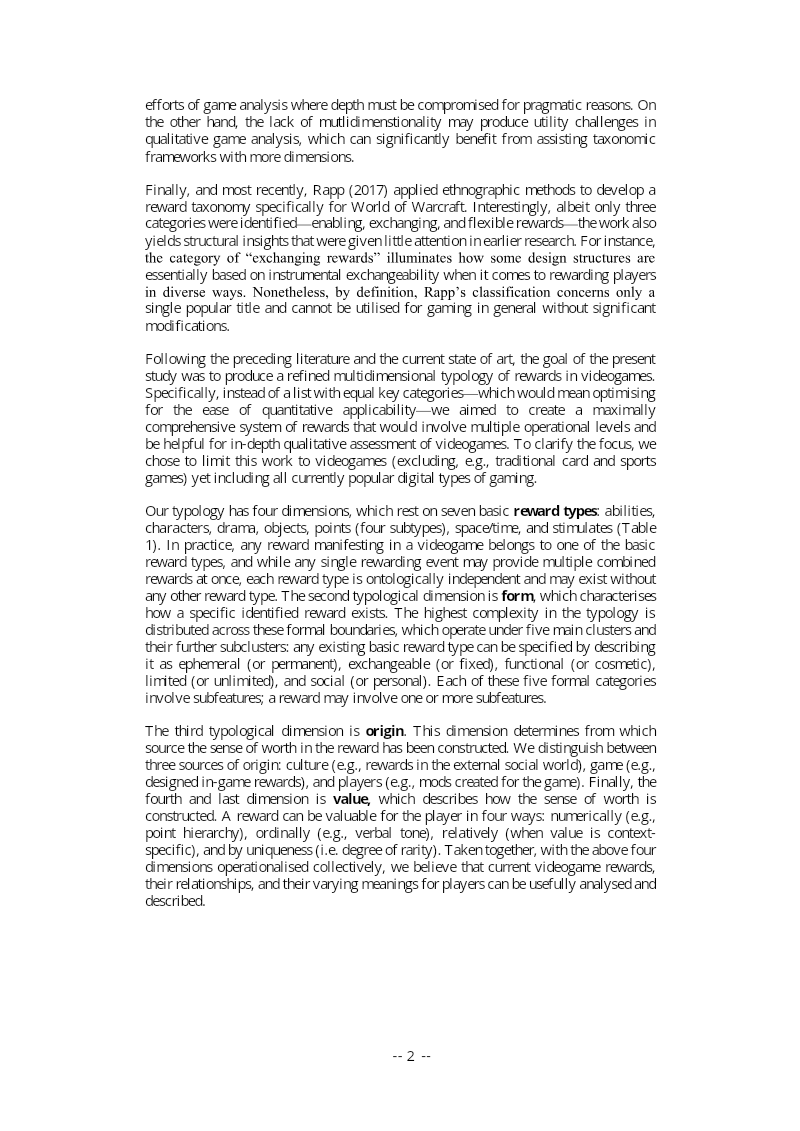
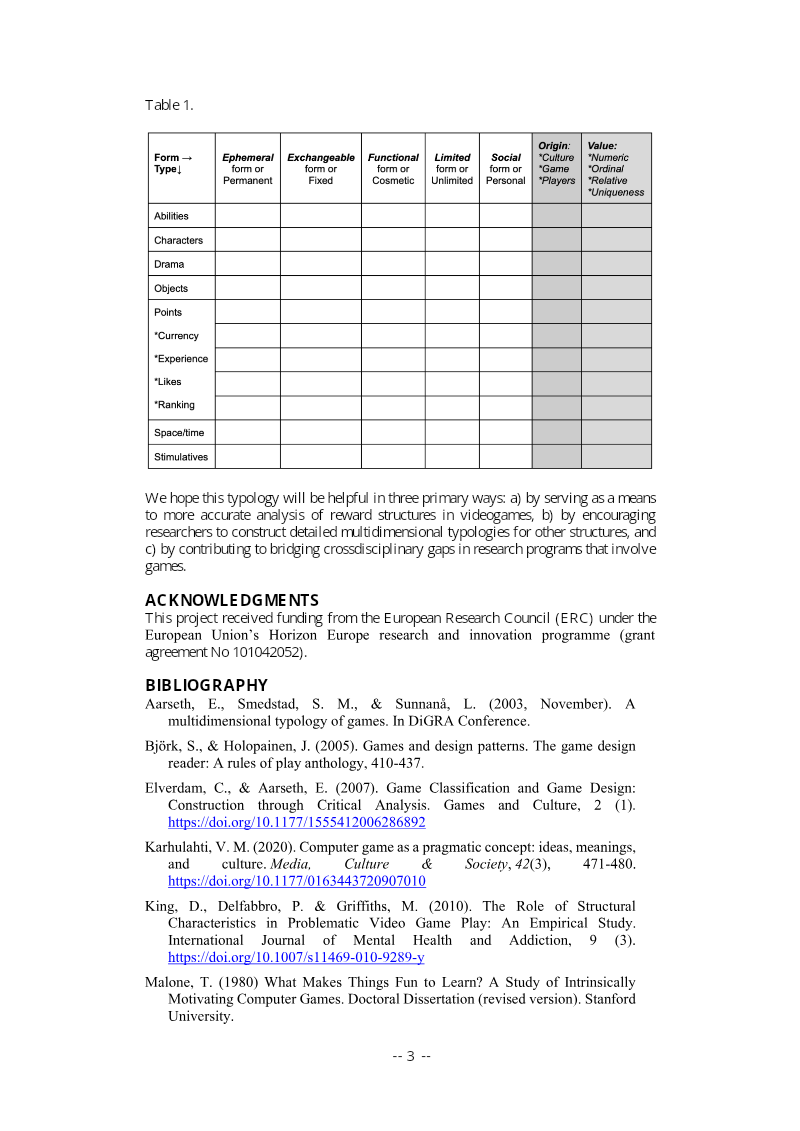
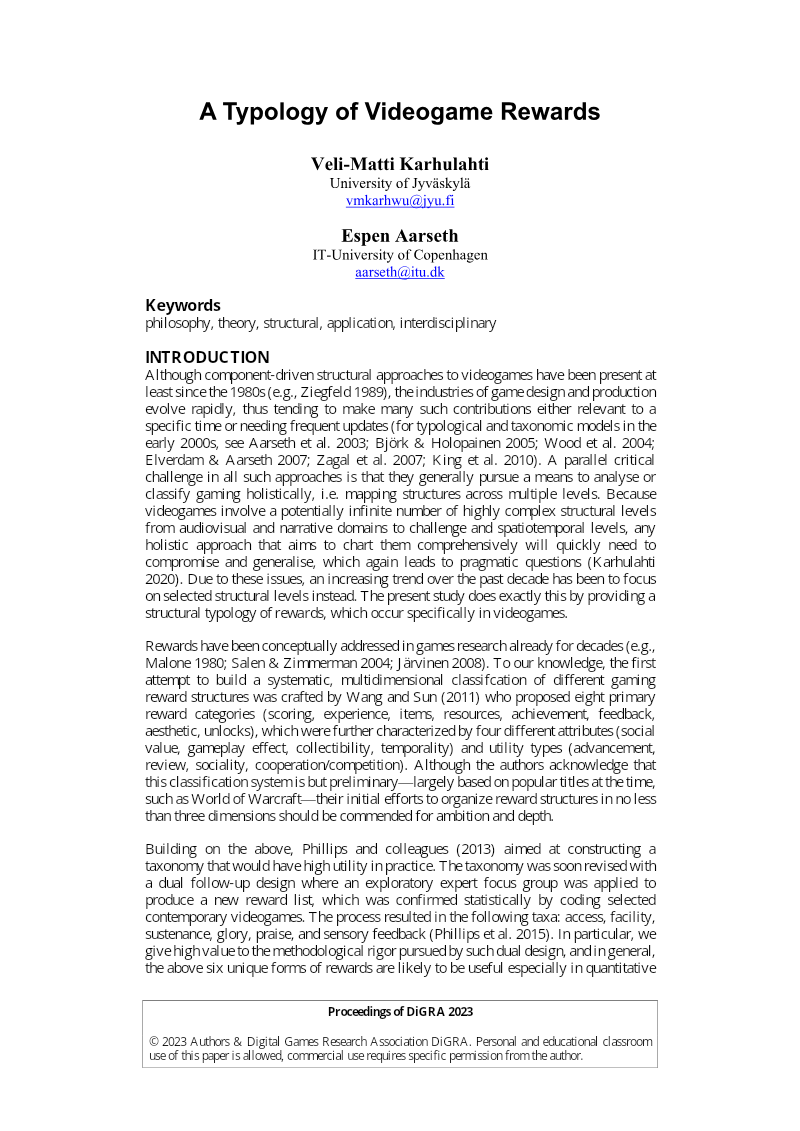
DiGRA · 2023
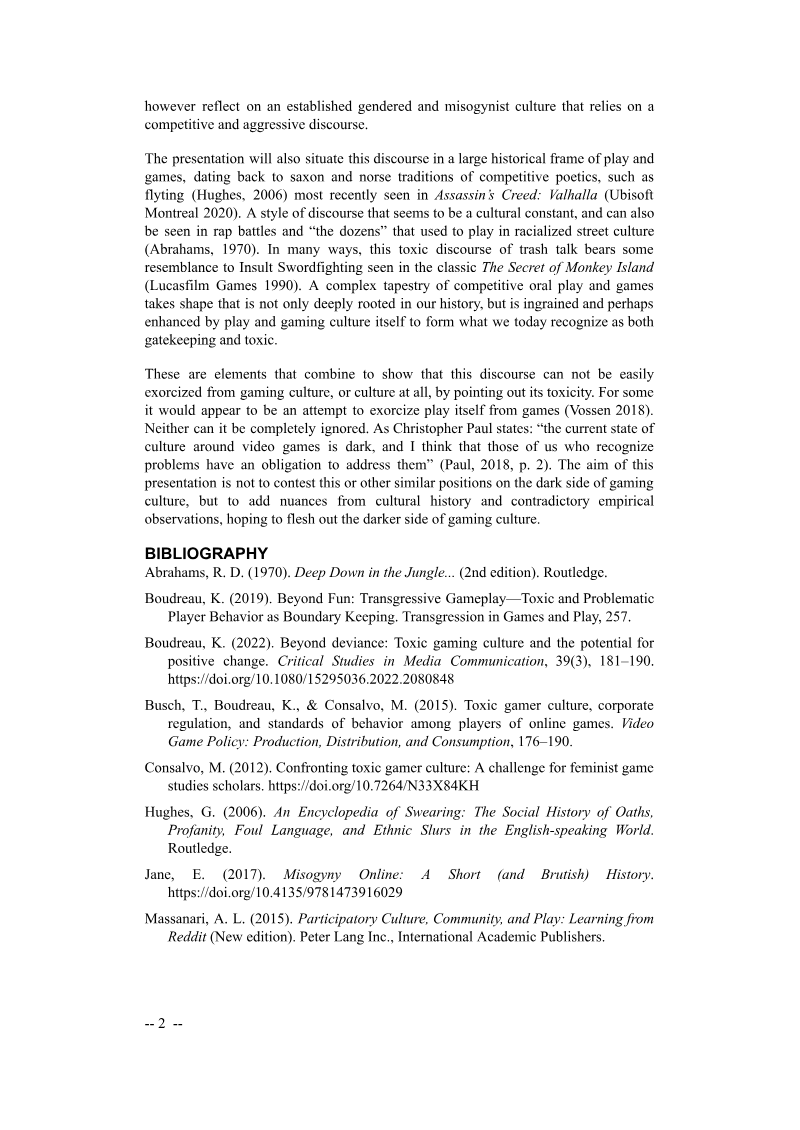
DiGRA · 2023

Jason Schreier · 2026










