Ubisoft Belgrade
Company
6 documents in the library are about Ubisoft Belgrade, from writers such as SGA, The Game Business and Ubisoft. Each has a summary and key insights with the page they come from.
Connections
The documents about Ubisoft Belgrade on the inner ring, the other games and companies they name on the outer one. Select a cover to see it up close and open it in a new tab; drag to move, pinch or Ctrl + scroll to zoom.
Documents about Ubisoft Belgrade
Ubisoft First-Quarter 2026-27 Sales
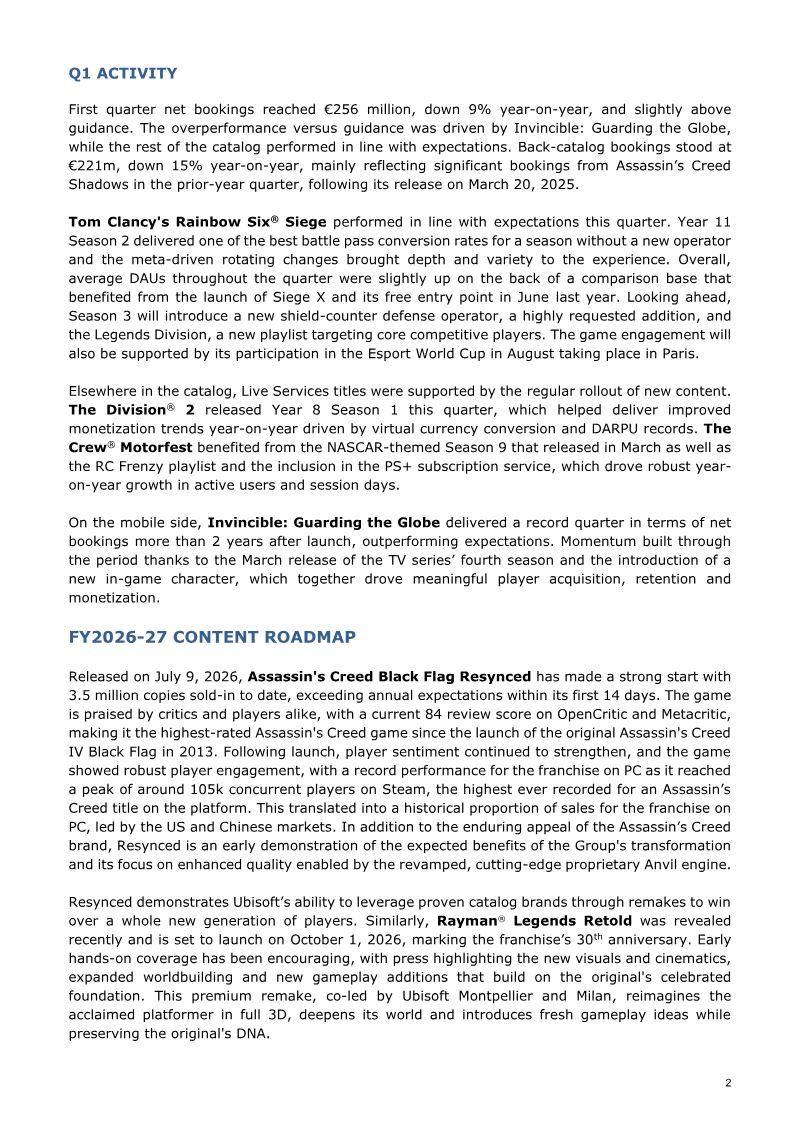
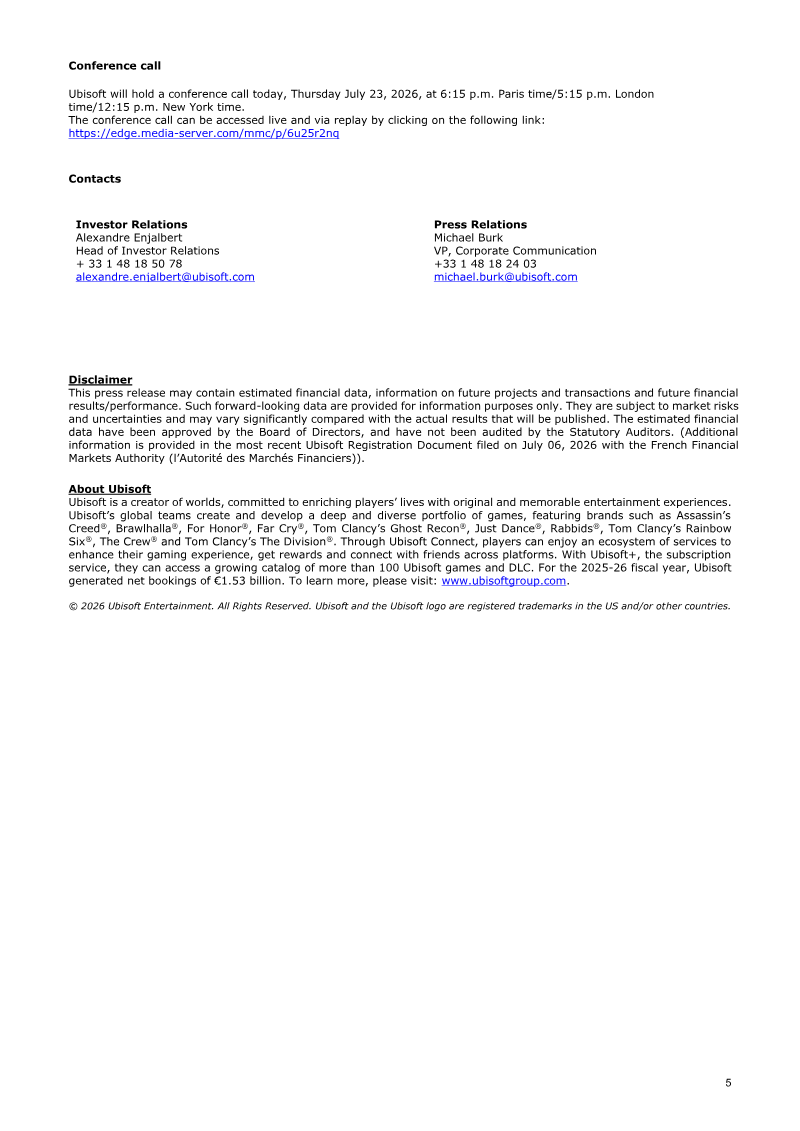
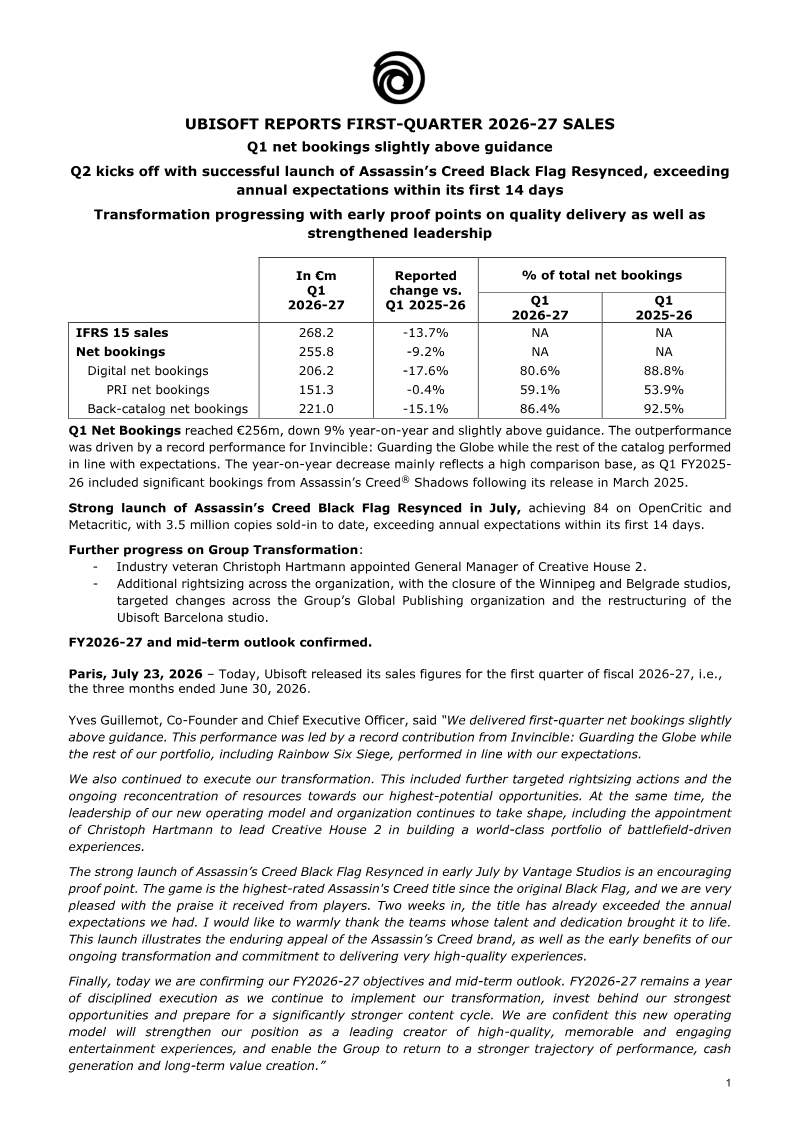
Ubisoft’s first-quarter fiscal 2026-27 results indicate a period of disciplined transformation and operational stabilization.
- Ubisoft reported Q1 2026-27 net bookings of €256 million, a 9% year-on-year decrease that was slightly above guidance due to record performance from 'Invincible: Guarding the Globe'.
- The launch of 'Assassin's Creed Black Flag Resynced' on July 9, 2026, exceeded annual expectations within 14 days, achieving 3.5 million units sold-in and an 84 rating on OpenCritic and Metacritic.
- The company is undergoing structural transformation, including the closure of its Winnipeg and Belgrade studios and the restructuring of the Ubisoft Barcelona studio.
Ubisoft to Close Winnipeg and Belgrade Studios: 380 Roles at Risk
Ubisoft is implementing a significant restructuring plan, resulting in the closure of its Winnipeg and Belgrade studios and the reduction of its global publishing team. These actions place 380 roles at risk.
- Ubisoft is closing its Winnipeg and Belgrade studios and restructuring its Barcelona team, putting a total of 380 roles at risk.
- The company is reducing its global publishing operations as part of a broader strategy to cut fixed costs by €500 million, aiming to lower them from $1.75 billion in March 2023 to $1.25 billion by March 2028.
- The Barcelona studio restructuring will narrow its focus exclusively to 'Tom Clancy’s Rainbow Six: Siege', though its separate mobile studio in the city remains unaffected.


2023 Serbian Gaming Industry Report
The report demonstrates that Serbia’s gaming sector has experienced a dramatic expansion in 2023, with the workforce more than doubling from roughly 1,700 to over 4,300 employees.
- Serbia’s gaming workforce grew significantly in 2023, more than doubling from approximately 1,700 to over 4,300 employees.
- Industry revenue reached €175 million in 2023, a 17% year-on-year increase driven primarily by mobile titles and original intellectual property.
- Mobile gaming dominates the market with a 60% share on Android, while large studios with 40+ staff capture the majority of industry profits.
Serbian Gaming Industry Report 2021
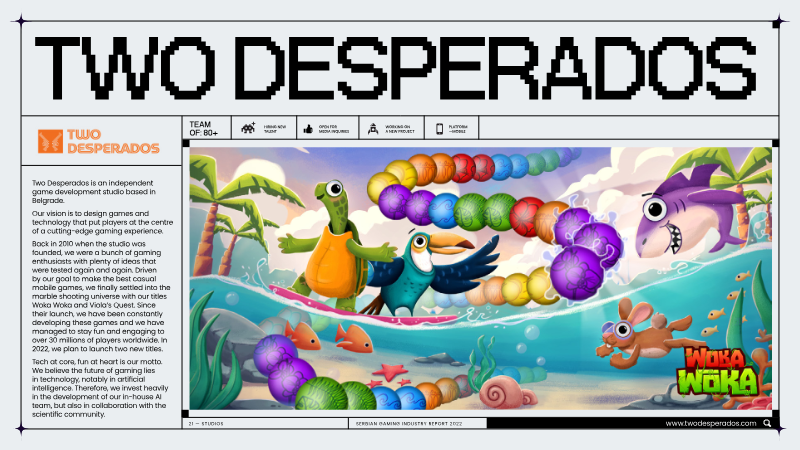
In 2021 Serbia’s gaming ecosystem emerged as a rapidly expanding, export-oriented sector that combined a sizable studio base with a vibrant indie community.
- In 2021, Serbia’s gaming sector comprised approximately 130 studios employing 1,548 people, generating $125 million in revenue with 75% to 100% of earnings derived from international exports.
- The industry is heavily reliant on the free-to-play model, which accounts for 64% of all games produced, while the total output reached roughly 2,200 titles.
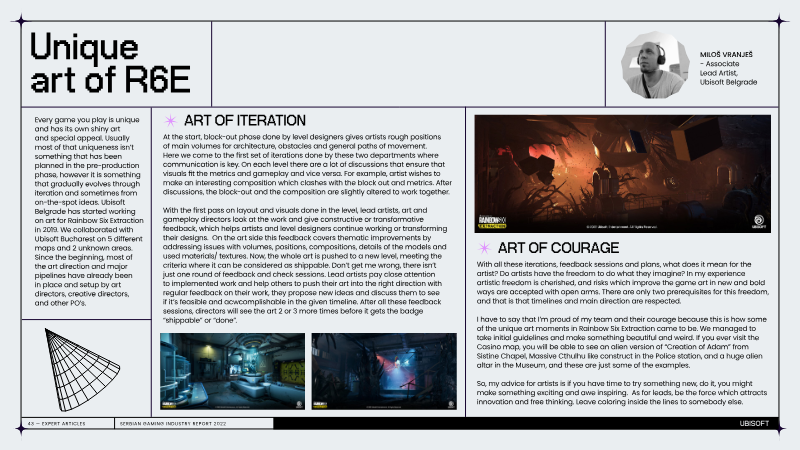
- The ecosystem supports a diverse production scale, ranging from indie developers using high-fidelity tools like MetaHuman Creator to major contributors such as Nordeus, Playrix RS, and Ubisoft Belgrade.
Serbian Gaming Industry Report 2018
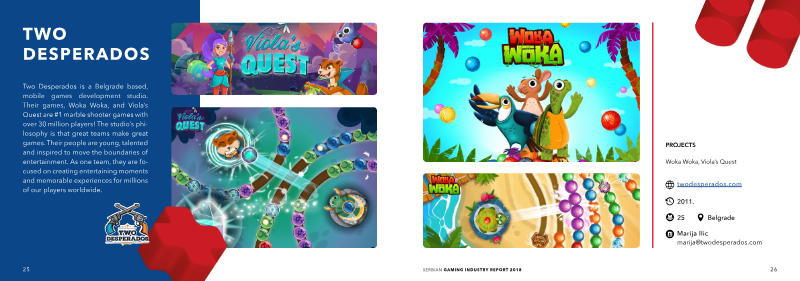
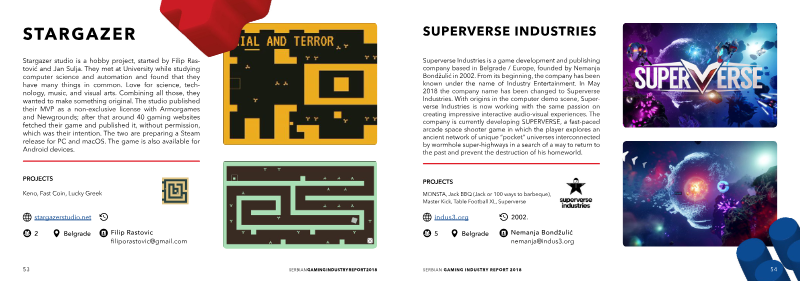
The inaugural Serbian Games Association report maps a rapidly expanding national gaming ecosystem that now comprises more than 60 members across indie development, esports, visual-effects houses and internationally linked studios, employing over 1,500 skilled professionals.
- The Serbian gaming industry comprises over 60 member entities and employs more than 1,500 professionals, anchored by major players like Nordeus, Ubisoft Belgrade, and 3Lateral.
- Funding for the sector is diversified, with 40% sourced from angel investors, 30% from crowdfunding, and 20% from venture capital, with the largest single investment reaching €650,000.
- A robust pipeline of technical talent is supported by approximately 30,000 university students in IT-related programs and the integration of programming into primary-school curricula.

Serbian Gaming Industry Report 2019
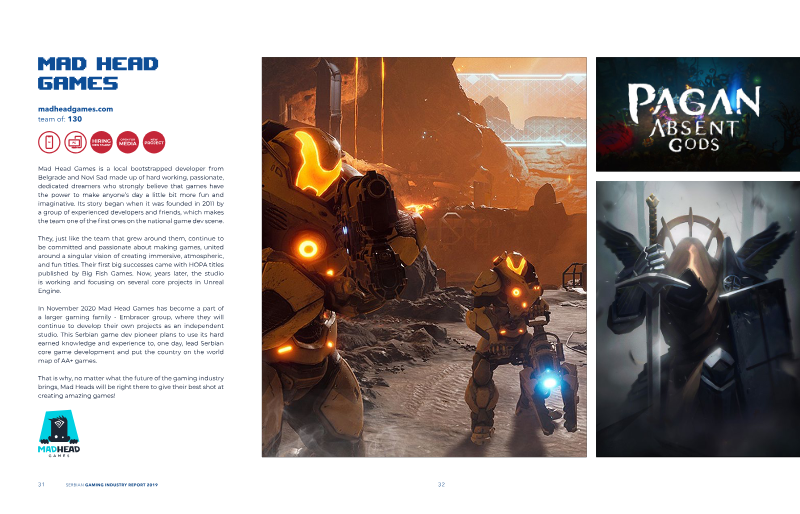
The Serbian games sector is emerging as a rapidly expanding, diversified ecosystem that now supports more than 80 companies and roughly 2,000 employees, reflecting a 3.4% year-on-year increase in staff.
- The Serbian gaming sector generated approximately €100 million in revenue in 2019, supported by an ecosystem of over 80 companies and 2,000 employees.
- Flagship mobile titles from companies like Nordeus and Playrix RS have achieved massive scale, amassing over 100 million monthly active users.
- The industry is experiencing steady growth with a 3.4% year-on-year increase in staff and robust recruitment demand across studios ranging from micro-teams to 180-person developers.