Superplay
Company
Documents about Superplay
Puzzle Monthly #6: Disney Solitaire's Big Win, Playtika's Earn-Out Trap and Solitaire vs Puzzle
Disney Solitaire has established itself as a significant market success by successfully adapting modern puzzle-game mechanics to the solitaire genre.
- Disney Solitaire has successfully modernized the solitaire genre by adopting high-frequency live-ops, gacha mechanics, and progression systems similar to top-tier match-three titles like Royal Match.
- Playtika is currently restricting user acquisition spending due to significant debt obligations and the financial pressure of a substantial earn-out agreement with developer SuperPlay.
- Solitaire games are shifting away from traditional, ad-reliant revenue models toward social casino economies and complex meta-layers to improve unit economics.
Sega-Rovio news, Tripledot's Supersonic buy, mobile at Take Two, Playtika shenanigans and more
The mobile games industry is currently navigating a period of strategic consolidation, shifting user acquisition (UA) models, and evolving financial performance across major publishers.
- Tripledot acquired the Supersonic mobile publishing label from Unity for $40 million, marking the company's second major acquisition of unwanted studios from large tech firms in recent years.
- Playtika will slash marketing and user acquisition spend on Disney Solitaire by 70%, citing the game's ability to maintain growth and expand margins despite reduced investment.
- Take-Two reported $739.5 million in mobile bookings for the last quarter, noting that while mobile revenue dipped slightly, direct-to-consumer initiatives have had a positive material effect on margins.

Google's €890m EU fine and why Netflix's gaming figures mean nothing | Week in Mobile Games podcast
The European Commission has imposed an €890 million fine on Google for violating the Digital Markets Act, specifically targeting anti-steering practices and self-preferencing within the Google Play Store.
- The European Commission has fined Google €890 million for Digital Markets Act breaches, consisting of €460 million for self-preferencing its own services and €430 million for restricting developers from directing users to alternative, cheaper purchase channels.
- Tencent is reportedly in talks to acquire the mobile game developer SuperPlay from Playtika in a deal valued at up to $1.5 billion.
- Netflix’s claim of a 600% increase in mobile game engagement is considered a 'vanity metric' by industry analysts because the company fails to provide standard health metrics like Daily Active Users (DAU) or Monthly Active Users (MAU).
🚨📢 BREAKING NEWS: GTA 6 Pre-Orders Hit $260M + Tencent & Superplay for $1.5B + PubMatic-Zynga Deal
The gaming industry is currently navigating a period defined by significant capital shifts and balance sheet pressures, with major titles and corporate acquisitions serving as bellwethers for broader market health.
- Grand Theft Auto 6 generated $260 million in global digital pre-orders during the final week of June, with projections estimating 51 million units sold and $3.3 billion to $5.2 billion in revenue by its November launch.
- Analysts warn that if GTA 6 fails to meet performance expectations, the resulting industry-wide valuation decline could negatively impact the broader mobile gaming market.
- Tencent is reportedly in talks to acquire Superplay from Playtika for $1 billion to $1.5 billion to help Playtika manage $2.3 billion in debt maturities due between 2028 and 2029.
TWIG #393: GTA 6's Impossible Attach Rate, Playtika's Earn-Out Disaster, and Unity 7's Big Swing
The gaming industry is currently grappling with a disconnect between aggressive financial projections and historical market realities, particularly regarding the highly anticipated launch of Grand Theft Auto 6.
- Analysts project that GTA 6 would require an unprecedented 60% attach rate to meet expectations of 85 million units sold within two months, a figure that significantly exceeds historical AAA benchmarks.
- The gaming market is highly consolidated, with 94% of total console and PC revenue currently generated by a small group of established franchises.
- Playtika has suspended dividends due to severe balance sheet strain caused by poorly negotiated earn-out obligations following its acquisition of Superplay.
Tencent, Playtika and SuperPlay shenanigans, further Google Play changes. Monopoly Go, MTG, more
The mobile games industry is currently navigating significant shifts in corporate ownership, platform accessibility, and market performance.
- Google has dropped its requirement for a 'registered app stores' program, allowing third-party app stores like the Epic Games Store to operate directly within the Google Play Store as of late July 2024.
- Tencent is reportedly in talks to acquire Superplay, the developer of Dice Dreams and Domino Dreams, for up to $1.5 billion following the studio's significant performance growth under Playtika.
- MTG reported Q2 group revenue of $306 million with a 24% profit margin, driven by Raid: Shadow Legends, which earned $111 million, while direct-to-consumer revenue grew to 38% of total group income.
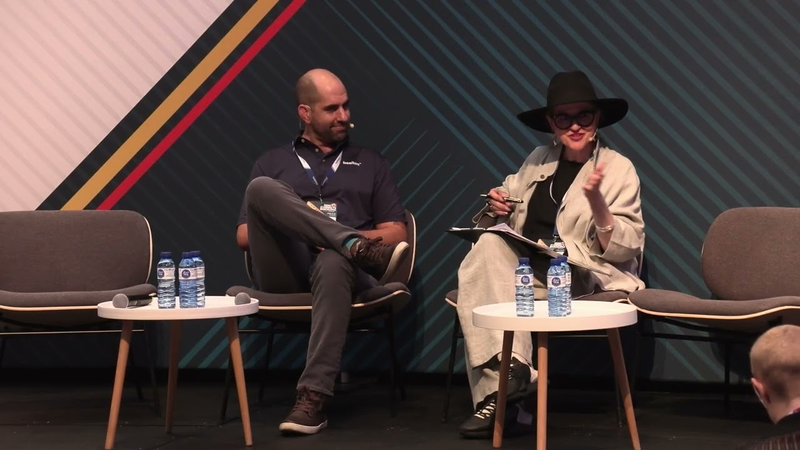
Session: Beyond Ads: How Publishers Are Rewriting Mobile Gaming Monetization - J. Vause & A. Jones
The mobile gaming industry is currently undergoing a shift in monetization strategies, moving beyond traditional advertising and in-app purchases toward integrated, rewarded ecosystems.
- Mobile monetization is shifting from traditional ads and in-app purchases toward integrated, rewarded ecosystems to combat rising user acquisition costs and ad fatigue.
- The most effective monetization strategy is a hybrid model that uses AI and machine learning to deliver personalized rewarded offers—such as surveys, retail deals, and third-party installs—at optimal moments.
- While gaming-related offers currently generate the highest revenue, diversifying with non-gaming rewards is essential to maintain engagement across varied user segments.
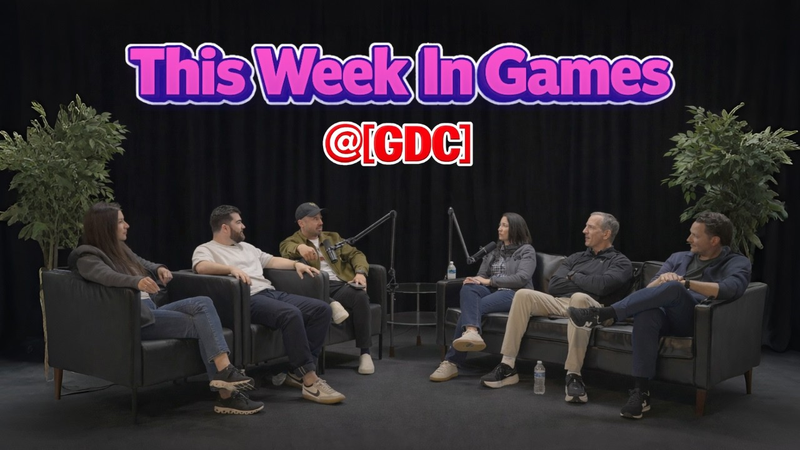
TWIG #374 GDC 2025: The Honest Debrief
The gaming industry is currently navigating a period of profound structural transition, characterized by a cautious atmosphere and a growing disconnect between traditional development models and emerging consumer preferences.
- Investors are shifting capital away from traditional PC and console development, viewing these sectors as low-growth publishing models and instead prioritizing gaming-adjacent AI tools and emerging markets like Turkey.
- The gaming industry faces a structural crisis defined by rising customer acquisition costs, declining download volumes, and a significant contraction in venture capital investment.
- Gen Alpha is abandoning traditional high-fidelity narrative titles in favor of low-fidelity, social-first experiences on platforms like Roblox, rendering established development playbooks increasingly obsolete.

Red Dead Redemption, Moon Active, Playtika, Liftoff, 2025's top games, data, jobs and more
This analysis examines the state of the mobile games industry as of early 2026, focusing on performance metrics, corporate restructuring, and market trends.
- The mobile gaming market is dominated by a few high-earning titles, led by Honor of Kings ($1.68B in China), Last War ($1.57B), and Roblox ($1.5B) in 2025.
- Strategy games remain the industry's most lucrative genre, generating $13 billion in total market revenue during 2025.
- Playtika is restructuring its operations by laying off 500 employees to pivot toward AI-driven automation and a leaner corporate model.
TWIG #301 $1B Company Emerges From the Shadows
The global gaming industry is currently navigating a period of maturation defined by incremental innovation and a strategic pivot toward established intellectual property.
- Major industry players are prioritizing the acquisition of proven assets over internal R&D, evidenced by Playtika’s recent purchase of Superplay to secure high lifetime value models.
- Developers are increasingly applying social casino monetization mechanics to classic board game franchises to decouple revenue from traditional time-gated progression.
- The gaming sector is experiencing a decline in creative risk-taking, with developers favoring the refinement of existing genres and hybridization over the creation of entirely new gameplay experiences.