VideoPocketGamer.biz
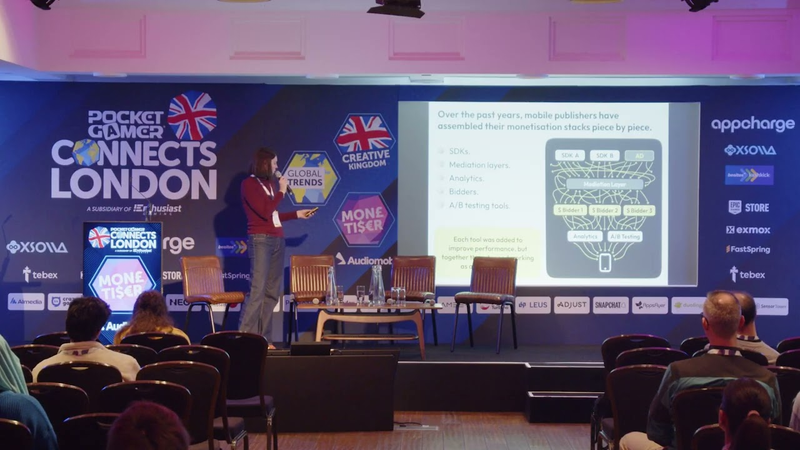
Session: Beyond Ads: How Publishers Are Rewriting Mobile Gaming Monetization - J. Vause & A. Jones
30 Jun 202621 min video
Transcript
I am now going to pass over to the lovely Jackie, who is in the background here. And she's going to talk to Andrew Jones from Cash Kick about how beyond ads publishers are rewriting mobile game monetization. I will hand it over to you guys.
Thank you, Oscar.
It's one of my favorite topics, actually, rewarded. Like to feel rewarded.
All right.
So, um welcome to this afternoon's session beyond advertising and talking about monetization with rewarded and many other things. My name's Jackie Vos. I am the CEO of Dimoso. She's a leading PR and marketing firm in this space. And I I've been very lucky to work with a lot of the OGs, as I call them, in this space, which includes Cash Kick. But I've worked with and I have to mention this because they're a client of mine, Misplay, and a number number of other clients, but Cash Kick is our subject today because a lot of the things that Cash Kick are doing at the moment are innovative and something that all developers should know about. So, I'm going to allow you, Andy, to introduce
yourself.
Thank you. Yeah, so like you said, CashKick is one of the OGs in the rewarded UA space. And I focus specifically on the B2B side of the business. So, the Basitos marketplace, which is effectively the CashKick partner network. So, CashKick, as some of you may know, rewarded app where users, you know, play games, take surveys, cashback shopping, deals. And what I do is I'll white-label that experience and embed that into other partners' apps that are looking to monetize their users, increase retention, etc. Traditionally, we've worked a lot in the fintech verticals as well as market research and rewarded. And just now starting into breaking into the gaming vertical as a publisher for, you know, effectively B2B traffic as well.
Yeah. How many of you are familiar with rewarded as as a monetization or UA
technique? Good. We have some experts in the audience. Do we have anybody who's considering taking on a new new platform for rewarded or looking at monetization through rewarded? Aha, okay. So, we have some experts in the audience. So, you've explained that separate to UA, what you're what you've been doing is white-labeling and working with with partners. Can you just give me a bit more a few more examples of that, especially in the gaming side of things?
Yeah, absolutely. So, I think what's exciting about the B2B space is the diversity of the user. It's not necessarily just a typical rewarded app user. It could be, you know, somebody that's using a neo bank for a cash advance or short-term loan that also sees an opportunity to earn money or it could be a survey taker. Um it can be
somebody that's shopping in a retail store looking for additional coupons. It really could be anything. I think that's so what's so exciting about the space is that any company that has an audience that they're looking to monetize and increase retention could potentially be a fit and kind of given that I think a natural overlap with the gaming advertiser space as well where they can turn be publishers and you know diversify away potentially from either in you know an ad monetization strategy or an IAP strategy where they could you know have a rewarded offer embedded directly into their game you know reward in in-app currency to keep the user in ecosystem and keep them kind of coming back. And some of the smaller partners we're working with now Game 79, Fun Games, Gaming X, Judy Apps had conversations with some some major players Superplay, Tripled Dot, etc.
So it's just in the infancy but it's looking promising.
Well, I'm so pleased that you mentioned the fact that this isn't just your big publishers like Tripled Dot. I think a lot of the the developers and publishers here are smaller ones indie publishers and developers who really you know would take sort of notice of what the likes of the wonderful Fun Games for example I'm a big fan of. Could you tell me a bit more about what what they've been doing with you?
Yeah, so they've been looking into both kind of the deals and and our game offering as well. I think for them the deals is most enticing. It's not as competitive with their core offering. So we have a multitude of fintech offers something like sign up for chime bank set up direct deposit get $300 that type of a deal that's very event based um is performing very well in this vertical.
So um use of you're leading to different rewards and and and what what shifts in user behavior do you think have or the market dynamics um that are driving publishers to rethink this monetization?
Yeah, I I think it's two things. I think it's a little bit of ad fatigue on the user level and then from the company level, you know, increasing CAC. So you know, the cost of users so expensive retaining them is key and from what we've seen, you know, this rewarded traffic this rewarded structure um is a great way to kind of reduce churn and and increase retention across a multitude of verticals. in gaming as well.
Yeah, I was um just recently at a conference with your wonderful colleague Julia and there was a big discussion about um not only retention as [clears throat] word but engagement as well and how you
know, everybody mentions retention but engagement is is probably more important.
Yeah, absolutely and I think that's ultimately where the reward structures come into play. You know, these long-term 30 45 and some cases 60 days that reward users along the way. Um many advertisers look at different kpis some early retention some much later. So having a structure that kind of fits the majority [snorts] has been key and then allowing us to have the flexibility to customize these reward structures because we know
[sighs and gasps]
you know, all of our structures are built on the cashkick foundation but not every user of our publisher is the same user of CashKick. So, because of that, maybe earlier events and earlier funnel make sense for publisher A and maybe longer term, you know, higher rewards make sense for publisher B. And having that flexibility within our technology, um has allowed us to succeed.
You mentioned your technology. And as an OG, um you know, and I I refer to OGs cuz we've been in discussion about there are so many different platforms and providers springing up. Um and so many different types of offers. Uh just looking at at CashKick as an OG, what sort of investment do you put into your tech?
A a majority. I mean, we are product-led. Um so, our largest teams are product, you know. We have an AI machine learning team as well. That's going to be a huge focus specifically with um in the sorting and how we're placing the right offers to the right user. Um but, you know, the good thing about having CashKick is it's ultimately our testing ground for the products and features we want to bring over to our B2B side of the business. So, everything we're doing, we're testing, iterating on, AB testing, and then bringing that over for our publishers to utilize.
So, you see a lot of sort of cross-fertilization in terms of innovation and ideas and
Absolutely. And you know, you mentioned it's it's a up-and-coming space. It's also a very crowded space. So, we want to make sure we're at the forefront, you know, with our product and that, you know, keeps up with the, you know, the competition.
I mean, avid readers of Pocket Gamer and Pocket Gamer.biz will have seen that um there was a little bit of a kerfuffle in this market with the FreeCash um coming from being taken down from the app stores. It's now back on the app stores. Um I think it's important to to note from from things like that happening that there are um there is credibility and resilience within this marketplace.
100%, that's what I would say. It validates the [snorts] business for sure, but I think also highlights the importance of transparency as well. Um, now I'm I'm not an expert, I don't
know exactly what happened with all the free cash doings, but I think that just bodes well for our business and how we operate in terms of transparency in pricing, transparency in product, in publisher, in users, all those things. Um, just so there's no surprises with the end user and the publisher as well.
Well, something I've actually been quite impressed with with um the way everything's set up with you guys is the relationships that you have with your customers. Um, I I see that more in the I've seen that more in the UA side because that's what I've been more exposed to, but how does that work with the monetization?
Yeah, very similar. You know, to it's a small team and we're growing, you know, every quarter in terms of head count, but again, as there's so much competition in this space that, you know, we're all effectively doing something similar, relationships are key. Um, I mean, I I've always felt that relationship is probably the strongest aspect of sales in any
industry, but specifically in one like this. Um, where ultimately, you know, you're going to bat, you know, on both the advertiser side and the publisher side. Um, you're maybe vouching for traffic in order to hit advertiser KPIs. Um, so there's a lot of trust and relationship building along the way that goes into making that successful.
So, how does that typically work then when you're when you're working with a customer? What do What's the first thing you do when you're working with with let's say, you know the likes of fun games.
Yeah, it's it would be you know similar as any publishers. You know, you want to start out you know a little bit slow, ramp up, set realistic expectations in terms of quality, CPI, what to expect. You don't want to over promise and under deliver. Um but you also have to find that right mix in terms of reward structure and what's going to resonate with that audience because it's a fine line you know that the publisher wants to make money but they also want
their users to make money but not too much money where they're losing out on their margin. So, it's a little bit of a sweet spot and that's kind of what takes time. So, I like to ramp very slowly.
[sighs]
You know, a couple hundred installs a week and then up to a thousand etc. You know, depending on the scale of the company but slow and steady I think is is the name of the game here. And then of course going back to the relationships, you know, we're meeting them at conferences, in person in their office, QBRs etc. Um you know, no no shortage of of that face time.
That's fantastic. Um talking about the innovation in monetization, there's non-cash rewards like in-game I So, they're gaining traction. How do those compare to the traditional cash incentives that um in terms of user engagement um and long-term value?
Yeah, it very much depends on the on the type of company. You know, if we're talking about the fintech space, they all reward in cash primarily but maybe
you can't withdraw unless you open up one of their financial products like a checking account or a short-term loan. So, you're always driving back your core product adoption or if you're talking to a major online retailer that's you know rewarding in their currency, you can only use those points on their sites. Again, so it's like the rewards are never even leaving the ecosystem. So, I think this is something that's been very popular and I think ultimately extremely scalable for looking into other verticals like travel for example where maybe you can reward in you know, airline, you know, loyalty miles, that type of thing.
Yeah. So, um what um in terms of diversification, what monetization strategies beyond the ads are proving to be the most effective right now?
Right right now it's gaming works the best, you know, so putting our game inventory into other publishers. That
monetizes the best right now. So, what we're looking to do at Becitos is ultimately bring in more publishers. Um international is a huge focus of us right for right now. We're in six markets. We'll hope to be in hopefully 10 to 12, uh you know, by the end of the quarter and we'll continue to scale from there. Um and then diversify the offer mix as well. So, games monetizes the best, but we also have deals and surveys. Um surveys monetizes the least, but it's another good retention tool and there's always going to be a core segment of your user base that will only take surveys for example. And then especially when we're talking with the gaming vertical, it's a little bit more appetizing I think to have a deal in their UI or a survey as opposed to another game offer unless it's maybe from their same portfolio of of titles.
To give that kind of um differentiation.
Yeah.
That's right.
Um so, we talked about all the good stuff. What do you see as the main challenges
that um that come with this sort of model?
Well, I I I think we talked about a little bit, you know, the competition ultimately and the low barrier to entry. It it's very easy to enter this marketplace market. Um you know, there's always game studios popping up that need UA and there's no shortage of websites or apps that have users. Um so, making that connection is easy, but I think, you know, the tough part, and again, where we're focusing on, is the product piece. And I think that's what sets Cashkick apart, and some of our competitors that are doing it well,
[snorts]
and how they're utilizing AI into the personalization of the offers they're showing the users. So, the right offer to the right user at the right time. I think is ultimately going to be the most important.
Um and I'm I'm I'm aware of time, and Oscar's at the ready with his with his um microphone. Um how do you see rewarded ecosystems
working with mobile games in the future? You've mentioned AI, you've mentioned product innovation. Uh paint me a picture of um how you might see just generally any game developer kind of picking up
Yeah, I I I I mean, it's very much in its infancy now, um but I could see it as a real viable monetization solution right along there with ads from AppLovin, with in-app purchases, you could have, you know, direct owned offers right in there.
[sighs and gasps]
And then, of course, when you're customizing it to what the user's behavior is, it's more targeted. The user's going to be more intentional. That user's going to stick around. They're not going to be bombarded with ads. Um you can still make money on that user, but it can also still be more fun and engaging for that user at that same time.
Yeah, I mean, when you're looking at your user as a as your game player as a developer, you're normally looking at that user as the playing the game.
That's the main thing.
Right.
Um so, you know, from that perspective, it's kind of hard to get your head around all these different opportunities to monetize, and um so, as a one piece of advice that you could give, bearing that in mind, bearing in mind the the the game developer is just, you know, trying to make the best game possible. What's that one piece of advice you you look to giving um publishers or developers
I would say just to be open-minded. I would say gaming as a monetization tool um is still new. So, a lot of times when we're working with publishers, it could be any vertical. We're not only selling them, you know, that we're the best fit, but we're also selling them on the idea that games is right for their brand and right for their strategy. So, I would say being open-minded um to the idea and to change ultimately.
And taking that sort of one step at a time.
one step at a time. Walk, crawl, run. Crawl, walk, run rather.
crawl, walk, run. Yeah. Brilliant. Um do I have any questions?
Any questions? I have a quicky. Um So, um I'm thinking about the uh upcoming digital fairness act that the European Union are looking at. And one of the things that they're exploring in that is the idea of requiring game teams to put a a real money value to virtual currency.
Mhm.
Which I think is an absolute disaster waiting to happen and an absolute like impossibility. Almost exactly where I think we we're being asked by the European Union to commit fraud, which is ridiculous that the regulation might be doing that. Um uh Now, the reason I'm asking what the question is out there is more. I'm not expecting you to have an answer cuz it's not out yet, but do we do you think we're in a more problematic environment when it comes to regulatory change for this kind of business or is it still problematic?
Absolutely. And I think we we see that,
you know, I I live in the States, so there's certain states, California for example, where there's certain games, mostly skill-based, where they're just not allowed and there is a little bit of that gray area real money. I mean, it is gambling at the end of the day. So, I think there is going to be more scrutiny for that vertical and that segment. And then, of course, things like PII as we're looking to expand internationally, that's always going to be top of mind. But in terms of the currency piece I don't know if I have an answer for it. I think from us, that's how we set things up internally. We assign, you know, their reward to a currency to a real dollar amount. How they want to display that is on them. Obviously, it'd be more transparent, but I think that's you're getting under the hood a little bit. But to answer the question, absolutely, I think regulation will continue to be
complicated, particularly when you can take loot boxes at one end, which are cashable versus a randomized reward, which isn't. Which is that? How does that fit? Where does that place? And I think the level
of interference in game design we're risking, unfortunately, is is still there. But anyway,
And this is sorry, Oscar, I just wanted to make one point to that. That, I think, is why it's important to look at the companies with more established credibility and longevity in this audience because they are they do have their compliance teams and their regulatory teams and everything else already working on these things in the background.
Hey, I I'm not going to say no to a reward. After all, I spent 5 and 1/2 years promoting Unity Ads. So, all good. On that note, any last minute questions or shall we move on? So, thank you very much. Round of applause for these guys, please.
[applause] [music] [music] [music]
Auto-generated captions from YouTube — names and numbers may be misheard.
Key insights
Distilling the key insights…
Ask AI about this video
Cite this video
Citation
Generating citation…






















Comments