Microfun
Company
Documents about Microfun

Just Dessert vs. Gossip Harbor: Who Merged It Better?
The mobile gaming industry has seen the Merge 2 genre ascend to become the second highest-grossing category within casual gaming, characterized by consistent year-over-year growth.
- Merge 2 games utilize a core loop where players spend Energy (1 tap per 1 Energy) to generate items from Producers, which are then merged to fulfill orders that drive narrative progression.
- Energy economy is designed for a 3-hour and 20-minute full recharge cycle, with a 100-unit cap that creates a recurring return loop for players.
- Monetization in the genre relies on the 'foot-in-the-door' effect, using small, frequent gem purchases to lower psychological barriers and build habitual spending routines.

Analyst Bulletin: Mobile Game Market Review July & August 2026
The mobile gaming landscape during July and August 2026 demonstrated a marked departure from traditional seasonal lulls, characterized by aggressive LiveOps strategies and structural innovation.
- The New York Times Games reached ninth place in the revenue charts on August 28, 2026, driven by a 75% discount on first-year subscriptions.
- Marvel SNAP experienced a doubling of iOS downloads compared to its pre-launch baseline following the introduction of a new Draft Mode, which features roguelike mechanics and deck upgrades.
- Mobile games like Coin Master, Dice Dreams, and Disney Solitaire are increasingly utilizing 'chain-offer' mechanics that lock milestone reward progress behind real-money purchases.

Top Grossing Mobile Games in South Korea (2025 & 2026)
South Korea represents the fourth-largest mobile gaming market globally, characterized by a distinct bifurcation between high-revenue titles and high-volume download games.
- South Korea is the world's fourth-largest mobile gaming market, generating approximately $5.3 billion in 2025 from a population of 51 million.
- While 2025 H2 revenue grew 8.3% over the first half to $2.8 billion, annual download volume fell by roughly 21%, indicating a shift toward monetizing existing players rather than acquiring new ones.
- Nexon’s 'MapleStory: Idle RPG' surged to the top of the 2026 grossing charts with $135.4 million in revenue, highlighting the rapid rise of the idle RPG sub-genre, which grew from 2% of RPG revenue in 2020 to 16% by 2024.
Top Grossing Mobile Games in Japan (2025 & 2026)
The Japanese mobile gaming market remains a distinct and highly lucrative landscape characterized by a significant divide between revenue-generating titles and high-volume download leaders.
- Japan generates 11.5% of global mobile gaming revenue from only 2.0% of the world's mobile players, highlighting an exceptionally high average revenue per user (ARPU) market.
- The Japanese mobile market is dominated by domestic gacha and RPG titles, with long-running franchises like Monster Strike, Fate/Grand Order, and Uma Musume consistently securing top revenue positions.
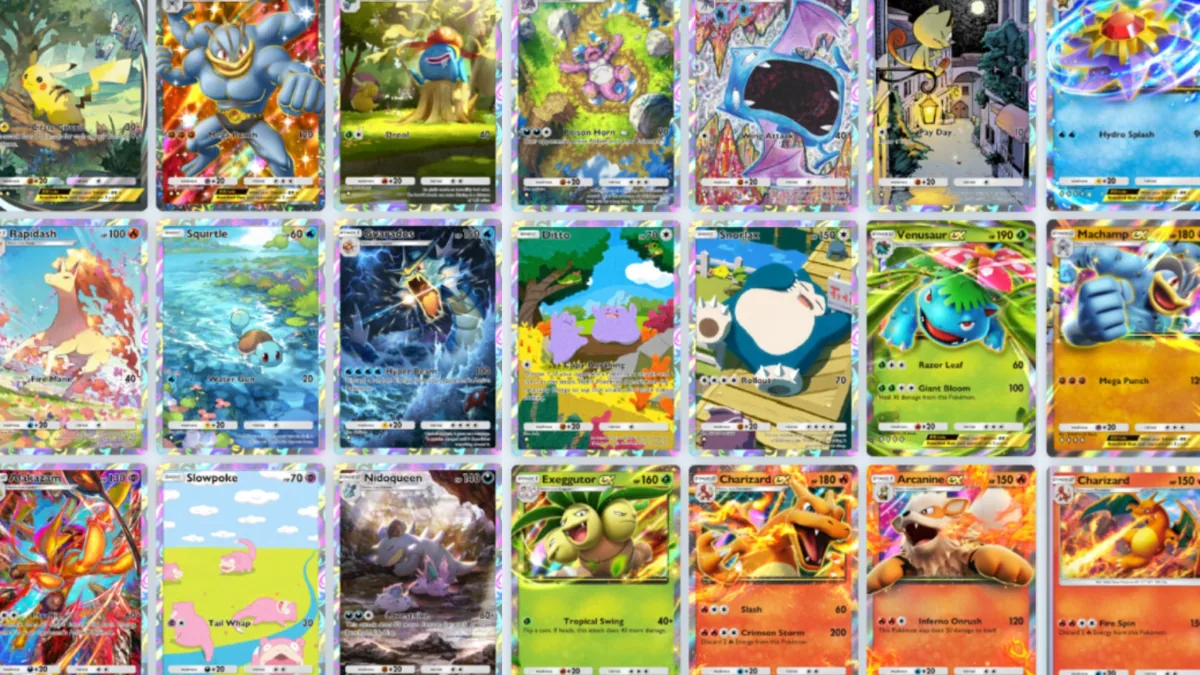
- In 2025, Pokémon TCG Pocket and Last War: Survival led the market in revenue with $326.1 million and $326.0 million respectively, though Pokémon TCG Pocket's revenue cooled to eighth place by mid-2026.
Top 10 Worldwide Mobile Games by Revenue and Downloads in May 2026
The mobile gaming landscape in May 2026 was characterized by a distinct divergence between high-volume download leaders and high-revenue earners.
- Last War: Survival led global mobile revenue in May 2026 with $121.4 million, narrowly edging out Tencent’s Honor of Kings, which earned $120.4 million.
- The mobile market is bifurcated: lightweight puzzle games like Block Blast! dominate downloads (25.73 million) through high-volume ad-supported traffic, while strategy and match-3 titles capture the majority of revenue through deep live-ops and monetization systems.
- Revenue leaders demonstrate high retention-based monetization, with Last War: Survival generating approximately $30 per download and Royal Match securing $102.4 million in revenue through a consistent cadence of content updates.
Does Merge-2 Monetize Better Than Match-3?
The article examines why Merge-2 titles such as Gossip Harbor and Travel Town have recently surpassed the long-standing revenue leader Candy Crush Saga, questioning whether Merge-2 monetizes more effectively than Match-3 games.
- In February 2026, the Merge-2 game Gossip Harbor surpassed Candy Crush Saga in monthly revenue ($77.7 million vs. $71.7 million). By the end of Q1 2026, Gossip Harbor's quarterly revenue grew 172% year-over-year, while Candy Crush's fell 7%.
- The core difference between Merge-2 and Match-3 monetization lies in their board mechanics: Match-3 boards are temporary and reset each level, while Merge-2 boards are persistent, allowing players to manage an ongoing economy rather than solve discrete puzzles.
- Match-3 games monetize by selling solutions to failed levels, offering a 'clean break' for players. Merge-2 games monetize by selling continuity, using energy systems to pause progress and encourage spending to maintain momentum on an unfinished board.

Gossip Harbor’s LiveOps Journey: From 20 to 100 Events a Month
Gossip Harbor, a leading title in the Merge-2 genre, has achieved significant commercial success by aggressively scaling its LiveOps strategy.
- Gossip Harbor scaled its LiveOps cadence from 20 events per month in early 2024 to nearly 100 events per month by late 2025.
- The game generated over $720 million in total in-app purchase revenue since its June 2022 launch, peaking at $62 million in monthly revenue by October 2025.
- By late 2025, temporary bundles and special offers accounted for 62% of the game's total revenue.

How Gossip Harbor Became the Top-Grossing Merge Game
Gossip Harbor: Merge & Story has emerged as the leading title in the mobile merge puzzle genre, surpassing established competitors like Merge Mansion and Travel Town.
- Gossip Harbor has reached $677 million in lifetime revenue and over 90 million total downloads, overtaking competitors like Merge Mansion and Travel Town to become the top-grossing merge game of 2025.
- The game’s primary demographic consists of women with an average age of 32, who are targeted through emotionally charged, dramatic advertising that emphasizes storytelling over direct gameplay footage.
- Microfun relies heavily on paid user acquisition, with a large majority of downloads driven by aggressive ad spending and continuous testing of creative concepts.

The New Rising Revenue King of the Merge Genre: How Gossip Harbor Conquered the U.S. Market
The analysis identifies the merge genre as a rising revenue driver in 2024, with Gossip Harbor emerging as the leading U.S. title after surpassing Travel Town’s $117 million in-app revenue.
- Gossip Harbor has become the leading U.S. merge genre title, surpassing Travel Town’s $117 million in-app revenue and reaching 15th place in global Google Play revenue rankings by November 2024.
- Microfun’s strategic focus on Merge-2 titles, such as Gossip Harbor and Seaside Escape, has successfully captured significant U.S. market share by pivoting away from the saturated match-3 sector.
- Consistent advertising efforts, utilizing 600–800 creatives, doubled the game's U.S. daily active users from 60,000 to 120,000 between July and November.

Finding Genre Success: The Case of Gossip Harbor
Microfun’s Gossip Harbor has emerged as a dominant force within the competitive merge-two mobile gaming sector, currently commanding a $195 million annual run rate and securing the second-largest market share in the United States.
- Gossip Harbor has reached a $195 million annual run rate, securing the second-largest market share in the U.S. merge-two mobile gaming sector.
- The game’s design prioritizes a low-friction, linear user experience that minimizes complex decision-making to appeal to a broad casual audience.
- Monetization is driven by a layered strategy that combines dynamic energy constraints, escalating merge costs, and coin sinks with both long-term seasonal passes and short-term high-pressure events.