Kiro'o Games
Company
7 documents in the library are about Kiro'o Games, from writers such as Games Industry Africa, Maliyo Games and DiGRA. Each has a summary and key insights with the page they come from.
Connections
Each row is a game or company named alongside Kiro'o Games, each column a document, oldest first. A mark means that document names it. Select a row to see those documents.
Documents about Kiro'o Games

GIA to Return in August
Games Industry Africa (GIA), a news and resource outlet covering the African videogame sector, posted a brief notice on July 1, 2026 saying it is pausing publication and will resume later in August.
- Games Industry Africa (GIA) has entered a temporary operational hiatus and is scheduled to resume regular publishing activities in August 2026.
- The organization continues to provide access to its existing repository of resources, including business news, developer profiles, and event coordination data, during the break.
- The annual State of the Industry Report remains available as a foundational reference for stakeholders seeking comprehensive analysis of the African gaming market.
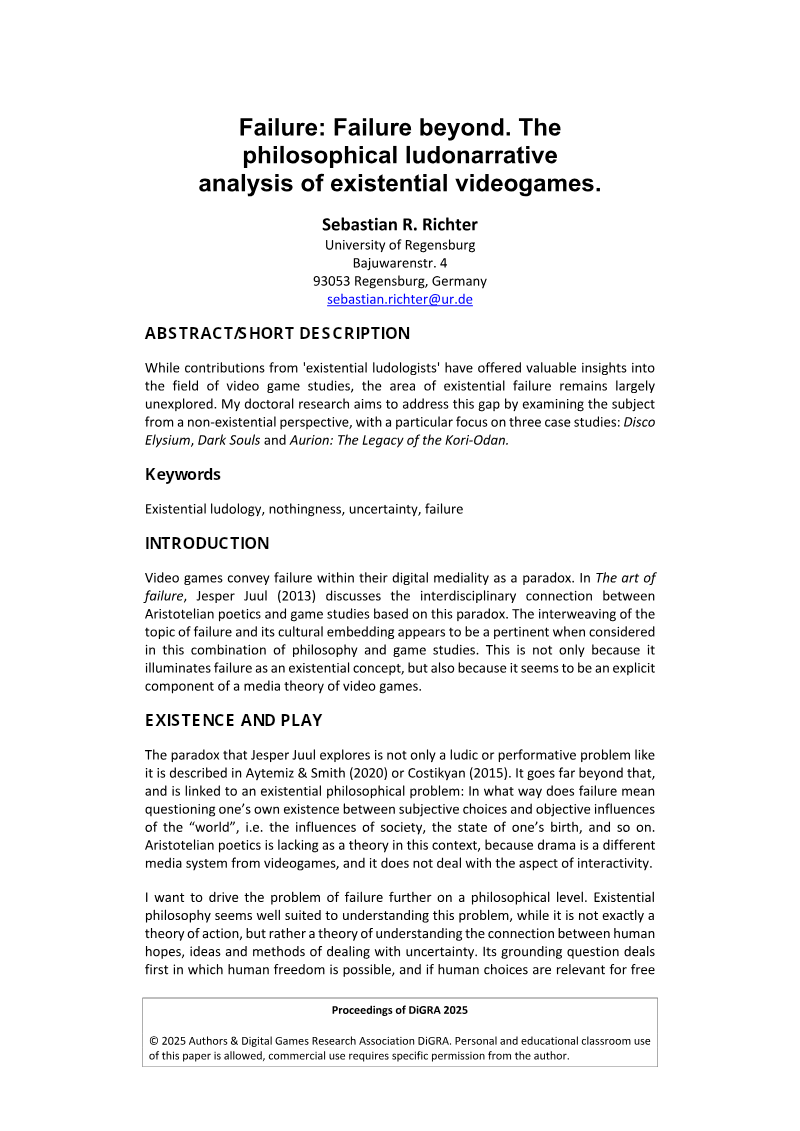
Failure: Failure Beyond. The Philosophical Ludonarrative Analysis of Existential Videogames
The document outlines doctoral research focused on the philosophical ludonarrative analysis of existential failure in video games, aiming to bridge a gap in existing "existential ludology" by examining the subject from a non-existential perspective.
- The document is a doctoral research proposal by Sebastian R. Richter (University of Regensburg), presented at DiGRA 2025, and is an early-stage proposal rather than a completed study.
- Its central argument is that failure in games is an existential problem, not merely a ludic or performative one, touching on freedom, choice, and the individual's position between subjective agency and external forces such as society and birth circumstances.
- The author argues that existential ludology lacks concrete analyses of philosophical games and proposes that existential philosophy can supply an analytical toolbox for examining how failure is represented in interactive narratives.
2025 Africa Games Industry Report Reveals Consistent Growth in the Region
The "2025 Africa Games Industry Report," produced by Maliyo Games, provides an in-depth analysis of the African games ecosystem, highlighting its consistent growth and evolving landscape across mobile, console, and PC platforms.
- The 2025 Africa Games Industry Report, in its second edition, highlights consistent growth in Africa's games ecosystem, providing data and narratives on emerging studios and the evolving development landscape for mobile, console, and PC games.
- The Middle East & Africa region shows robust expansion in the global games industry, with a significant growth rate of +8.9% year-over-year, surpassing North America's modest +0.6% growth.
- Maliyo Games, a pan-African games development studio headquartered in Lagos, Nigeria, is responsible for producing the Africa Games Industry Report, with its founder and CEO, Hugo Obi, sharing the 2025 edition.
Africa Games Industry Report 2025
The Africa Games Industry Report 2025 is a second-edition study by Maliyo Games, a Lagos-based studio, covering the African games ecosystem across the continent.
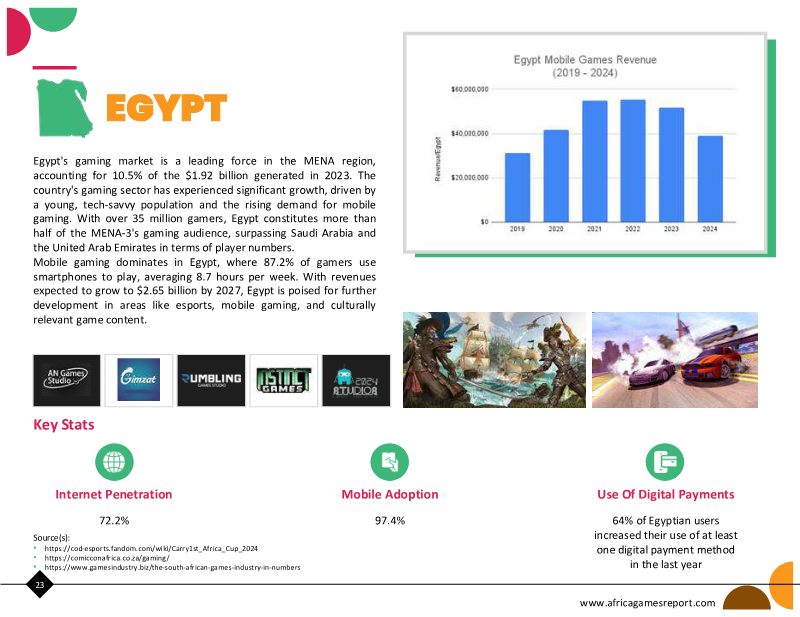
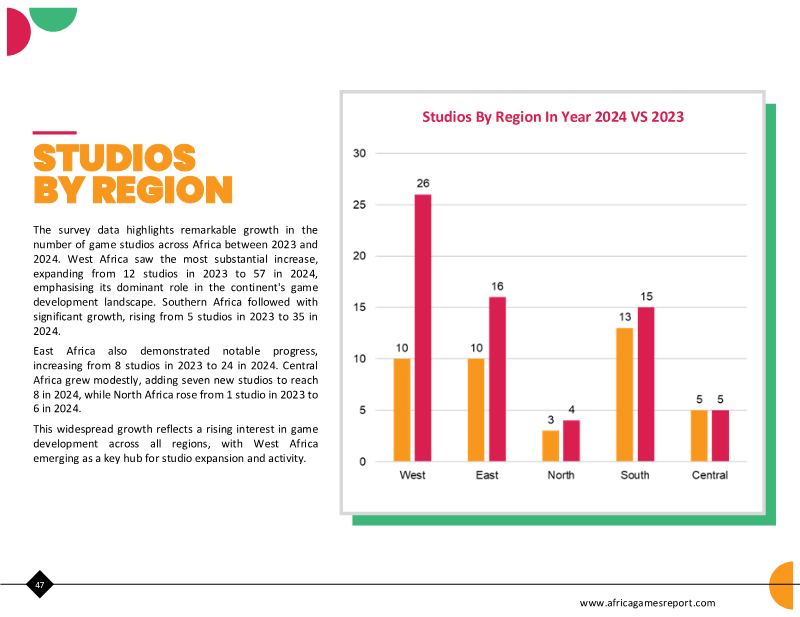
- The survey indicates that African game studios grew sharply between 2023 and 2024, with West Africa rising from 12 to 57 studios.
- Nigeria shows the largest growth among the five top mobile markets, with mobile in-app revenue rising from $12.0 million in 2019 to $60.9 million in 2024.
- Only 3% of survey respondents reported receiving government funding, and 33% had applied for or participated in an accelerator or support programme.
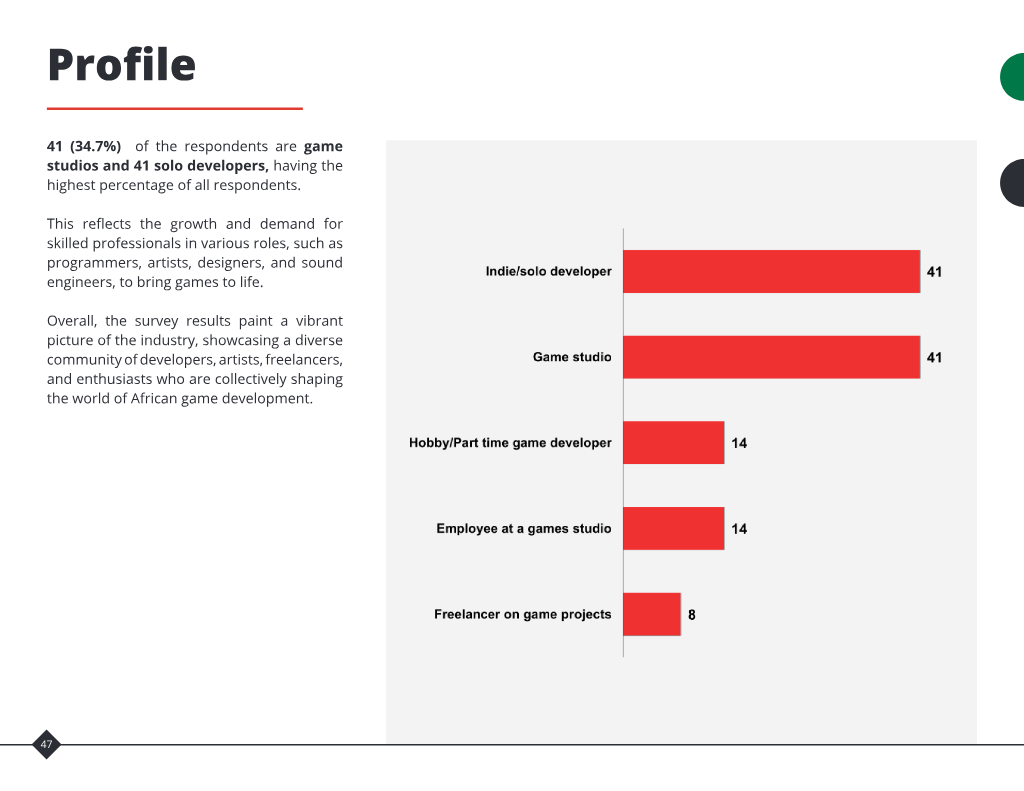
Africa Games Industry Report 2024
The Africa Games Industry Report 2024 is a publication by Maliyo Games, a Lagos-based studio, with an online Africa Games Developer Survey conducted from April to May 2023 and analysis completed in Q3 2023.
- Survey respondents shared concerns about the current state of infrastructure in their region, with 71 (60%) estimating power supply is poor or really poor.
- Only 70 (59%) of surveyed respondents had ever secured external investment for any past project.
- Mobile games are the most popular games in Africa, and according to a report commissioned by Newzoo, 177 million of approximately 186 million Sub-Saharan gamers use mobile devices.
Country Report: Cameroon
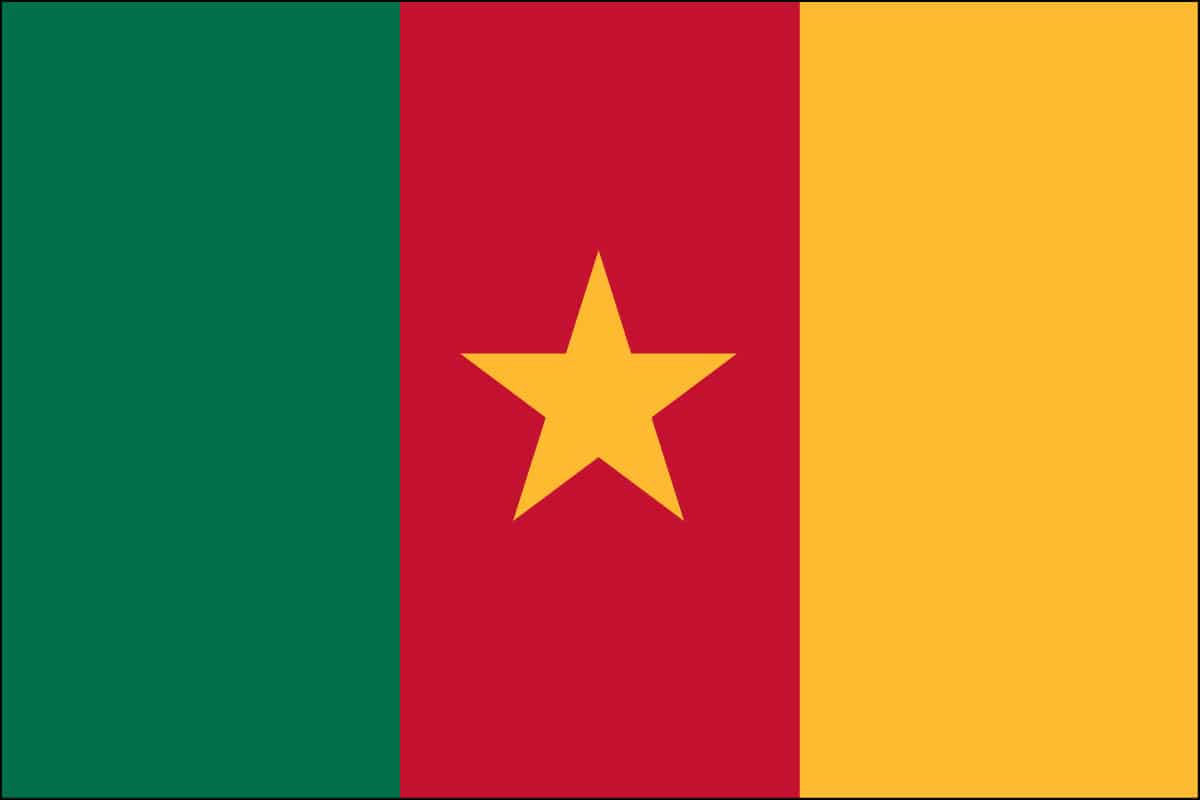
Cameroon's games industry is small and underdeveloped despite being home to Kiro'o Games, one of the continent's earliest and longest-standing studios.
- Cameroon's game development sector is nascent, with Kiro’o Games serving as the primary, long-standing studio in a market that lacks a broad ecosystem of active entities.
- Mobile connectivity is the primary digital channel in Cameroon, with 14 million subscribers representing 52% of the population.
- Development growth is hindered by significant infrastructure challenges, most notably unreliable electricity, which creates a competitive disadvantage compared to international peers.
The Great Divide
This 2020 opinion and analysis piece from Games Industry Africa challenges the perception of Africa as a single, uniform entity and examines why the continent's most commercially and critically recognized games originate overwhelmingly from South Africa.
- The African game development industry is highly fragmented, with the majority of commercially successful titles originating from South Africa and North Africa due to better access to technical infrastructure and international financing pipelines.
- South Africa’s industry maturity is driven by an established community ecosystem, such as Make Games South Africa, and a history of development dating back to the 1996 release of 'Toxic Bunny' by Celestial.
- North Africa’s development scene was historically bolstered by Ubisoft Casablanca, which operated from 1998 to 2016 and trained 300 graduates, creating a talent pool that eventually formed independent local studios.