Loading the document
1 free read left. Create a free account for unlimited reading + AI research.
Create free accountArticle Games Industry Africa
1 free read left. Create a free account for unlimited reading + AI research.
Create free accountArticleGames Industry Africa
Celestial, South Africa's first studio, released Toxic Bunny in 1996, and the industry numbered just two studios by the decade's end.
This 2020 opinion and analysis piece from Games Industry Africa challenges the perception of Africa as a single, uniform entity and examines why the continent's most commercially and critically recognized games originate overwhelmingly from South Africa. Drawing on commentary from industry figures rather than quantitative data, it explores the uneven development of game industries across regions, with attention to South Africa, North Africa, and the less-developed East and West African scenes.
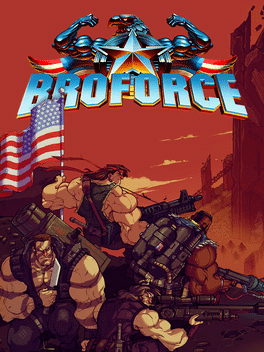
Titles such as Aurion: Legacy of the Kori-Odan (Cameroon), Viscera Cleanup Detail, Broforce, and Semblance (all South African) are cited as recent successes, largely enabled by Western publishers. Nick Hall, founder of Playtopia/Make Games Africa, attributes South Africa's strength to a large, visible community that offers mentorship and knowledge-sharing, a focus on international rather than mobile markets that reduced risk, and a handful of financially sustainable studios working exclusively in games. Zambian developer Sithe Ncube adds that South Africa's large economy, competitive digital sector, cultural pride in the arts, institutional educational support, and a development history dating to the 1990s all contribute.
The historical account notes that Celestial, South Africa's first studio, released Toxic Bunny in 1996, and that the industry numbered just two studios by the decade's end. Apartheid-era advantages in socio-economic standing and investment access allowed white South Africans to build the early foundation. In North Africa, Ubisoft Casablanca opened in 1998, ran a training campus for 300 graduates between 2008 and 2010, and employed 48 staff before closing in 2016, with alumni going on to found a national gaming body and their own studios. Ties to Europe and the Middle East, plus interest from Tunisia and Egypt, supported gradual growth.
The central conclusion is that the continent's primary obstacle is a shortage of significant investment. Tunisian studio CEO SeifEddine Ben Hamouda argues that governments should fund game studios as they do elsewhere, and the piece closes with cautious optimism that some governments are beginning to do so.
Each row is a game or company this document names, each column a document, oldest first. A mark means that document names it. Select a row to see those documents.
Games Industry Africa · 2026
PocketGamer.biz · 2026

Lucidity Insights · 2025
PocketGamer.biz · 2025

Naavik · 2025
PocketGamer.biz · 2025

Deconstructor of Fun · 2025
Maliyo Games · 2025
Uganda Bureau of Statistics · 2024
Games Industry Africa · 2024
Stillfront · 2024
The Game Hub Senegal · 2024

Naavik · 2023