Interactive Entertainment
Company
Documents about Interactive Entertainment


Interactive Australia 2009
Interactive Australia 2009 (IA9) is a study by the Centre for New Media Research at Bond University, with the Interactive Entertainment Association of Australia, and is the third study of its kind since 2005.
- Sixty-three percent of Australian adults do not realise Australia has no R18+ classification for games, while 91% think it should have one.
- Piracy is estimated at about 2 in 26 titles in Australian game households, with 17% of households admitting to having pirated copies.
- Friends or family are the source of 51% of pirated games in Australia, the largest share among the sources reported.
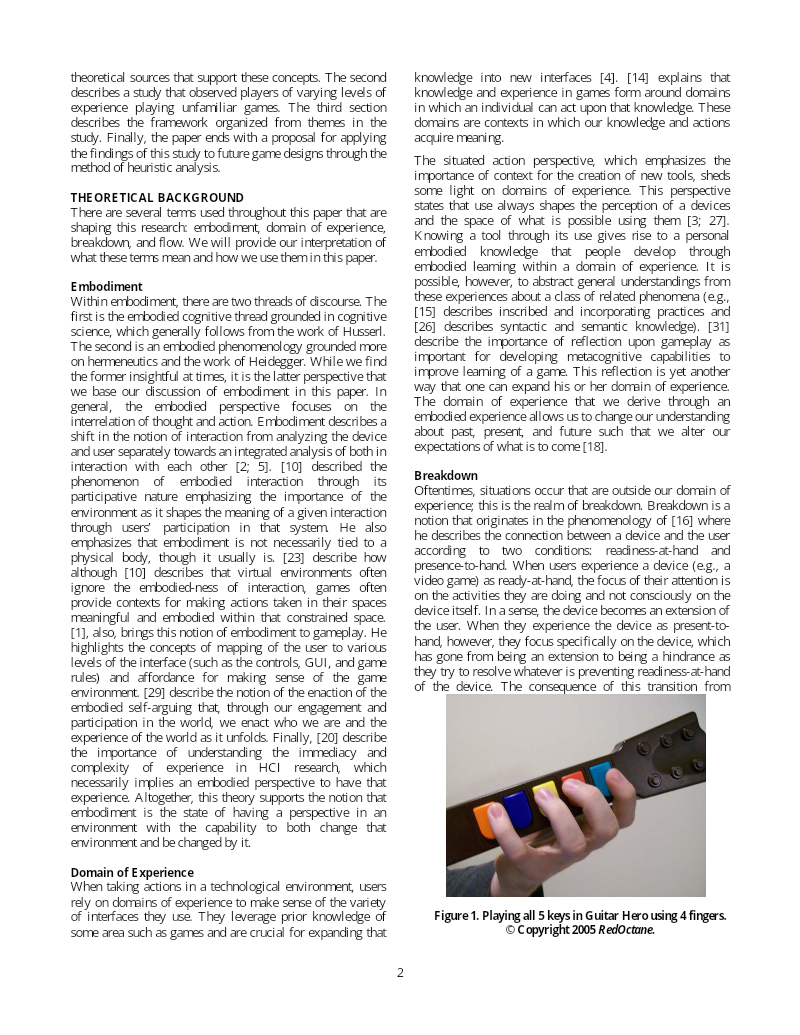
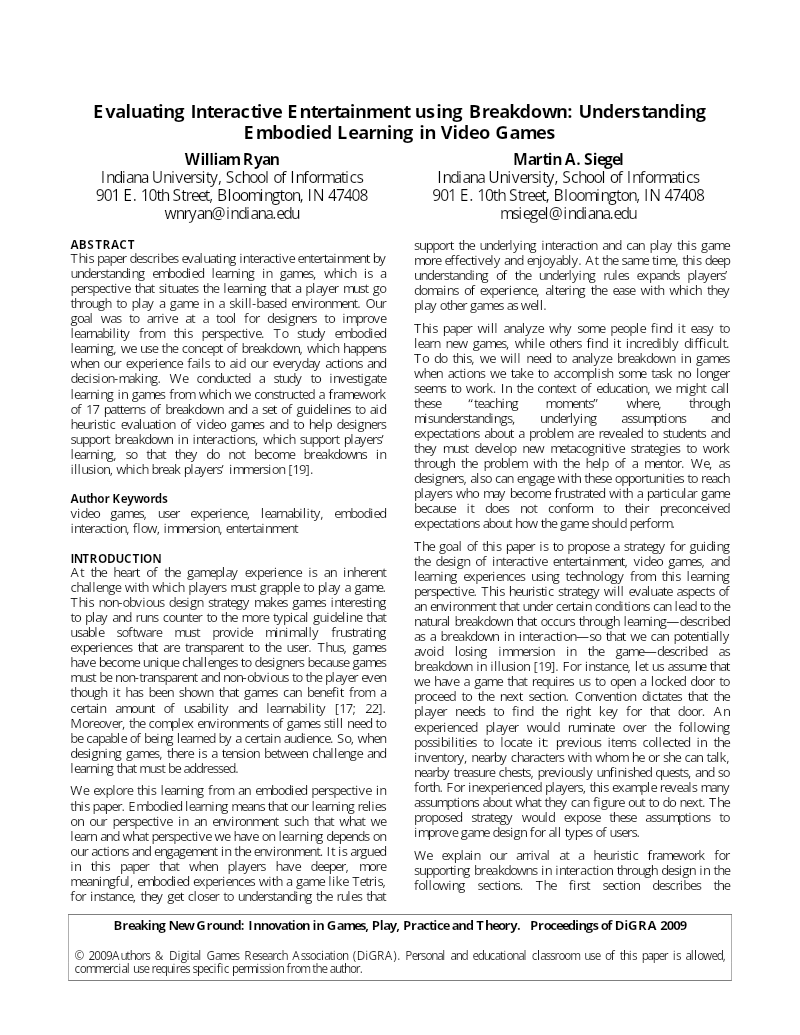
Evaluating Interactive Entertainment Using Breakdown: Understanding Embodied Learning in Video Games
This paper by William Ryan and Martin A. Siegel of Indiana University's School of Informatics, presented at DiGRA 2009, examines embodied learning in video games through the concept of breakdown.
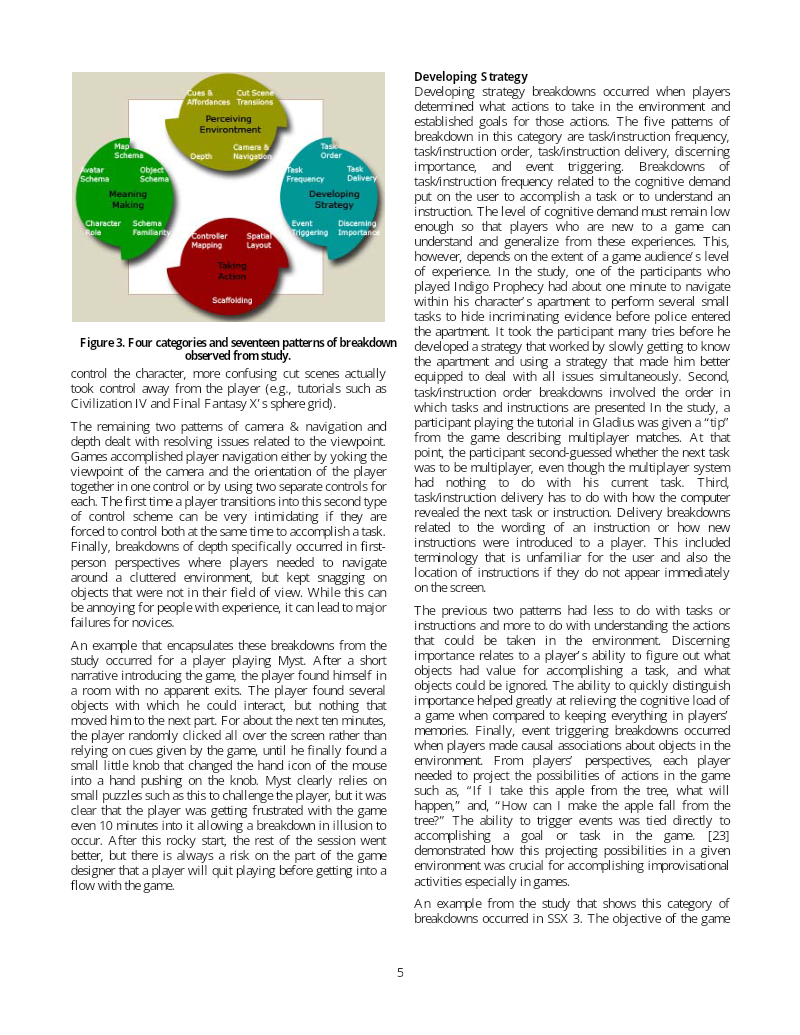
- The study identified 17 patterns of breakdown grouped into four categories: perceiving the environment, developing strategy, taking action, and meaning making.
- The authors distinguish breakdowns in interaction, which are a normal part of gameplay and help players generalize, from breakdowns in illusion, which can break immersion.
- In the Myst session, a player randomly clicked across the screen for about ten minutes before finding a small knob, and frustration grew even 10 minutes in.


Interactive Australia 2007: Facts About the Australian Computer and Video Game Industry
Interactive Australia 2007 is a national research booklet prepared by Bond University's Centre for New Media Research for the Interactive Entertainment Association of Australia.
- Seventy-nine percent of Australian households have a device for playing computer and video games, and the sample was drawn randomly across 1,606 households.
- The average age of Australian gamers is 28, and 41% of gamers are female.
- Games compete with other media such as TV, film and music rather than with non-media and outdoor leisure activities.


GamePlay Australia 2005
GamePlay Australia 2005 is an independent study by Bond University's Centre for New Media Research and Education, funded by the Interactive Entertainment Association of Australia (IEAA), on Australians' thoughts and habits regarding computer and video games.
- Of Australians in game households surveyed, 78% of adults said computer and video games are educational.
- 88% of Australians, regardless of whether they play or have a game device, said Australia should have an R(18+) classification for computer and video games.
- 61% of parents monitor their children's game play "a lot", with another 26% monitoring it "a little".


State of the Industry Report 2000-2001: USA
The IDSA's "State of the Industry Report 2000-2001: USA" covers the U.S. computer and video game industry.
- Computer and video game software sales were flat at $6 billion in 2000, following record-breaking double-digit growth in 1999.
- Video game rentals rose in 2000 to 919 million from 880 million in 1999.
- A 2000 Hart Research survey found 60 percent of Americans, about 145 million people, play interactive games on a regular basis.

The Gaming Industry: A New Game of Growth
The global games market is positioned as a rapidly expanding sector, with Newzoo projecting growth from USD151.9 billion in 2019 to roughly USD180.1 billion in 2021.
- The global games market is projected to grow from USD151.9 billion in 2019 to approximately USD180.1 billion in 2021, with eSports revenue expected to reach USD1.5 billion by 2020.
- Malaysia's gaming industry contributed USD100 million to its revenue in 2018 and is forecast to grow at a CAGR of 10.9% (2018-2023) to USD168 million by 2023, ranking 21st worldwide with USD633 million in total games revenue.
- The Malaysian government, through the Ministry of Communications and Multimedia, recognizes gaming as one of ten key creative industries and has allocated RM10 million in Budget 2019 to develop eSports, aiming to make Malaysia a regional eSports hub.


Annual Report of the Capital Group: PCF Group S.A. 2024
The document is the 2024 management board report of the PCF Group S.A. capital group (People Can Fly), a Warsaw-headquartered video game developer and publisher, covering the 12 months ended 31.12.2024, with consolidated and standalone figures presented in thousands of PLN.
- Consolidated sales rose to 190,401 thousand PLN in 2024 from 150,124 thousand PLN in 2023, while the group's net loss widened to 175,306 thousand PLN.
- Management decided to write off 100% of the Bifrost project costs at 31.12.2024, which the report links to an inability to secure financing for further production and release.
- The strategic options review ended on 10.12.2024 after the group failed to obtain the new financing it needed, which led to the decision to limit the Bifrost team and suspend Project Victoria.