indie
CompanyUnited States
Documents about indie
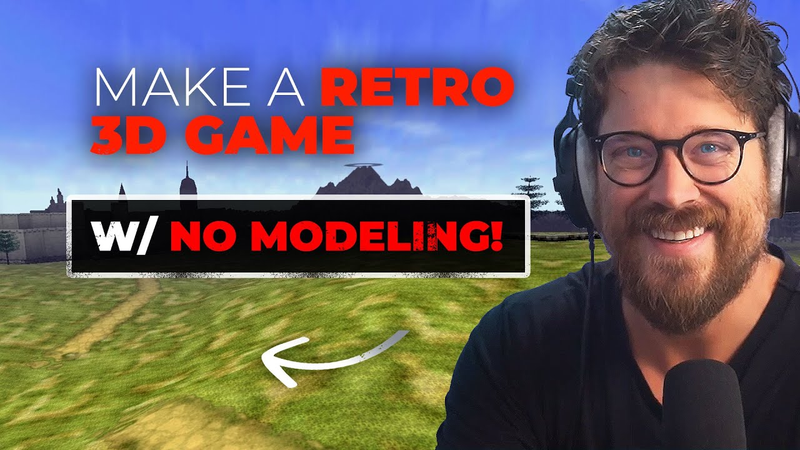
Retro 3D Game Workshop (No Modeling Experience Required!)
Creating a retro-style 3D game does not require advanced modeling expertise or complex production pipelines.
- Achieve a 90s-era aesthetic by stripping away modern rendering features such as normal maps, metallic properties, and high-resolution anti-aliasing.
- Prioritize manual texture manipulation, including pixelation and mosaic filtering, to ensure visual consistency across all environmental assets.
- Bypass high-poly modeling by utilizing gray-boxing, simple geometric shapes, and 2D billboards to construct game environments.

Game Awards Hype, Clair Obscur's Big Win, and Disney's AI Deal | Games For Breakfast
The 2025 gaming landscape is defined by a tension between high-budget marketing spectacles and the evolving technical and ethical challenges facing the industry.
- The Game Awards functions primarily as an advertising campaign, with industry observers noting that the event's structure—specifically the rapid-fire presentation of awards and the relegation of indie titles to the pre-show—undermines its credibility as a legitimate awards ceremony.
- The industry is seeing a shift in AI discourse, with critics arguing that the knee-jerk dismissal of all AI-integrated projects as 'slop' is becoming a lazy form of criticism that fails to distinguish between creative tools and low-effort content generation.
- Disney's recent ventures into AI-driven storytelling have sparked industry skepticism, with concerns that these technologies are being used to repurpose and redistribute existing intellectual property rather than fostering genuinely new creative works.

Steam Demos Are the New Early Access
Modern indie game development prioritizes a marketing-first philosophy where high-quality, polished demos serve as the primary vehicle for market validation and wishlist acquisition.
- Game developers should prioritize the 'ugabooga' solution—the lowest-investment, simplest implementation—to test core mechanics before building complex systems.
- Steam's 'New and Trending' tab remains a critical discovery metric, with an estimated threshold of approximately $8,000 in sales required to gain visibility.
- The quality of a game is validated when playtesters continue playing for hours after a scheduled session ends, indicating the presence of 'secret sauce' beyond just a compelling trailer.
TWIG #360 The Story of Two Steam Games, Where Winds Meet & The 4X Shake-Up
The modern gaming landscape is defined by a widening gap between vanity metrics and sustainable revenue, as developers struggle to balance high user acquisition costs with long-term retention.
- The 4X strategy genre currently generates approximately $700 million in monthly revenue, with growth driven by gender-neutral themes and casualized art styles rather than traditional hardcore aesthetics.
- The gaming industry is shifting away from complex, gear-heavy progression systems toward accessible, cross-platform experiences that utilize seasonal resets to improve retention.
- Rising user acquisition costs and high install prices are forcing studios to abandon traditional squad RPG models in favor of high-fidelity, broad-appeal titles.

Game Awards 2025: Major Releases Missing From the Nominee List
The 2025 Game Awards nominations have sparked industry debate regarding the selection process and the exclusion of several high-impact titles.
- The 2025 Game Awards nominations are facing industry criticism for omitting high-impact titles like Battlefield 6 and Arc Raiders while favoring specific developers and niche titles.
- The mobile game category is under scrutiny for a lack of Western market representation, prioritizing East Asian-monetized titles like Wuthering Waves and Uma Musume over market-shaping Western successes like KingShot and Royal Kingdom.
- Analysts have identified a disconnect between the awards' criteria and commercial performance, noting that several nominees have either experienced financial failure or remain in limited release.

Let's Review Your Games — Ep. 037
The indie title Devoid demonstrates significant creative potential, characterized by a compelling art style and well-conceived core mechanics.
- Menus serve as a primary indicator of a game's overall polish; a lack of hover sound effects or excessive time spent navigating them often signals an unrefined product.
- Avoid using walls of text to explain mechanics; instead, use icons or short video clips to demonstrate controls, and introduce mechanics gradually rather than all at once.
- Text-based dialogue should be paced automatically or allow for manual progression, as players cannot gauge reading speed without accompanying audio cues.
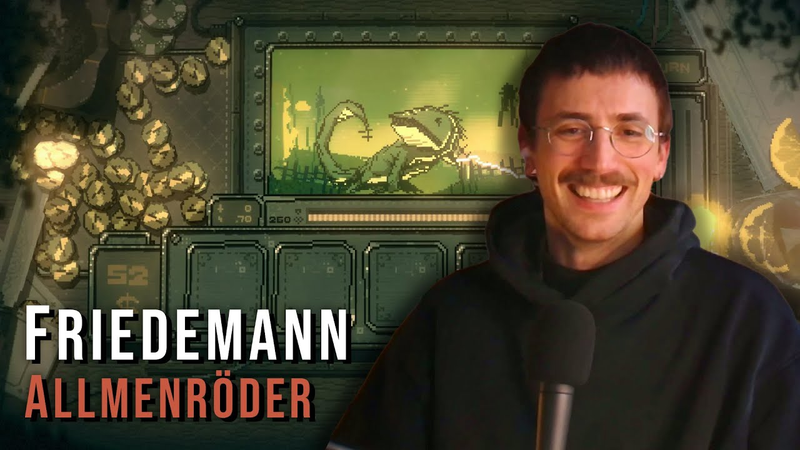
You (Probably) Can't Trust Game Dev Formulas
The modern game development landscape is defined by its inherent unpredictability, rendering rigid, universal formulas for success largely obsolete.
- Prioritize the core game idea over execution, as experienced developers often reach a point where technical execution is no longer the primary hurdle to creating a successful product.
- Develop a unique visual identity quickly by leveraging constraints; for example, the game Slots & Daggers established its final aesthetic in just two weeks by combining gestural iPad sketches with specific post-processing and lighting effects.
- Balance familiarity and novelty by ensuring a game is recognizable enough to not alienate players while offering a distinct hook, such as combining the established deck-builder rogue-like genre with a claw machine mechanic.
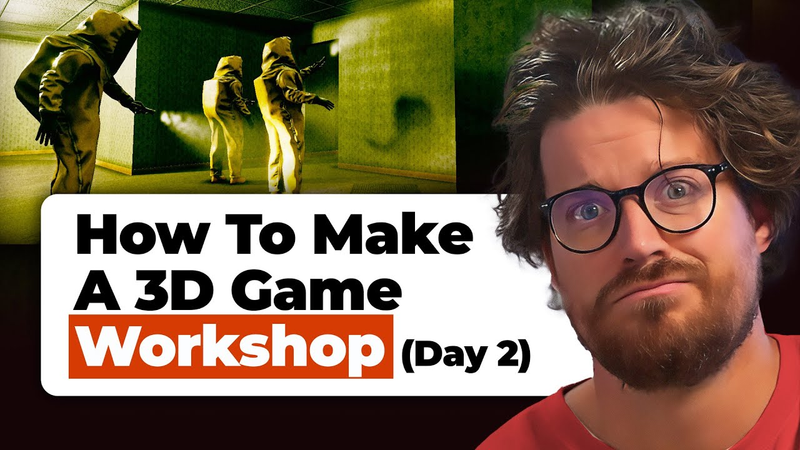
Workshop: How To Make A 3D Game (With No Experience) Day 2
Creating an immersive 3D environment in Unity requires a disciplined balance between technical performance and cinematic design.
- Optimize 3D performance in Unity by replacing resource-heavy point lights with optimized spotlights and using occlusion scripts to manage real-time shadow casting.
- Achieve a professional, 'lived-in' aesthetic by manually adjusting UVs and using horizontal texture tiling, similar to the design standards seen in Half-Life.
- Enhance immersion by applying decals to break up repetitive textures and standardizing audio levels to a range between -12 and -6 dB.

How To Make Games In 2026, 6 Years On 1 Game, Making Custom Engines (Edmund McMillen & Tyler Glaiel)
The modern independent game development landscape is defined by a tension between rapid, hyper-focused production cycles and the enduring viability of long-term, ambitious projects.
- Long-term projects like Mewgenics remain commercially viable by prioritizing unique, infinitely replayable gameplay over industry trends that favor shorter development cycles.
- Custom C++ engines can increase creative control by bypassing standard visual editors in favor of streamlined pipelines, such as integrating Adobe Animate for modular, vector-based character generation.
- Design philosophy should embrace intentional imbalance to drive player engagement rather than striving for perfect, sanitized equilibrium.

Arguing With Chris Zukowski About "Friend Slop" And "Cheap Games" | Ep. #057
The independent game industry is currently undergoing a structural shift toward high-velocity development, moving away from multi-year production cycles in favor of smaller, agile projects.
- Indie developers are finding higher success rates and better mental health outcomes by pivoting from multi-year projects to smaller, faster development cycles of 4 to 6 months.
- The current indie game market is characterized by the emergence of new, rapidly evolving genres—including 'friend slop,' idle games, horror, simulation, and auto-battlers—which allow developers to define the boundaries of a new creative frontier.
- Many of these high-performing, smaller-scale games are heavily influenced by the 'Roblox' design philosophy, which emphasizes rapid iteration and accessible, fun-focused mechanics.

Not Just Discord: Minimap Builds the Next Gaming Hub
Minimap functions as a centralized, data-driven ecosystem designed to consolidate the fragmented gaming landscape into a singular, profile-based hub.
- Minimap functions as a data-driven community platform for gamers, combining social features with a proprietary database of over 160,000 games to provide insights into player behavior.
- The platform enables targeted marketing campaigns for publishers like Capcom, Sony, and Smilegate by leveraging psychographic data based on actual player history rather than just broad demographics.
- A recent campaign for Monster Hunter Wilds on the platform's integrated e-store resulted in 4,000 game sales within one month, demonstrating the platform's ability to drive both user acquisition and direct revenue.

Let's Review Your Games — Ep. 033
Indie game development requires a rigorous focus on technical stability, marketability, and the strategic implementation of game feel to ensure commercial viability.
- Prioritize cross-platform testing across diverse monitor resolutions to prevent performance failures that alienate players and streamers, as technical stability is a prerequisite for commercial viability.
- Enhance combat intensity and enemy intelligence through audio design techniques like layering mechanical sound effects, pitch shifting, and spatialized audio rather than relying on complex mechanical overhauls.
- Avoid using problematic stock music to prevent copyright strikes, which can discourage streamers from showcasing a title and stifle organic growth.