indie
CompanyUnited States
Documents about indie
Nightmare Reaper: Doing a 1.0 Steam Release the Right Way
The transition from Early Access to a 1.0 full release on Steam represents a critical inflection point for indie developers.
- A successful 1.0 launch can drive massive momentum, as evidenced by Nightmare Reaper selling 10,400 units in six days—50% of its total volume accumulated over three years of Early Access.
- Strategic marketing for the 1.0 release, including a 70-streamer Twitch event and high-reach YouTube coverage, helped nearly double the game's wishlist from 39,000 to 75,000.
- Maintaining an 'Overwhelmingly Positive' review status throughout the development cycle is essential for securing long-term discoverability and consumer trust.

Apple’s $500MM Bet on Arcade and the Future of Mobile Gaming
Apple’s introduction of the Apple Arcade subscription service represents a strategic effort to diversify revenue streams and mitigate the impact of slowing hardware sales.
- Apple has earmarked approximately $500 million to fund the development of exclusive titles for its Apple Arcade subscription service.
- Apple is offering indie developers between $1 million and $3 million in funding per title to create exclusive games that are free of advertisements and in-app purchases.
- The service is a strategic effort to offset slowing iPhone hardware sales and declining app download volumes by shifting focus toward subscription-based services.
The Best Slides I Saw at GDC 2019
This analysis highlights key marketing insights and strategic takeaways presented at the 2019 Game Developers Conference (GDC).
- Modern game sales have shifted from a launch-day peak model to a 'long burn' trajectory, where revenue growth in the second month can significantly outperform initial launch week figures compared to 2014 trends.
- Developers should utilize lead magnets, such as offering free content in exchange for email addresses, to effectively build mailing lists and drive marketing spikes.
- When pitching to platforms like Steam or Sony, developers must engage with two distinct internal departments: the Content team, which evaluates game quality, and the Promotion team, which handles store marketing.
Decorticating Dead Cells: A Business and Marketing Deep Dive
The successful commercialization of the indie title Dead Cells relies on a rigorous, data-driven approach to competitive analysis and community-focused development.
- The development of Dead Cells cost approximately $800,000, with the team allocating $70,000 toward events and $50,000 for a trailer that primarily served to facilitate press coverage rather than drive direct sales.
- Competitive analysis should involve playing all games within a genre and using tools like NoScope or Social Blade to track viewership trends and identify key features like modular design and late-game content.
- Early Access strategy requires transparency regarding development timelines and a focus on building community rapport by explicitly highlighting how player feedback has influenced game updates.
Boyfriend Dungeon: The Secrets of Their Email Marketing Strategy
The email marketing strategy for the indie game Boyfriend Dungeon demonstrates the effectiveness of narrative-driven, character-focused communication during a crowdfunding campaign.
- Frequent communication during a campaign does not cause mass unsubscribes; Kitfox Games sent six unique emails to 6,868 subscribers during their Kickstarter, resulting in only a 2% unsubscribe rate.
- Email marketing is a high-conversion channel, as the campaign generated 1,212 total clicks to the Kickstarter page and contributed to a 'Direct Traffic' segment that accounted for over $76,000 CAD in pledges.
- Practicing a 'give-give-give-ask' strategy—where developers provide exclusive, story-driven content like character backstories or 'love letters'—increases audience engagement and prevents the perception of spam.

The 2018 Overall Salary Survey: CIS Region
The 2018 Overall Salary Survey examines compensation trends within the game development industry across the Commonwealth of Independent States (CIS) region.
- The median annual salary in the CIS game development sector fell by 7.4% in 2018, dropping from $16,800 in 2017 to $15,600.
- The gender pay gap widened significantly, with the difference in annual median compensation increasing from $4,800 in 2017 to $6,000 in 2018.
- While the gender ratio in the industry remained constant at 27% women and 73% men, the median salary for women decreased by 10% year-over-year.
What We Can Learn From Indie Fiction Authors
The indie fiction publishing market offers a blueprint for sustainable game development in an increasingly crowded digital landscape.
- Build and actively manage a mailing list to capture leads, as it is the primary tool for driving immediate reviews and sales during new product launches.
- Increase production velocity by releasing more games faster, as statistical trends in indie publishing suggest that 20% of titles often generate 80% of total income.
- Maintain strict genre consistency across your portfolio to ensure store algorithms correctly categorize your products and to build a loyal, predictable customer base.
What Nintendo Power Can Teach Us About Indie Game Marketing
The primary objective of this analysis is to demonstrate how indie game developers can adapt the marketing strategies of the legacy publication Nintendo Power to build sustainable, community-focused mailing lists.
- Adopt a 'give-give-give-ask' strategy for email marketing, where you provide three pieces of high-value content for every one sales-focused email to maintain audience engagement and increase open rates.
- Use email lists rather than social media for marketing because email offers greater permanence and direct reach to an audience that has explicitly opted in to hear from you.
- Create 'lead magnets' by offering exclusive, immediate value—such as cheat codes, strategy guides, or concept art—to incentivize new subscribers to join your mailing list.
Your First Indie Game Failed? Here Is What to Do Next
The primary purpose of this guidance is to reframe the experience of a failed debut indie game as a necessary, foundational step in building a sustainable game development business.
- Treat a failed game launch as the start of a long-term business rather than an end, focusing on building a loyal fan base through sustained engagement rather than initial sales volume.
- Implement a mailing list signup form directly within the game, incentivizing signups with 'lead magnets' like exclusive playable characters, bonus levels, or unique in-game items.
- Provide exceptional, personalized customer support by responding to every email, tweet, and forum post to convert early adopters into long-term evangelists.
5 Reasons Why You Need to Build an Email List
Email marketing serves as a critical, foundational component for independent game developers aiming to cultivate a sustainable fan base and drive game sales.
- Email marketing generates significantly higher engagement than social media, with average click-through rates of 20% compared to as low as 2% on platforms like Twitter.
- Email lists provide a durable, owned asset that is not subject to the algorithmic changes, platform volatility, or potential obsolescence of third-party social media companies.
- Email allows for granular audience segmentation, enabling developers to tailor content based on subscriber behavior, engagement levels, or how the user originally joined the list.
Don't Blame Marketing for Product Failures
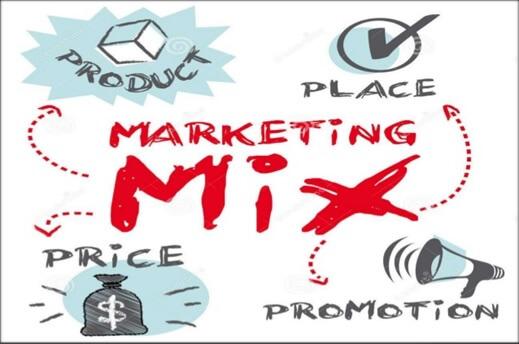
The primary thesis asserts that mobile game developers often misattribute commercial failure to poor marketing when the root cause is frequently a flawed product.
- Marketing is not limited to promotion and advertising; it encompasses the full '4 P's' framework: Product, Price, Place, and Promotion.
- Indie developers often fail because they treat marketing as an external task for promotion rather than integrating it into the core product design and development cycle.
- For mobile free-to-play games, traditional press releases and game reviews are ineffective because they primarily attract early adopters who lack long-term retention.
Mobile Gaming Leaders: May 2016
The mobile gaming landscape in May 2016 was defined by the dominance of simple, highly accessible titles that catered to short, idle play sessions.
- Slither.io was the most downloaded mobile game in the U.S. during May 2016, achieving nearly 9 million combined downloads on the App Store and Google Play.
- Approximately 70% of Slither.io's total downloads originated from iOS users, contributing to a cumulative U.S. download count exceeding 20 million.
- Ubisoft’s Hungry Shark World ranked as the second most downloaded game overall in May 2016, securing 4.28 million U.S. downloads across both platforms.