
Heart Machine
CompanyUnited States · Founded 2013
We love creating adventures with engaging stories in beautiful, vibrant worlds. Creators of the award-winning Hyper Light Drifter and Solar Ash. Working on Hyper Light Breaker. Based in LA with incredible team members across the globe.
Connections
Each row is a game or company named alongside Heart Machine, each column a document, oldest first. A mark means that document names it. Select a row to see those documents.
About the company
- Founded
- 2013
- Country
- United States
Company data from IGDB.com
Documents about Heart Machine

Noxious Fumes
Nathan Brown's Hit Points newsletter (issue #397, September 2026) argues that the western triple-A industry should answer its crisis by copying Japan, and Capcom in particular, rather than waiting for sweeping fixes like AI or the overthrow of capitalism.
- The Western triple-A game industry is facing an existential crisis driven by unsustainable development costs, prompting calls for a shift toward the financially disciplined model used by Japanese developers like Capcom.
- Capcom maintains profitability by keeping budgets in check, retaining long-term staff, and avoiding decade-long development cycles for tentpole franchises like Resident Evil and Monster Hunter.
- The industry is increasingly reliant on 'Myhrvold’s Law,' where software expands to fill available computing power, leading to bloated development that many industry experts argue must be reined in.

Game File: News Round-up
Stephen Totilo's September 17, 2026 Game File round-up opens with Blizzard's unusually early announcements at Blizzcon: Diablo V for 2029 and an open-world first-person shooter called StarCraft for 2030.
- Nearly 86% of Japanese game developers now use generative AI in their work, a significant increase from 51% in 2025.
- Roblox is launching a 'Play Roblox Everywhere' initiative to allow its games to run as standalone apps on PC, mobile, and consoles, as well as in web browsers, to capture 10% of the global gaming market.
- Indie studio closures and layoffs continue, with Heart Machine laying off nearly its entire staff after funding was pulled and Polyarc announcing its closure after 12 years.
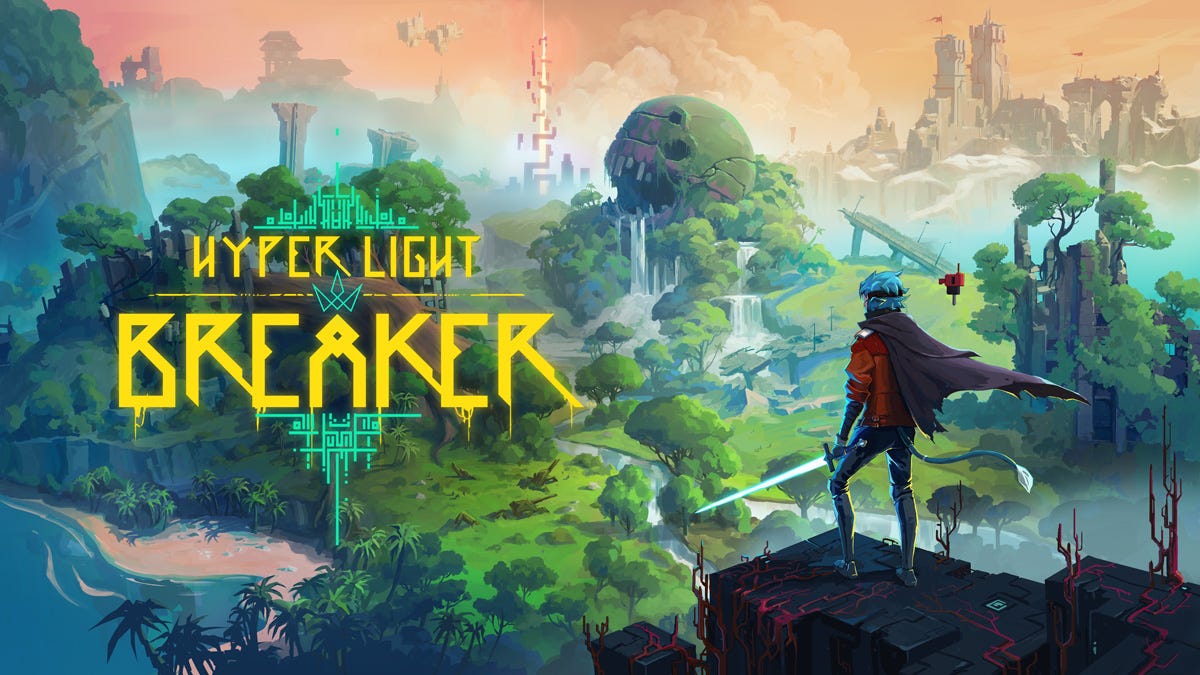
Hyper Light Breaker's Michael Clark: "We want our true believers to feel their faith in us is rewarded."
This document presents an interview with Michael Clark, Lead Producer for Heart Machine's game Hyper Light Breaker, discussing the game's challenging Early Access launch and the studio's strategy for addressing player feedback.
- Hyper Light Breaker currently holds a 63% approval rating on Steam based on over 2,500 reviews, prompting Heart Machine to prioritize addressing player feedback regarding difficulty curves and core gameplay systems.
- Heart Machine is committing to a year-long development roadmap focused on expanding content, specifically adding new biomes, bosses, and playable characters to improve the game's value proposition.
- The studio transitioned to procedural generation for this title to avoid the rigid content creation constraints that hindered the development of their previous game, Solar Ash.

Getting Cozy with the Zombie Apocalypse: The Saferoom as Capitalist Breakroom in Left 4 Dead and Back 4 Blood
Caighlan Smith, a PhD candidate at Memorial University of Newfoundland, examines how players experience coziness in the saferooms of Left 4 Dead, Left 4 Dead 2, and Back 4 Blood, fast-paced first-person shooter zombie games.
- The author describes saferoom coziness as a reward for completing stressful zombie-killing work, which reflects the work/leisure divide of capitalism.
- The article identifies the saferoom as offering temporal and spatial reprieve from the stress of the level, drawing on Waszkiewicz and Bakun's concept of situational coziness.
- Saferooms provide resource abundance that contrasts with the scarcity of normal gameplay, in Left 4 Dead through spawned weapons and med-kits and in Back 4 Blood through a copper-funded shop.


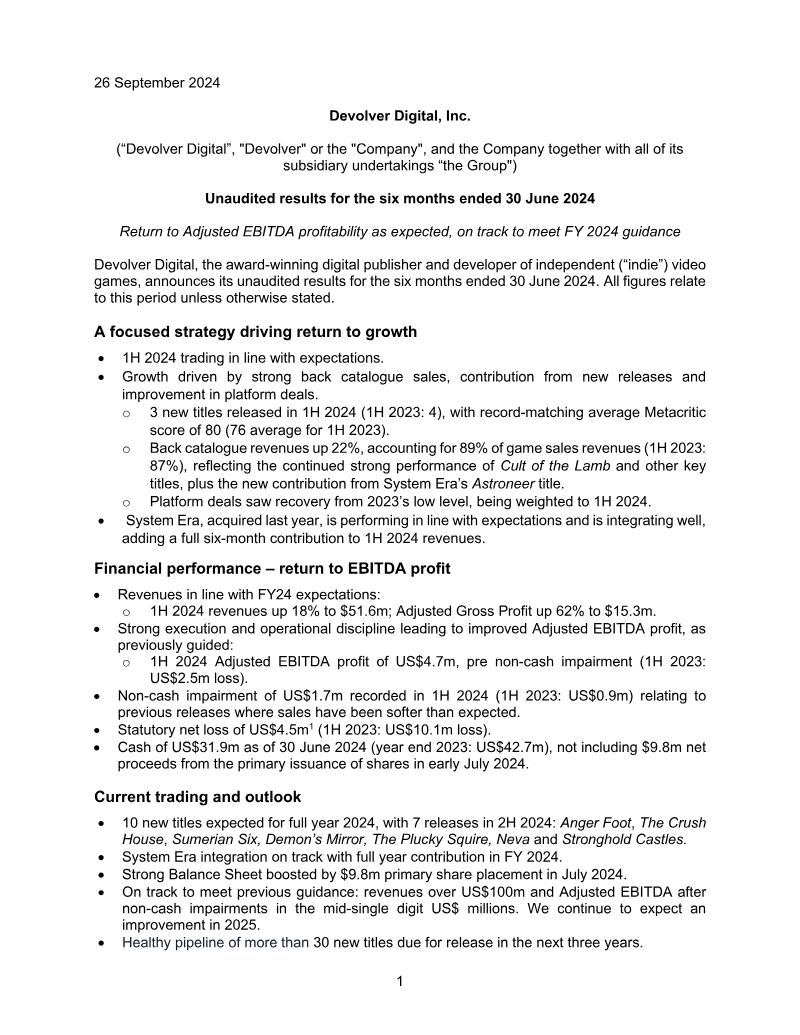
Devolver Digital Unaudited Results: Six Months Ended 30 June 2024
Devolver Digital, Inc., an indie video game publisher and developer registered in Wilmington, Delaware, released unaudited results for the six months ended 30 June 2024, prepared under IFRS and presented on a group basis.
- Group revenue rose 18% to US$51.6 million in the first half of 2024, with gross profit up 62% to US$15.3 million.
- Back catalogue titles generated 89% of game sales revenues in 1H 2024, up from 87% a year earlier.
- Adjusted EBITDA before performance-related impairments was a US$4.7 million profit, compared with a US$2.5 million loss in 1H 2023.
How the Triple‑I Initiative Shakes Up the Streaming Showcase Space
The Triple-I Initiative, a new streaming-only showcase, aims to elevate independent game creators by providing a platform distinct from AAA-dominated events.
- Independent studios face a tightening funding environment as the era of lucrative exclusivity deals and guaranteed Game Pass support has largely subsided.
- No third-party VR titles launched on the Meta Quest store in 2023 surpassed $10 million in gross revenue, with top performers like Assassin’s Creed Nexus VR generating between $3 million and $7 million.
- Established 'evergreen' VR titles like Golf+ and Blade & Sorcery: Nomad have reached lifetime gross revenues approaching $100 million, highlighting a significant performance gap between legacy hits and new releases.
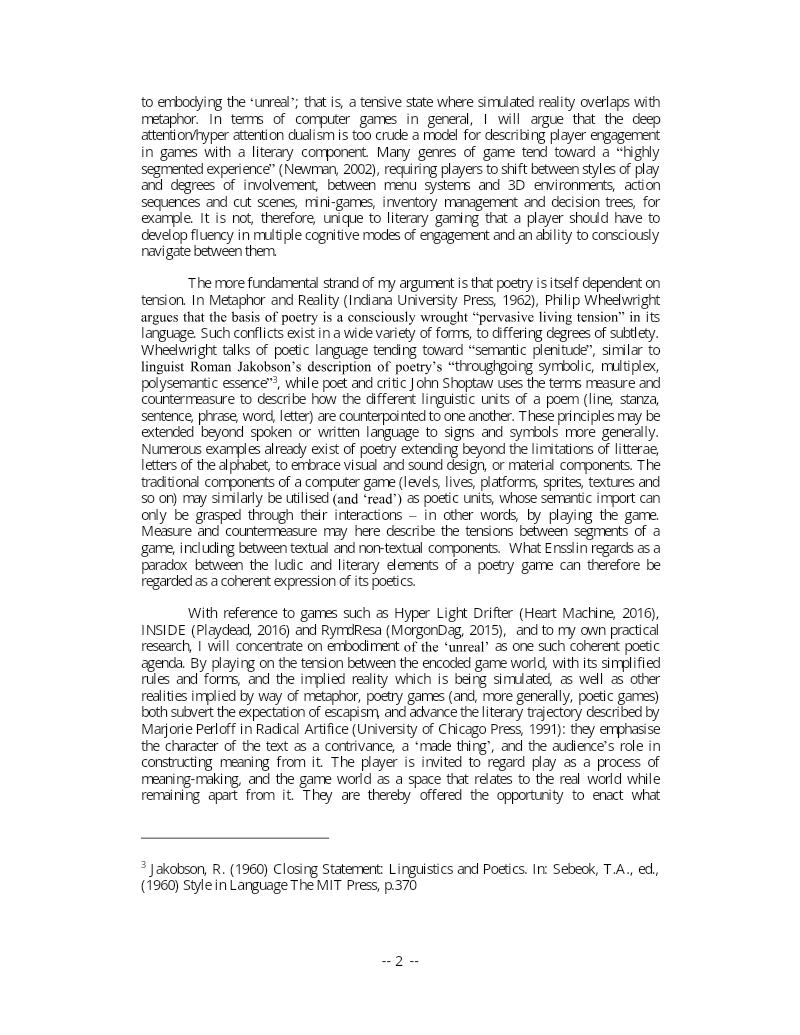

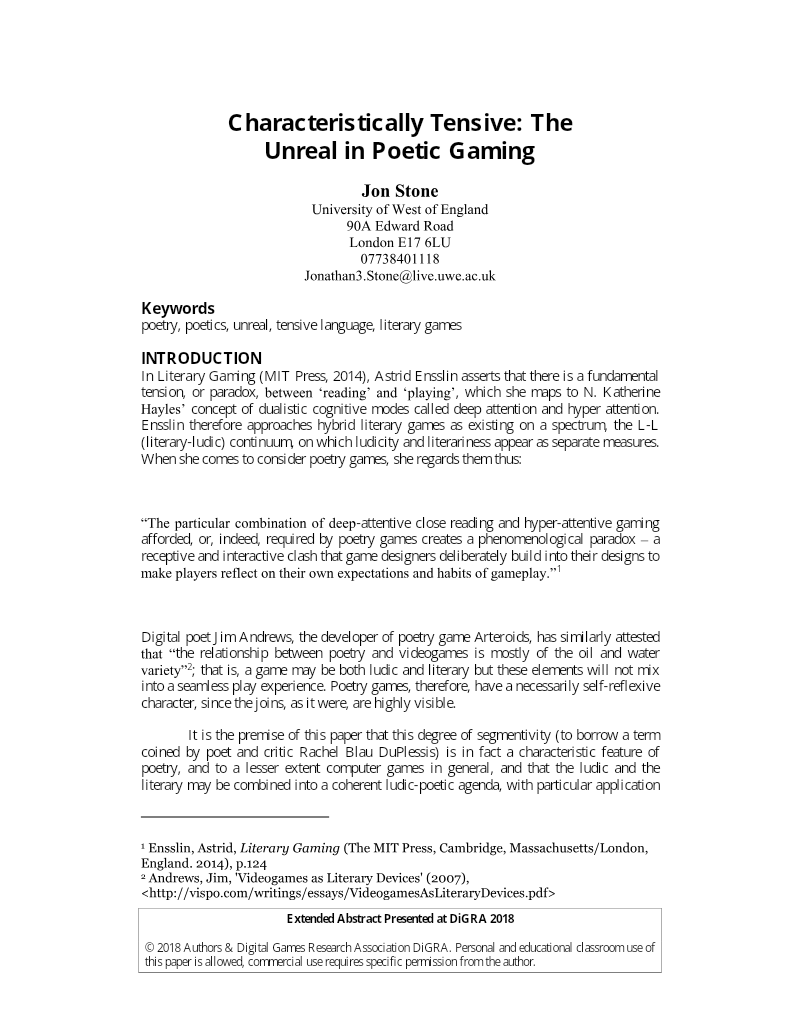
Characteristically Tensive: The Unreal in Poetic Gaming
This extended abstract, presented at DiGRA 2018, argues that the perceived tension between the ludic and literary elements in poetry games is not a paradox but a characteristic feature of both poetry and, to a lesser extent, computer games in general.
- The paper argues that tension between ludic and literary elements in poetry games is not a flaw to be resolved but a coherent expression of poetics, and that this tensive quality is characteristic of poetry itself.
- It challenges Astrid Ensslin's model of poetry games as a paradox between deep and hyper attention, arguing the dualistic model is too crude because many game genres already require players to shift between menus, 3D environments, cut scenes, and decision trees.
- Drawing on Philip Wheelwright, Roman Jakobson, and John Shoptaw, the paper extends principles of poetic tension from written language to game components such as levels, sprites, and textures, which gain semantic meaning only through interaction.
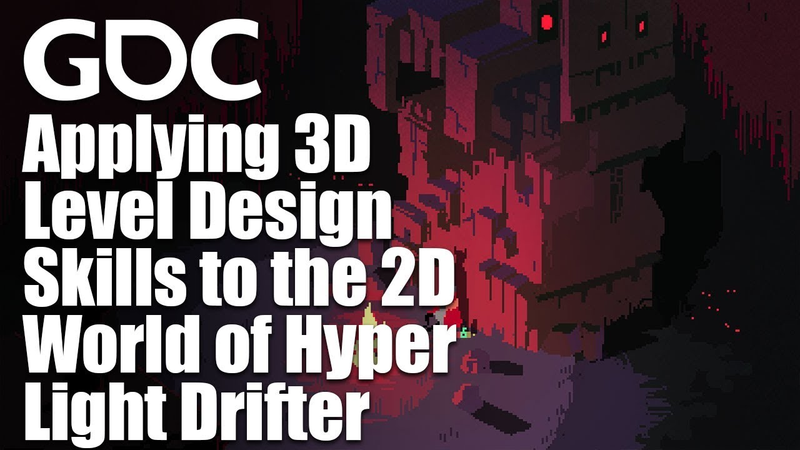
Applying 3D Level Design Skills to the 2D World of Hyper Light Drifter
Core level design principles are fundamentally universal, transcending the technical divide between 3D action titles and 2D environments.
- Level design principles are highly transferable between 3D and 2D; core concepts like 'prospect and refuge'—the contrast between vulnerable open areas and safe, enclosed spaces—remain effective regardless of the game's dimensionality.
- Instead of using a subtractive 'sculpting' method to block out levels, designers can use a metrics-driven approach by establishing fixed distances for movement and combat, then growing the level outward from those connected pieces.
- In 2D overhead games like Hyper Light Drifter, designers can effectively use camera locks to isolate combat encounters, forcing player focus and creating distinct, self-contained pacing beats.
Still Grooving: Game Dev Life Set to Live Music
This presentation explores the emotional and professional realities of independent game development, focusing on the lifecycle of the title Hyper Light Drifter.
- Developers should prioritize creative 'love' and thematic resonance over exhaustive perfectionism, as the core player experience is defined by atmosphere rather than just mechanical systems.
- The labor invested in game development acts as a value multiplier, where thousands of hours of team effort can generate hundreds of years of collective engagement for the global player base.
- A sustainable career requires rejecting rigid work-life balance models in favor of a fluid, rhythmic approach to productivity that emphasizes intentionality and variety.
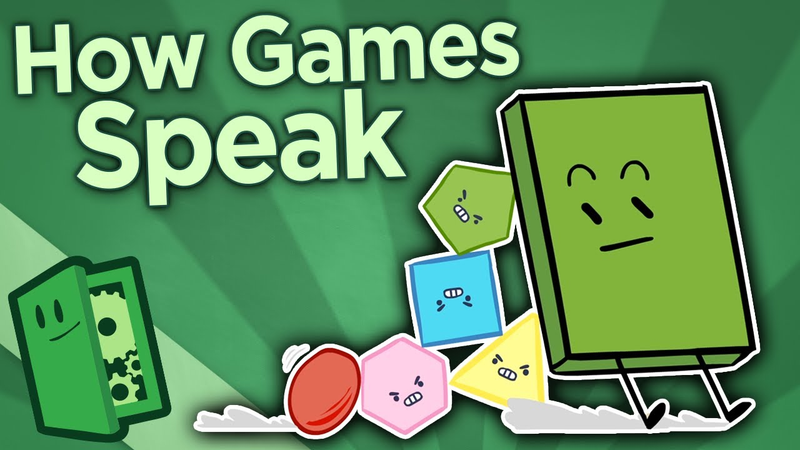
How Games Speak - Learn the Language of Design - Extra Credits
Game design functions as a sophisticated language, utilizing a system of arranged elements to communicate complex ideas and experiences to players.
- Game design functions as a hierarchical language consisting of three layers: isolated, associative, and dynamic meaning.
- Dynamic meaning is the most potent layer, utilizing narrative twists and systemic responses to create a dialogue that explores complex themes like violence or human relationships.
- Associative meaning occurs when individual elements are combined to create experiences greater than the sum of their parts, such as linking visual recoil and sound effects to define combat feel.
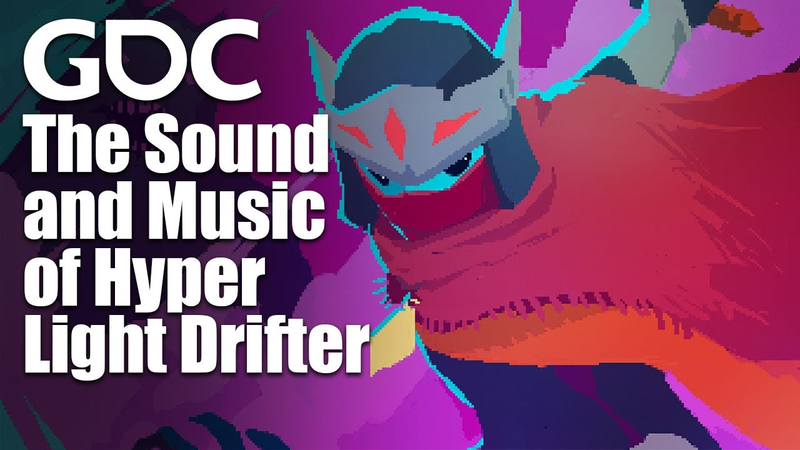
The Sound and Music of Hyper Light Drifter
The audio development of Hyper Light Drifter centers on the creation of a unique, immersive sonic identity through experimental recording techniques and a highly iterative collaborative process.
- The audio team utilized unconventional field recording techniques, such as using a stethoscope modified with a garden hose spigot to record internal body sounds like blood flow, which were then processed and distorted to create ambient textures for boss battles.
- To achieve a unique, 'nightmarish' aesthetic, the developers used a 1950s wire recorder—purchased for $250—to capture and manipulate raw, historical audio, creating distorted textures that predated modern digital recording artifacts.
- The sound design process relied heavily on extreme processing of organic sounds, such as recording the creator's own voice squealing like a pig or using wolf vocalizations, which were then pitch-shifted and layered to create distinct, terrifying creature audio.
The 2017 Game Developers Choice Awards
The 2017 Game Developers Choice Awards served as a comprehensive celebration of the industry’s evolution, balancing commercial blockbusters with innovative independent titles.
- Overwatch was named Game of the Year at the 2017 Game Developers Choice Awards, reflecting its significant cultural impact during that period.
- The 2017 awards ceremony formally recognized the industry's expansion into new platforms by establishing a dedicated virtual reality category, with Job Simulator winning the inaugural award.
- Pokémon Go was highlighted for its role in driving mobile innovation, underscoring the industry's shift toward diverse and accessible gameplay experiences.