Futureplay
Company
Documents about Futureplay

How to Make a Creative Agency Your Secret Weapon
Creative agencies serve as a strategic catalyst for gaming studios, helping to bridge the gap between product development and effective market positioning.
- Creative agency partnerships can drive significant growth, as evidenced by Futureplay’s Merge Garden, which saw a 1000% surge in downloads and doubled player retention after a strategic collaboration.
- Studios should shift from a reliance on short-term performance marketing, which often promotes the broader game category, toward a sustainable model that integrates brand building with performance tactics.
- Engaging a creative agency typically requires a four-to-six-month commitment, beginning with a discovery phase to align stakeholders before moving into narrative and asset production.

How to Overcome Post-Launch Slump: The Case of Merge Gardens
The mobile game Merge Gardens serves as a primary case study for overcoming a post-launch performance plateau through strategic product and marketing pivots.
- Futureplay’s Merge Gardens reversed a post-2021 performance plateau through a comprehensive 'soft reboot' that restored growth over a two-year period.
- The developers integrated previously independent Match-3 and merge loops by requiring players to complete narrative-driven quests that utilize both gameplay styles.
- The product shift replaced utilitarian characters with a story-driven framework centered on a protagonist named Daisy, supported by high-production cinematic marketing.

How Futureplay Leverage GameRefinery to Make the Right Games at the Right Time
Futureplay utilizes data-driven market intelligence to align game development with current industry trends, ensuring their titles achieve product-market fit.
- Futureplay utilizes a four-step market research framework—mapping, segmenting, positioning, and competitor analysis—to reduce the role of luck in game development and ensure product-market fit.
- The company successfully transitioned from idle games like 'Idle Farming Empire' (2015) to IAP-based titles like 'Battlelands Royale' by using data-driven insights to identify new growth opportunities.
- Market mapping involves filtering out segments that fall short of revenue goals or do not align with a studio's specific domain expertise and development capabilities.
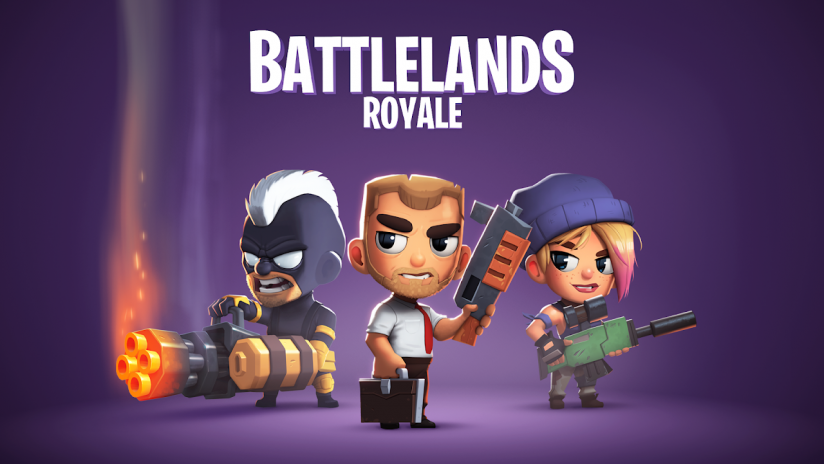
Battlelands Royale: Contender or Pretender?
Futureplay’s Battlelands Royale serves as a case study for the viability of mobile-first Battle Royale games, specifically examining whether a simplified, fast-paced design can compete with industry giants like Fortnite and PUBG.
- Despite achieving nearly 7 million downloads in its first two months of release, Battlelands Royale failed to monetize effectively, earning only $450,000 across iOS and Android.
- The game failed to crack the top 500 grossing apps despite peaking near the top 10 in download rankings, indicating a significant disconnect between user acquisition and long-term retention.
- Futureplay optimized the Battle Royale formula for mobile by reducing match sizes to 32 players and limiting session times to under five minutes to ensure rapid, bite-sized gameplay.

How GameRefinery Has Helped Futureplay Games Prioritize the Right Features
This case study examines how Futureplay Games utilizes the GameRefinery analytics platform to optimize mobile game development and feature prioritization.
- Futureplay Games uses GameRefinery to replace subjective, hearsay-based feature prioritization with analytical data to identify which updates are most likely to improve revenue.
- The platform allows developers to model existing titles and receive data-driven suggestions on feature implementation within one hour.
- GameRefinery automates the time-consuming process of tracking competitor updates, providing notifications on effective feature changes that would otherwise require a full-time analyst to monitor.