Idle
Documents

🐱 A Cat Shooting Trees: Idle Cat Gunner & the best creatives of the Year
Idle Cat Gunner has emerged as a dominant force in the mobile idle gaming sector, currently securing the number two position for in-app purchase revenue within its category. The title generates between $200,000 and $250,000 in daily revenue by synthesizing a highly accessible gameplay loop with aggressive, multi-faceted monetization tactics. By stripping away complex mechanics such as enemy AI or defensive requirements, the game focuses on a simplified progression model where players merge weaponry to overcome time-gated damage checks against static targets. This minimalist design philosophy facilitates high player retention and creates a frictionless environment for integrating rewarded ads, offer walls, and permanent utility purchases.
The commercial success of the game is bolstered by a sophisticated monetization architecture that includes battle passes, auto-upgrade packages, and tiered offers. These systems are supported by a robust LiveOps strategy that ensures consistent engagement and long-term player investment. By catering to a broad casual audience, the game has successfully surpassed the performance benchmarks of previous cat-themed titles, establishing a new standard for profitability in the idle genre.
User acquisition strategies rely heavily on high-volume, meme-driven creative assets that leverage humor and relatable narratives. By utilizing AI-generated content and diverse scenarios—such as revenge-themed plots and RPG-style tropes—the marketing team maintains high engagement across major social platforms. This commitment to rapid creative testing allows for effective scaling, ensuring that the game remains visible and appealing to a wide demographic. Ultimately, the combination of streamlined core mechanics, aggressive monetization, and innovative advertising positions the title as a top-tier performer in the contemporary mobile gaming landscape.
- Idle Cat Gunner currently generates between $200,000 and $250,000 in daily revenue, securing the number two position for in-app purchase revenue in the mobile idle gaming category.
- The game utilizes a minimalist design that removes complex mechanics like enemy AI and defensive requirements, focusing instead on a simplified merge-weaponry progression loop.
- Monetization is driven by a multi-faceted architecture that includes battle passes, auto-upgrade packages, tiered offers, rewarded ads, and offer walls.
- The title maintains long-term player investment and engagement through a robust LiveOps strategy and a frictionless environment for permanent utility purchases.
- User acquisition relies on high-volume, meme-driven creative assets, including AI-generated content and RPG-style tropes, to maintain engagement across social platforms.

⛏️ One Guy, No Ads, No Tutorial, $100K/Day: The Idle Obelisk Miner Story
Idle Obelisk Miner represents a significant departure from contemporary mobile gaming standards, demonstrating that a solo-developed title can achieve exceptional financial performance by rejecting industry-standard monetization and design tropes. By eschewing intrusive advertisements, mandatory tutorials, and modern user interface trends, the game cultivates a minimalist, old-school aesthetic that resonates with a dedicated, hardcore audience. This anti-mobile philosophy prioritizes deep, unfolding progression mechanics and granular quality-of-life features over mass-market accessibility, effectively fostering a highly engaged community that values authentic, complex gameplay.
The financial metrics of the title are particularly notable, as the game generates approximately $100,000 in daily revenue from a relatively modest volume of 4,000 to 5,000 daily downloads. This results in an impressive revenue-per-download figure of roughly $13, a testament to the game’s high spend-depth and the efficacy of its player-friendly economic model. With a stable base of 50,000 daily active users and a robust community of over 57,000 members on Discord, the game proves that specialized, developer-led design can outperform mainstream titles that rely on aggressive user acquisition and ad-based revenue streams.
Growth for the project is driven primarily by organic reach and strategic influencer partnerships rather than paid user acquisition. By maintaining a balanced, transparent economy and avoiding the pop-ups and predatory monetization common in the idle genre, the developer has secured long-term retention among veteran players. Ultimately, the success of Idle Obelisk Miner serves as a case study for the viability of niche-focused development, highlighting how prioritizing community trust and mechanical depth can yield superior unit economics in the competitive mobile landscape.
- Idle Obelisk Miner generates approximately $100,000 in daily revenue from only 4,000 to 5,000 daily downloads, resulting in a high revenue-per-download figure of roughly $13.
- The game achieves financial success by rejecting industry-standard monetization, specifically eschewing intrusive advertisements and predatory pop-ups in favor of a player-friendly economic model.
- The title sustains a base of 50,000 daily active users and a Discord community of over 57,000 members by prioritizing deep, complex progression mechanics over mass-market accessibility.
- Growth is driven primarily by organic reach and strategic influencer partnerships rather than paid user acquisition, proving the viability of niche-focused development.
- The developer successfully employs an anti-mobile design philosophy that omits mandatory tutorials and modern UI trends, appealing to a hardcore audience that values authentic gameplay.
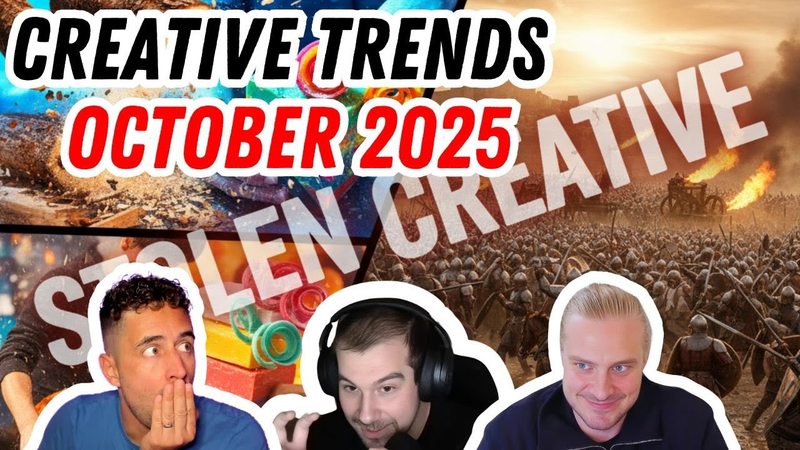
💥 Creative THEFT era has begun. Direct 1:1 stolen ads perform 4-5x better. Would you run them?
The mobile gaming industry has entered a transformative phase characterized by the widespread adoption of direct creative replication, a practice often termed Creative Theft 2.0. Rather than investing in original asset production, studios are increasingly identifying high-performing advertisements from disparate genres and creating near-identical copies. This strategy leverages proven engagement hooks, such as ASMR-style content, puzzle-based simulations, and viral AI-driven transitions, to disrupt user pattern recognition. Data indicates that these replicated assets frequently outperform original creative work by a factor of four to five, providing a significant competitive advantage in user acquisition and cost-per-install efficiency.
This trend is driven by a market environment that prioritizes rapid optimization and performance metrics over intellectual property concerns. Major titles, including industry leaders like Last War and Royal Kingdom, have demonstrated that iterating on established, high-engagement concepts leads to substantial revenue growth. Even established franchises like Candy Crush are actively monitoring these cross-genre trends to maintain their market position. The practice has become so pervasive that it is effectively incentivizing a race to the bottom, where developers of all sizes feel compelled to abandon original creative strategies to remain viable in an increasingly crowded ecosystem.
While the rise of creative replication raises significant ethical questions and highlights a lack of formal industry regulation, current platform policies remain insufficient to curb the practice. As developers continue to prioritize speed and proven hooks, the industry is shifting toward a model where the ability to identify and rapidly deploy successful trends is more valuable than creative innovation. Consequently, the future of mobile user acquisition appears tethered to the continuous recycling and refinement of existing ad concepts, ensuring that the cycle of creative theft remains a dominant force in the global mobile gaming market.
- Direct replication of high-performing ads is now a dominant strategy, with copied creative assets frequently outperforming original content by a factor of 4 to 5.
- Major industry titles, including Last War and Royal Kingdom, are actively utilizing near-identical copies of successful ad concepts to drive significant revenue growth.
- The mobile gaming industry is shifting toward a model where the ability to identify and rapidly deploy proven trends is prioritized over original creative innovation.
- Even established market leaders like Candy Crush are monitoring cross-genre ad trends to maintain their competitive position in the ecosystem.
- Current platform policies are insufficient to regulate creative theft, effectively incentivizing a race to the bottom where developers abandon original strategies to remain viable.

🏰👠 The Tower GD Masterclass Review: The ultimate Cinderella story
The Tower serves as a compelling case study in the mobile free-to-play market, demonstrating that deep mechanical complexity and community-driven engagement can generate substantial revenue, even in the absence of high-fidelity art or traditional production values. With over $50 million in total revenue and daily earnings peaking at $80,000, the game proves that minimalist, Excel-like interfaces can sustain long-term player retention when paired with robust progression systems and high-stakes decision-making. By prioritizing a core loop centered on macro-management and grinding, the project has successfully captured a dedicated audience that favors long, uninterrupted gameplay sessions over conventional energy-based monetization models.
Operating with a lean team of four full-time employees and a network of contractors, the project highlights the efficacy of strategic outsourcing and iterative, community-led development. Approximately half of the game’s installs are derived organically from a highly active Discord community and a creator code program, while the remainder is supported by disciplined paid user acquisition. This hybrid growth strategy allows for consistent updates that increase lifetime value without requiring the massive marketing budgets typical of larger studios. The developer’s transition from chemical engineering to game design underscores the potential for individual creators to achieve significant scale through a focus on player-centric design and consistent live operations.
Despite this success, there remains untapped potential in the game’s monetization and marketing infrastructure. While the current model effectively utilizes permanent in-app purchases and offer walls, the "remove ads" feature is arguably too generous, potentially limiting revenue growth. Furthermore, reliance on a limited set of ad mediation partners suggests that the team could further optimize earnings by diversifying into higher-performing networks. Ultimately, the game stands as a testament to the power of smart design, proving that niche titles can thrive by fostering deep player investment and maintaining a lean, agile operational structure.

💰 Ad Monetization Trends - Prison games take over by Felix Braberg
The mobile gaming market is currently experiencing a significant shift in simulation and idle arcade genres, characterized by a widespread transition toward prison-themed titles. This trend mirrors the previous dominance of supermarket-themed simulators, with developers increasingly reskinning existing successful mechanics to leverage the broad appeal of prison narratives. This thematic pivot is supported by effective user acquisition strategies, as evidenced by the success of 4X games like Lands of Jail, which have demonstrated that prison themes resonate strongly with global audiences across both iOS and Android platforms.
Key industry players are employing aggressive ad-monetization loops to maximize revenue from these titles. Prison Life by Supercent, for example, generates an estimated $38 million annual run rate by utilizing a high-frequency mix of rewarded ads and interstitials, alongside a clever onboarding tactic that provides premium speed-up benefits for free to drive later conversion. Similarly, Prison Survival by Highgame utilizes a "convert or die" model, forcing users into interstitial ads if they decline rewarded opportunities, a strategy that remains highly effective for scaling in the current hypercasual landscape.
Other titles, such as Prison Escape Journey and Prison Escape Simulator, demonstrate the versatility of this theme by adapting supermarket simulator mechanics to prison settings. These games optimize revenue through strategic ad placement, such as utilizing interstitials at app open rather than standard app-open ad formats to achieve higher eCPMs. While banner ad performance continues to decline across the industry, the reliance on rewarded ads and frequent interstitial exposure remains the primary driver for these games, which often maintain high daily active user counts despite heavy ad loads. The trend suggests that prison themes will continue to dominate simulation charts as developers refine conversion funnels and creative user acquisition tactics.
- The mobile simulation and idle arcade genres are shifting toward prison-themed titles, replacing the previous market dominance of supermarket-themed simulators.
- Supercent's 'Prison Life' generates an estimated $38 million annual run rate by combining high-frequency rewarded ads with interstitials and a free-to-premium speed-up onboarding funnel.
- Developers are successfully reskinning existing supermarket simulator mechanics to fit prison settings, as seen in titles like 'Prison Escape Journey' and 'Prison Escape Simulator'.
- Highgame’s 'Prison Survival' utilizes a 'convert or die' monetization model that forces interstitial ads on users who decline rewarded ad opportunities.
- Strategic ad placement, such as triggering interstitials at app open rather than using standard app-open ad formats, is being used to achieve higher eCPMs.

🌾 Little Farm Story: SayGames’ New #1 Title. The Ad Simulator Farming.
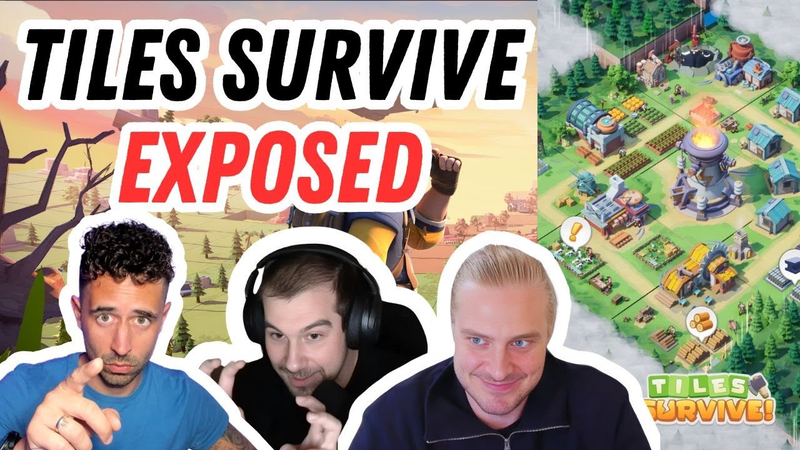
Tiles Survive Breakdown: FunPlus goes full Century Games
- FunPlus's 'Tile Survive' is currently scaling at approximately $50,000 in daily revenue with roughly 60,000 daily downloads since its launch in March.
- The game utilizes a simplified version of the 'Dark War' 4X playbook, focusing on streamlined onboarding, events, and gacha mechanics rather than complex systems.
- Unlike its predecessors, 'Tile Survive' integrates scripted road-collection encounters directly into the core progression, effectively gating player advancement behind specific exploration levels.
- The title relies heavily on aggressive, high-performing ad creatives that feature AI-generated memes, Minecraft-style hooks, and fake user-generated content, despite these elements often being absent from the actual gameplay.
- Despite initial scaling, the game's user base and retention metrics have shown a downward trend, suggesting that the current growth is heavily reliant on aggressive UA spending rather than long-term engagement.

How to 10x Your Revenue in a Tough Market by Paul West
- Fumb Games achieved a 10x revenue increase in 2024 by pivoting focus to proven niches, specifically rebranding a casual project into 'Idle Mine,' which generated $1 million in revenue within 60 days of launch.
- The studio shifted its monetization strategy to prioritize subscriptions, which now account for 80% of purchase revenue in their new titles, providing higher value than one-time in-app purchases.
- To scale UA, the studio moved away from a strict three-day payback window, opting for longer, more sophisticated payback periods while consolidating their ad network spend to the four most effective platforms.
- The team maintained simultaneous growth in both DAU and ARPDAU by implementing a high-frequency LiveOps schedule, featuring both weekend and midweek events that utilize reskinned gameplay to drive engagement.
- Fumb Games leveraged Bitcoin as a core mechanic to facilitate instant, fee-free micro-payouts to players, tapping into the 'free cash' incentive model to drive retention and monetization.
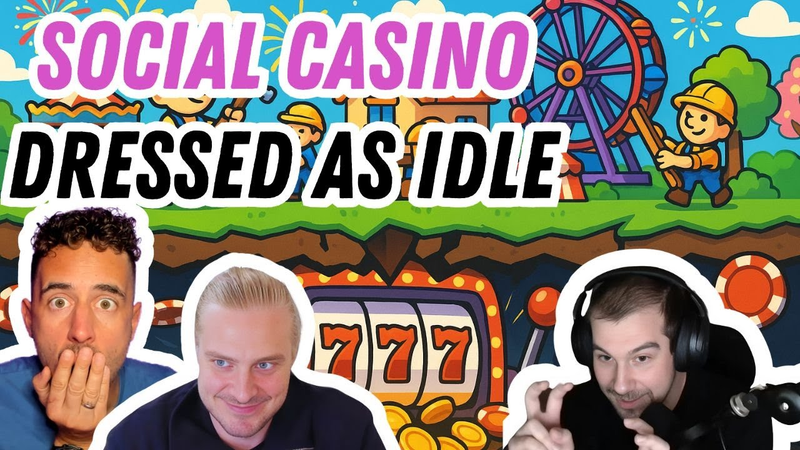
Carnival Tycoon’s Playbook: From Idle to Social Casino?
- Carnival Tycoon generates approximately $5 million in monthly revenue, positioning it as the fifth-largest social casino game despite marketing itself as an idle game.
- The game functions as a 'Trojan Horse' by using idle-game mechanics and approachable onboarding to mask a core loop that is fundamentally a social casino slot machine.
- Approximately 70% of the game's net revenue is derived from iOS, suggesting that rewarded ad placements are likely restricted to high-end Android devices or specific user segments.
- Rewarded ad implementation is strictly capped and integrated into the core loop to avoid cannibalizing social casino revenue, with users typically limited to a small number of impressions per session.
- The game's growth strategy relies on aggressive creative tactics, including the use of 'fake play' ads and assets inspired by other successful titles like Idle Lumber Empire to drive user acquisition.

🎮 Kingshot's Insane Genre Mix Explained! How Century Games’ New 4X Hooks Players & Payers
- Century Games has adopted a standardized 'template' strategy for Kingshot, essentially re-skinning the successful survival-city-builder mechanics of Whiteout Survival and Frozen City by layering them onto a 4X strategy framework.
- The core gameplay loop of Kingshot combines idle survival mechanics, such as resource management and base building, with traditional 4X alliance warfare and hero-based gacha progression.
- Kingshot utilizes aggressive user acquisition tactics, including fake gameplay mini-games and AI-generated character assets, to mirror successful creative trends observed in other top-performing mobile titles.
- The game features a seamless world map structure that allows for alliance-based raiding and troop formations, while monetizing time-gated progression through premium currency purchases.
- Century Games is actively diversifying its portfolio beyond its established hits, though recent attempts like Legend of Mushroom have shown that overly complex mechanics or niche art styles can struggle to gain traction.