FaZe Clan
Documents about FaZe Clan

FaZe Clan Chief Strategy Officer Kai Henry Resigns
The resignation of Kai Henry as Chief Strategy Officer of FaZe Clan, effective November 8, 2022, marks a notable leadership change within the esports organization. The departure was formally disclosed through a U.S.
- Kai Henry resigned from his position as Chief Strategy Officer of FaZe Holdings Inc. (NASDAQ: FAZE) on November 8, 2022.
- The resignation was confirmed via an SEC Form 8-K filing, which stated that Henry is not entitled to any severance or additional compensation under his executive employment agreement.
- FaZe Clan CEO Lee Trink characterized the departure as a mutual and amicable decision, noting that the company intends to continue collaborating with Henry on future projects.
Cloud Gaming, Post-mortem: The Afterlife of Defunct Cloud Services
This analysis examines the shifting landscape of the video game industry during a period of high inflation and market consolidation, focusing specifically on the transition of cloud gaming following the discontinuation of Google Stadia.
- Cloud gaming is shifting from consumer-facing platforms to a B2B model, where infrastructure providers offer white-label streaming services to telecom companies and major IP holders.
- The industry is moving away from centralized 'winner-takes-most' platforms toward a fragmented ecosystem of single-publisher services and specialized aggregators.
- Economic pressures, including a 10.9% inflation rate in Germany and rising debt-to-capital ratios for firms like Embracer Group, are forcing a strategic pivot in how cloud gaming is deployed.
FaZed and Confused: The $19 Million Sell-off of Esports Collective FaZe Clan
This analysis examines the acquisition of FaZe Clan by GameSquare for $18.5 million, a figure that represents a staggering decline from the organization’s initial $1 billion valuation.
- GameSquare acquired FaZe Clan for $18.5 million, marking a massive collapse from the organization's previous $1 billion valuation.
- Publicly traded esports organizations generated only $248 million in combined revenue in 2022, falling significantly short of the $1.6 billion industry-wide forecast for 2023.
- FaZe Clan’s failed growth strategy relied on unrealistic projections, including an attempt to scale revenue from $38 million to $651 million by 2025 through speculative ventures like NFTs and the metaverse.
Amusing Ourselves to Death: FaZe's Public Listing and Esports' Next Era
The public listing of FaZe Clan via a $1 billion SPAC merger marks a transition for esports from a niche competitive category into a diversified entertainment era.
- FaZe Clan’s $1 billion SPAC merger signals a shift for esports organizations from tournament-reliant entities to diversified media franchises.
- FaZe Clan aims to grow revenue from $38 million in 2020 to $651 million by 2025, representing a projected 1,200% increase over five years.
- The company’s business model relies on shifting monetization from $0.42 to $3.52 per fan, a target that faces skepticism due to the historically low monetization rates of the 13-34-year-old demographic.

IEM Cologne Major 2026: Schedule, Results, Standings and Viewership Stats
The IEM Cologne Major 2026 report outlines the tournament’s progression through Swiss Stage 2, detailing match results, standings, and evolving viewership figures.
- IEM Cologne Major 2026 Stage 2 viewership surged, averaging 33,000 more viewers per match compared to the 2025 StarLadder Budapest Major.
- Peak viewership for the tournament reached nearly 500,000 concurrent spectators during a comeback match between BIG and NRG.
- Stage 1 viewership experienced a decline compared to the 2025 Budapest event, attributed to the absence of marquee organizations including FaZe Clan, NiP, and Fnatic.

BB Team Claims First Win Over Team Vitality
The article reports BB Team’s decisive 2-1 victory over Team Vitality during the IEM Atlanta 2026 group stage, ending Vitality’s eight-match winning streak and marking BB Team’s first official win against the French squad since 2023.
- BB Team defeated Team Vitality 2-1 at the IEM Atlanta 2026 group stage, securing a playoff berth and ending Vitality’s eight-match winning streak.
- This victory marks BB Team’s first official win against Team Vitality since 2023 and makes them only the second team to defeat Vitality during the 2026 season.
- Team Vitality has been relegated to the lower bracket, where they face an elimination match against FaZe Clan.

Leading Esports Teams by Investment Raised
The ranking, compiled from publicly available CB Insights funding data by Minoru Toriyama of Osaka Seikei University, identifies T1 as the most funded esports organization worldwide with roughly $100 million disclosed investment.
- T1 leads global esports organizations with approximately $100 million in disclosed investment, followed closely by Team Vitality ($98.4 million) and 100 Thieves ($97.5 million).
- T1 demonstrates that high capital investment can drive sustainable business models, evidenced by over $60 million in 2025 revenue and an 80% year-over-year growth rate.
- Other top-funded organizations include Cloud9 ($82.8 million), Gen.G ($59.4 million), and Fnatic ($55.4 million).
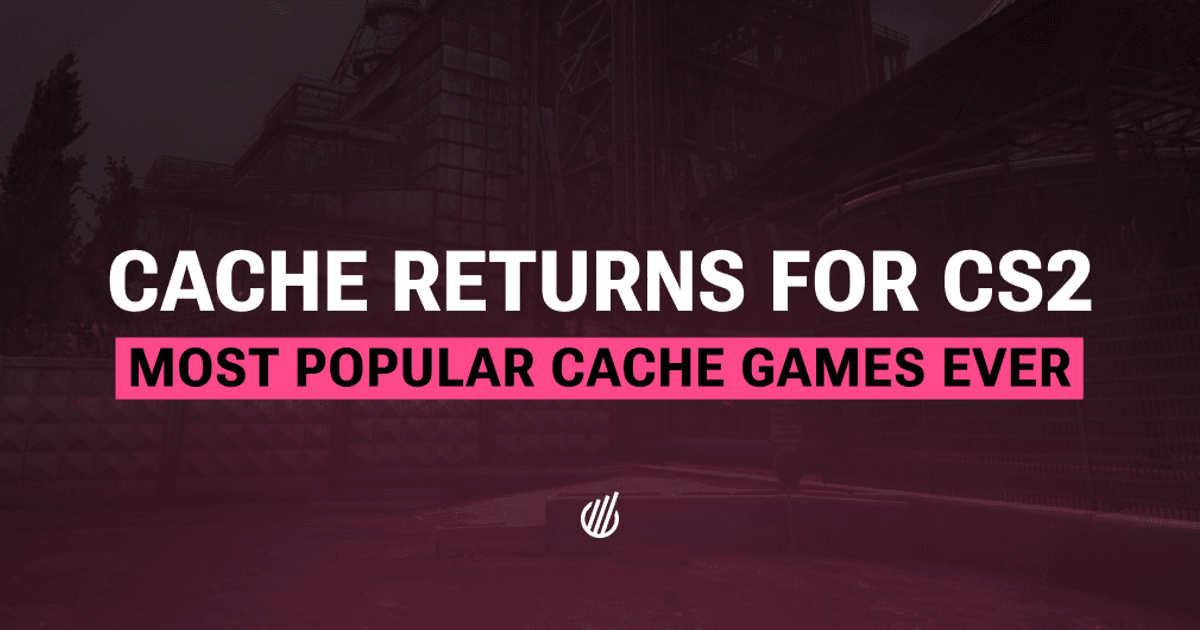
Cache Added to CS2: Most Popular Cache Esports Games
Valve’s latest Counter-Strike 2 update introduces the long-awaited “Cache” map, a staple of competitive play that has historically attracted high viewership.
- Valve has officially added the Cache map to Counter-Strike 2, utilizing a Source 2 engine rebuild to modernize visuals while maintaining the map's original competitive mechanics.
- The reintroduction of Cache is a strategic effort to boost CS2 esports engagement by leveraging the map's historical popularity with top-tier teams like Astralis, Fnatic, Cloud9, and FaZe Clan.
- Cache holds a significant viewership legacy, highlighted by the 2017 ELEAGUE Major semifinal between Fnatic and Astralis, which reached a peak of 785,000 concurrent viewers.
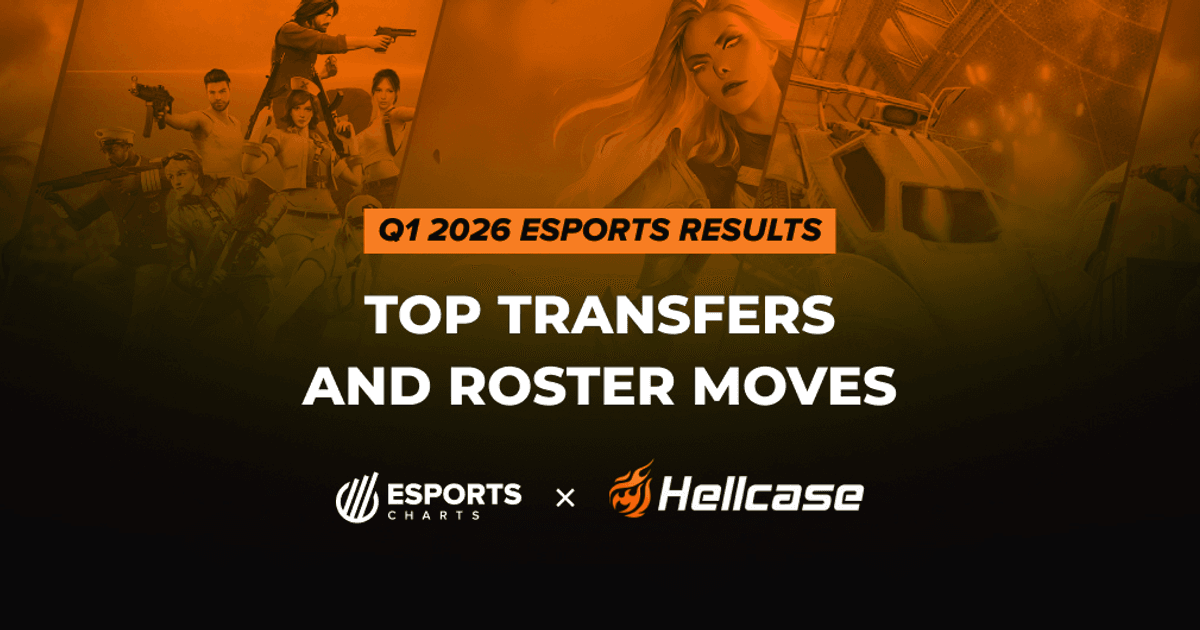
Esports Roster Moves & Transfers: Q1 2026
The global esports landscape underwent significant structural and personnel shifts during the first quarter of 2026, characterized by a volatile mix of organizational restructuring and strategic talent acquisitions.
- In Q1 2026, competitive success in major titles like Counter-Strike, Dota 2, League of Legends, and Valorant remained heavily dependent on leadership stability and the integration of veteran talent.
- Strategic acquisitions of established players, such as Saksa joining Team Yandex, directly resulted in measurable improvements in tournament performance and prize earnings.
- Individual star power continues to drive market engagement, evidenced by Demon1’s move to ENVY in Valorant, which generated viewership metrics exceeding those of higher-ranked teams.