343 Industries
CompanyUnited States
Documents about 343 Industries
Where's Xbox going, and what happens when it gets there?
Microsoft is currently executing a significant restructuring of its Xbox division, prioritizing the profitability of established intellectual property such as Call of Duty, Fallout, and Halo.
- Microsoft is restructuring its Xbox division to prioritize the profitability of established IP like Call of Duty, Fallout, and Halo, moving away from a broad portfolio toward a model of consistent, high-impact output.
- The Game Pass subscription model is driving a shift toward fiscal discipline and organizational streamlining across the gaming industry to address inherent financial constraints.
- Disney has shifted its strategy from internal studio ownership to a disciplined licensing model, highlighted by a $1.5 billion investment in Epic Games.
Why This Halo Developer Went Indie (And Completely Solo!) — Full Time Game Dev Podcast Ep. 010
Transitioning from high-profile AAA studios like 343 Industries to solo indie development represents a fundamental shift from collaborative stability to total personal accountability.
- Solo indie development requires strict scope management, such as utilizing side-scrolling mechanics and miniature prototyping, to mitigate the psychological and financial pressures of total personal accountability.
- Achieving 100,000 wishlists on Steam does not guarantee commercial success, as wishlist decay and a lack of momentum can significantly diminish initial sales performance.
- A successful indie launch can yield approximately $300,000 in profit from 40,000 units, underscoring the need for realistic financial expectations.
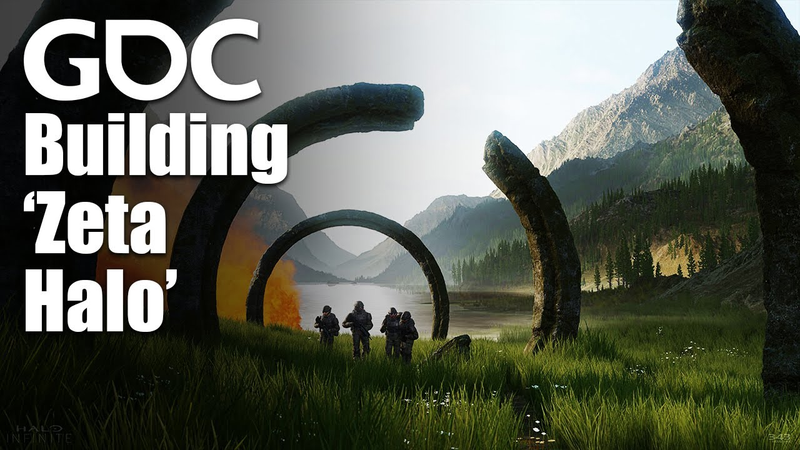
Building 'Zeta Halo': Scaling Content Creation for the Largest 'Halo' Ever
The development of Halo Infinite required a fundamental shift in production methodology to accommodate the franchise’s transition into a massive, open-world environment.
- To manage the massive scale of 'Zeta Halo,' which was roughly 10 times larger than the campaign levels of Halo 5, 343 Industries transitioned from manual, non-destructive editing to a modular, node-based procedural workflow.
- The team implemented a 'Mass Painter' system that allows artists to paint textures and material layers across multiple modular meshes simultaneously, decoupling the painting process from specific Uber Shaders.
- A custom terrain system utilizes two sets of graphs: a 'sculpting graph' for geometry and a 'surfacing graph' for materials and ground cover, which are optimized at runtime into virtual textures and procedural placements.
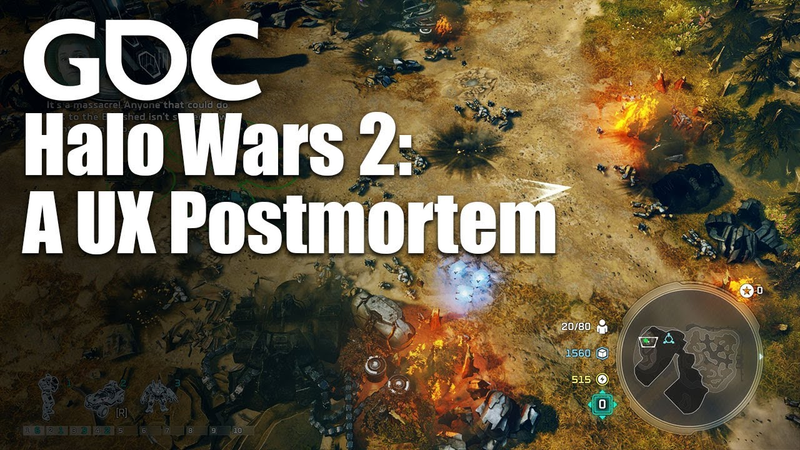
Halo Wars 2: A UX Postmortem
The development of Halo Wars 2 required a complex user experience (UX) strategy to bridge the gap between a legacy console-based real-time strategy (RTS) franchise and the demands of a modern, cross-platform audience.
- The development of Halo Wars 2 required a collaborative partnership between 343 Industries and Creative Assembly to adapt the legacy RTS franchise for a modern, cross-platform audience.
- To lower the barrier to entry, the team introduced Blitz mode, which successfully integrated card-based strategy with RTS mechanics.
- Iterative design testing for Blitz mode revealed that initial interfaces were too cluttered for console play, leading the team to adopt a simplified 12-card deck system with a streamlined horizontal interface.