Reports in the Market (Mobile) category.
The mobile application market entered a period of significant transition in 2023, navigating a complex landscape defined by economic volatility and evolving privacy regulations. Despite these headwinds, the industry achieved a record half-trillion dollars in combined advertising and consumer spending. While global advertising growth slowed to 14% and consumer spending experienced a marginal 2% decline, the sector demonstrated remarkable resilience through strategic adaptations. Key shifts include a rising App Tracking Transparency (ATT) opt-in rate of 29% and an increased reliance on media mix modeling and Connected TV (CTV) to optimize return on investment in a privacy-centric environment.
Sector-specific performance reveals a stark contrast between industries. Fintech and e-commerce emerged as primary growth drivers, with fintech in-app revenue surging over 90% between late 2022 and early 2023. E-commerce sessions grew by 12%, supported by record-breaking revenue peaks in late 2022. Conversely, the mobile gaming industry faced its most challenging year on record in 2022, marked by a 12% decline in installs and a 9% drop in consumer spending. However, early 2023 data indicates a nascent recovery for gaming, with installs and sessions rebounding by 10% and 11% respectively over previous averages.
The current market environment necessitates a shift from broad acquisition strategies toward long-term user retention and sophisticated measurement. As retention and "stickiness" remain persistent challenges across all verticals, developers are increasingly prioritizing reattribution campaigns, personalized onboarding, and loyalty programs. Success in the coming years depends on the adoption of advanced analytics and cross-platform insights to navigate data-privacy requirements. By leveraging these tools, stakeholders can effectively drive user acquisition and maximize lifetime value in an increasingly competitive global marketplace.
The mobile gaming landscape is undergoing a significant structural shift as developers transition from hyper-casual models toward hybrid-casual strategies. This evolution is driven by a marked decline in ad revenue profitability, influenced by the implementation of App Tracking Transparency on iOS, shifting post-pandemic user behaviors, and increased selectivity from major publishers. To maintain sustainability, developers are increasingly integrating in-app purchases and meta-gameplay components into their titles while opting for self-publishing models to retain greater control over their assets.
Data from 2022 reveals a downward trend in ad impressions and eCPMs across both Android and iOS platforms. Conversely, the volume of in-app purchases grew on both operating systems, signaling a successful pivot toward diversified monetization. Geographically, the United States remains the dominant market, ranking first for both ad revenue and in-app purchases across platforms. India emerged as the leading territory for total installs on Android, highlighting the importance of emerging markets for scale, even as monetization remains concentrated in Tier 1 regions.
The competitive landscape for ad networks and monetization channels shows distinct leaders. Apple Search Ads dominates the iOS ecosystem, securing the top position in multiple categories including retention and lifetime value. On Android, AppLovin and ironSource lead the market. AppLovin specifically stands out as the top monetization channel by total ad revenue on both operating systems. For eCPM performance, Meta Audience Network and ironSource lead on Android and iOS respectively.
These findings are based on anonymized data collected throughout the 2022 calendar year, utilizing a weighted average methodology. The analysis focuses on high-scale performance, only including countries and ad networks that exceeded a threshold of 25 million installs. This comprehensive view underscores a broader industry movement where the traditional reliance on pure advertising is being replaced by a more balanced, hybrid approach to game design and revenue generation.
The Mobile Gaming Loyalty Report examines the drivers of player engagement, retention, and spending across the mobile landscape. By combining a longitudinal benchmark of 500 games with a survey of 3,000 mobile gamers in the US and Canada during 2023, the analysis establishes a Loyalty Index based on six key monetization and engagement KPIs. The findings emphasize that while user acquisition remains expensive, maximizing the lifetime value of existing players through loyalty-centric design is essential for sustainable growth.
Role-Playing Games (RPGs) emerge as the most loyal genre, scoring 75 out of 100 on the index due to deep gameplay loops and compounding monetization systems that encourage high-value, frequent spending. Strategy games follow closely, excelling in repeat purchases and session frequency. Conversely, Lifestyle games lead in average sessions per user, utilizing bite-sized tasks and emotional storytelling to drive incremental spending. Data indicates a significant gap between average and top-quartile performers in genres like Casino and Sports, suggesting substantial room for optimization in retention and spender conversion.
Consumer behavior insights reveal a disconnect between play and spend habits; while over 77% of spenders rotate between two to seven games weekly, 53% concentrate their spending on a single title. Progression is the primary motivator for both continued play and in-app purchases, whereas "pay-to-win" mechanics and poorly received updates are leading causes of churn. Notably, 39% of players will abandon a game if a bad update is not corrected within a week. High-value spenders, defined as those spending over $100, exhibit more demanding standards for app store ratings and customer service.
Marketing effectiveness is heavily influenced by authenticity and social proof. Over 71% of gamers demand real gameplay footage in advertisements, and 60% consider app store ratings and reviews crucial for downloads. While digital ads remain the primary discovery tool, word-of-mouth ranks as a top-three acquisition source. Additionally, there is a strong interest in play-and-earn mechanics, with 84% of respondents open to trying games that offer tangible rewards.
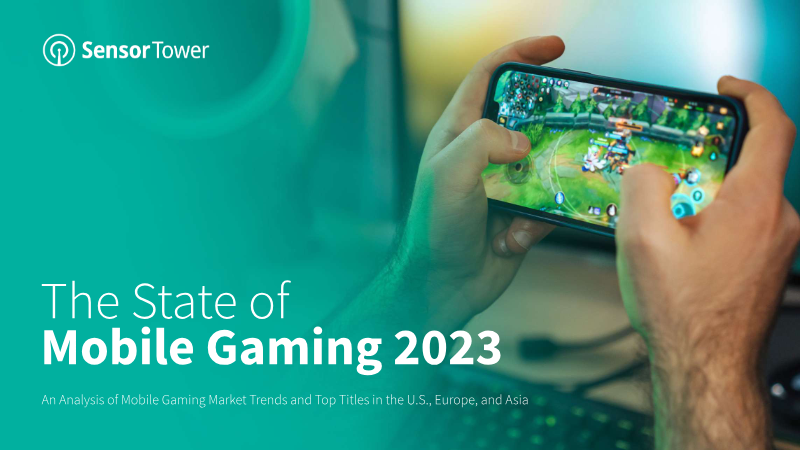
The global mobile gaming landscape underwent a significant structural transition in 2022, characterized by a 14% decline in total player spending from its 2021 peak alongside a stabilization of download volumes at approximately 13.8 billion per quarter. While major markets such as the United States, Japan, and South Korea experienced revenue contractions, China emerged as the second-largest market globally, and India solidified its position as the leader in download volume, accounting for 17% of total installs. This period marked a definitive shift away from the hypercasual genre, which saw an 18% decline in downloads due to rising user acquisition costs and broader economic pressures.
In response to these market pressures, the industry is pivoting toward a hybridcasual model that blends accessible core mechanics with sophisticated mid-core monetization and meta-progression features. This emerging segment grew by 13% and generated $1.4 billion in revenue, driven by significantly higher player engagement than traditional casual titles. Success in the current environment is increasingly dictated by the effective use of Live Ops, which now accounts for 97% of revenue among top-grossing games. Features such as character collection and social clan systems have become essential for maintaining high engagement levels and driving long-term player retention.
While established genres like RPGs and shooters faced revenue declines, the action genre grew by 9%, and subscription-based models gained momentum, exemplified by the expansion of ad-free gaming catalogs. Conversely, the crypto and NFT gaming sector experienced a sharp downturn, with downloads falling from 46 million to 29 million and revenue dropping by 35%. Despite the overall contraction in spending, the market remains larger than pre-pandemic levels, with legacy titles like Honor of Kings and Subway Surfers maintaining dominance in revenue and download rankings, respectively, across a diversifying global audience.
The benchmark focuses on hyper‑casual mobile games during the fourth quarter of 2022, comparing performance metrics across iOS and Android and highlighting shifts from the previous quarter. Data are drawn from GameAnalytics, which tracks more than 100 000 titles and reaches roughly one‑third of the global mobile player base, providing a broad, cross‑regional view of the segment.
Cost‑per‑install (CPI) reached an all‑time high of $0.20 median on both platforms, with the overall median CPI rising to $0.42. Android’s median CPI grew by $0.05 while iOS saw a larger increase of $0.17. Among the top ten ad‑spending countries, the United States posted the highest iOS median CPI at $0.80, overtaking France and Germany, while Brazil dropped out of the ranking. South Korea and Canada recorded the steepest CPI hikes on Android, each climbing $0.06 from Q3 2022. The report covers major markets in North America, Europe, Asia‑Pacific and Latin America, reflecting a worldwide scope.
Retention benchmarks reveal a consistent advantage for iOS. In the top‑2 % of games, Day 1 retention was 45 % on iOS versus 38 % on Android, and Day 7 retention stood at 19 % versus 14 %. For the top‑25 % tier, Day 1 rates were 33 % (iOS) and 28 % (Android), with Day 7 at 10 % and 6 % respectively. Across all titles, median Day 1 retention was 24 % on iOS and 23 % on Android, while median Day 7 retention was 7 % versus 4 %. The gap between elite, good and average games is pronounced, underscoring the importance of early‑stage player engagement.
Overall, Q4 2022 saw rising acquisition costs and modest but platform‑dependent retention
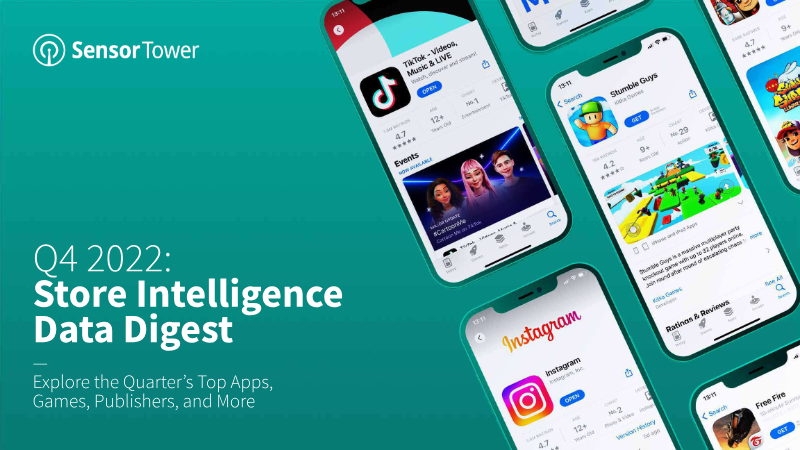
The fourth quarter of 2022 delivered a nuanced portrait of the mobile‑app ecosystem, tracking download activity across the world’s two dominant storefronts and highlighting shifts in consumer preference. Global install volume slipped marginally to 35.5 billion, a 0.1 % decline, while the Apple App Store posted a 2.4 % rise to 8.1 billion downloads and Google Play contracted 0.9 % to 27.5 billion. Instagram reclaimed the top‑ranked position worldwide, and Meta’s portfolio occupied half of the top‑ten list, underscoring the company’s entrenched influence. TikTok, CapCut and the newly launched game Stumble Guys emerged as the fastest‑growing titles, signaling continued appetite for short‑form video and casual gaming.
In the Asian market, video‑centric applications remained dominant. TikTok delivered roughly 29 million installs despite a 19 % quarter‑over‑quarter dip, while Instagram led Google Play with more than 116 million downloads, driven largely by India’s sizable user base. The FIFA World Cup spurred a surge in football‑related games, with FIFA Mobile and Soccer Super Star posting 136 % and 112 % QoQ growth respectively. New releases such as Gas (7,102 % QoQ in the United States), Makeover Studio (2,035 % QoQ) and MARVEL SNAP broke into the top‑20, and Ludo King amassed over 36 million Asian downloads.
Meta and Google continued to dominate the download landscape, with Meta recapturing the No. 1 slot on Google Play. Regional spikes, notably Stumble Guys’ peak performance in Indonesia, illustrate how localized trends can amplify global patterns. Overall, the quarter reflects a stable yet evolving market where established platforms retain supremacy while emerging titles and event‑driven spikes reshape the
The hyper-casual gaming landscape continues to evolve as developers navigate shifting attribution models and monetization strategies. Analysis of the sector reveals that advertising remains the primary revenue driver, with a heavy reliance on high-volume user acquisition and optimized ad mediation. Data from 2021 and 2022 indicates that the top-performing ad networks for hyper-casual titles are those capable of delivering massive scale at low costs per install, while simultaneously providing robust monetization tools to capture value from short-lived player lifecycles.
Geographic trends show a significant concentration of activity in established markets, though emerging regions are increasingly contributing to the global install base. The industry segments covered include both Android and iOS platforms, with a specific focus on how privacy changes have impacted attribution and marketing efficiency. Statistics suggest that while the cost of acquiring users has fluctuated, the most successful publishers are those utilizing sophisticated data analytics to balance spend across a diverse range of ad networks.
Methodological insights derived from industry benchmarks highlight the importance of real-time data processing and cross-platform tracking. By examining the performance of the top ten ad networks, it becomes clear that market leadership is defined by the ability to integrate seamlessly with attribution partners. The findings conclude that the hyper-casual market remains resilient, provided that developers adapt to the technical requirements of modern mobile advertising and maintain a rigorous focus on retention metrics and effective ad placement strategies.
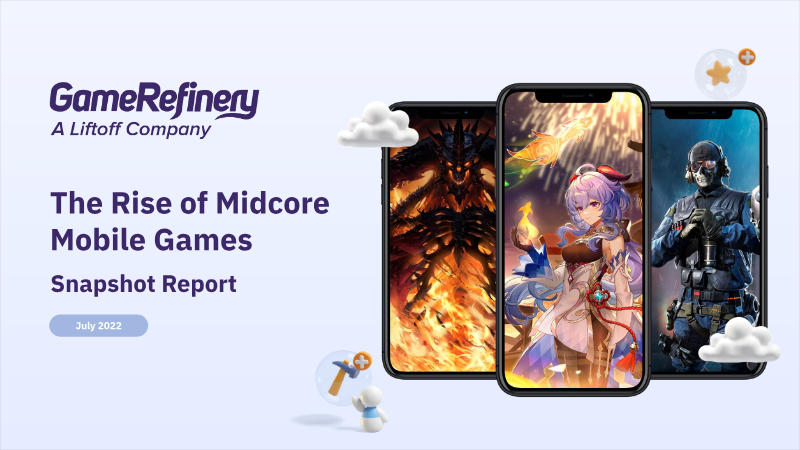
The midcore mobile gaming sector is experiencing a significant shift as AAA developers successfully port major PC and console franchises to mobile devices. Between Q1 2021 and Q1 2022, midcore games represented the only category to see market share growth, accounting for nearly 37% of US iOS mobile game revenue. This trend is further evidenced by the fact that nine midcore titles released in the past year remain in the top-200 grossing charts in the US, compared to only three casual titles.
The success of these high-performing midcore games is attributed to three essential design pillars: sophisticated control systems, diversified monetization, and high content cadence. Leading titles like Diablo Immortal and Genshin Impact have moved away from traditional mobile autoplay mechanics, instead favoring precision-based manual controls and immersive storytelling that mirror premium console experiences. These games effectively cater to player motivations centered on mastery and the adrenaline rush of reaction-based skills.
Monetization strategies in the midcore space have become increasingly complex. Top-performing games are significantly more likely to utilize Battle Passes, with 75% of the top 20% grossing midcore games employing the feature compared to just 25% of lower-ranking titles. Furthermore, gacha systems remain a dominant revenue driver; over 65% of top midcore games feature more than five different gachas. To maximize margins, a emerging trend shows publishers establishing external web stores to bypass standard app store commission fees.
Finally, maintaining a massive content cadence is critical for retention. Approximately 80% of top midcore games utilize special live event currencies to create temporary economic sinks and drive daily engagement. By combining frequent limited-time events with a steady stream of cosmetic updates and new gameplay modes, successful developers ensure long-term player interest in an increasingly competitive AAA mobile landscape.
This analysis explores the significant growth and evolving landscape of midcore mobile games, particularly in the United States market as of mid-2022. While casual and hyper-casual titles historically dominated the mobile space, midcore games—often high-quality AAA experiences ported from PC and console franchises—are increasingly capturing market share. Data indicates that midcore titles accounted for nearly 37% of US iOS mobile game revenue in Q1 2022, representing the only category to see year-over-year growth during that period.
The findings highlight a clear performance gap between top-tier midcore games and their competitors. In a 365-day sample, nine midcore titles maintained positions in the top-200 grossing US charts, compared to only three casual titles. Success in this segment is driven by three primary pillars: sophisticated control systems that emulate the precision of console gaming, massive content cadence through live events, and diversified monetization strategies. Notably, 75% of top-grossing midcore games utilize Battle Passes, and over 65% feature five or more distinct gacha mechanics.
The scope of the research focuses on the US iOS market, utilizing a proprietary three-layered taxonomy to analyze genre-specific trends. Key case studies include Diablo Immortal, Apex Legends Mobile, and Genshin Impact, which are cited for their ability to balance core gameplay depth with mobile-specific monetization. Additionally, the analysis identifies an emerging trend of publishers implementing external web stores to bypass traditional app store commission fees. The methodology relies on data-driven analysis from the GameRefinery SaaS platform, incorporating feature-level comparisons and revenue tracking to distinguish the design elements that define market leaders.
The 2022 Israeli mobile‑game market is portrayed as a rapidly expanding sector that now commands a global presence, with the analysis aiming to quantify its economic weight, identify the drivers behind its growth, and assess its competitive standing worldwide. In 2022 the market generated roughly nine billion dollars in revenue, supported by about two hundred development studios employing fourteen thousand people. Social and casual titles dominate both investment flows and install numbers, while action, strategy and hyper‑casual games lead in downloads and earnings, exemplified by hits such as Coin Master, PUBG Mobile and Fill the Fridge!.
The surge was accelerated by the COVID‑19 pandemic, which deepened user engagement and boosted in‑app purchases, turning mobile gaming into a habitual pastime for a broad audience. Leading Israeli publishers—Playtika, Plarium, Moon Active and Crazy Labs—have leveraged this momentum to become global players, delivering diversified portfolios that span social, casino, RPG and simulation genres and consistently ranking among the world’s top‑performing titles.
Beyond domestic performance, the study highlights divergent creative advertising formats across key international markets. U.S. campaigns favor live‑action influencer videos, Japanese ads emphasize character artwork, voice acting and gacha‑driven narratives, while South Korean promotions adopt their own distinct stylistic approaches. These regional preferences underscore the importance of tailored marketing strategies for Israeli developers seeking to expand beyond their home market.
Modern mobile game monetization is increasingly defined by the integration of sophisticated Battle Pass systems and gacha mechanics, which serve as the primary drivers for the industry's highest-grossing titles. Gacha mechanics are nearly universal among top-tier games, appearing in 93% of the top 20% grossing titles, while Battle Passes are utilized by 60% of this same demographic. These tools have evolved from simple transactional models into complex systems that leverage social cooperation, urgency, and psychological progression. Innovations such as auto-renewing subscriptions, social gifting within guilds, and "pity" systems for gacha pools have become standard practices to ensure transparency and maintain long-term player engagement without compromising core gameplay balance.
The geographic focus remains centered on the United States mobile market, where 75% of top-grossing games now employ gacha mechanics. A significant shift is occurring in the nature of in-app purchases, moving away from direct gameplay boosters toward meta-layer content such as narrative elements and collectibles. Furthermore, progressive reward systems—which provide escalating gifts based on cumulative spending—have seen a steady two-year increase in adoption. These systems are highly correlated with financial success, as they are nearly three times more likely to be found in top-performing iOS games than in lower-grossing titles.
Ultimately, the most successful monetization strategies rely on emotional triggers and social integration rather than isolated transactions. Features like randomized "Mystery Shops" and quantity-limited community offers create a sense of scarcity and collective participation. Developers who find success in this landscape are those who look across diverse genres to adapt innovative features like piggy bank integrations and co-op progression tracks. By focusing on these sophisticated meta-layer incentives, studios can drive both retention and revenue while fostering a more committed player base.
This analysis examines the highest-grossing mobile games across iOS and Android platforms during the second quarter of 2022. Utilizing data from the Apptica platform across 37 countries, the study focuses on three primary industry segments: casual, casino, and mid-core games. The central thesis highlights the continued dominance of established franchises and the significant revenue-generating power of mid-core titles, which emerged as the highest-grossing genre during this period.
Key findings indicate that Rise of Kingdoms by Lilith Games was the top-earning individual title, generating over $179.5 million on iOS alone. On the Android platform, Candy Crush Saga led with revenues exceeding $122 million. When aggregating performance across multiple top-charting titles, King emerged as the highest-grossing publisher with over $264 million in revenue, followed closely by Lilith Games at $254.6 million and Playrix at $182.8 million. The data also reveals a high reliance on organic traffic for top-tier games; mid-core titles on iOS averaged 91% organic traffic, while casual games on Android maintained a lower average of 70%.
Geographically, the United States remains the primary hub for mobile game development, hosting 28.8% of the top-performing publishers' headquarters. Ireland and Israel follow as significant secondary hubs. In terms of market presence, Playrix and Playtika were the most frequent leaders in the charts, each accounting for 16.2% of the games appearing in the top-10 rankings. The analysis concludes that while the market is competitive, a small group of global publishers and established mid-core titles continue to capture the majority of mobile gaming revenue.