Twitch
Twitch is a livestreaming service for gaming, entertainment, sports, music and other content. It publishes articles aimed at brands, such as one on the business outcomes of advertising in gaming.
Documents
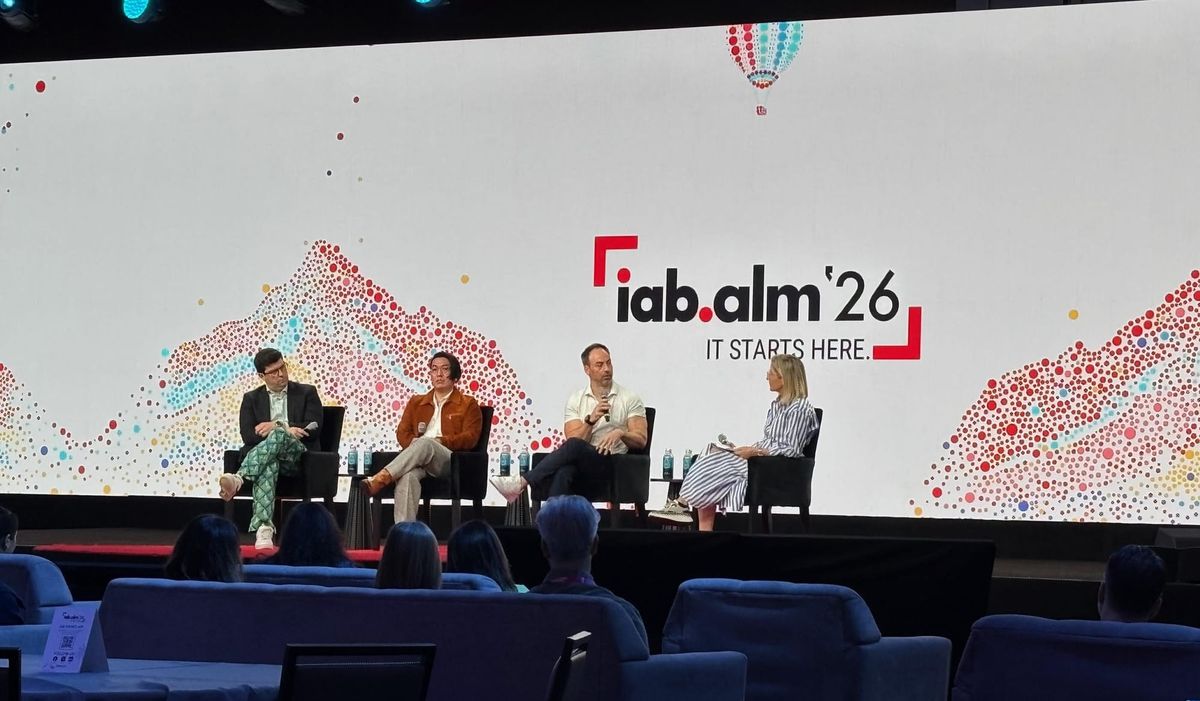
How Gaming Is Delivering Real Business Outcomes for Brands
The presentation demonstrates that gaming has become a strategic channel for brands seeking measurable marketing impact.
- Gaming has transitioned into a performance-marketing channel capable of tracking the full funnel from initial brand awareness to final conversion.
- Overwolf serves as a major advertising hub, reaching over 113 million monthly gamers and ranking as the second-largest U.S. gaming property according to Comscore.
- Global brands including Universal Pictures, P&G, Lancôme, AMD, Monster Energy, Nissan, and KFC are actively utilizing gaming platforms to achieve measurable business outcomes.
Reports about Twitch
564 documents by other writers name Twitch in the title or summary.
Spellbreak's Hype Get, PlayStation Plus Collection, & More
This analysis explores evolving strategies for video game discoverability and platform engagement as of September 2020.
- Platform holders are shifting focus from individual unit sales to ecosystem retention, exemplified by Sony’s PlayStation Plus Collection for PS5 and Apple’s integration of Apple Arcade into the Apple One subscription bundle.
- Developers without established fan bases can gain market traction by prioritizing viral-friendly platforms like Reddit and Imgur alongside centralized community management via Discord.
- Successful game discoverability increasingly relies on creating distinct visual hooks optimized for short-form video content to capture audience attention.
Top Mobile Games Worldwide for August 2020: Downloads
The mobile gaming landscape in August 2020 was characterized by high-volume installs led by hyper-casual titles.
- Voodoo’s Scribble Rider was the most downloaded mobile game worldwide in August 2020, reaching 44.6 million installs.
- Brain Wash by SayGames secured the second position with approximately 30 million downloads during the same period.
- Among Us experienced a significant surge in popularity, with downloads increasing 661% month-over-month to reach 18.4 million, ranking it ninth globally.
Behind the Dizzying Ride to the Top for Among Us
The unexpected rise of the multiplayer party game Among Us serves as a case study in unconventional game discovery and long-term audience cultivation.
- The success of Among Us was driven by a viral surge in 2020, two years after its 2018 launch, proving that sustained development can lead to delayed global prominence.
- A Steam daily deal in early 2020 served as a critical inflection point, significantly boosting baseline sales and wishlist counts to provide the momentum necessary for mainstream adoption.
- The game’s initial growth was anchored in non-Western markets, specifically Brazil, Korea, and the Middle East, before expanding into North America and Europe.
Great Talks at GDC Summer 2020
The GDC Summer 2020 conference provided critical insights into game marketing, focusing on strategies for Steam visibility, independent developer networking, and pre-production market analysis.
- Aim for a minimum of 12,000 Steam wishlists before launch to trigger visibility on the 'Popular and Upcoming' list, which can generate 1,000–3,000 additional wishlists per day.
- Project your first-week sales by multiplying your pre-launch wishlist count by 20–30%, as this represents the expected conversion rate plus organic discovery.
- Avoid using pre-orders for Steam releases unless you are a AAA studio, as pre-orders do not contribute to the platform's sales ranking algorithms.
The Impact of Having Esports Events Without an Audience PG Connects Digital #2
The global esports industry underwent a profound operational transformation during the COVID-19 pandemic, shifting from traditional, venue-based spectacles to fully remote, digital-first productions.
- The shift to remote, digital-first production during the pandemic successfully replaced physical venue revenue with record-breaking viewership, as demonstrated by events like Road to Rio.
- The industry accelerated technological innovation by adopting distributed production teams and advanced virtual sets to maintain broadcast quality without on-site audiences.
- Engagement strategies evolved to include real-time data dashboards, second-screen applications, and deep Twitch integration to compensate for the lack of physical crowd interaction.
Esports, Influencers and New Media Changing the World PG Connects Digital #2
The presentation explores the evolving landscape of esports, influencer marketing, and new media, emphasizing how these elements function as critical drivers for the modern gaming ecosystem.
- Developers must shift from top-down advertising to integrating influencers as core partners, as traditional marketing strategies are becoming increasingly obsolete.
- Mid-tier (B and C-level) influencers frequently generate higher audience loyalty and more effective engagement compared to high-profile superstars.
- The gaming industry is transitioning toward 'active entertainment,' where viewers prioritize interactive experiences, such as community-driven events and real-time participation, over passive consumption.

Big Tech Sucks at Gaming: Can Amazon, Google, Facebook, and Apple Disrupt the Video Games Market?
The global video games market, valued at $130 billion with over two billion active players, has become a primary target for expansion by major technology firms including Amazon, Google, Facebook, and Apple.
- Big Tech firms (Amazon, Google, Facebook, and Apple) generate $20 billion in gaming revenue, capturing only 3% of their total operations and trailing incumbents Sony and Microsoft, who command $31 billion in the sector.
- The gaming industry’s reliance on complex multiplayer ecosystems and network effects renders the traditional Big Tech strategy of buying platform exclusivity less effective than it was for music or film.
- Amazon has faced significant setbacks, including the failure of its major title Crucible and stagnant growth at Twitch, while Google’s Stadia lost its first-mover advantage in the cloud gaming market.
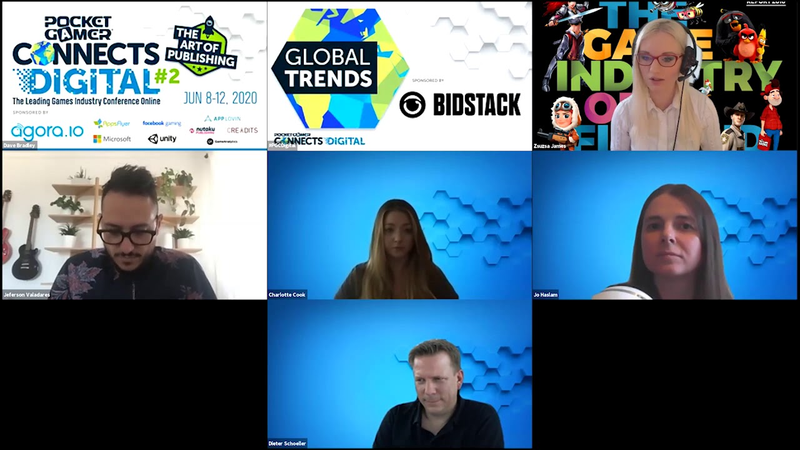
Panel: What will Inspire the Next Big Thing in Games? PG Connects Digital #2
The gaming industry is currently undergoing a fundamental transformation driven by the convergence of social engagement, cross-platform accessibility, and evolving monetization strategies.
- Future industry breakthroughs will rely on integrating social connectivity directly into the core gameplay loop rather than treating social features as secondary additions.
- Developers are shifting away from traditional, disruptive advertising toward native, integrated monetization models that prioritize user experience.
- Subscription-based services are increasingly used to reshape development cycles and provide greater revenue stability, mirroring the success of streaming platforms.
Guest Post: Discoverability by Design
The primary thesis of this analysis is that modern game developers must move beyond traditional, high-budget promotional "shouting" and instead integrate discoverability directly into the core design of their games.
- Developers must shift from external promotional spending to integrating discoverability directly into core game design to combat extreme market saturation on platforms like Steam and the App Store.
- Memetic shareability drives visibility through viral hooks such as unique art styles, quirky design elements, and built-in replay export systems for social media.
- Watchability features, including streamer-viewer interaction tools and mechanics that highlight high-level skill, are essential for optimizing games for platforms like Twitch.
Amazon's Crucible: Virtual Business, Games + Ads
The analysis examines Amazon’s strategic positioning in the video game industry following the release of its first-party title, Crucible.
- Amazon is pursuing a vertical integration strategy in gaming by leveraging its AWS infrastructure for back-end support and Twitch for marketing to bypass third-party distributors.
- Despite the release of Crucible, Amazon currently lacks a platform-exclusive franchise comparable to established titles like Microsoft's Halo.
- Amazon's significant market valuation growth relative to major publishers like Electronic Arts provides the capital necessary to pursue major acquisitions to accelerate its gaming expansion.
Safe Haven No More: Is the Current Boost in Game Consumption a Structural Shift, or Temporary?
The recent surge in global video game consumption, driven by COVID-19 lockdowns and the elimination of commutes, appears to be a temporary spike rather than a permanent structural shift.
- The gaming industry is experiencing a contraction, with activity dropping 10% week-over-week and 45% from its pandemic-era peak.
- Gaming has shifted from a price-inelastic niche to a mass-market sector, making it increasingly vulnerable to broader economic volatility and declines in discretionary spending.
- High-profile engagement metrics are declining, evidenced by a 26% year-over-year drop in Fortnite's teen player base and consistent decreases in Twitch viewership.
Report on App Categories
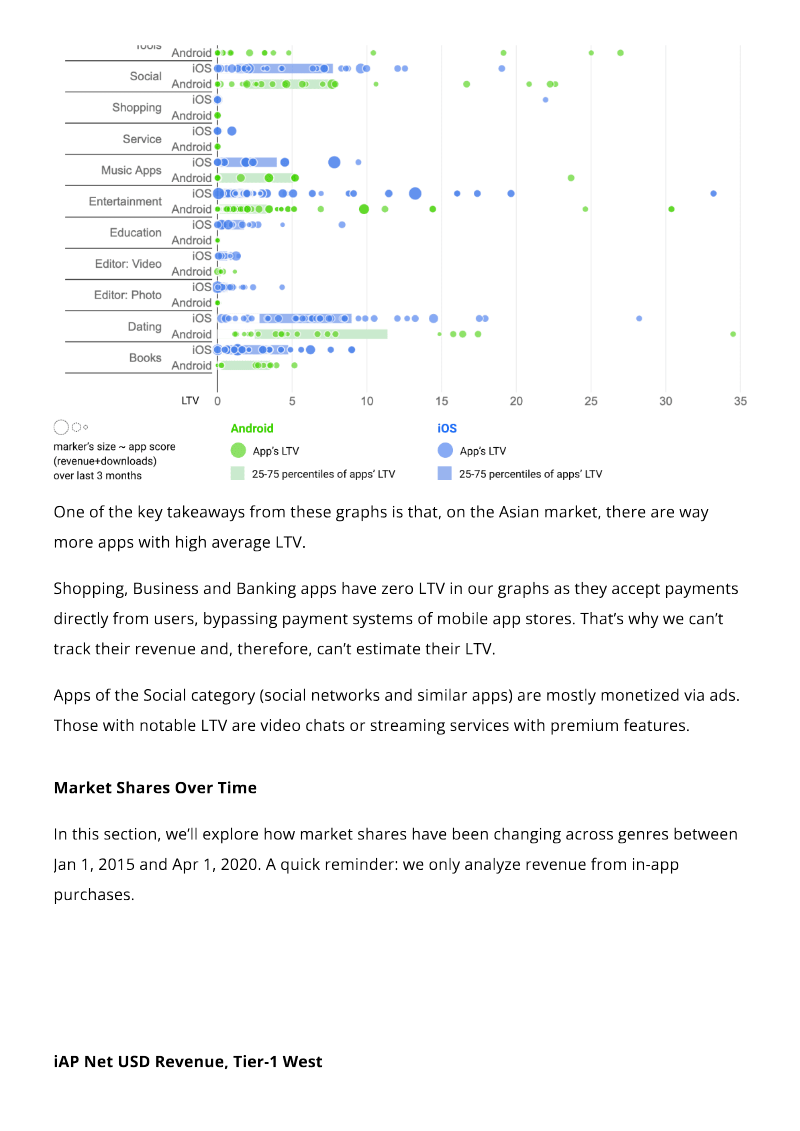
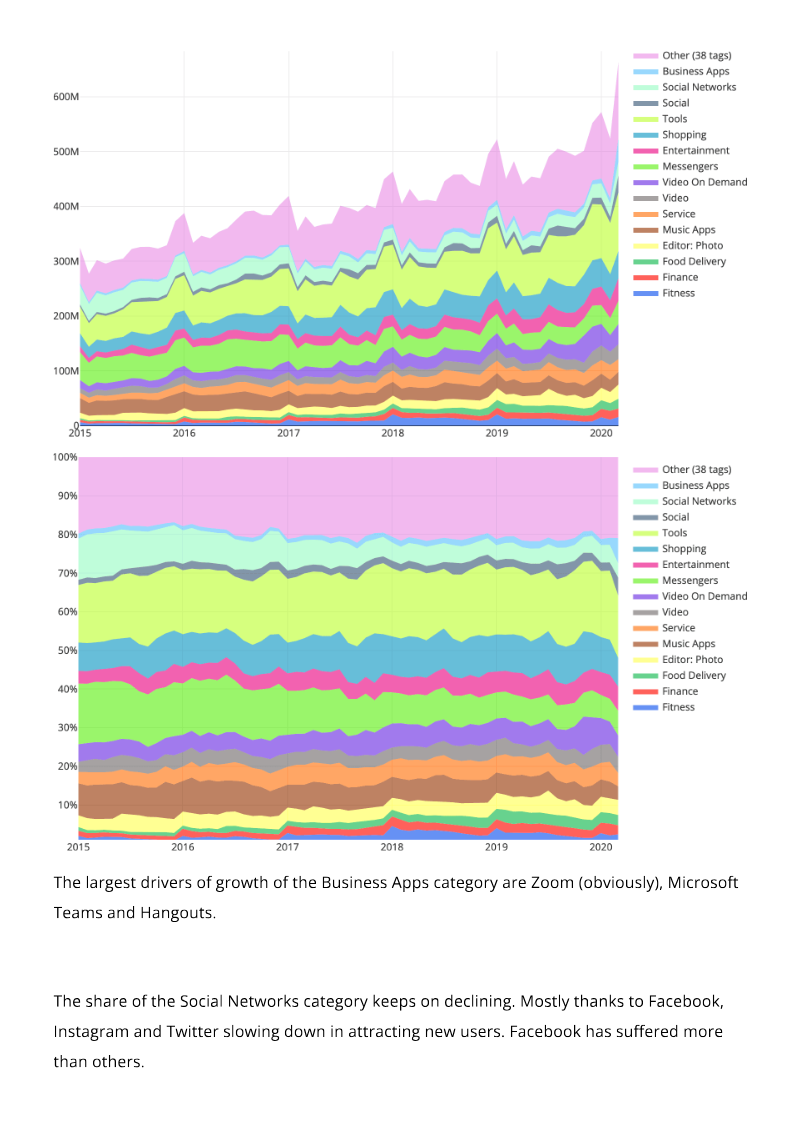
This research provides a comprehensive analysis of the non-gaming mobile application market, focusing on shifting market shares, revenue performance, and lifetime value (LTV) across various categories.
- Video apps, led by YouTube, Twitch, and BIGO LIVE, represent the highest growth category in Western markets as of early 2020.
- Video-on-demand services account for 20% of total in-app purchase revenue in Eastern markets.
- Asian markets demonstrate a higher density of apps with high average lifetime value (LTV) compared to Western markets.