Twitch
Twitch is a livestreaming service for gaming, entertainment, sports, music and other content. It publishes articles aimed at brands, such as one on the business outcomes of advertising in gaming.
Documents
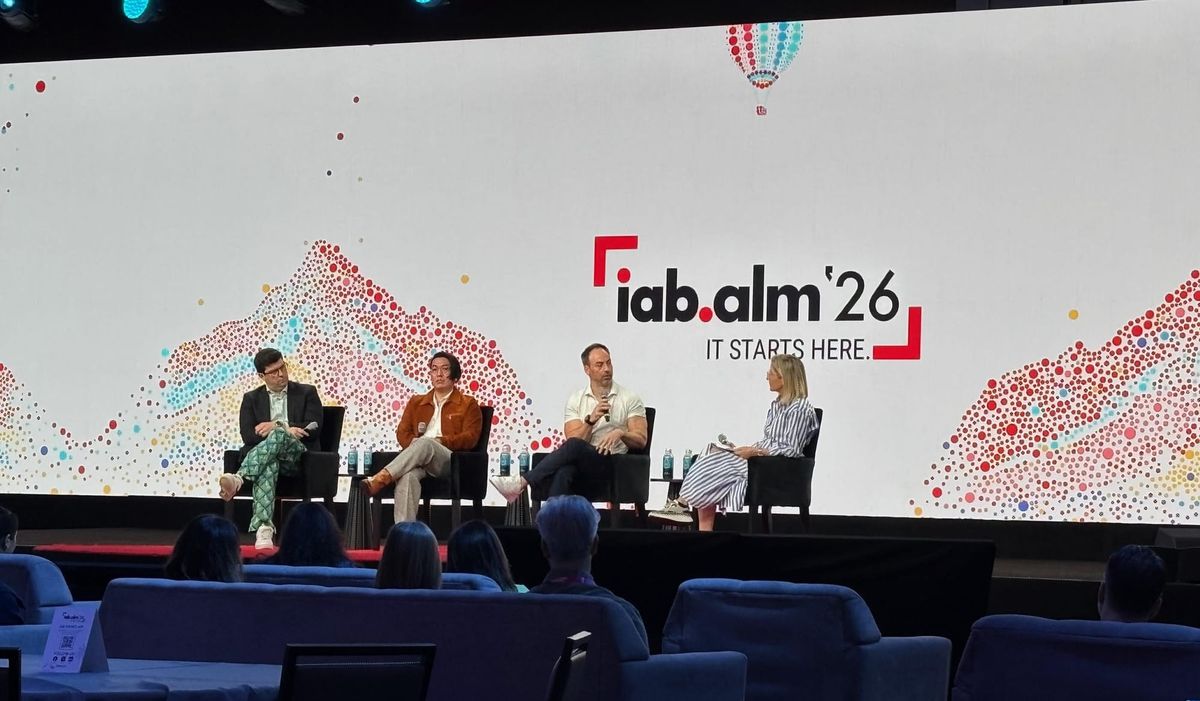
How Gaming Is Delivering Real Business Outcomes for Brands
The presentation demonstrates that gaming has become a strategic channel for brands seeking measurable marketing impact.
- Gaming has transitioned into a performance-marketing channel capable of tracking the full funnel from initial brand awareness to final conversion.
- Overwolf serves as a major advertising hub, reaching over 113 million monthly gamers and ranking as the second-largest U.S. gaming property according to Comscore.
- Global brands including Universal Pictures, P&G, Lancôme, AMD, Monster Energy, Nissan, and KFC are actively utilizing gaming platforms to achieve measurable business outcomes.
Reports about Twitch
566 documents by other writers name Twitch in the title or summary.
Rapporto sugli Esports in Italia 2022
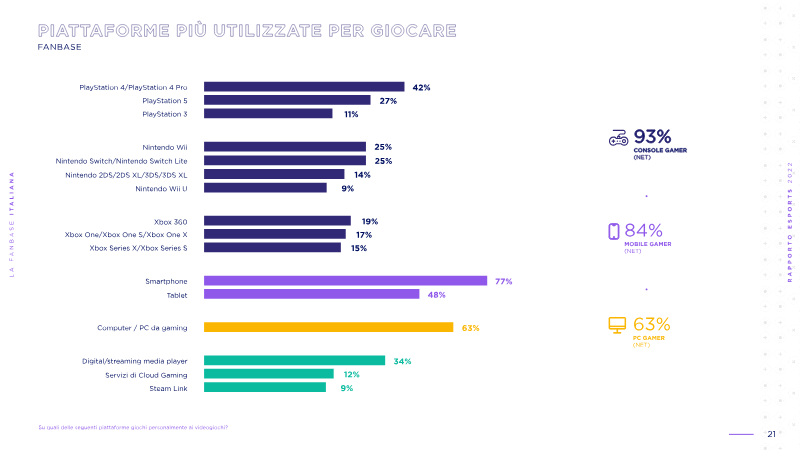
The Italian esports landscape is undergoing a period of structural consolidation, characterized by a dedicated fanbase of 1.62 million individuals aged 16 to 40.
- The Italian esports market comprises 1.62 million fans aged 16 to 40, with an average age of 27 and a socio-economic profile higher than the national average.
- Twitch is the dominant consumption platform, having recorded a 60 percent year-over-year increase in hours watched.
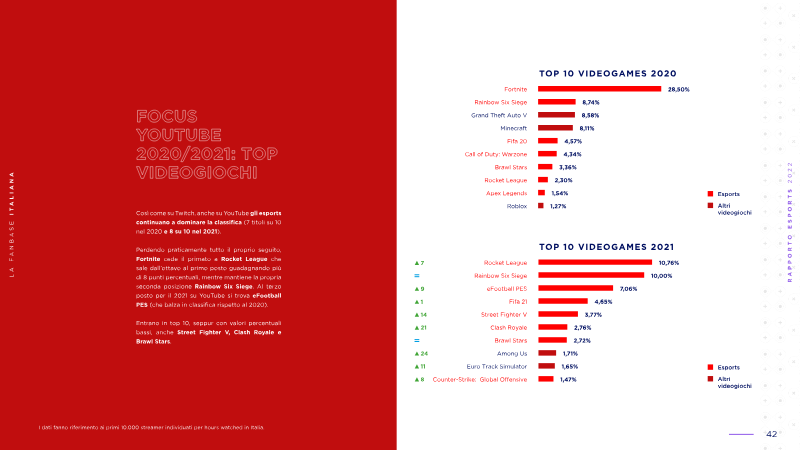
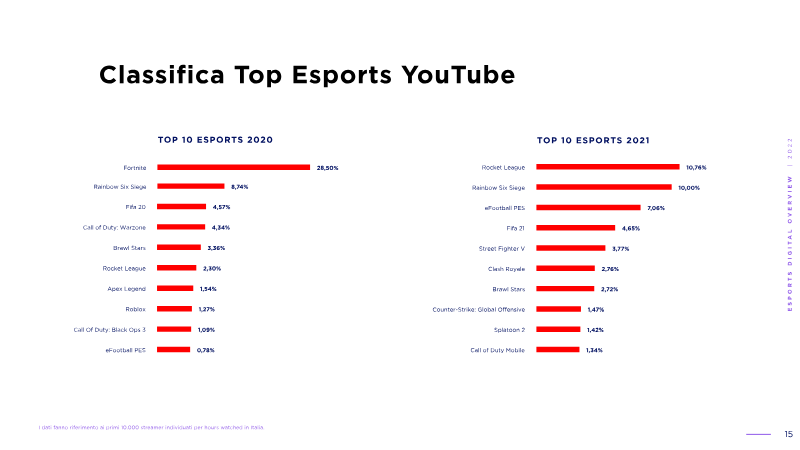
- The market has shifted from the dominance of single titles like Fortnite toward a more fragmented landscape led by competitive games such as Call of Duty: Warzone and Rocket League.
Esports Digital Overview: Italy 2022
The Italian esports market underwent a transformative shift in 2021, characterized by a decisive consolidation of viewership on Twitch and a notable diversification of competitive gaming titles.
- Twitch consolidated its position as the primary platform for Italian esports in 2021, recording 482 million hours watched, a 60 percent year-over-year increase.
- Viewership for national esports events surged by 92 percent, while international broadcasts experienced a 52 percent growth rate.
- The competitive landscape shifted away from the dominance of single titles like Fortnite toward a more fragmented market led by esports-focused games.
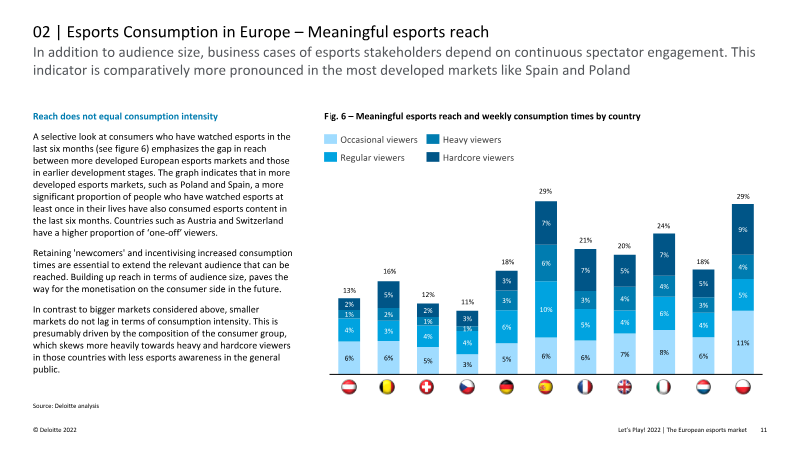
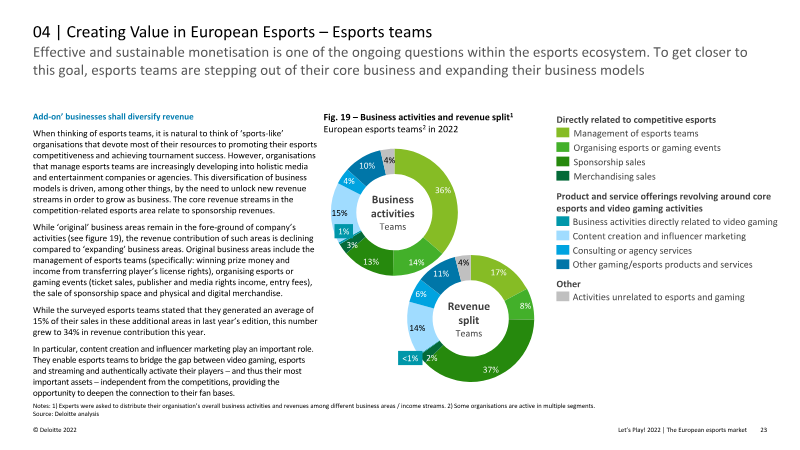
Let's Play! 2022: The European Esports Market
The European esports market has reached a critical inflection point, transitioning from the rapid, pandemic-driven expansion of 2020 toward a phase of stabilization and strategic maturation.
- The European esports market has shifted from pandemic-driven expansion to a phase of stabilization, characterized by a plateau in total reach and a decline in regular viewership.
- Esports organizations are pivoting away from pure competitive play toward diversified business models that integrate agency services, media production, and content creation to ensure long-term sustainability.
- The industry is currently under-monetized due to a historical reliance on free-to-access content, necessitating a shift toward converting casual viewers into consistent, paying consumers.

300,000 SUBSCRIBER SPECIAL (And How You Can Do It Too)
The primary thesis of this discussion is that building a dedicated audience is the most valuable asset for an independent game developer, offering long-term creative freedom and financial stability that far exceeds the volatility of individual game launches.
- Building a dedicated audience provides long-term financial stability and creative freedom, allowing developers to move away from the volatility of relying solely on individual game launches.
- A sustainable career model for independent developers involves diversifying income streams beyond game sales to include digital courses, asset packs, and sponsorships.
- YouTube serves as a critical marketing funnel for developers, even though platform ad revenue alone is typically insufficient as a primary income source.
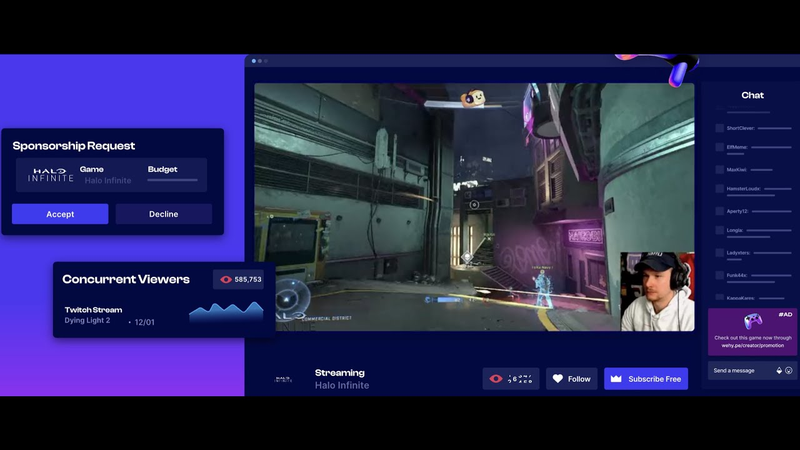
Kress’s Corner #1 Is influencer marketing hype or reality?
Influencer marketing has transitioned from a peripheral awareness tactic into a core pillar of game industry user acquisition.
- Influencer marketing has shifted from a brand awareness tactic to a core performance channel, necessitated by the decline of traditional performance marketing effectiveness following Apple’s IDFA privacy changes.
- Publishers can now treat creator partnerships as measurable performance channels by integrating mobile measurement partners to correlate social share of voice with active player counts, ROAS, and CPI.
- Niche clusters of smaller creators often outperform high-profile influencers in conversion rates and cost-efficiency due to their deeper audience intimacy and engagement.

Game Developer Index: Sweden 2022
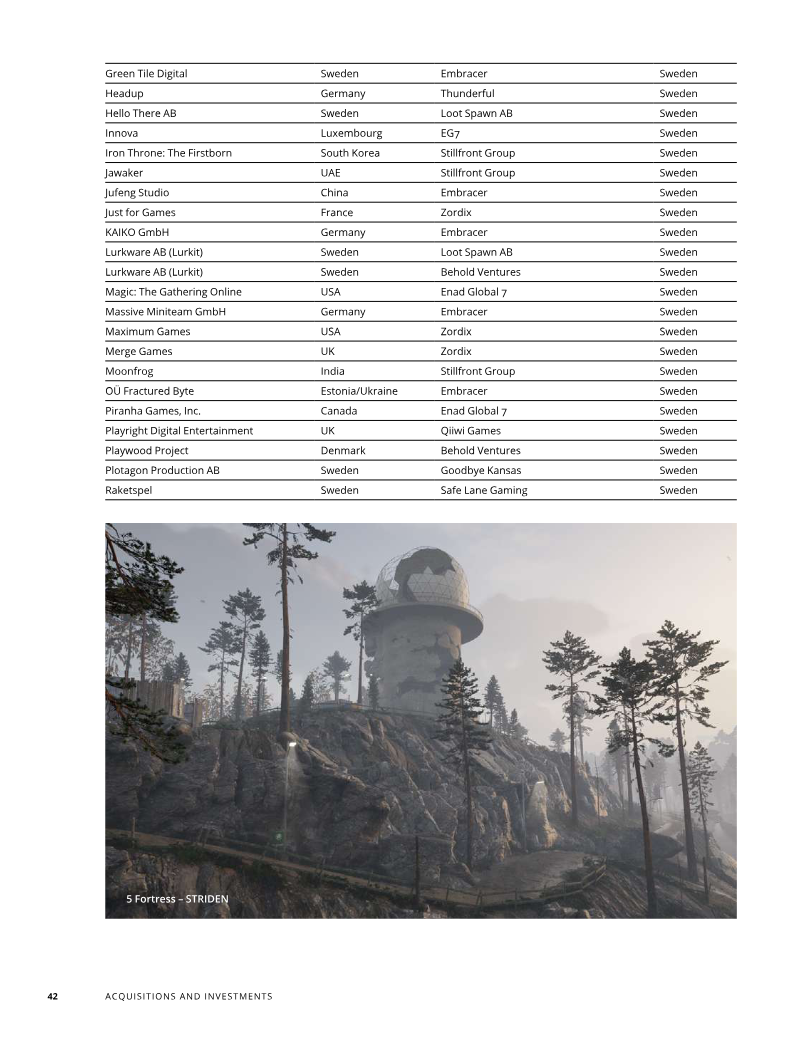
The Swedish games industry underwent a period of rapid expansion in 2021, characterized by a 22% increase in domestic revenue to €2.7 billion and a 43% surge in global revenue to €5.8 billion.
- The Swedish games industry experienced significant financial growth in 2021, with domestic revenue rising 22% to €2.7 billion and global revenue surging 43% to €5.8 billion.
- Driven by 81 international acquisitions led by groups like Embracer and Stillfront, Swedish-owned entities now operate 197 studios across 49 countries, employing approximately 28,000 people globally.
- Swedish-developed titles maintain a massive international reach, with an estimated one in four global players engaging with these games and Swedish-associated content accounting for 6% of all Twitch watchtime in 2021.
Video Game Streaming Trends: 2022 Third Quarter Report
The third quarter of 2022 reflects a period of stabilization for the live streaming industry as it transitions away from pandemic-era highs.
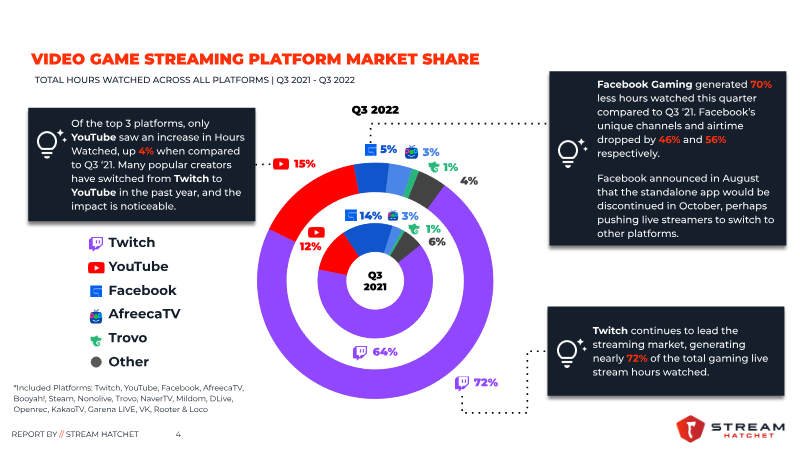
- Twitch maintains a dominant 72% market share of gaming hours watched, while YouTube grew its viewership by 4% and Facebook Gaming suffered a 70% decline following the discontinuation of its standalone app.
- The live streaming industry is stabilizing post-pandemic with total hours watched down 13% year-over-year, though current viewership remains nearly double 2019 levels.
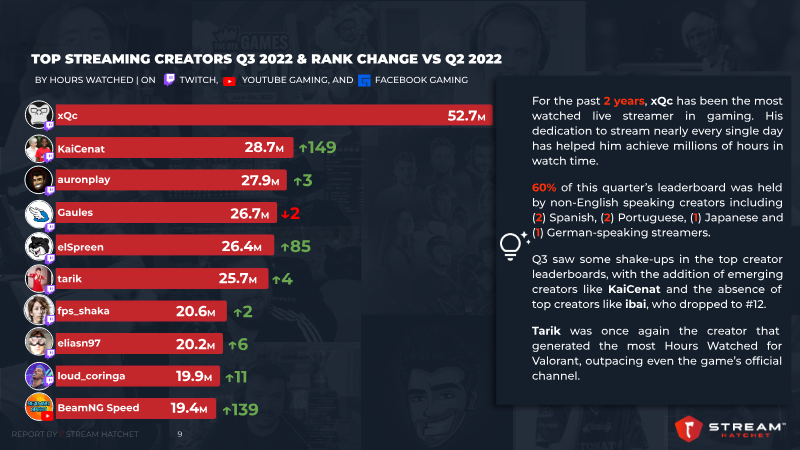
- Esports viewership grew 40% year-over-year, with Twitch capturing 66% of this segment and eight of the top ten esports organizations now generating the majority of their watch time through non-competitive variety content.
Avoiding Ineffective (or Scam!) Discovery Interactions with Influencers
The primary objective of this analysis is to address the prevalence of fraudulent influencer interactions and provide strategies for developers to navigate the complex landscape of game discovery.
- Approximately 95% of incoming key requests for Steam titles are illegitimate, often originating from scammers seeking keys for gray market resale or personal collection.
- Scammers frequently employ sophisticated tactics, including spoofing the identities of prominent YouTubers and using bots to artificially inflate follower counts on platforms like Twitch.
- Developers should implement proactive filtering, such as removing generic contact emails from Steam pages and using hidden HTML 'honey pots' to trap scraping bots.
FaZed and Confused: The $19 Million Sell-off of Esports Collective FaZe Clan
This analysis examines the acquisition of FaZe Clan by GameSquare for $18.5 million, a figure that represents a staggering decline from the organization’s initial $1 billion valuation.
- GameSquare acquired FaZe Clan for $18.5 million, marking a massive collapse from the organization's previous $1 billion valuation.
- Publicly traded esports organizations generated only $248 million in combined revenue in 2022, falling significantly short of the $1.6 billion industry-wide forecast for 2023.
- FaZe Clan’s failed growth strategy relied on unrealistic projections, including an attempt to scale revenue from $38 million to $651 million by 2025 through speculative ventures like NFTs and the metaverse.
Which Time of Year Should You Release Your Game?
Analysis of Steam release timing indicates that while the time of year influences conversion rates, it is not a primary determinant of a game's ultimate success.
- Release timing is not a primary determinant of long-term success, as the median conversion rate for games with 10,000 to 15,000 wishlists remains stable at 0.14 regardless of the season.
- Q4 launches face a 20% to 28% lower conversion rate than the annual average due to market saturation, yet total consumer activity can be over 300% higher, effectively offsetting the increased competition.
- The period from January to April is the most favorable for conversion, with rates outperforming the annual average by 7% to 20%.

News Mash-Up: Week 25
This summary provides an overview of key developments in the global video game industry for the week of June 20, 2022.
- Fall Guys reached 20 million players within 48 hours of transitioning to a free-to-play model across PC, Xbox, PlayStation, and Switch platforms.
- Sony has officially withdrawn from Gamescom 2022, joining other major publishers like Nintendo, Activision, and Take-Two in skipping the physical event.
- Microsoft is developing 'Direct Capture' technology for Xbox Cloud Gaming, which has already reduced streaming latency by 72ms with the goal of enabling 4K resolution.
Beyond Myths: Influencer Marketing Is Not What You Think It Is
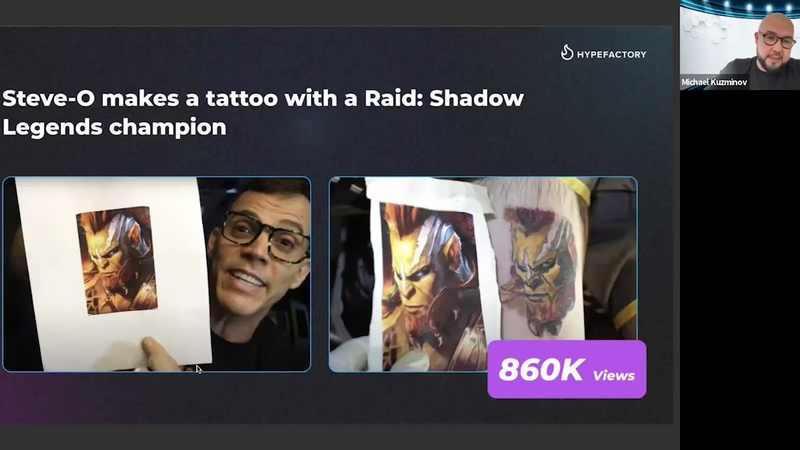
Influencer marketing serves as a rapidly expanding advertising channel within the gaming industry, yet its execution is often hindered by persistent industry myths.
- Evaluate influencer campaign performance over a six-month window rather than immediate post-campaign metrics to account for the delayed effect on organic installs and engagement.
- Prioritize audience-centric targeting over rigid niche relevance, as non-obvious categories like horror or mystery can yield higher conversion rates for casual mobile games.
- Balance influencer portfolios by mixing micro and medium-sized creators while maintaining long-term partnerships with top performers to ensure consistent results across multiple campaign waves.