
Replay. The Polish Journal of Game Studies
Open-access game studies journal published by Lodz University Press, in English and Polish.
Documents
What Will Be the Future of the Past?: Report from the NECS 2015 Conference
The 2015 European Network for Cinema and Media Studies (NECS) conference, held in Lodz, Poland, served as a major academic forum for nearly 350 researchers from 33 countries to address the evolving challenges of audiovisual culture, with a specific focus on the preservation and archiving of digital media.
The Uniqueness of the Experience of Death in Artistic Video Games
The analysis explores the distinct representation of death within artistic video games, contrasting these portrayals with the instrumental, rule-based approach found in mainstream gaming.
Rules Versus Immersion: Engagement in Narrative and Formal Systems
The tension between formal game systems and narrative immersion is often framed as a binary conflict, yet these modes of engagement are not inherently mutually exclusive.
Replay: The Polish Journal of Game Studies 1(1)
Replay: The Polish Journal of Game Studies serves as an interdisciplinary academic platform dedicated to the scholarly examination of digital games.
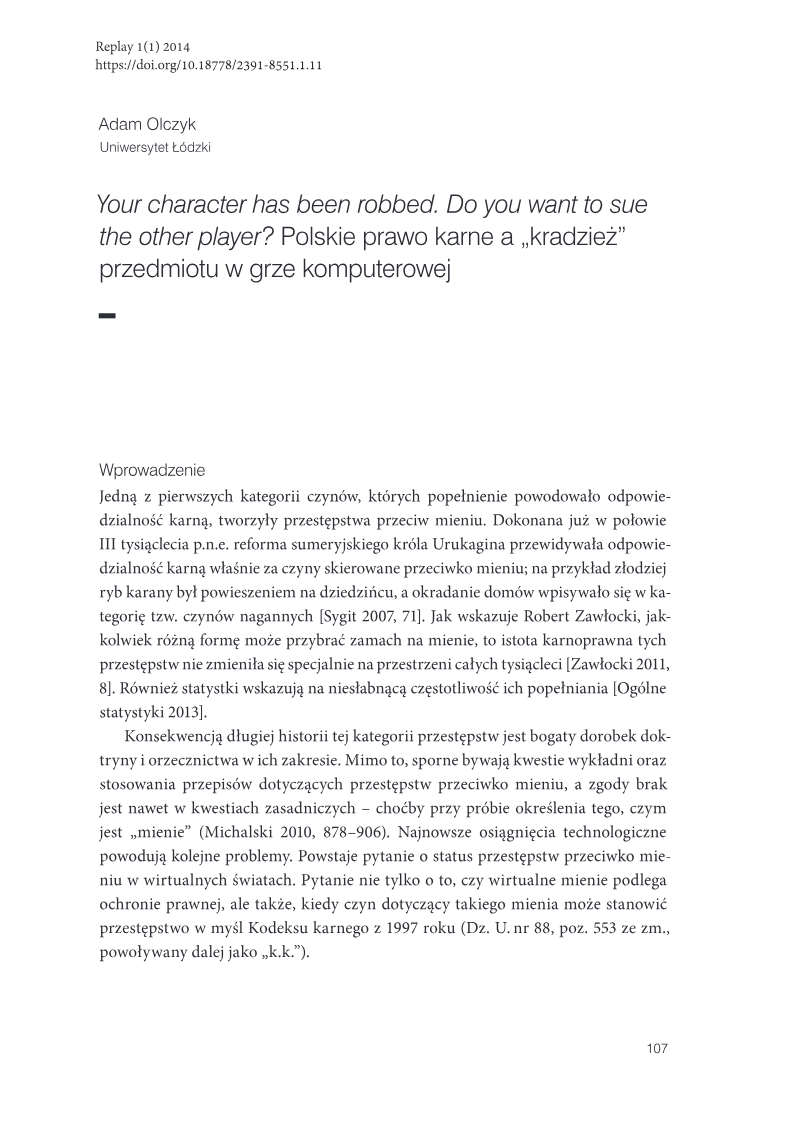
Your Character Has Been Robbed: Polish Criminal Law and 'Theft' in Computer Games
This analysis examines the intersection of Polish criminal law and the misappropriation of virtual assets within online gaming environments.
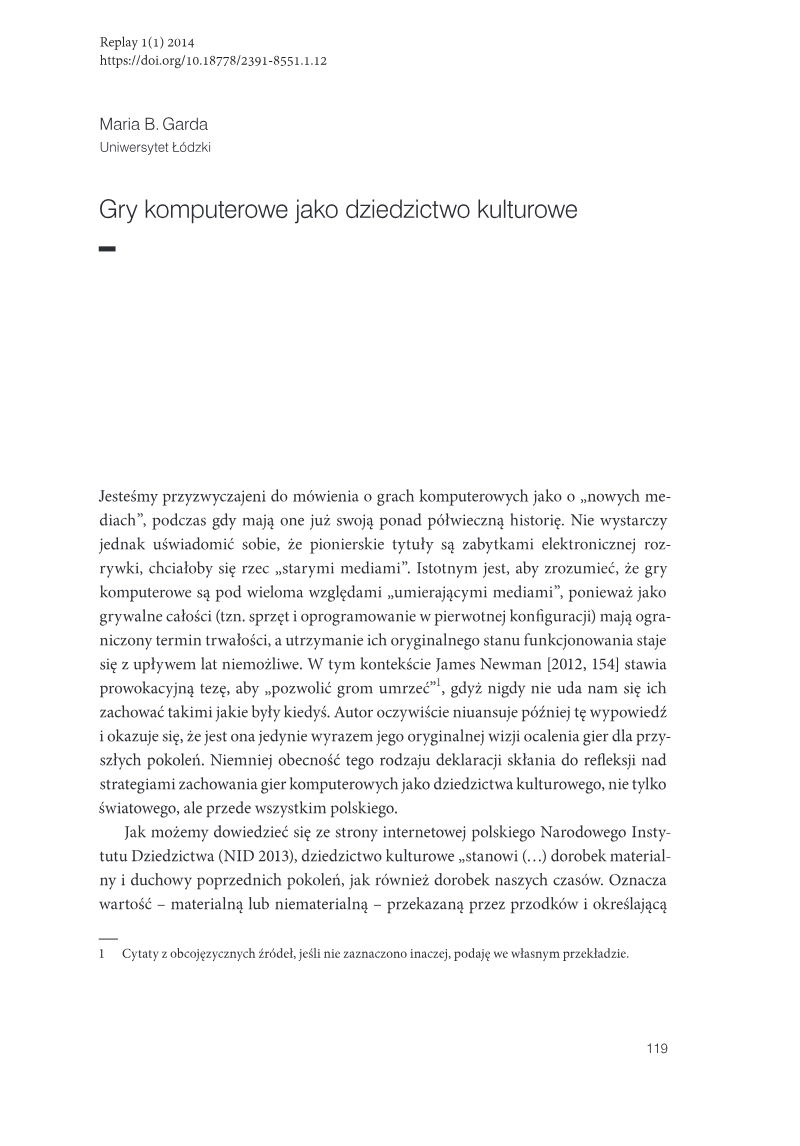
Gry komputerowe jako dziedzictwo kulturowe
Computer games represent a significant yet highly vulnerable form of cultural heritage that faces the threat of permanent loss due to rapid technological obsolescence.
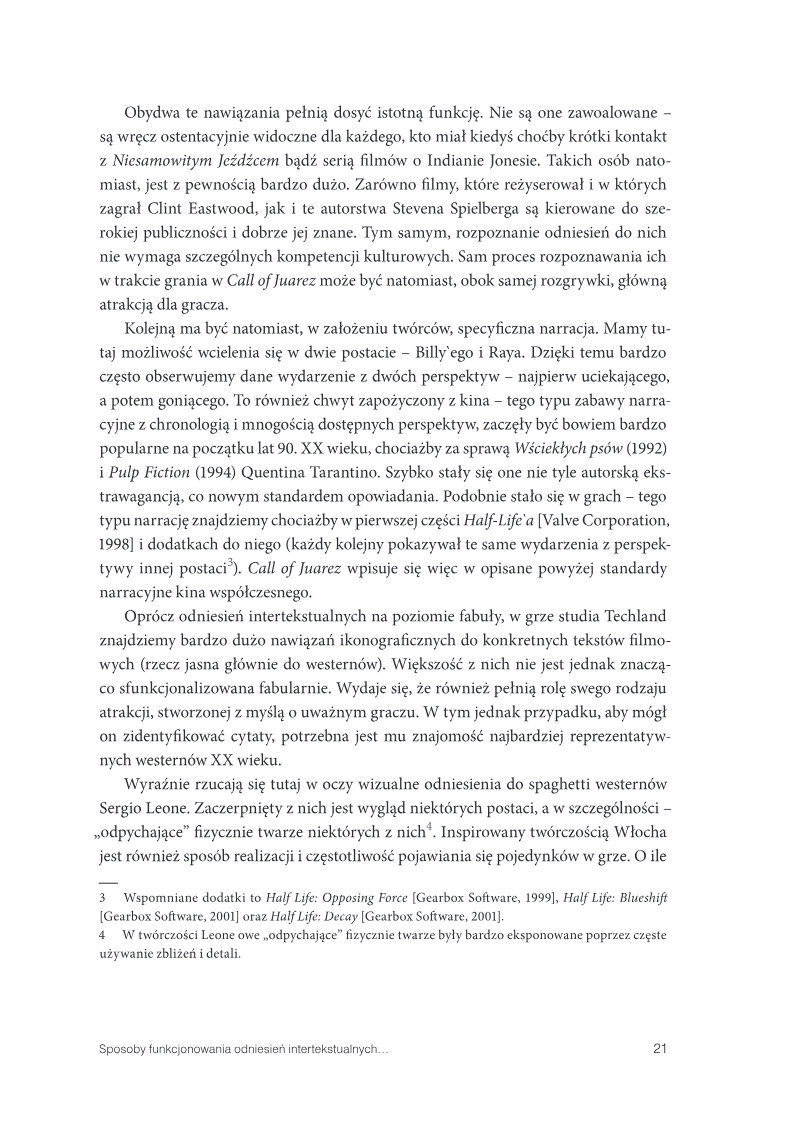
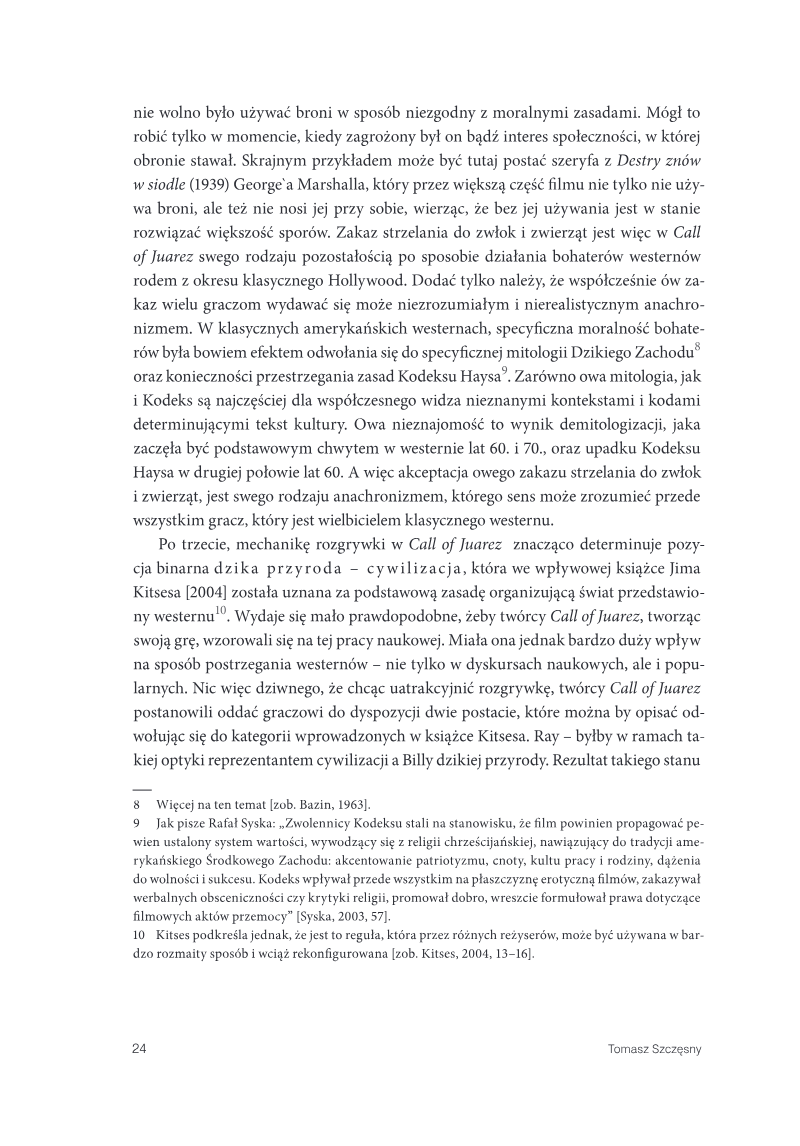
Sposoby funkcjonowania odniesień intertekstualnych oraz konsekwencje remediacji formuły gatunkowej westernu w grze Call of Juarez
The analysis explores how the video game Call of Juarez (2006) successfully revitalized the Western genre through intertextual references and the remediation of cinematic tropes.
Mortal Kombat, czyli jak uratować świat
The analysis explores the evolution of modern media through the lens of the Mortal Kombat franchise, characterizing it as an "entertainment system" rather than a traditional narrative or film adaptation.
Ludo-narrativism, or Bogost's Proceduralism in the Light of the Ludology-Narratology Debate
The primary purpose of this analysis is to evaluate the theoretical contributions of Ian Bogost as a constructive resolution to the foundational ludology-narratology debate in game studies.
Motyw Yūrei w Japońskich Survival Horrorach: Analiza Wybranych Przykładów
This analysis explores the integration of the yūrei—vengeful spirits from Japanese mythology—into the survival horror genre, focusing on how traditional folklore is remediated into modern interactive media.
Playing with Loss of Control: Weak Subjectivity, Questioning Rationality and Problematizing Identification in Narrative Videogames
The analysis explores the prevailing design paradigms in narrative-driven, single-player video games, which typically position the player as a powerful, rational, and highly capable protagonist.
- Mainstream narrative games are built on a 'logic of progress' where players start with limited agency and evolve into powerful subjects, a structure reinforced by quantifiable metrics like experience points and character levels.
- The prevailing design paradigm encourages strong player identification and emotional attachment, often treating the game world as a 'technology of the self' where players maximize their efficiency and agency.
- Games like 'Spec Ops: The Line' (Yager Development, 2012) subvert traditional player agency by forcing the player to commit war crimes, such as using white phosphorus, which are mandatory for narrative progression.
Do you work at Replay. The Polish Journal of Game Studies? Get a free report of how these documents are read and cited here.