
Replay. The Polish Journal of Game Studies
Open-access game studies journal published by Lodz University Press, in English and Polish.
Documents
Negotiating Anthropocentrism and Ecologies in Cozy Games
Cozy games function as significant digital mesocosms that shape player perceptions of environmental agency and human influence.
- Cozy games function as 'mesocosms' that allow players to explore environmental themes, though they often struggle to balance the aesthetic of safety with the reality of ecological crisis.
- Animal Crossing: New Horizons (Nintendo, 2020) reinforces anthropocentric and colonialist ideologies by encouraging players to extract resources from other islands and curate nature for personal, neoliberal asset improvement.
- Terra Nil (Free Lives, 2023) subverts traditional cozy game tropes by shifting the player's goal from resource accumulation to the active rehabilitation and restoration of degraded ecosystems.
Soft Horrors: The Visual and Ludic Safety of Dark Cozy Games
Dark cozy games represent a burgeoning subgenre that intentionally juxtaposes soft, endearing aesthetics with unsettling Gothic or horror-themed narratives.
Cozy Heterotopias in JRPGs: A Foucauldian Perspective on the Spatiality of Coziness
Cozy aesthetics in Japanese Role-Playing Games function as heterotopias, serving as distinct, ritualized spaces that exist apart from the primary game world while remaining deeply connected to the player’s emotional experience.
- Michel Foucault’s concept of 'heterotopia'—spaces that function as a respite from societal crises—provides a framework for analyzing how cozy aesthetics in JRPGs allow players to safely process real-world anxieties.
- Cozy JRPG elements, such as the detailed food systems in Ni no Kuni: Wrath of the White Witch, serve as heterotopian tools that provide comfort through abundance and nostalgia.
- The water tower sequence in Final Fantasy VII Remake functions as a situational cozy heterotopia, using nostalgic character-driven narrative and atmosphere to offer players a respite from the game's broader, more intense conflict.
Comfortably Numb: An Ideological Analysis of Coziness in Videogames
The rise of cozy gaming represents a significant shift in interactive entertainment, yet these experiences often function as a form of utopian escapism that reinforces rather than challenges existing socioeconomic structures.
The Duality of Cozy Games: Cozy Agency, Neoliberalism, and Affect
Cozy games operate as a complex duality, functioning simultaneously as a sanctuary from the pressures of modern life and as a subtle mechanism for reinforcing neoliberal ideologies.
“Drown Your Troubles in Coffee”: Place, Heterotopia, and Immersion in the Coffee Talk Series
The Coffee Talk series functions as a profound exploration of spatial design and emotional resonance, positioning the in-game coffee shop as a heterotopia of compensation.
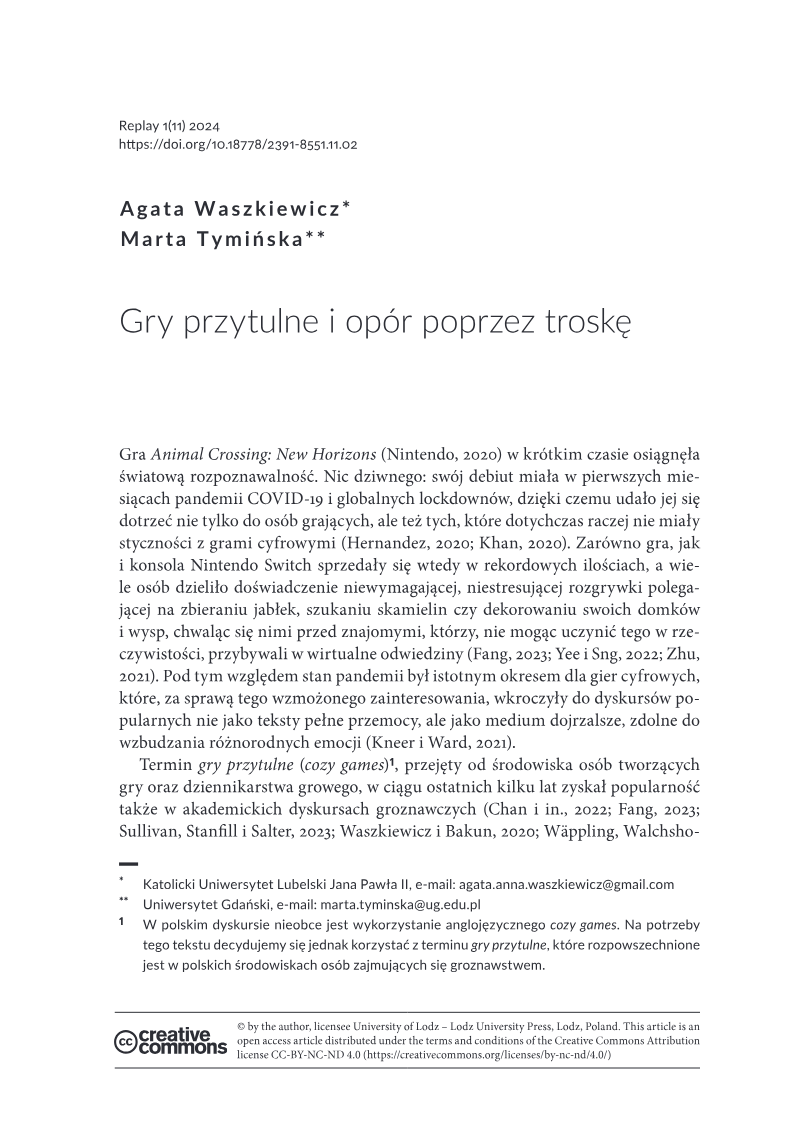
Gry przytulne i opór poprzez troskę
This analysis explores the emergence and academic conceptualization of cozy games, a genre characterized by low-stress mechanics, pastel aesthetics, and a focus on safety, abundance, and care.
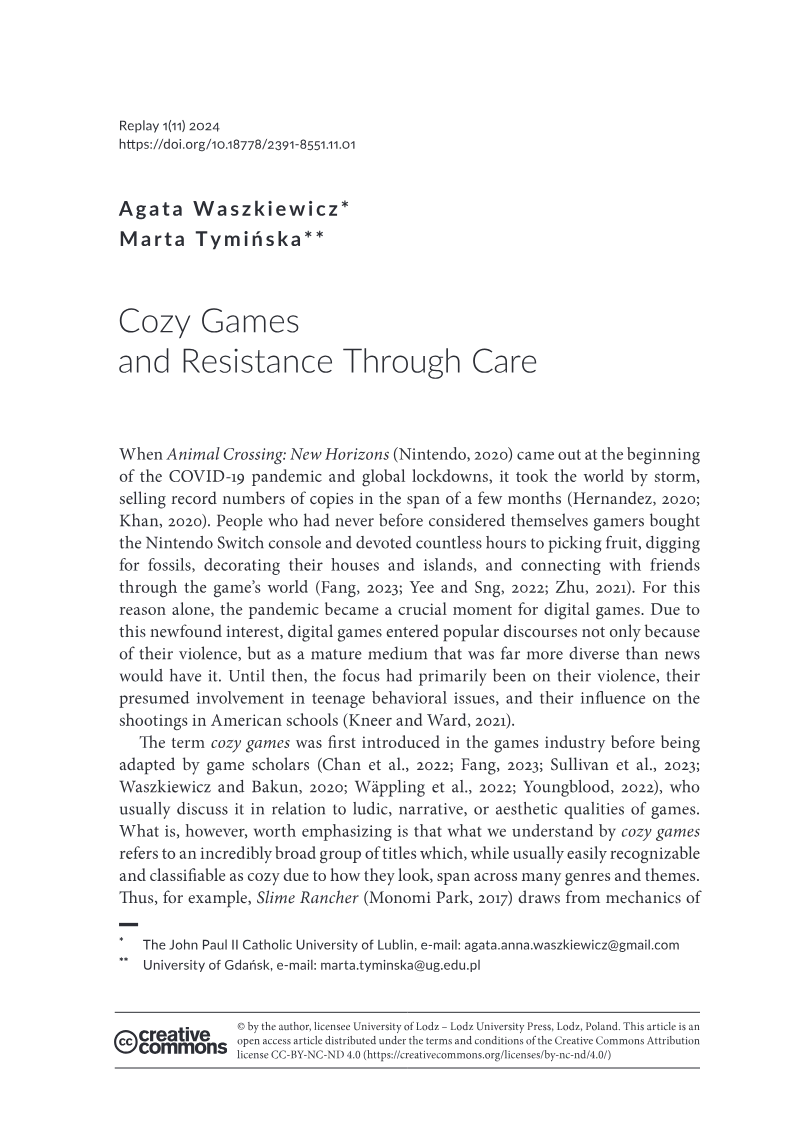
Cozy Games and Resistance Through Care
The rise of cozy games represents a significant shift in digital entertainment, moving away from traditional industry focuses on violence and competitiveness toward themes of safety, abundance, and emotional well-being.
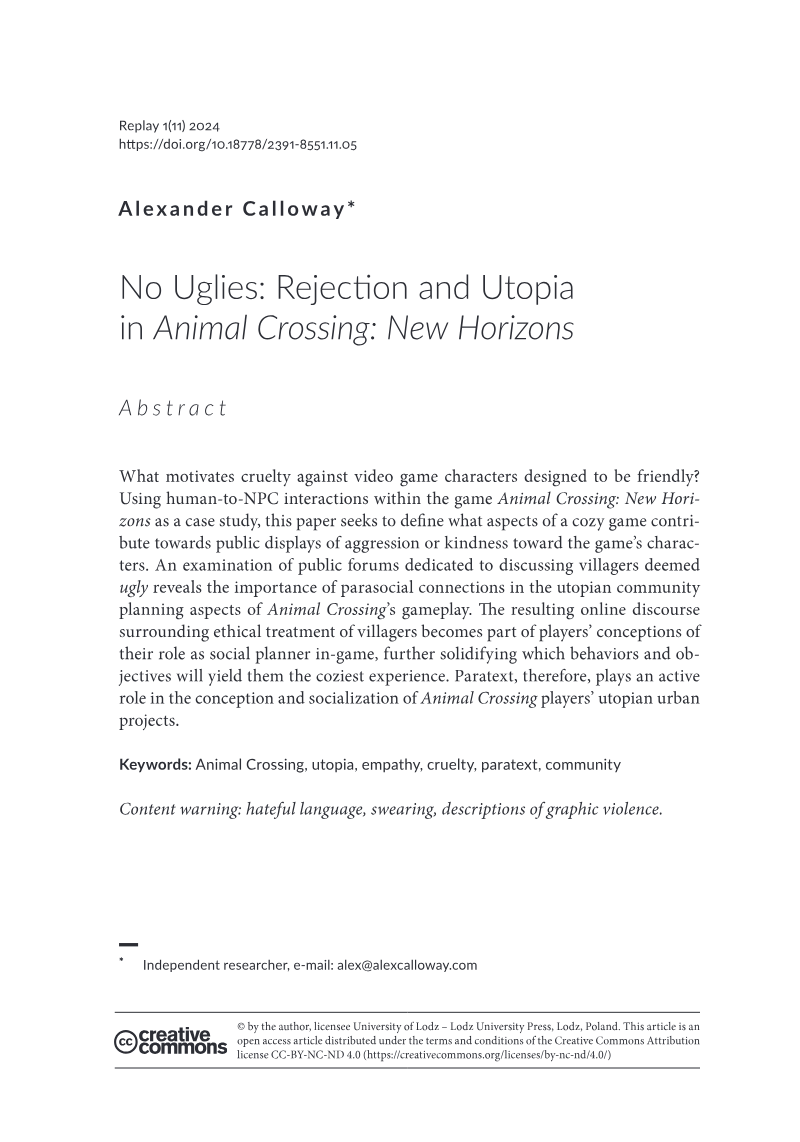
No Uglies: Rejection and Utopia in Animal Crossing: New Horizons
Animal Crossing: New Horizons functions as a complex site of tension between its marketed identity as a cozy, utopian simulation and the aggressive, exclusionary behaviors adopted by its player base.
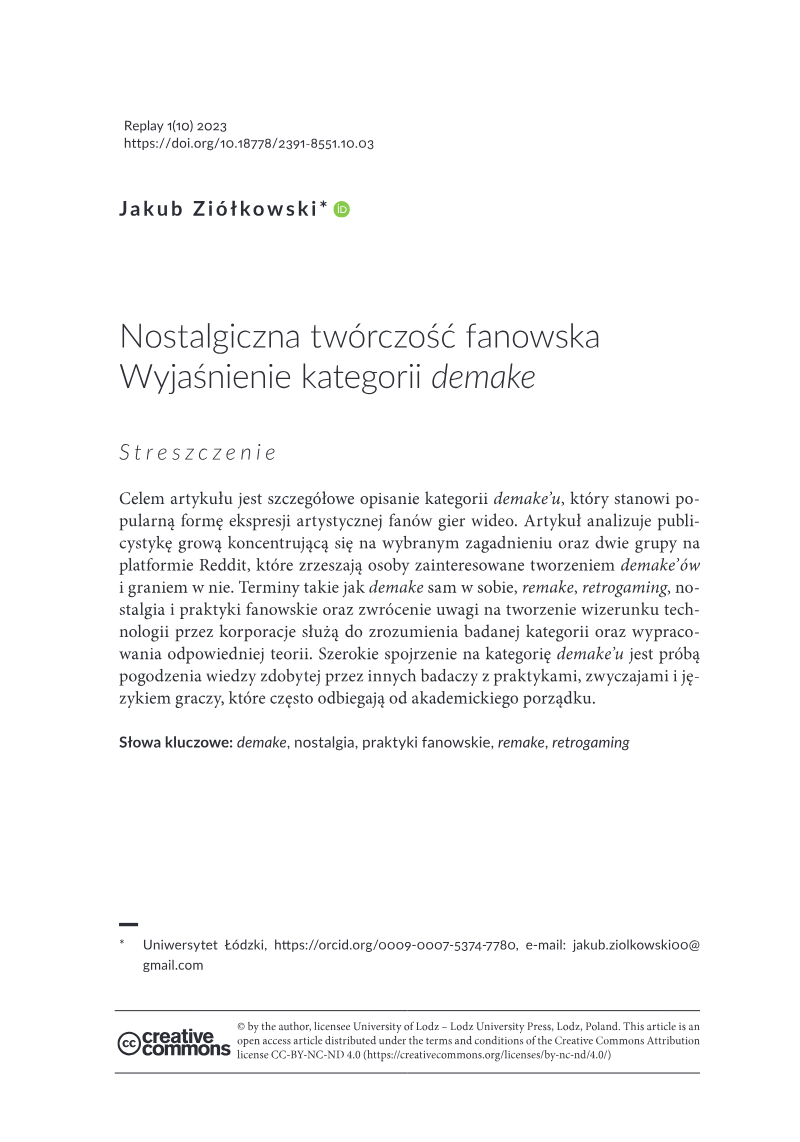
Nostalgic Fanworks: Explanation of the Demake Category
Demakes represent a distinct form of fan-driven creative expression that reimagines contemporary video games through the aesthetic, mechanical, and technical constraints of historical hardware.
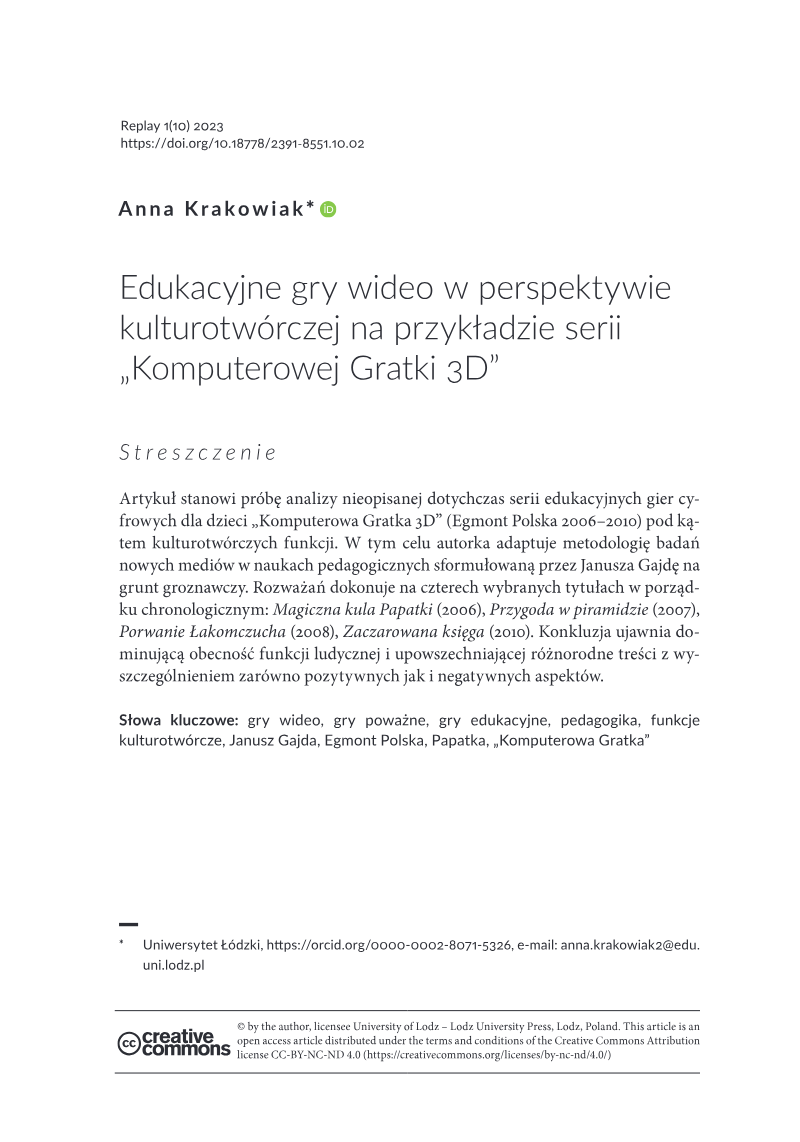
Educational Video Games in a Cultural Perspective: The Example of the Series “Komputerowa Gratka 3D”
The educational video game series Komputerowa Gratka 3D, published by Egmont Polska between 2006 and 2010, serves as a critical case study for understanding the intersection of pedagogy and digital entertainment.
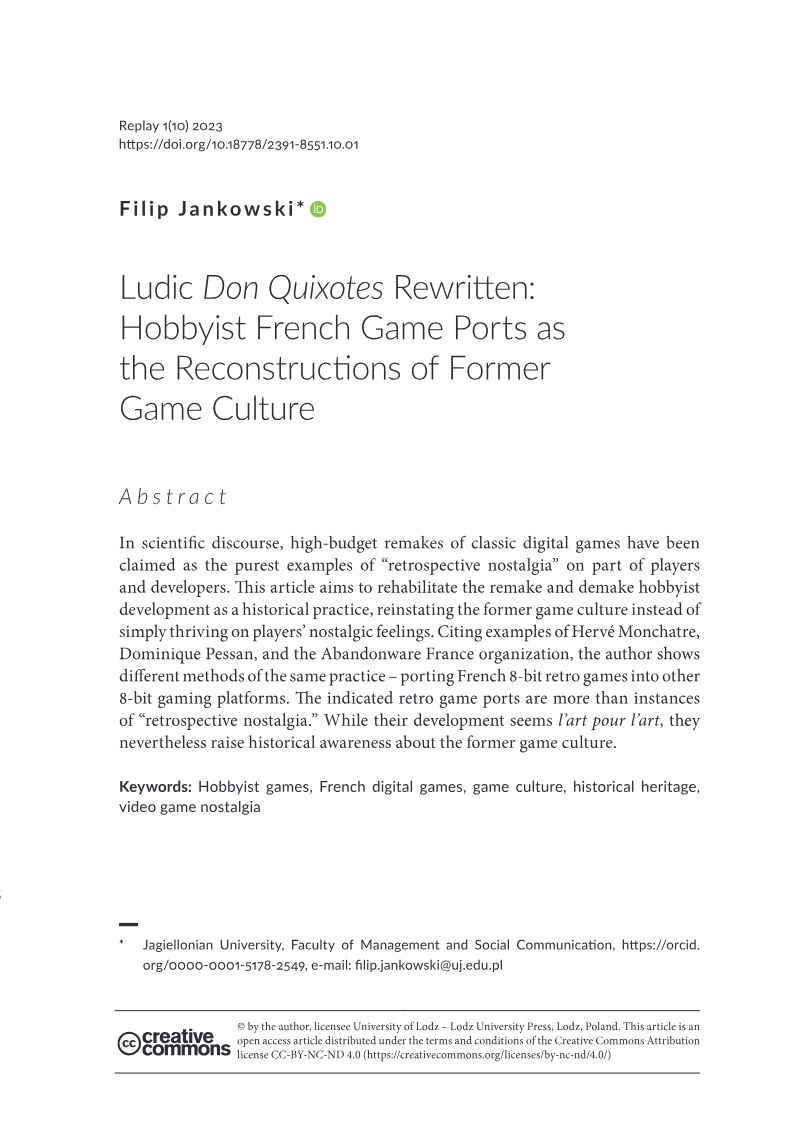
Ludic Don Quixotes Rewritten: Hobbyist French Game Ports as Reconstructions of Former Game Culture
Hobbyist game ports and demakes function as essential historical reconstructions that transcend simple restorative nostalgia.
Do you work at Replay. The Polish Journal of Game Studies? Get a free report of how these documents are read and cited here.