1 free read left. Create a free account for unlimited reading + AI research.
Create free accountReport Replay. The Polish Journal of Game Studies
1 free read left. Create a free account for unlimited reading + AI research.
Create free accountReportReplay. The Polish Journal of Game Studies
Distilling the key insights…
The 2015 European Network for Cinema and Media Studies (NECS) conference, held in Lodz, Poland, served as a major academic forum for nearly 350 researchers from 33 countries to address the evolving challenges of audiovisual culture, with a specific focus on the preservation and archiving of digital media. The event’s central thesis explored the tension between traditional archival practices and the ephemeral, complex nature of modern digital artifacts, including film, new media art, and video games.
Key findings highlighted the inadequacy of traditional museum and gallery frameworks in capturing the essence of digital art and gaming. Experts noted that digital art often operates outside institutional mainstream channels, necessitating new, interdisciplinary approaches to preservation. In the context of video games, discussions emphasized the distinction between archiving physical media—such as cartridges or discs—and preserving the intangible "experience" of gameplay. Data points presented during the conference underscored the scale of this challenge, noting that major online titles host populations comparable to small nations, yet lack standardized, sustainable archival methods. Furthermore, platform-specific data, such as the high percentage of unplayed titles on digital storefronts like Steam, complicates the historical record and cataloging accuracy.
The conference concluded that the responsibility for digital heritage remains an open, unresolved question involving developers, publishers, researchers, and amateur collectors. The consensus among participants was that current institutional structures are insufficient for the task. Instead, the future of digital archiving likely requires a shift toward decentralized, personal, and symbiotic systems that prioritize the documentation of user interaction and gameplay experiences alongside technical preservation. The event underscored an urgent need for collaborative, cross-disciplinary strategies to ensure that the rapidly evolving digital past remains accessible to future generations.
Each row is a game or company this document names, each column a document, oldest first. A mark means that document names it. Select a row to see those documents.
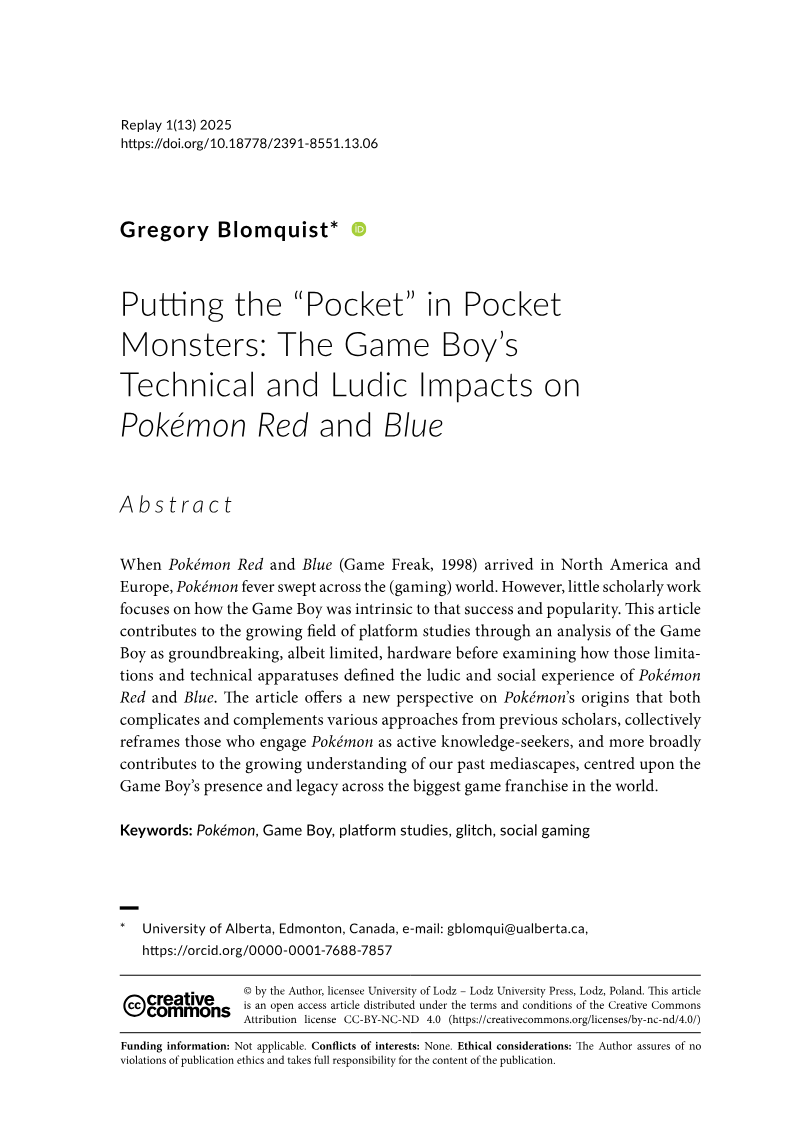
Replay. The Polish Journal of Game Studies · 2026
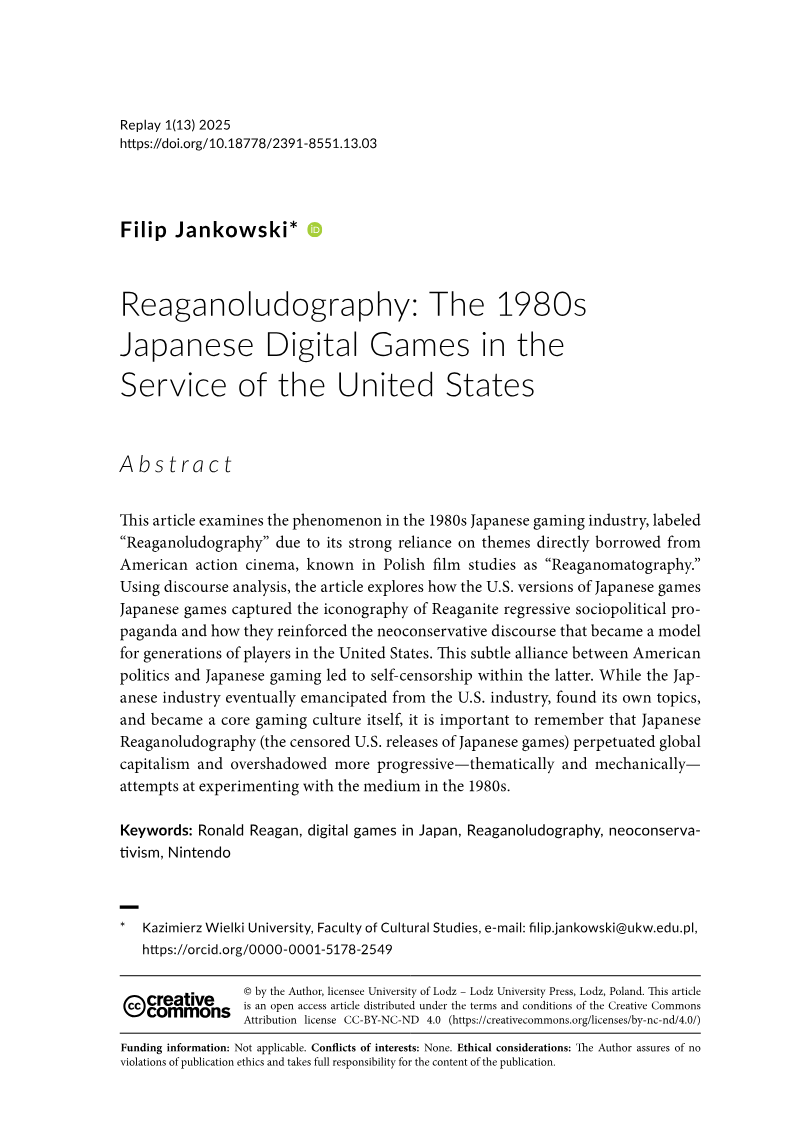
Replay. The Polish Journal of Game Studies · 2026



Replay. The Polish Journal of Game Studies · 2026
Replay. The Polish Journal of Game Studies · 2026
Replay. The Polish Journal of Game Studies · 2026
Replay. The Polish Journal of Game Studies · 2026
Replay. The Polish Journal of Game Studies · 2024
Replay. The Polish Journal of Game Studies · 2024
Replay. The Polish Journal of Game Studies · 2024
Replay. The Polish Journal of Game Studies · 2024
Replay. The Polish Journal of Game Studies · 2024
Replay. The Polish Journal of Game Studies · 2024
DiGRA · 2026