1 free read left. Create a free account for unlimited reading + AI research.
Create free accountArticle GameMakers
1 free read left. Create a free account for unlimited reading + AI research.
Create free accountArticleGameMakers
The deal is valued at 17-18x forward EBITDA. This is a discount to Activision's 20x multiple during its acquisition by Microsoft.
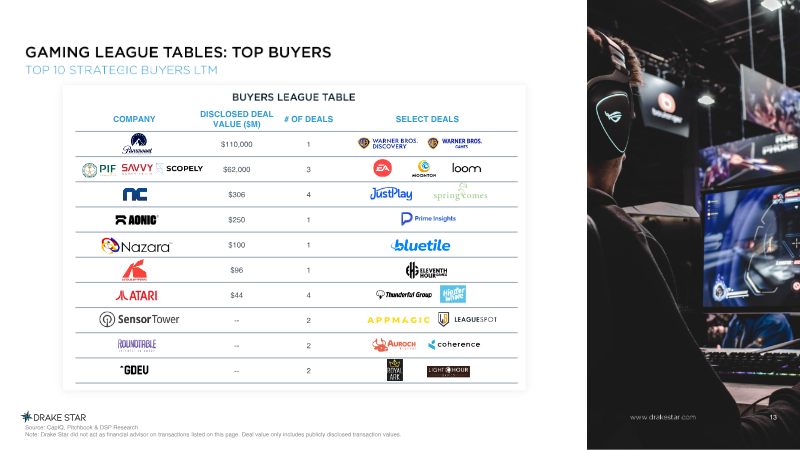
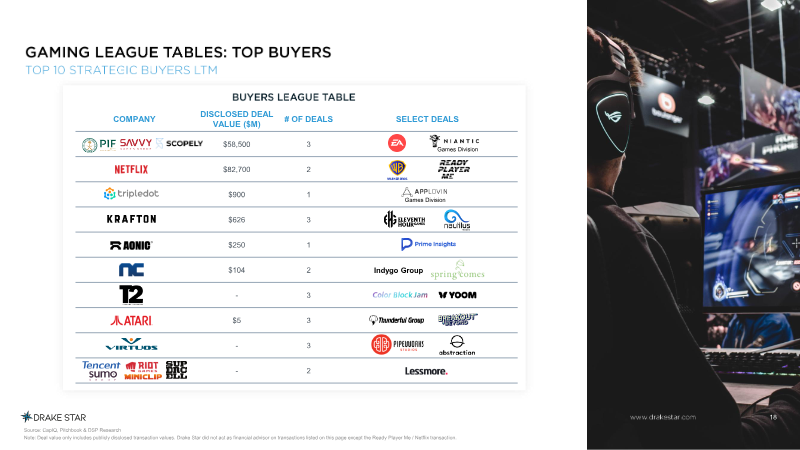
The acquisition of Electronic Arts (EA) by Saudi Arabia’s Public Investment Fund (PIF) for $55 billion represents a fundamental departure from traditional private equity leveraged buyout (LBO) models. Rather than adhering to standard practices such as immediate cost-cutting, aggressive headcount reductions, or short-term exit timelines, this deal utilizes "patient capital" to prioritize long-term strategic alignment with Saudi Arabia’s Vision 2030. The transaction is less about immediate operational efficiency and more about integrating EA’s sports portfolio into a broader global entertainment and geopolitical strategy, including potential synergies with live sports events and the development of Saudi Arabia as a global entertainment hub.
Analysis of the deal reveals that common criticisms regarding EA’s operational inefficiency are largely based on a misunderstanding of accounting practices. Because EA conservatively expenses software development costs rather than capitalizing them, their financial metrics appear weaker than those of peers who use different accounting standards. When evaluated on a bookings basis, EA’s performance is competitive, suggesting that the "operational bloat" narrative is inaccurate. Furthermore, the involvement of Silver Lake and Affinity Partners appears largely optical, as the PIF possesses the financial capacity to act as the primary backer and debt guarantor, insulating the company from the quarterly earnings pressures that typically drive LBO-related restructuring.
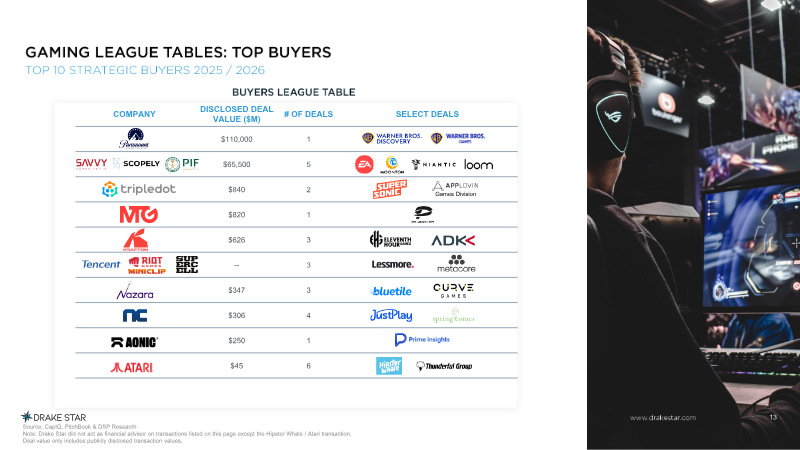
The scope of this shift highlights a shrinking public market for major gaming publishers, leaving Take-Two as the sole remaining independent major player in the U.S. public sector. While the deal may lead to knowledge transfers between EA and the PIF-owned Scopely, full-scale integration is unlikely due to the need for independent business justifications. Ultimately, the success of this acquisition will not be measured by traditional financial benchmarks, but by EA’s ability to serve as a cornerstone for Saudi Arabia’s long-term ambitions in the global attention economy.
GameMakers · 2026
GameMakers · 2026

GameMakers · 2026

GameMakers · 2026

GameMakers · 2026
GameMakers · 2026
GameMakers · 2026
GameMakers · 2026

GameMakers · 2026

GameMakers · 2026
GameMakers · 2026
GameMakers · 2026
Deconstructor of Fun · 2026