
GameMakers
F2P product management, game design, and monetization strategy by Joseph Kim.
Documents

TWIG 121: BlizzCon 2021, Valheim Built By 5 Devs, Zynga Accelerates Growth, Rovio M&A Target
The gaming industry is currently defined by a tension between massive corporate consolidation and the surprising agility of small-scale development teams.
- Major industry players like EA are driving consolidation through large-scale acquisitions, exemplified by the $1.2 billion purchase of Codemasters.
- Large publishers face significant growth headwinds due to the post-IDFA environment and the technical challenges of scaling new titles while managing third-party data sharing risks.
- Blizzard Entertainment is experiencing internal development delays for major titles like Overwatch 2 and Diablo IV, forcing a reliance on legacy franchises such as the Diablo II remaster.
F2P Design Tips for 2021, Copy Clash Royale! (1 of 4) Ft. Jeff Witt
Game design strategy for 2021 emphasizes the importance of selectively adopting successful mechanics from established titles rather than replicating entire systems.
- Adopt the real-time, card-based combat mechanics of Clash Royale while decoupling them from its shallow card economy to avoid long-term engagement and monetization plateaus.
- Replace flat, steep stat-boost models with a granular progression system spanning 40 to 60 levels rather than the standard 12, ensuring more frequent rewards and consistent player achievement.
- Mitigate the frustration of long grinds by keeping players within 'striking distance' of the next milestone through more frequent, manageable progression rewards.
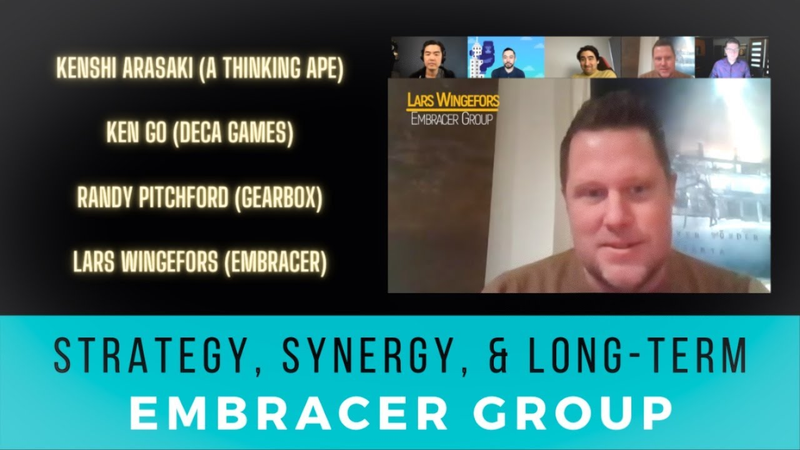
Embracer Group | Future, Synergy, and Focusing on the Long-term
Embracer Group operates as a decentralized federation of gaming entrepreneurs, prioritizing long-term value creation over the traditional corporate roll-up model.
- Embracer Group operates as a decentralized federation organized into eight independent operating units to preserve creative autonomy and entrepreneurial culture.
- The company’s acquisition strategy prioritizes long-term financial growth and multi-year relationships with creators over short-term margin optimization.
- The organizational structure is designed to provide studios with capital and a collaborative network to scale projects, rather than functioning as a traditional exit for founders.

TWIG 120: Supercell CEO Annual Letter, Zynga To Build Ad Network, Bad Robot Getting into Games
The gaming industry is currently undergoing a significant shift toward vertical integration and cloud-based infrastructure as companies navigate a landscape defined by mobile privacy constraints and evolving consumer habits.
- Zynga is internalizing its advertising network to mitigate the impact of Apple’s SKAdNetwork limitations and recapture margins lost to mobile privacy constraints.
- Supercell maintains a 31% profit margin and over five billion lifetime installs, though the company is experiencing a decline in annual revenue and EBITDA.
- Supercell faces internal friction as it attempts to reconcile its traditional small-team, prototype-focused culture with the resource-heavy demands of modern live-service operations.

How To Become A Great Manager!
Effective management in the games industry requires a dual commitment to achieving clear business objectives and fostering the professional development of individual team members.
- Effective management requires balancing business objectives with individual professional development by fostering trust and authenticity rather than relying on micromanagement.
- Operational excellence is best achieved by replacing infrequent, high-stakes performance reviews with a continuous feedback loop and regular, real-time coaching check-ins.
- Managers should utilize structured frameworks like skills matrices to define clear career progression expectations and help employees transition from technical tasks to broader organizational responsibilities.
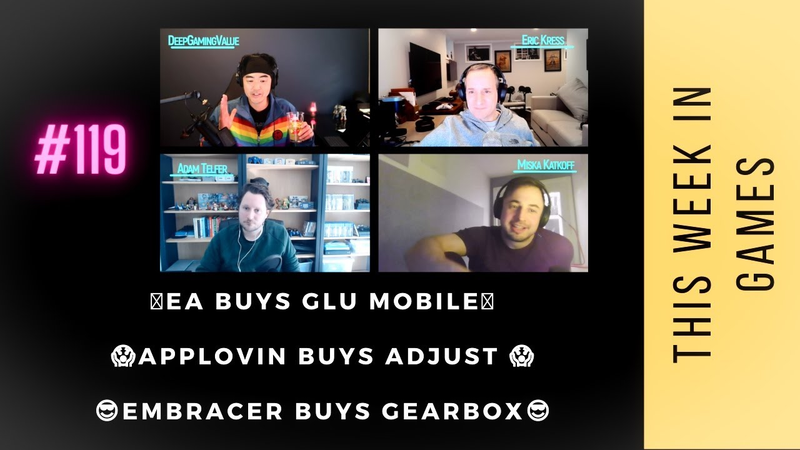
TWIG 119 : EA Buys Glu, AppLovin Buys Adjust, Embracer Buys Gearbox, and Predictions (Shooter, Mktg)
The gaming industry is currently undergoing a period of intense consolidation and strategic realignment, driven by the need to secure mobile expertise and navigate a shifting landscape defined by privacy changes and evolving monetization models.
- The gaming industry is undergoing rapid consolidation, highlighted by Electronic Arts' $2.1 billion acquisition of Glu Mobile and Embracer Group's $1.3 billion purchase of Gearbox Entertainment.
- The mobile shooter genre is a high-growth market that generated $2.1 billion in 2020, requiring deep-progression systems similar to Warframe or Escape from Tarkov to remain competitive.
- The deprecation of the Identifier for Advertisers (IDFA) is forcing a strategic shift away from traditional user acquisition toward reliance on established intellectual property and diversified marketing channels.

Future of Mobile Attribution | What to do Post-IDFA Deprecation!
The deprecation of the Identifier for Advertisers (IDFA) represents a fundamental shift in mobile attribution, rendering traditional click-based tracking methods obsolete.
- The deprecation of IDFA has rendered traditional click-based tracking obsolete, forcing a transition to Apple’s SKAdNetwork and the loss of granular, user-level data.
- Developers must now implement sophisticated internal modeling and complex instrumentation of conversion values to compensate for the lack of precise tracking data.
- To maintain user acquisition efficiency, studios must integrate with Mobile Measurement Partners (MMPs) and accelerate monetization signals earlier in the user funnel to generate actionable insights.

Developing UA Skills Over a Career
User acquisition (UA) is evolving from a channel-specific discipline into a broader growth function that requires a blend of storytelling, product intimacy, and data-driven experimentation.
- UA is shifting from a channel-specific discipline to a holistic growth function that requires managing complex, multi-channel ecosystems rather than focusing on individual platforms.
- Successful growth marketing relies on four core pillars: omnichannel orientation, empathetic storytelling, deep product understanding, and data-centricity.
- Marketers must move beyond immediate ROAS metrics to prioritize long-term retention and account for the 'honeymoon phase' of user behavior.

The Future of UA | Surviving the Death of Performance Marketing
The landscape of user acquisition is undergoing a fundamental transformation as the industry pivots from manual, granular media buying toward automated, machine-learning-driven platforms.
- User acquisition is shifting from manual, granular media buying to automated, machine-learning-driven platforms, rendering traditional tactical campaign management obsolete.
- The deprecation of identifiers like IDFA and stricter privacy regulations have necessitated a move toward custom attribution and media mix modeling over traditional performance metrics.
- Marketing roles are evolving into a hybrid function requiring a synthesis of data science, brand strategy, and product development to navigate complex, automated data environments.
Playtika IPO | Future for The Leader in Mobile Social Casino
Playtika’s initial public offering, which established an $11 billion valuation, reflects investor confidence in the company’s sophisticated, data-driven approach to the social casino market.
- Playtika achieved an $11 billion valuation by applying a software-as-a-service (SaaS) model to the social casino market, prioritizing operational optimization over new title development.
- The company’s growth is heavily dependent on mergers and acquisitions due to stalled organic growth and a lack of a proven track record for internal game development.
- Recent financial performance shows signs of stagnation, characterized by sequential revenue declines and challenging year-over-year comparisons.

Making Hit Roblox Games | Real Devs Share Secrets to Success
Achieving significant financial and creative success on the Roblox platform requires a transition from hobbyist experimentation to professional, long-term commitment.
- Sustained success on Roblox requires treating development as a full-time, long-term business rather than a hobby, as top-tier performance is built on years of technical refinement and team management.
- Top-performing games on the platform generate millions in annual revenue, supported by a business model where developers accept revenue-sharing in exchange for essential infrastructure, hosting, and moderation services.
- Effective monetization strategies prioritize ethical mechanics such as game passes, personalization, and pay-to-skip features, while avoiding controversial systems like loot boxes.

Mobile Ad Revenue in 2021
The mobile gaming industry is undergoing a fundamental transformation in 2021, driven primarily by the deprecation of the Identifier for Advertisers (IDFA).
- The deprecation of the Identifier for Advertisers (IDFA) in 2021 has triggered a market shock, with experts projecting CPM declines ranging from 30% to 50%.
- Publishers are shifting away from traditional waterfall mechanisms toward unified, real-time bidding to improve monetization efficiency and reduce latency in a post-IDFA environment.
- To mitigate the loss of granular tracking, the industry is pivoting toward contextual targeting, machine learning, and non-identifying data points to maintain ad performance.