1 free read left. Create a free account for unlimited reading + AI research.
Create free account
Embracer Group | Future, Synergy, and Focusing on the Long-term
Key insights
5 takeaways- 01The group maintains a long-term growth model by reinvesting cash flow into the business while minimizing centralized corporate interference in studio operations.
- 02The organizational structure is designed to provide studios with capital and a collaborative network to scale projects, rather than functioning as a traditional exit for founders.
- 03Embracer Group operates as a decentralized federation organized into eight independent operating units to preserve creative autonomy and entrepreneurial culture.
- 04The company’s acquisition strategy prioritizes long-term financial growth and multi-year relationships with creators over short-term margin optimization.
- 05Synergies are achieved by integrating high-definition development capabilities with live-service operations to facilitate transmedia expansion and multi-platform IP development.
Ask AI about this video
Transcript
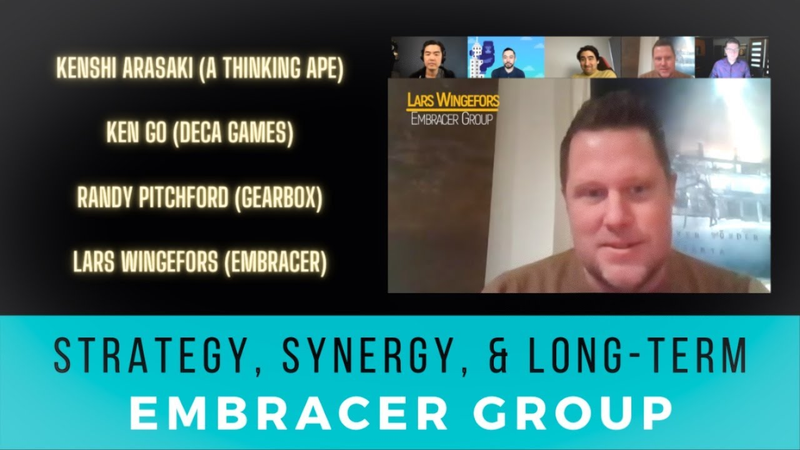
hello everybody and welcome today we'll be discussing game industry murders and acquisitions and in particular to discuss the strategy and outlook of game industry organizational consolidation with a specific eye on the embracer group and so here with us to talk about the games industry industry roll-ups and consolidation and more specifically about the embracer group we have first of all one of my favorite people in the industry kenshi arasaki ceo of a thinking ape one of the best in the industry at sort of long tail and forever franchise types of games from the very early days with games like kingdoms at war we also have kengo ceo of deca games who specialize in live operations having taken over and successfully managed a number of live operated titles such as the former greedy titles in particular like knights and dragons in modern war we have randy pitchford
president and ceo of gearbox and i think everyone knows gearbox games but most notably games like borderlands and finally we have lars vegaforce co-founder and group ceo of embracer group i would say quickly becoming very famous for a lot of the recent industry acquisitions they have been making welcome everybody to the podcast thanks for having me thanks for being here so i thought we could start maybe with you lars and just kind of jumping right into the embracer group and kind of the strategy that you're kind of rolling out so can you talk to us first about the embracer group in terms of the strategy behind acquiring the game studios that you have so far and kind of moving into the future yeah so you know first of all i'd like to to comment on you know i don't see it as a roll-up strategy you know looking at embracer i would rather look
at embracer as a more of a federation of gaming entrepreneurs and creators and we're doing something together you know i started when i was 16 20 eight years ago trading nes games and i've been through all the verticals of the industry and the shifts in the industry and it's just fantastic to build this group of you know great and leading entrepreneurs and creators across the industry and i think you know it's not about acquisitions you know for me we are more merging with uh fantastic companies and we're building this together and embracer giving them the resources in forms of capital obviously but also the ecosystem we are building to to support and to leverage in the the synergies you know
being you know ips or or development resources or distribution and marketing and i'm super long-term you know i've done this for again 28 years and i love doing what we're doing and you know adding this fantastic uh entrepreneurs on board that that also been around in many instances for as long uh and you know i'm looking forward to do this for you know another at least 20 years right so i i think it's important coming back to that and it's this is not like a financial roll-up you know for me you know i made my money even before i i made the ipo it's it's now being public i'm using the public market to
boost the businesses and and we are for example we are reinvesting as much of as possible of our cash flow into the future building even greater and better and more games so um feel free uh you know gentleman's uh or colleagues here to to you know to to give joseph your view about embracer but i think that is really important and and you know financial rollup is you know that is something completely different okay well lars maybe we could kind of dive into that comment a little bit more in terms of if you were to think about your strategy and you would characterize it as more of a federation of companies but talking about the recent movement towards getting additional scale so
in terms of what you're trying to do relative to kind of the acquisitions that are happening at other groups let's say you know still front eg7 mtg or even on the stevia side zynga platika these cut other companies that are acquiring to get to more scale is there would you say that the motivation for embrace your group is different from those companies or do you think it's similar i don't know you know i have all the respect for my for you know the whole industry and my colleagues and you know doing you know doing they're doing their business you know i'm doing my business and and you know obviously i think one differentiator from others could be that we are just very long term we i've been working past five years meeting you know more than 700 investors to find the absolute most long-term investors so we're building this together uh that's one example of i think a
differentiation uh it's for me it's not about you know what the share price is like the next quarter you know this is about building a real business uh that are sustainable uh so and i'm sure the others having a similar mindset i can't talk for them but sure we are doing our thing it's also worth pointing out that um one of the things that drew me to embrace her was finding out that um lars is basically the majority shareholder and he's gone on record saying that you know he's going to do this for the next 20 to 25 years and to me that was so initially that sounded so absurd that i needed to look into that some more and uh you know that creates i think a really interesting sort of structure uh so when lars is talking about long term like you know there are actual things that we can point to in the organizational
design that are sort of evidence of that and so maybe we could actually talk about that a little bit more so from the studio side kenshi ken and randy when you look at some of the companies the the larger companies out there who have been trying to acquire a number of different studios to try and achieve scale for whatever reason whether it's financial engineering or whether it's to build a federation like how do you think and clearly i mean you guys all must have been approached by multiple people in the past so when you're looking at the market right now in terms of a zynga versus uh mtg still front versus embracer what's kind of going on in your mind or how are you viewing these different players in the marketplace today and maybe starting with you kenji um so so yeah i think i certainly think the market is really interesting with all the consolidation that's going on um for me i guess i can mostly just talk
about uh you know how i sort of viewed embracer mostly because that's what i obviously have the most experience with and so i think i think in general the way that we design our own company and and i think when i sort of try to contrast the structure and embrace her with other companies i came across in the space i've really just become i think a really big fan of the decentralized model in general you know people talk about the decentralized model but i think it's maybe worth expounding a bit on why i believe that's such a key advantage why that's so important and why it's important to sort of really dig into companies that mention that they are part of the decentralized model they have a decentralized structure but they don't really and uh and and the reason for that is like you know i just believe that that you know the corporate graveyard in general is littered with the corpses of companies who are acquired and try to realize synergies with the parent company right and you know oftentimes you have
you know big companies trying to roll them up they believe they have a centralized team that's you know that knows better than the company um and you know they end up killing the culture and then the company ends up dying right or they consider it a failed acquisition um and so i i believe actually that the decentralized model is one of the most sustainable ways to grow an organization long term and there are various examples of that right um you know for example amazon's done that internally with their two pizza teams and their their internal decentralization um companies outside of the gaming industry like berkshire hathaway have done external right with acquisitions and they've done it for multiple decades and i think i think in general it's especially important in the gaming industry to worry about the culture of a company being preserved and why a decentralized model is important um you know i just think that gaming is just a creative process and it's heavily driven by the people and the culture behind it so if you destroy the culture you know you you basically destroy whatever was unique in that studio's
ability to create games in the first place um and so the the lens through which i look at these companies is i just kind of look at how are they structured and what are the sort of incentives that that creates and again coming back to berkshire hathaway you know the quote is you know you show me the incentives i'll show you the outcome um and so uh that's sort of how i look at acquires in general i know it's like a really high low level broad overview i don't know that i'm experienced enough or have enough expertise to be able to compare and contrast them in more detail than that okay can go yeah i think just to add to that you know i think you know all of the companies that you mentioned you know they're all good and great in their own ways you know and having the the privilege to be considered by any of them is always you know this is a good thing but i think that the differences between them is is there's similarities around this decentralization that they have what like kenji mentioned but there's also different ways that they're tackling it
and in the end i think the the main difference is culture between those those different companies you know each of them may have a high level similarities in strategy but then when you talk with the people and you understand how they're organized and how they are operating that's what i define as culture and you'll as you kind of peel underneath the layers you know any any company that's getting acquired that you know one of the big question marks is always going to be like what is going to happen to me and my company once we joined this group and you know the reason i why i joined embracer was because i really got along well with lars i really liked the team i really felt like there was a very similar history and philosophy to how we got started and what we wanted to do and i felt like they were going to be the best partner to help me reach my ambitions for my company you know and i think all of the entrepreneurs who are joining embracer
are not seeing it as an exit they're seeing it as a launching pad into something bigger and better that we're going to do together and i think that's what lars is mentioning you know that's what the embracer group is it's not it's not a single company it's it's sort of a it's a it's something that's going to catapult us into another atmosphere to help us do something more than we could have by ourselves and if you're going to do that with somebody you want to find somebody you feel you're comfortable with that you trust that you feel has the skills and expertise to help you and and that's going to be different for every company so the companies who are joining a baser feel like embracer is that partner that's going to be the one that helps them and they can choose another company and that might be right for other companies but for the i think for the people who are super long term who think about you know these like decade-long strategies who believe in this collaboration with like-minded entrepreneurs i think that's kind of the people who could kind of gear towards embracer right randy what about from your perspective is
being kind of you know not and it's kind of different from kenshi and ken in the sense that you're kind of coming from more of the hd side rather than the mobile side regardless of the kinds of games we make i mean at the end of the day we're we're the nut jobs that just want to entertain people you know we're the dancing monkey we're the we're the sideshow freaks that want to swallow the swords and see who's going to watch us as we breathe fire and uh uh you know if you think about some of the great you know if you want to get objective about it we can get outside our medium a little bit and think about music uh if you think about like the greatest songs of all time in every case it wasn't that that artist's first song but all of us who have gotten somewhere and had people want to bet on us they tend to like us for what they already know you know so like when gearbox is out there working with established publishing partners or other partners they just want to see us do what they already know us for and that's great and like i'm gonna play the hits you know like when the rolling stones played the super bowl in their
60s uh they opened with start me up they closed with satisfaction but they also had one of the new songs there in the middle off the new album and and and you're going to play the hits of course but but we want to push boundaries and take risks and try things and make entertainment that's never been made before and uh to do that it takes resources it takes capital and people like you know my company and me and gearbox and i'm sure you know kenshi and kengo have dealt with this we've we've had to explore if we wanted to to do things we'd have to either explore within the margins of our own success which fortunately we've all been very successful so we've we've been able to do that and prove ourselves uh but that there's a limit to that there's a limit to the margins of our own success and and lars is is a really interesting uh cat who gets that entertainers are going to entertain and and he's figured out how to have access to capital and how to connect investors in publicly traded markets
through through through his eye uh to trust and invest in the creations of talent like gearbox and like all the great companies of the embracer group and when we can funnel resources and trust to creators who just want to entertain people just want to make the greatest stuff cool things are going to happen and value will emerge and and and we have yet to even see how powerful this is like this is this is also i think part of the beginning of embracer story as as all of the member companies come to grips with this relationship and apply it towards uh towards the next step the value has not even been realized yet and yet look look what embracer's already done it's it's pretty pretty remarkable and i'm i'm really thrilled and excited to be a part of it and i'm i'm grateful that lars exists i can't it never occurred to me that such a group could exist before uh before discovering it uh and and and i i i'm just grateful to be a part of it right and so maybe like talking a little bit more about some of the potential synergies and as
is kenshi you kind of alluded to this a little bit and talking about decentralization right i think one of the one of the criticisms about decentralization has been the ability to do something beyond just scaling an existing company in terms of whether it's sharing best practices or things like that i think supercell is a good example of a company where you know it's like yeah they're fully decentralized but do they actually share best practices are there synergies that that kind of uh take place between these various studios and so maybe lars as you are gathering these different studios together what are you seeing is some of the synergies between them or are you thinking kind of kind of supercell zynga-like just you know kind of more decentralized and separate yeah so i think that one of the strengths of the embracer group is is our operating model and you need to understand the operating model uh to understand about synergies so
our our group has when the transaction with gearbox and easybrain uh closes we will have eight operating units and within those units there is obviously a daily synergy between between studios for example looking at our first operating unit thq nordic they have 20 studios and and you know as many external studios uh you know working together under the umbrella of thq nordic with all the producers and distribution and marketing and all that so you know obviously people sometimes say there is no synergies but on a daily basis there is a lot of synergies obviously people are working together but between the eight operating units it's obviously sometimes i'm sure there's
daily you know uh synergies as well but then it's more about you know finding opportunities and you know for example one one uh you know being saber doing a saber interactive doing a importing project on on an established ip for example or being that you know the distribution arm of koch media doing a distribution in a territory or or just sharing intelligence and sharing you know resources uh but i think we are just in the early days of this i think there is so much that could be done uh and will be done over the coming you know five ten twenty years across the group uh and you know i don't wanna force anything you know i wanted people to find and experience the group and and and and people are you know
talking to each other and sharing but i think that's the way to do the true long-term cooperation between people rather than having someone like dictating what they should do you can moderate things you can get people together you know unfortunately we have a pandemic which makes the you know the physical meetings harder but um but hopefully this pandemic will be over so and i can't wait to to get together and and and meet people can she i i know you've had um you know we've talked a little bit about some synergies and things of that nature so how are you viewing or what would you ex hope to see from a combined sort of federation type of group in terms of synergies yeah definitely um so the way i think about it i keep i keep coming back to a point in my life when i just started the company and i was talking to someone i really admired
i said um how do i find a good mentor and they said kenji you're thinking about it completely wrong um you don't you don't want to mention what you want to find is a really amazing group of peers and then you want to level each other up um and it's a sort of co-op friendly you know co-optician you know cooperation and competition where you're inspired by what each other is doing and you're pushing each other to be better and when i look back at my career you know every the most productive periods of my life was when i had those sort of peers and so um that's that's sort of what i'm looking forward to you know at embracer group you know we have uh when we're when we're you know negotiating our acquisition we had a really great peer with ken at deca games as well as our other you know our other operative groups outside of the free to play ecosystem and i i was i was sort of confident that that group would only grow over time and
you know in the last few months there's already you know there's already iugo and easy brain as well uh really amazing companies and so i believe that you know within the decentralized model that that sort of sharing and learning um is is like by far the the most sustainable way to sort of achieve any sort of synergies and it's it's kind of interesting right when you think about it you go to a conference you're going to see other gaming ceos and you're going to talk about numbers but they're going to be conference numbers which means they're not going to be real right um and you know but when you're when you're part of the same company and your shareholders in the same company you have the same incentives right you're really going to uh open the kimono so to speak you're going to share all the real numbers you're going to share the you're going to be vulnerable right you're going to share the real learnings um and and you have you have a reason to do so and and and you get to do that in a way that you know allows you to be fiercely independent right and i'll be the first to say this like i am a terrible employee right and so this is why this sort of model is it's great for me
and go yeah you know i just want to you know double down on what lars was saying that i think it's very i when i've read stuff about embracer i think one of the misconceived things is that there is a single strategy a single set of synergies but like lara said we are organized into these eight operative groups so i think it's sometimes confusing from an outsider's perspective when they see these different acquisitions happening and they seem to be very unrelated but actually if you look really closely and if you understand what each of these operative units uh strategies are that they start to make more sense so you know with a thinking ape and a hugo joining deca i think that i think you can see the synergies that that will happen within that group and then with sabre and all of these uh these great you know double a triple a developers adding to their group you can see how they can leverage the the skills and the strengths of their already great business you know the same thing with thq nordic
same thing with cork media and coffee stain each of them have their own unique strategies and their own strengths and weaknesses and as these other studios and companies are joining them i think if you look really closely it's it's easy to see the synergies but when you are so external and zoomed out and you see all these things happening sometimes it's a little bit confusing i just want to add that that you know think about embracer has eight separate individual operating units could be eight different companies but it's actually just under one bigger umbrella right and randy when i look at gearbox i actually see you know first of all when i first read about the you know the news i actually thought it was a really fantastic opportunity because when we look at the current trends in the market right now in terms of like cross-platform with games like inch and impact and things of that nature that at least on a theoretical basis if you can take the great sort of you know gameplay game experiences of hd companies and marry that with the expertise that folks like kenshi and kango are bringing from uh from a
free-to-play live operating type of model that you know that's potentially like peanut butter and chocolate but i don't know what what are your thoughts in terms of some of the synergies that you would hope to see in in the future and am i right about the the hd plus free to play or or am i wrong about that well i do love reese's peanut butter cups uh you know i'll tell you one thing that i think all of the companies in the embracer group have in common is uh there's a hunger uh and and everybody wants to to everybody sees opportunity to maximize and and nobody's there yet like there's all there's so much opportunity so much more opportunity that we can capture and some of that opportunity is going to come through collaborations with partners through uh taking advantage of someone else's strength and and and and and also each other mitigating each other's weaknesses so so that's a natural instinct that that all that all of the member companies have before uh enduring this this this relationship
that we have with embracer now as the group expands and even with the power that the group already has there there is going to be things that we notice like hey i really think there's some opportunity here and those guys are already kicking ass at that maybe we can connect up and get some advantage out of that but but if we find those opportunities and as we discover them and interact on them together there's just no friction between us anymore we can do you know kentucky was saying it earlier we can do a business to business inside the group with much less friction and we have this perfect mediator you know lars can can make sure that we can you can can uh you know scrape away the usual fear and and uh the the the companies that are sometimes even competitors with each other have when they try to do partnerships together and now in the embracer group we're not we're not competitors we're all allies now so that all that fear and all that protection side of what puts friction on it that can all be washed away and we can focus on the value and the opportunity
that we might see with each other and because because we we approach this because lars approaches this with with a decentralized strategy everybody at the table knows we're there because we want to be not because we were dragged there so so if you know if if ken go and i want to do a deal or kenshi and i want to do a deal uh it's not because we're being forced to it is because we see some mutual opportunity there and because we're all in the same family we can the friction can just just wash away and it's beautiful and i'm i'm pumped i cannot wait to take advantage of this advantage of this this unique feature of the embracer group that most other kind of centralized uh video game um corpse do not have by by the function of their design they just can never have it um yeah just to just to add up to that point you know and maybe to to kind of come back to an earlier question that you had joe you know when we've talked to potential suitors in the past you know a large part of it is how do i
make sure that you know we continue to be autonomous and we get to preserve our culture and um you know randy mentioned there's also like a hunger within the entrepreneurs in the embracer group and so the thing that was really interesting to me as part of my my own due diligence is i called i was introduced to a bunch of entrepreneurs in the embracer group and i actually did some back channeling too um and every single entrepreneur that i talked to was still at embracer after like after their now periods um in contrast when i called others you know at other potential inquiries when i talked to other founders who had been acquired after two years most of them were gone um and so to me i think that's a kind of a really big striking difference and uh and i think that's an advantage uh at least in my opinion for the race group right and when i look at you guys it's not like you know in terms of the kind of companies you guys have been around for quite a
while right you guys so talking to this approach about long-term companies you guys already are long-term companies and i guess with a long-term perspective and so lars when you're thinking about like the the acquisition process as you start to talk to different studios about potentially acquiring them can you walk us through what that process looks like for you and potentially how it might be different and like in terms of when you're thinking about acquisition if you're looking for companies that are long-term is there anything different the way that you do diligence or what you look for in terms of culture or things like that if you could speak to that would be great yeah so first of all i would like to point out that most of our acquisitions are or mergers that i would prefer to call them when there is a lot of equity included are driven by the operating group such as uh watch media or thq nordic
or or saber interactive and so on right so they they are obviously constantly uh looking to find more fantastic developers for most to join there to join their umbrella so that's a kind of a daily activity and looking now at the group we have roughly 60 game development studios within embracer but we work with another at least 70 external development studios and over time we welcome external development team to become part of the the family but we don't need to you know we don't need to own everything obviously and and we are super glad and happy and and uh to continue working with external development teams that's part of the the business um and
sometimes those relationships becomes very long-term you know for for many years obviously so i think that is part of the acquisition process that it's driven by the operating units and make major acquisitions uh are partly driven by by myself and my team here at the prank company uh for example i've been you know thrilled to get to know randy over the past years uh and and uh including and and you know obviously uh most of other acquisitions that we have been acquired or merging with under the parent company uh and so i think the overall group of people working with m a including the
ceos of the operating units and and you know the people at the parent company there is a lot of lot a lot of people you know there's up to 50 people working that on a daily basis [Music] and then we have the process of you know agreeing obviously trying i i personally i truly enjoy you know physical meeting people and discussing you know you know the business the future how to construct a deal and then kind of agreeing when agreed we're having a uh you know a process with the same advisors that we've been you know working with over the past years obviously doing all the financial and legal and tax to deal against sbas so yeah so it's so it's a it's a quite it's a quite organization uh
to you know to do all this right in is there anything in particular lars that you're looking for whether it comes to like the metrics or kind of revenue range or you know operating margin targets or things of that nature and uh yeah maybe we'll start there well you know i'm looking for you know great people that share the same ambition for the future you know that's that's what i'm looking for uh you know great entrepreneurs uh or or creators that want to you know continue doing what they're doing that we could you know add more resources into and it's just becoming greater you know i think that's obviously the most important thing uh then looking at the financials there is this every company have different financials so and an embracer have so many different kind of
business models so and we are not you know for example you know i i always looking at the absolute numbers rather than the percentage you know in the end of the day you you can't eat a percentage you you can only eat an absolute number so some businesses has lower margins but take less business risks some has amazing margins but the business risks are much higher so you need to balance that out i think that's one of the thing with embracer and that's why we are able to to be you know a public listed company that we have a very diverse business and very diverse revenue streams okay and i know you mentioned that with randy it this is a process that you said you got to know him over years is that the the acquisition process is this something where you do have to establish that relationship you have to get to know people over years it's not like
you're going to kenshi and being like hey hello here's a price let's do a deal it's it's more of a longer term thing is that is that how you would characterize that well i got to know ren i think it was one and a half years ago uh obviously i know about gearbox around if since 20 years or many many years back because it's they have done one of the most amazing games uh over decades so but for me it's about you know getting to know people uh over a longer period of time and i think it's important for people to also to evaluate their their options you know some some entrepreneurs that would like to you know do their own ipo some would like to do you know private equities you know so there is i think there is a process for most that's my experience as most entrepreneurs that like to do something else that like to
take the next step they they need to go through a process sometimes with advisors sometimes on their own and sometimes you know that process takes a few years and then i'm i'm glad to see uh that that in in quite a few instances that that they decide that embracer is the best or the alternative they would like to go with got it and then maybe from the studio side kenshi ken or randy could you guys speak to was the process a little bit different with because i i know you guys were approached by multiple folks right so in terms of the process from embracer relative to other folks where were there was there a different approach in terms of like the questions being asked or in terms of the relationships or things of that nature well i mean from my experience since since we've existed i think everyone we've ever partnered with
uh either overtly or uh uh or more more subtly has has made overtures uh to try to see if they could just capture our value and acquire the company uh and you know gearbox has kind of been allergic to that uh we've got a mission we've got we've got things to do you know and and and the the usual uh the usual kind of approach is less about fueling and empowering and and you know injecting rocket fuel into this machine that we built uh and more about just you know um sort of bleeding out whatever value we were in the moment of realizing right and and so i've always i've always been allergic to that stuff um in fact it it it's so it's so true that like like let's let's imagine all these entities are like animals out there to me i just picture them all like the shape of a dog and everything looks exactly the same yeah there's some that are larger and smaller but i just see this landscape full of dogs and when i first started interacting with lars uh
i thought he was a dog because they all look like dogs but you know the light maybe the lighting wasn't quite right or whatever but i realized holy this is a wolf uh and a a friend of mine a magician uh helped me uh with that analogy with his this show is a guy named derek delgadio who talks about the time between dog and wolf which is this time of day when the light is such where it's difficult to discern the difference and i was totally blind and it took a minute of knowing lars and actually uh being challenged and challenging myself to look at what he was actually doing uh and i got so used to just discounting and writing off uh the whole rest of the industry uh that it took a minute from for me to even understand uh the the the genius of lars's strategy and how how perfectly suited it is to what we actually all should be doing here as creatives as entertainers uh and as builders of this weird confluence between technology and art uh and and and he's figured it out and and as holy crap this is it this is the
model and it changed everything and it made it it made it not merely possible to have a conversation that i never expected to have but but become increasingly excited about it knowing that it's the it's the uh it is it is the missing piece to how we're going to light this rocket and go and go you know visit the stars it's rocket fuel it's it's i no longer am bound by gasoline uh or or you know harnessing lightning or fire like we we now have high octane rocket fuel and lars created it can't you or again yeah i don't think i'd add to that you know i think the difference that i experienced in my interactions was this sort of i got this feeling from like you know and sometimes you know when you're doing business it's sometimes it's about the number sometimes it's about the feeling uh so for me it was more about this feeling yeah i think in the process everyone's gonna look at your numbers but what i think lars is maybe his superpower is in my
experience it's just how he judges people and finding the right people that you know that fit what he's looking for and when i and i didn't realize this until i was on the other side of the table and working with him but when i just realized that now when we were doing our our our discussions that what made me really comfortable with him was this feeling like he's a real person and i'm i'm talking with the person who has been in my shoes who knows what i'm thinking and is able to evaluate people and on that kind of level of yeah this is a good businessman a good person something's going to fit the culture and i got the i don't know it's like sometimes you feel like you're doing business with the suit or with a paper and sometimes you feel like you're doing business with an actual human being and i think that was one of the biggest differences that i felt like when i was dealing with embracer was that i was dealing with mars i was dealing with an actual human and it wasn't like i was joining another company i was joining mars himself
and that everything that he was telling me i could take as the truth like i didn't have to never felt like i was had to second guess anything he was telling me because everything i saw everything i heard everything that um he said uh was was actually happening and you know some of these things you you have to make a leap of faith to just trust that you know with the the person you're dealing with is going to hold their their word as their bond but you know as you talk with a lot of people industry you you kind of get a sense of the different types of people out there when you talk with ours you get this very altruistic sense a very uh my word is my bond if i tell it to you i'm going to hold my i'm going to hold to the to that word you know and that's very rare and something that i really appreciated can't you um not too much to add to what the other guys had said um other than you know over the years i think ata or
thinking ape has had a lot of suitors um and in the same vein uh i mostly discounted them or we just you know we prefer to go our own way and in fact even before we run the process in which we joined embracer we were you know we believed our best years are ahead of us we believe you know we believe that like we're on the verge of great and tremendous growth and the the default path was to stay independent uh because you know we wanted to be in the control of our destiny and it wasn't until we came across embracer and the unique structure that they have um and and you know in line with what ken was saying i think you know lars and the rest of the team that embrace it they really personify the quote uh that you know i like to sort of think about when i ponder any sort of business relationship right and that's if i wouldn't work with you for a lifetime i won't work with you for five minutes and and i think you know lars and co
are a perfect example of people that i want to work with for a lifetime and yeah and and i think i think that was you know that the sort of uniqueness about that and the way that embracer creates really great long-term incentives um for for the entrepreneurs in the group i think that's why you're starting to see a lot of really great companies and really great people starting to take note and they're really starting to say wow like this this is actually something really interesting and this is something that i should pay attention to right i'm very humbled hearing you guys i don't know what to say thank you maybe i could ask a question about essentially successful operating models now kenji had mentioned that he did some background checks in terms of some of the acquired groups from by embracer and noted that unlike maybe other acquirers that there were founders and teams that were still there after a few years now when we look
at and not not to focus on other you know industry consolidators in the market but let's say when we look at a company like zynga and we saw that in the early days a lot of their acquisitions just were not having very much success for whatever reason and then more recently over the let's say the past three four years we've seen a number of their acquisitions add meaningfully to the value of zynga's business and i would say much more success or at least that's the view of the industry is that they've been a lot more successful in recent years now the cynical view on that is that they just kind of moved up and bought like larger scale companies and things of that nature but in terms of your perspective and when you think about how do you make sure that the companies you acquire are going to be successful over that long term period to to the point about your strategy how do you think about that in terms of the successful model for acquisition so that you can
have not only the companies add value to the company but be around for a long time and having these management teams or founders be around after two years um no i think it's uh important to to understand a fundamental approach to to you know is trust no it's and and you know letting the the verticals have the autonomy uh i think that is the key to success not not start messing up other people's business you know you should support you should support uh you know your businesses obviously whatever what whatever they need and and and i think it's very easy to you know start adding a lot of people centrally that are kind of experts and directors uh uh
and that will i i'm just a firm believer that that will could start messing up the business and that's why at the embracer level we don't have a lot of industry experts so the industry experts are obviously the entrepreneurs that are building this group and their management teams and letting them work together i think that is a big differentiator um and you know why should i spend this millions or billions acquiring the best and most amazing companies and entrepreneurs and creators if i'm not trusting them to you know continue operating and building to the future i think that's a fundamental difference i i can't comment on synga i'm sure they are amazing
but just general talking about them okay so maybe we can talk about the future and i think that you know i guess kind of a cynical view one that i've i've actually uh been putting out there as well is that because of all of the you know the number of acquisitions over the past few years by various industry groups and and companies that it seems to me my view is that the mid tier for a lot of like mid-tier skill game studios have already been acquired so lars when you look in terms of the future of embracer what does the future look like for you is it continued acquisitions do you think there are still a lot of attractive companies to acquire and maybe you could just talk about the longer term uh future plans or shorter short term or longer-term future plans of embracer no yeah i think it's very easy you know
we will continue uh we will continue the same strategy we had the past years uh you know we will continue adding fantastic companies we are just you know point five percent or one percent of the industry and i think there is plenty of room with other amazing companies out there that that i you know would make sense to join the group uh i think i think it makes sense even more now to join embracer than it perhaps were like five years ago because now we have you know even more resources available in terms of capital but also the ecosystem is much wider so i think our offering for you know people merging with us is is greater than ever and i you know i don't see a change in that strategy over the coming 20 years
okay and can she for you what does the future look like for a thinking ape um well the beautiful thing is that uh our incentives with embracer align really well with our long-term strategic planning internally and for us that's uh i mean long story short it's we just want to continue to scale the company and get a have a much larger impact okay another thing to point out is that i think we're really focused you know not on acquisitions ourselves but we're really focused on creating really great organic growth and i think something that's unique about embracer um well something that is one of embracer's strengths is you know even though they do uh bring new companies into the fold uh they also have really strong organic growth uh and it's something that we uh
continually reinvest in and you know i think that's something that's also really exciting okay can go future plans for deca oh for deca you know we are we're building this kind of mini embracer with an embracer so we were the first mobile and free to play focus company that embracer acquired and you know i was lucky enough to have kenshi join join me and to to build up this strategy to help help grow the free-to-play side of embracer to be as big or hopefully bigger than the premium side that already existed um it's going to be harder now with with randy joining the picture so we have a lot of big hill to overcome but i mean that's our that's our ambition we want to build up something bigger we want to build an ecosystem on the free-to-play side of things that's going to um allow each of these group companies that are going to join us to be stronger than they were independent right and is that loosely how embracer is structured is it kind of free to play and then like premium hd
or i mean we're structured into these operative groups right and so these eight different groups have their own unique strategies okay uh you know deca has always been focused on m a so we've been we were originally acquiring just games and then with kenshi and hugo we added studios to our strategy so that's something relatively new it was basically a month after we joined we started acquiring studios so that was a big transition for us and that was something that i wanted though that was something that was the reason why i joined the british in the first place was to be able to do more than i was able to do on my own like like randy was mentioning you know those are things i would have been too shy or too scared to take on that risk by myself but now as part of the group we've got all of these resources and i've been able to bring on like great minds like kenshi and hungi from a hugo and now we get to you know challenge each other with people like randy and so that's that's that's going to be the future for deca is finding other like-minded studios that other you know either publishers or
just pure developers both on mobile and on pc that want to be part of this ecosystem in order to share knowledge and build up something together okay and randy future gearbox oh man we got a lot of plans we got a lot of work to do you know our mission is to entertain the world and you know we we've had some success in video games and we've had some success with titles like you know it's pretty awesome to sell 60 million units of borderlands games but when you compare that against the the population of the planet we're a dismal failure we have so much work to do uh and and the way we get there is through you know look we've got some incredible ip we need to maximize that and some of that isn't g is through adjacent moves uh into new platforms new territories new business models you know some people really want to play games uh that that don't have a lot of friction up front so they want free to play as their access point other people don't trust games unless they're premium you know so so i we have to make different products for
these different kinds of customers if we hope to entertain them so so business models are going to be a part of it uh and demographic we we we should be creating new ip that reach different types of people for different types of reasons and context and then uh you know you think about platform yeah that that's great in the game space but that could also extend to the medium itself you know i'm about to go to hungary to work on this movie that we're working on with borderlands and uh i've been neck deep in this process for a while and we're learning a lot about transmedia and to be able to work with you know lionsgate and arad productions and you know eli roth is the director and kate blanchett and uh kevin hart and jamie lee curtis and there's other people coming like this is an incredible experience that will lead to more and more expertise and capability with transmedia and there's so many vehicles and ways that we can entertain people and i think we're just getting started i think we're just getting started awesome okay guys well i want to really thank you for your time i guess in closing is there any final
message you would have for our audience are there any lars do you have any specific kinds of companies you're looking for that you'd like to have reach out to you at all no i i just want to highlight you know to allow people to have their creative freedom and to allow people to you know make their own decisions and to give them time you know i'm always talking about that when having this public reporting that you know we need to let people take their time to make great gains and i think without specifically mentioning any titles i think you have been able to see that coming out from the embrace group the past period so i think that is super important and uh and that's why we you know we're building this and we're being very diverse and and uh you know i can't wait for you know what the future will bring awesome all right well
thank you very much for your time everybody kenshi kango lawrence and randy i definitely appreciate your time and um until next time thanks everybody thank you cheers [Music]
Summary
Embracer Group operates as a decentralized federation of gaming entrepreneurs, prioritizing long-term value creation over the traditional corporate roll-up model. By organizing its diverse portfolio into eight independent operating units, the company fosters an environment where creative autonomy and entrepreneurial culture remain central to studio operations. This structure is designed to provide acquired teams with the capital and collaborative network necessary to scale their projects, effectively serving as a launching pad for growth rather than a conventional exit for founders.
The acquisition strategy focuses on cultivating multi-year relationships with creators who align with a long-term vision of absolute financial growth. Rather than prioritizing short-term margins or imposing centralized control, the organization empowers studio leaders to maintain their unique identities while leveraging shared expertise across the group. This approach facilitates synergies, such as the integration of high-definition development capabilities with live-service operations, allowing studios to pursue complex objectives like transmedia expansion and multi-platform intellectual property development with reduced friction.
Looking toward a multi-decade horizon, the company intends to sustain its aggressive acquisition strategy while scaling its existing ecosystem. By reinvesting cash flow into the business and maintaining a structure that minimizes corporate interference, the group aims to preserve the creative integrity of its studios. This model positions the organization to capitalize on the collective knowledge of its peers, ensuring that individual studios remain agile and focused on long-term goals within a supportive, resource-rich environment.