
Game Production Alchemist
Game production craft and team leadership, by Rob Sandberg.
Documents

I Have Never Seen a Game Fail Because the Artists Were Too Slow
Game development failures are fundamentally rooted in unstable leadership and frequent, late-stage shifts in project direction rather than insufficient artistic output.
- Game failures are rarely due to slow artists; instead, unstable creative direction and frequent design changes are major culprits, leading to significant rework and wasted resources, as seen with Skull and Bones, which changed core premises at least four times and cost nearly $200 million.
- Faster execution, particularly with tools like generative AI, can increase the cost of unstable direction by generating more 'work in flight' that becomes write-offs when pivots occur, making untangling more expensive.
- Generative AI in game development, while potentially useful in pre-production where artifacts are meant to be discarded, poses risks if prototypes are promoted to production, leading to architectures built on unreviewed, unauthored, and unreproducible code.

This Free Flow-Metrics Tool Was Too Technical For Me a Year Ago. Not Anymore.
The primary purpose of this analysis is to advocate for the use of open-source flow metrics in game production, specifically highlighting how AI-assisted workflows have lowered the technical barrier to entry for non-developers.
- JiraMetrics is a free, open-source, and self-hosted flow-metrics tool for Jira that eliminates per-seat licensing costs and data egress concerns.
- The tool's setup, previously challenging for non-developers, has become easier due to advancements in agentic workflows (like using Claude Code), allowing for quick integration with existing Jira instances.
- Beyond generating charts, JiraMetrics includes a data-quality diagnostics section that audits Jira board history for inconsistencies (e.g., incorrect status transitions, issues created in-progress), identifying data that cannot be trusted for accurate flow metrics.

The AI Deadline Nobody in Games Is Talking About: 2 August
The European Union’s AI Act, specifically Article 50, introduces mandatory transparency obligations for game developers that take effect on August 2, 2026.
- The EU AI Act’s Article 50 transparency obligations take effect on August 2, 2026, with non-compliance penalties reaching up to 15 million euros or 3% of worldwide turnover.
- These regulations apply to any studio worldwide that sells games to players in the EU, regardless of the studio's physical location.
- While video games receive an 'artistic work' carve-out that allows for unobtrusive disclosures in credits or loading screens, this exemption does not extend to marketing materials, trailers, or store pages.
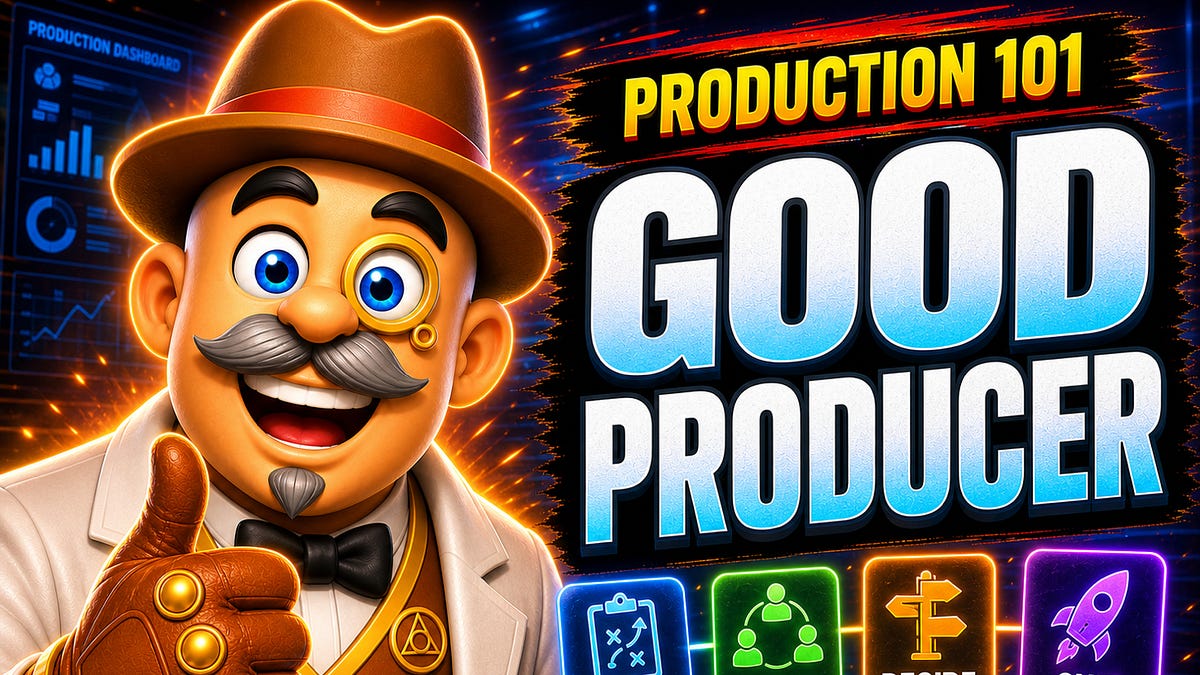
Production 101: The Traits That Separate Good Producers from Everyone Else
High-performing game producers distinguish themselves from their peers not through technical proficiency in scheduling or risk management, but through a specific set of soft skills and leadership behaviors.
- High-performing game producers prioritize emotional intelligence, which involves self-awareness, understanding team dynamics, and focusing on optimal outcomes rather than winning arguments.
- Effective producers practice active listening by speaking last in meetings to gather better information and ensure the team feels heard, fostering motivation and better decision-making.
- True empowerment from a producer means providing clarity on goals and constraints, and creating an environment where teams feel safe to experiment and take initiative without fear of punishment.
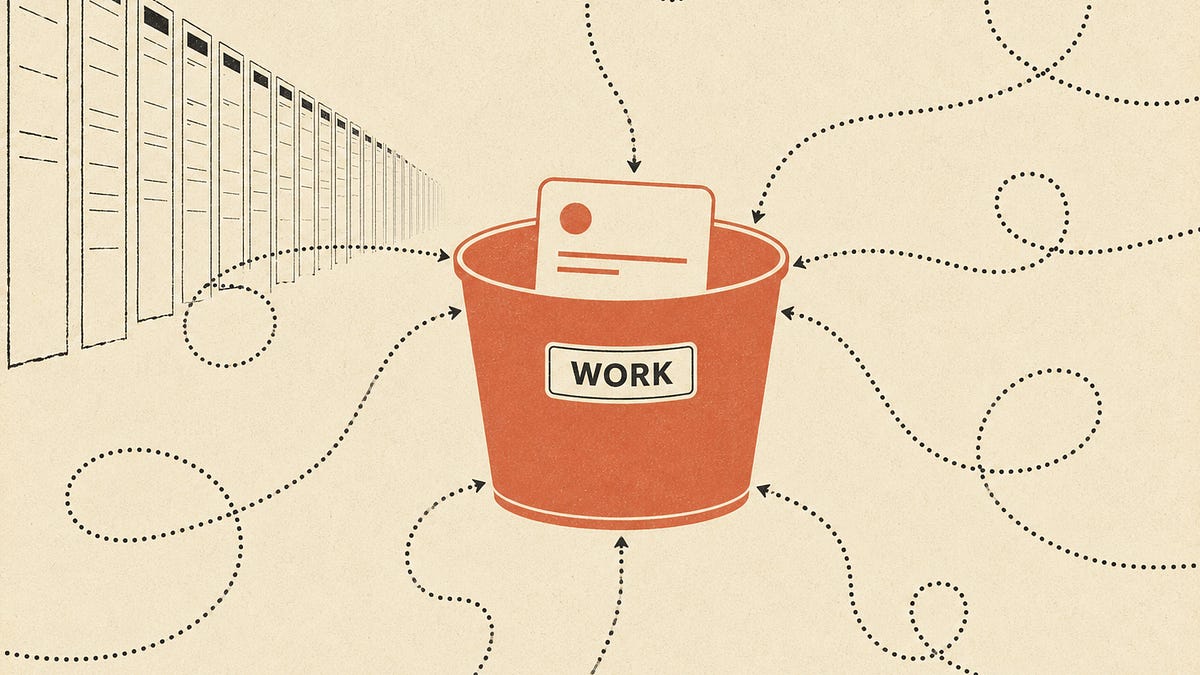
Reading Bruno Baketarić: Fixed the One Kanban Problem I Never Solved in Decades
The primary thesis of this analysis is that traditional Kanban boards in creative industries frequently fail because they model the action space of human activity rather than the state space of the work itself.
- Kanban boards for creative work should model the 'state space' of work items—the condition of the asset—rather than the 'action space' of the people performing the work.
- Mapping boards by activity leads to 'column sprawl' and constant board growth because creative work lacks a fixed, linear route, causing the card metaphor to break down once a team exceeds approximately ten states.
- Defining columns by state rather than activity allows varying work routes to share the same space, as conditions like 'in production' or 'awaiting review' remain true regardless of the specific path taken to reach them.

Nobody Decided Godot Had an AI Problem for Months. Then Somebody Finally Did.
The Godot Foundation’s June 2026 implementation of a new contribution policy serves as a case study in organizational decision-making regarding the integration of artificial intelligence in open-source development.
- Godot's new AI contribution policy, published on June 30, 2026, was a response to a long-standing reviewer bandwidth problem, not primarily an ethics decision. Reviewer capacity had not scaled with submission volume, which increased by 3.6x (from 25 million to 90 million merged pull requests per month) between January 2023 and March 2026.
- The Godot Foundation explicitly acknowledged that the reviewer shortage was a known problem they had 'successfully ignored' for months before implementing the policy.
- Godot's maintainers, such as Rémi Verschelde, publicly described AI pull requests as 'increasingly draining and demoralising' earlier in 2026, indicating the issue was recognized well before the formal policy.

The AI Question in Games Needs a Second Axis, and Then a Third
The industry-wide debate regarding artificial intelligence in game development suffers from an oversimplified focus on whether AI was used in a project.
- Understanding AI's role in game development requires a multi-dimensional framework, not a single linear scale. The initial framework, while useful, conflates different aspects like pipeline location and output intensity.
- The report proposes two primary axes for evaluating AI in games: 'pipeline location' (where AI touched the work) and 'output intensity' (how much AI determined the final shipped product).
- A crucial third axis, 'provenance,' is needed to address legal exposure, encompassing factors like pretraining corpus, fine-tuning data, consent for likeness/voice, and vendor indemnity. This is critical as courts will not differentiate between abstract capability and final render.

Production 101: The Role of an External Producer
The role of an external producer serves as a critical bridge between a publisher and an independent development studio.
- The external producer acts as the bridge between a publisher's funding and a studio's development, operating with 'influence without authority' because they cannot directly control the team building the game.
- Success in the role requires high financial and legal literacy, as producers must manage publisher-side P&L, forecast costs before scope is finalized, and navigate complex contractual amendments.
- Milestone oversight is a critical, formal responsibility where producers must precisely evaluate deliverables against Statements of Work, as approvals trigger payments and rejections carry significant legal weight.

What 90 Image Generations Taught Me About AI Concept Art at Production Scale
The integration of generative AI into professional game production reveals a significant gap between the capability to create individual images and the requirements for maintaining consistency at scale.
- AI image generation models, when used for concept art at production scale, lack object permanence and memory, meaning each new generation or camera angle effectively creates a 'different room' requiring extensive re-specification.
- The 'seed' feature, crucial for reproducibility in image generation, was consistently null across over 90 generations and four projects when using image edit endpoints, preventing consistent iteration.
- The labor in AI concept art shifts from initial artistic direction to reactive, forensic correction, with prompts growing from 147 words to 900 words to compensate for the model's lack of memory and consistency.

The Artefact Arrived Before Anyone Was Ready to Review It
The integration of artificial intelligence into game production has fundamentally altered the evaluation process, shifting the primary bottleneck from production capacity to stakeholder reception.
- AI has effectively removed the constraint on transmission volume, allowing teams to generate thirty artefacts in the time it previously took to create three.
- The primary bottleneck in modern game production is no longer the speed of creation, but the fixed reception capacity of senior stakeholders who have a finite amount of time to review incoming work.
- AI-generated artefacts often appear polished and finished, which short-circuits the review instinct in stakeholders who typically only engage with work that looks complete.
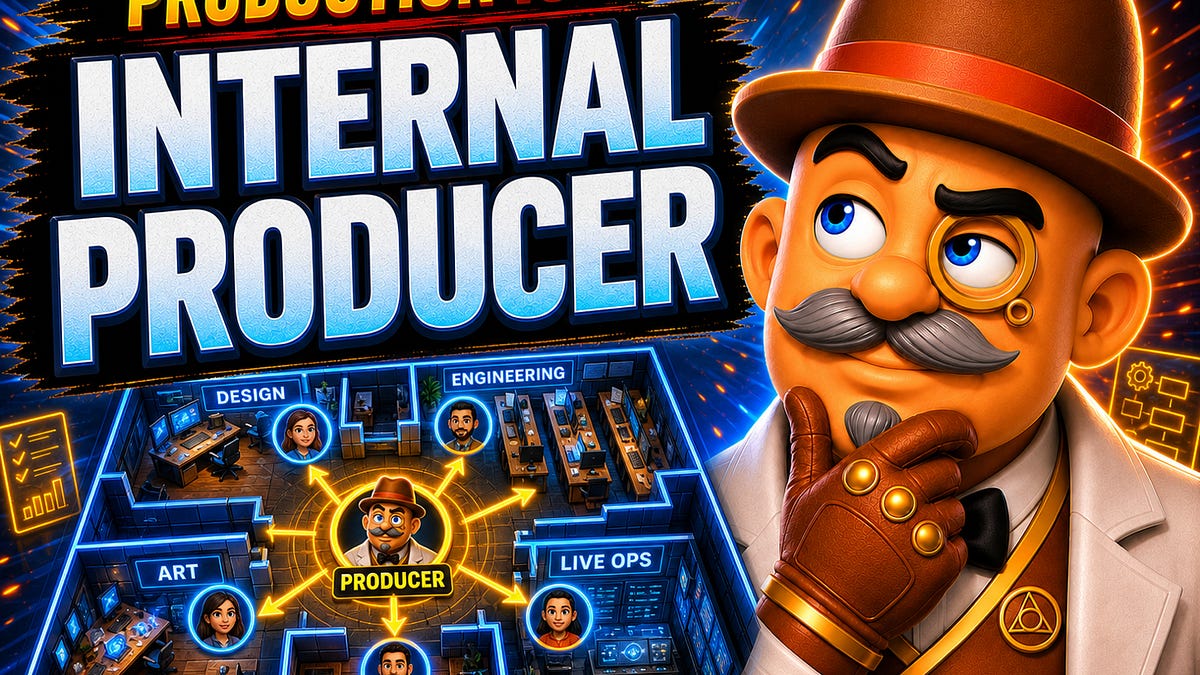
Production 101: Role of an Internal Producer
The role of an internal game producer is defined by a dual accountability to both project delivery and team sustainability.
- An internal producer holds dual accountability: ensuring project delivery (schedules, milestones, and budgets) while simultaneously protecting team capacity and long-term sustainability.
- The role functions as the bridge between creative vision and execution, requiring the producer to manage dependencies, scope changes, and risk without directly creating the game's assets or code.
- Effective internal producers must own the project's financial picture, including tracking budgets, expenditures, and vendor relationships, even when finance departments are involved.

Rockstar Fired Thirty-Four People and Made the Union Stronger: What That Means for GTA 6
The October 2025 termination of 34 employees at Rockstar Games serves as a critical case study in the failure of traditional union-suppression tactics within the video game industry.
- Rockstar Games fired 34 employees across its UK and Canadian offices on October 30, 2025, citing gross misconduct for sharing confidential information, which the IWGB union claims was an attempt to suppress unionization efforts.
- The Rockstar Game Workers Union, under the IWGB, publicly launched on May 28, 2026, covering all five UK studios (Edinburgh, London, Leeds, Lincoln, Dundee), just five months before GTA 6's scheduled release on November 19, 2026.
- The union's formation and growth were a direct result of Rockstar's actions; the firings occurred two days after the IWGB reached the 10% membership threshold required for formal union recognition in the UK, and membership subsequently increased.