
Game Production Alchemist
Game production craft and team leadership, by Rob Sandberg.
Documents

Agile Risk Management in the Game Studio
Agile risk management functions as a critical framework for modern game development, shifting the industry away from static, predictive planning toward iterative, adaptive workflows.
- Agile risk management should be treated as a proactive, strategic process that identifies both negative threats and 'positive risks'—opportunities that can drive project innovation and performance.
- Risks must be distinguished from issues: risks are future uncertainties that require planning and mitigation, while issues are current, tangible problems that require immediate resolution and stakeholder communication.
- Effective risk identification should utilize an 'if-then' format to clearly define the cause-and-effect relationship, allowing teams to better understand the potential impact on project timelines and costs.

From Meteorology to Project Management: The Power of Predictive Modelling - Part 2
Monte Carlo Simulation (MCS) serves as a powerful, data-driven alternative to traditional project estimation in game development.
- Monte Carlo Simulation (MCS) forecasts project completion by analyzing historical team throughput data to generate a probability distribution, rather than relying on individual task estimates.
- Using tools like ActionableAgile, teams can determine the probability of completing a specific volume of work by a set date, such as an 85% confidence level for finishing 100 tasks by March 20th.
- This methodology eliminates the need for developers to provide individual task estimates, shifting the burden of forecasting entirely to the production team.

My Product Owner is a Robot: Using ChatGPT to Create User Stories
This analysis evaluates the efficacy of using generative AI, specifically ChatGPT, to assist in the creation of user stories for game development.
- Generative AI can reduce the time required to draft and refine user stories from hours of manual work to less than ten minutes.
- ChatGPT effectively generates granular user stories following the standard 'As a (ROLE), I want to (ACTION), so that (BENEFIT)' format, including the often-neglected benefit component.
- Beyond simple task lists, AI can successfully organize outputs into a structured User Story Map, categorizing features by epics and logical development stages.
Bridging the Gap: Strategies for Implementing Change in Game Studios
The primary objective is to provide a strategic framework for managing organizational change within game studios, specifically addressing the complexities of implementing new methodologies like Agile.
- Successful organizational change requires navigating the 'Change Curve,' a framework that tracks emotional transitions from shock and denial to acceptance, allowing leaders to provide targeted support based on an individual's specific stage.
- The adoption model categorizes employees into five groups—Innovators, Early Adopters, Early Majority, Late Majority, and Laggards—each requiring different levels of evidence, training, and encouragement to successfully transition to new practices.
- Agile transformations often fail when they focus exclusively on specific methodologies like Scrum or Kanban rather than the broader, more complex process of organizational transformation.

Beyond Methodology: Cultivating an Agile Mindset in Studio Operations
The core thesis posits that successful game studio operations require an agile mindset rather than a superficial adherence to agile methodologies.
- True agility in game studios is a cultural transformation that requires shifting from merely 'doing' agile processes to 'being' agile through a fundamental change in mindset.
- Agile adoption is a gradual, long-term journey rather than a quick fix, as it necessitates deep-seated shifts in team behavior, thinking patterns, and organizational culture.
- Effective agile implementation relies on a paradox where rigid, structured practices—such as sprints, retrospectives, and stand-ups—are required to provide the stability necessary for team flexibility.

Steering the Boat Towards Excellence
The primary objective of this analysis is to define the role of a game producer by drawing a parallel to a rowing crew’s coxswain.
- Game producers should function as 'coxswains' who steer the project and align team energy rather than performing individual technical tasks like coding or design.
- Trust is the foundational element of team dynamics and must be actively cultivated through consistent transparency, inclusive decision-making, and genuine investment in individual professional growth.
- Social capital—the web of relationships and mutual respect within a studio—should be leveraged to resolve internal conflicts and secure necessary resources, while balancing project objectives with team morale.
When Will It Be Done?: A Scientific Approach to Agile Forecasting
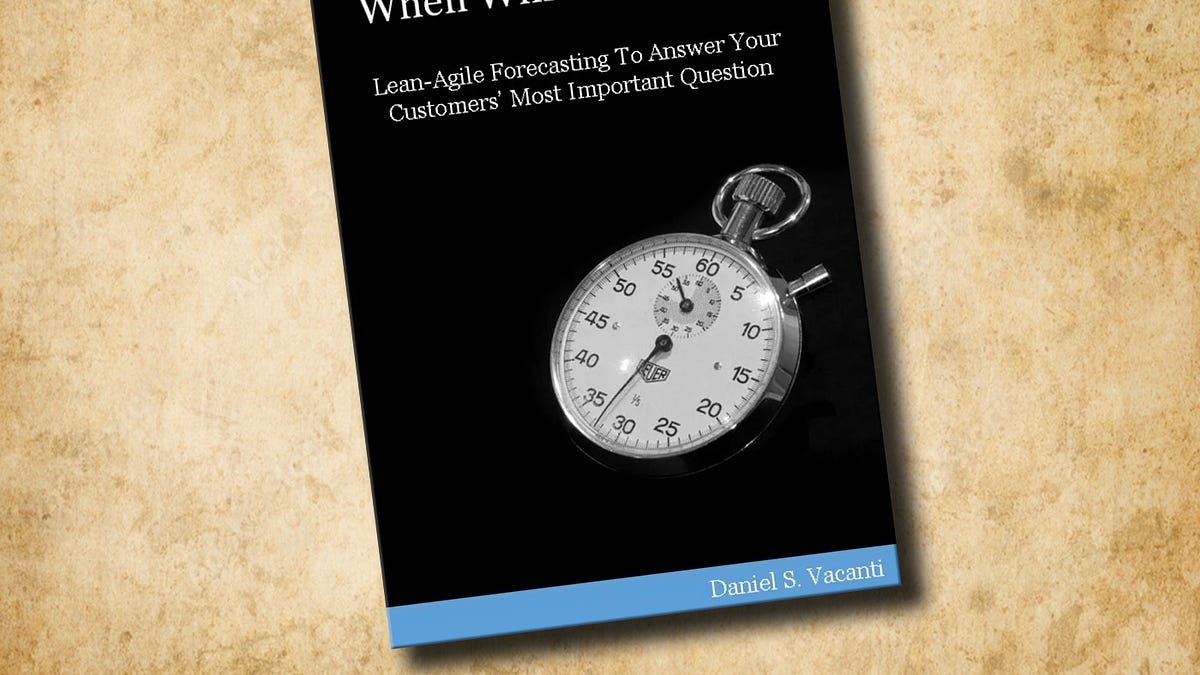
The book When Will It Be Done? by Daniel Vacanti serves as a critical guide for modernizing project management and software development through a scientific, data-driven approach to Agile forecasting.
- Daniel Vacanti’s 'When Will It Be Done?' advocates for transitioning from deterministic project estimation to probabilistic forecasting to improve predictability in Agile environments.
- Effective forecasting requires three foundational principles: thinking probabilistically about multiple outcomes, favoring short-term predictions to reduce uncertainty, and continuously reforecasting as new data becomes available.
- The book serves as a practical, actionable guide to flow-based analytics, bridging the gap left by Vacanti’s previous work, 'Actionable Agile Metrics for Predictability'.

Evolve From Scrum to Kanban Flow
The transition from Scrum to Kanban Flow represents an evolutionary step for game development teams seeking to improve project predictability and operational efficiency.
- Transitioning from Scrum to Kanban Flow shifts game development from time-boxed, iteration-based cycles to a continuous, pull-based delivery model.
- Kanban improves predictability and reduces cycle times by implementing work-in-progress (WIP) limits, which prevents team overburdening and enhances task focus.
- Unlike Scrum, which relies on fixed roles and sprint goals, Kanban utilizes flow-based metrics like cycle time and throughput to drive data-informed decision-making.
User Story Mapping for Improving Agility
User Story Mapping serves as a strategic framework for game studios to mitigate the inherent ambiguity and misalignment often found in the early stages of development.
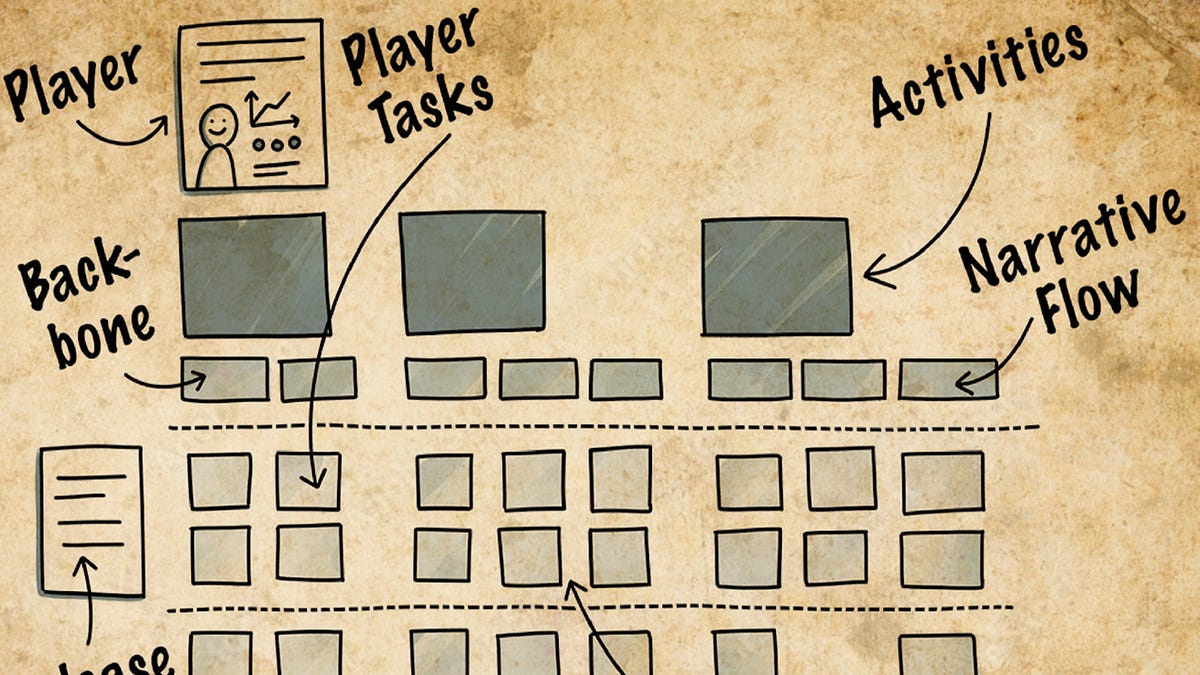
- User Story Mapping resolves development ambiguity by visually aligning the product team’s strategic vision with the designers' execution through a map of the player journey.
- The technique organizes user stories along two axes: a horizontal flow representing the chronological user journey and a vertical stack representing feature priority.
- By focusing development on high-priority, player-centric features, studios can optimize resource allocation and avoid wasting budget on non-essential additions.