
European Conference on Games Based Learning (ECGBL)
Annual European conference on game-based learning and serious games; its proceedings are published open access (CC BY) by Academic Conferences International.
Documents
The Race to Nuclear Supremacy: Classroom Games as Motivation for Student Learning
A study conducted at a private Mexican university examined whether low-cost, magnetic-sphere classroom games could boost student motivation and comprehension during a multidisciplinary Physics and History session on nuclear fission, the atomic bomb, and E=mc².
- A small, non-randomized study at one private Mexican university used low-cost magnetic-sphere kits to model an atomic nucleus during a combined Physics and History session on fission, the atomic bomb, and E=mc².
- Survey responses were strongly positive in both groups: 18 of 19 students in the game group and 19 of 21 in the comparison group gave favorable answers on average, with 62.2% of all participants fully agreeing the activity helped their understanding.
- The authors conclude that inexpensive game-based activities can motivate students in combined physics and history lessons, addressing concerns about weak STEM motivation and limited resources in Mexico and Latin America.
Making Legislative Process Understandable: Survey of Parliaments' Serious Games of European Countries
A survey of European national parliaments examines how legislatures use serious games, meaning games designed for purposes beyond entertainment, to explain parliamentary work and build civic knowledge.
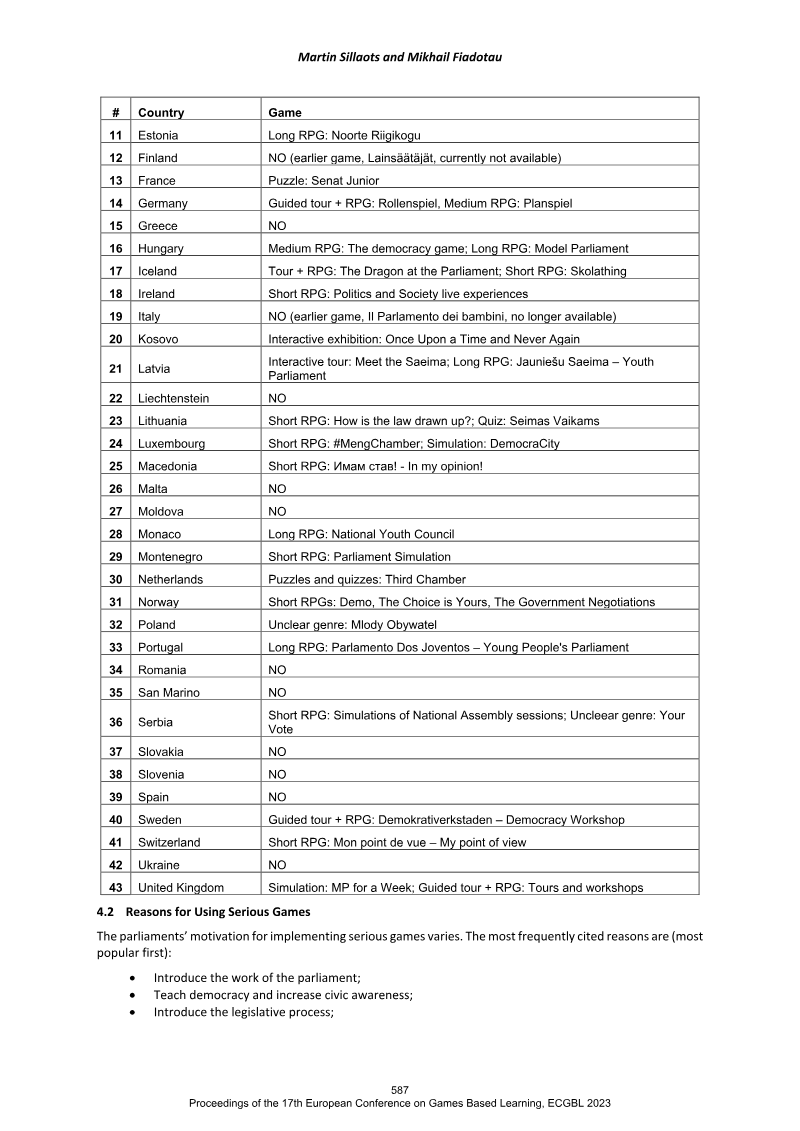
- Of 43 surveyed European national parliaments, 25 (58.1%) use serious games to explain parliamentary work and build civic knowledge, with 40 distinct game titles catalogued.
- Role-playing simulations of parliamentary procedure dominate the landscape at 52.5% of identified games, and sessions of one to three hours are the most common format.
- Most parliamentary serious games are physical, on-site activities, though Lithuania, Norway, and the United Kingdom also offer online versions.
Enhancing Mathematical Reasoning in Primary School: The Strategic Board Game Othello
This design-based study examines how the strategic board game Othello can be used to build mathematical reasoning among primary school students.
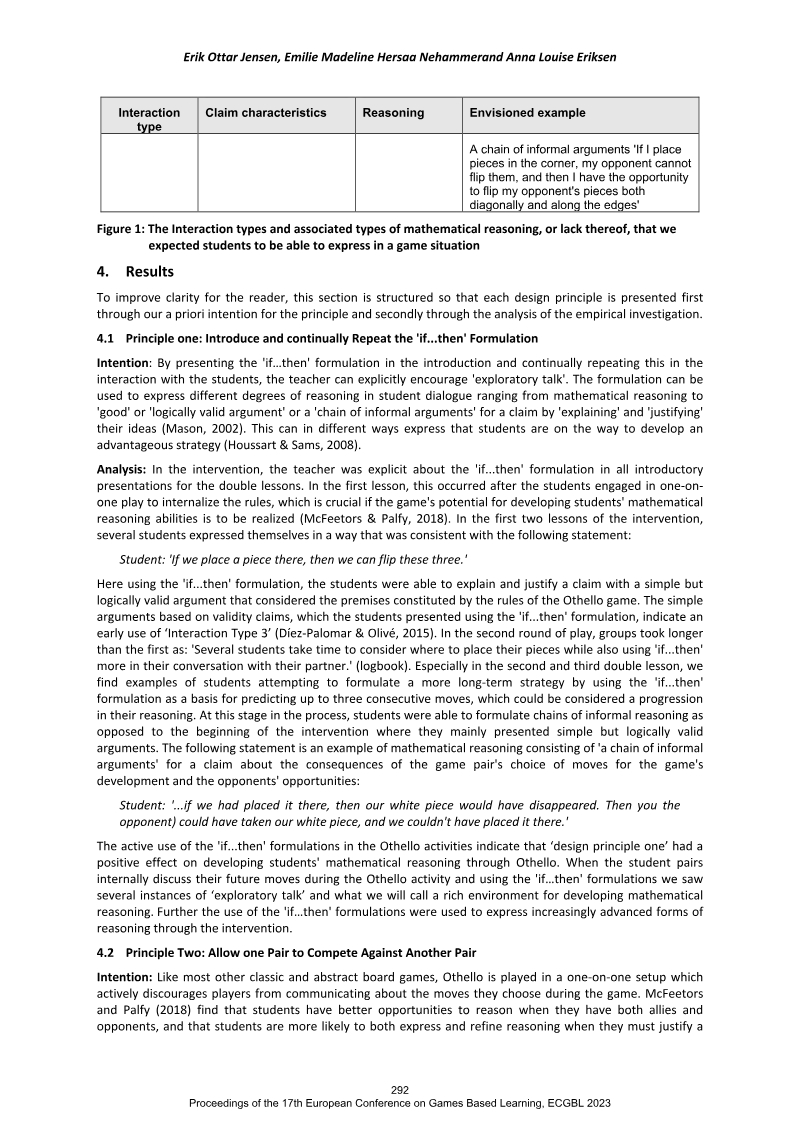
- The study proposes three design principles for building mathematical reasoning through Othello: using an "if...then" structure to organize arguments, pairing teams against each other so students must justify moves to teammates, and varying starting positions via worksheets to prompt forward-looking strategy.
- The design was tested in a single fifth-grade class (about 12-year-olds) across three 120-minute lessons, with data drawn from observations of two student pairs and the teacher, student materials, transcribed recordings, and group interviews, so findings are exploratory rather than generalizable.
- Students progressed from simple, logically valid "if...then" arguments toward chains of informal reasoning over the three lessons.
Kuxtal: Student Motivation Through Megagames in Higher Education Design Students
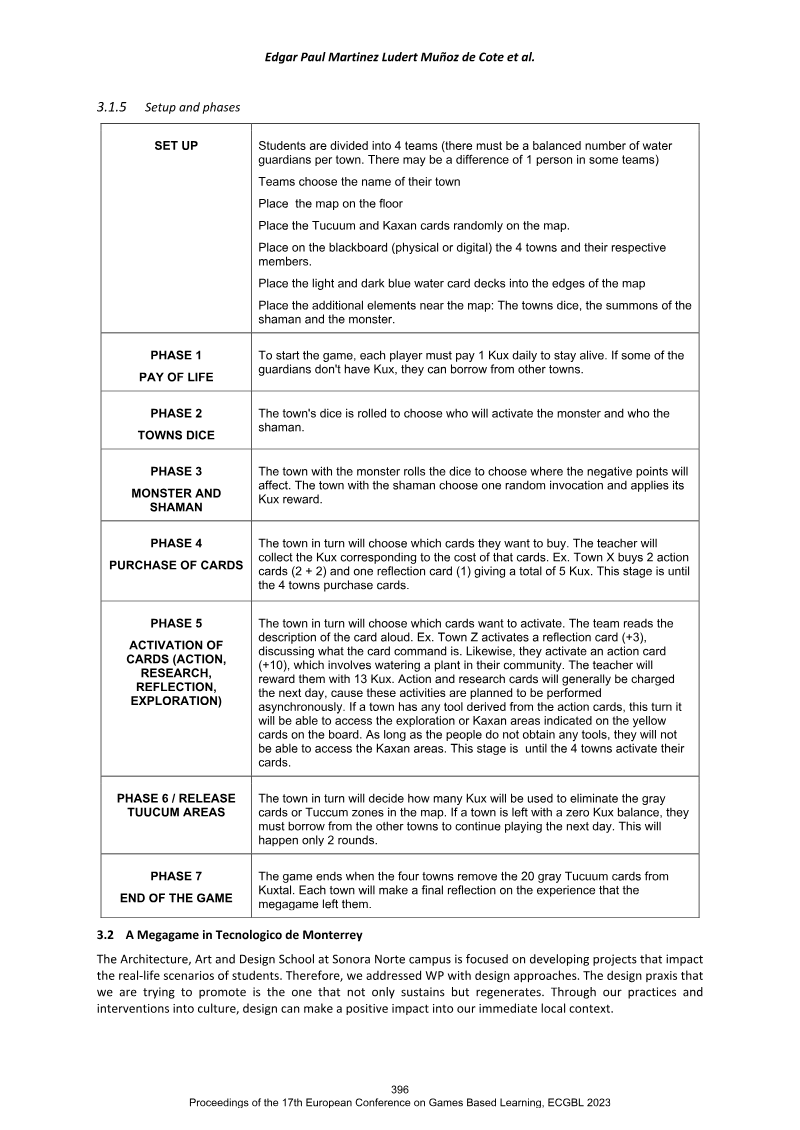
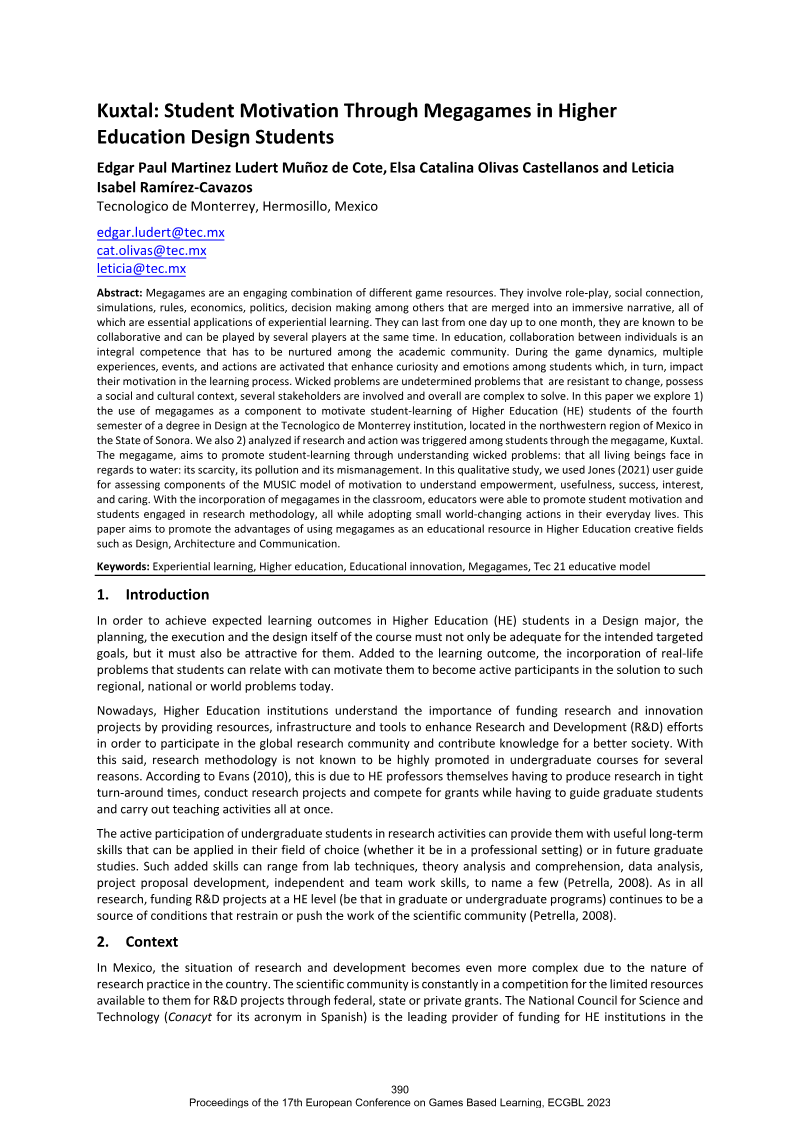
"Kuxtal" examines whether megagames, large-scale role-play simulations built around collaboration and resource management, can motivate Industrial Design students in Mexican higher education to engage with complex, real-world problems.
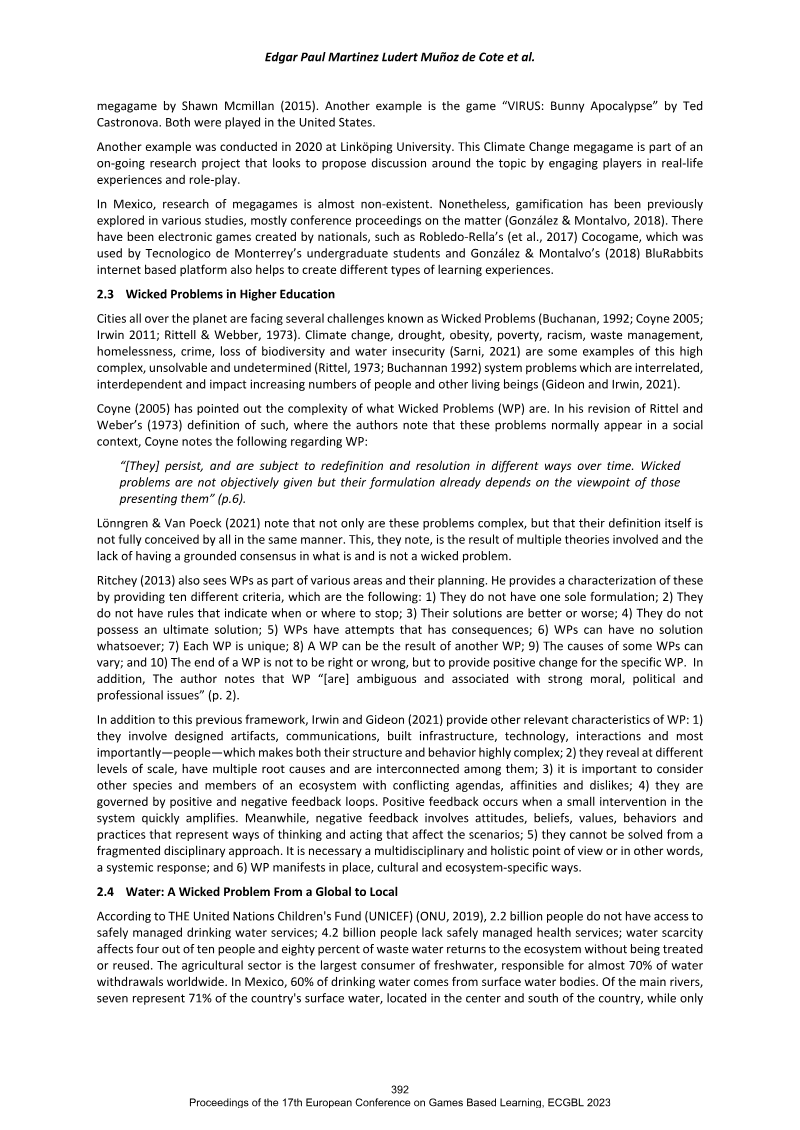
- Kuxtal is a megagame created by seven professors at Tecnológico de Monterrey that uses water scarcity, pollution, and mismanagement as its central challenges, designed around conditions in Hermosillo, where roughly 71% of water comes from underground aquifers.
- The study tests whether large-scale role-play megagames can boost motivation and research engagement among Industrial Design students, framed through the MUSIC model of academic motivation and a qualitative approach.
- In a week-long test with 24 Industrial Design students (mostly women), 17 strongly agreed they enjoyed the teaching methods and 18 strongly agreed the methods captured their attention.
Implementation of Game-Based Learning in a Tertiary General Education Course
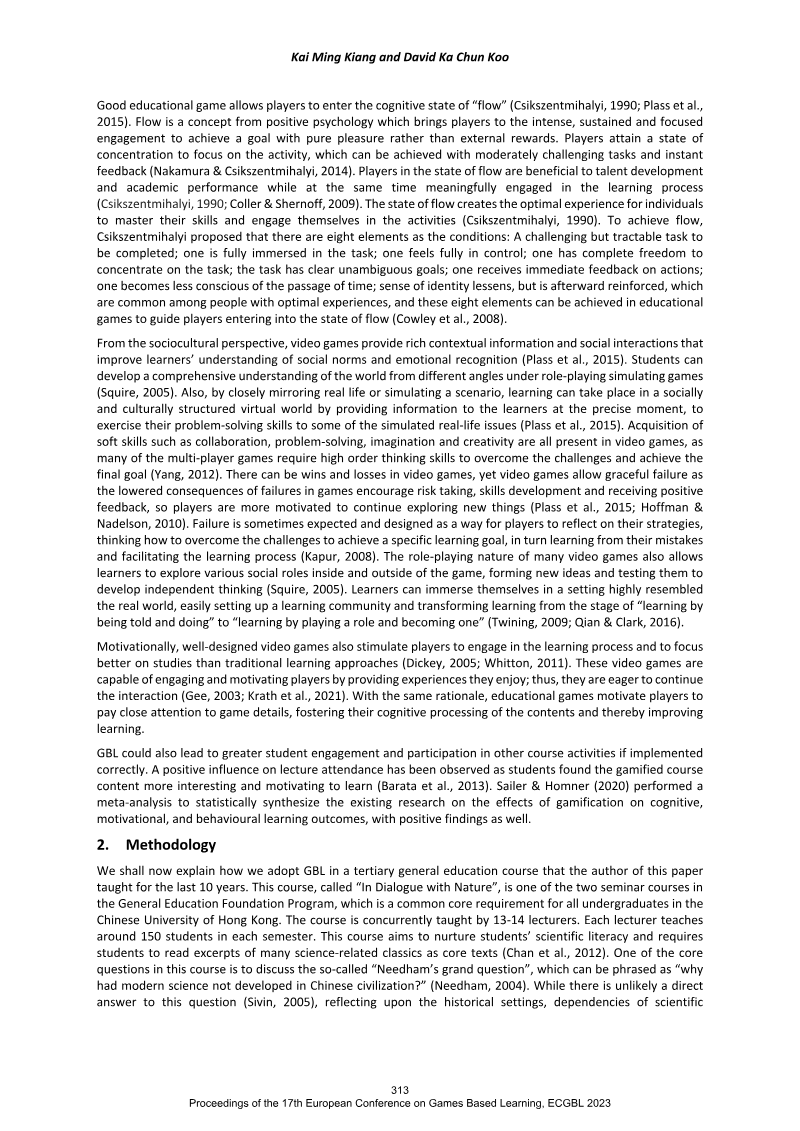
This paper examines the implementation of game-based learning (GBL) through a modified version of the commercial strategy game Civilization in "In Dialogue with Nature," a general education seminar course at The Chinese University of Hong Kong.
- Modifying an existing commercial off-the-shelf game (the strategy game Civilization) rather than building one from scratch let the course team focus on pedagogical design, with two added historical scenarios (4000 BC and 1500 AD) to explore how political, economic, cultural, and geographical factors shape scientific development.
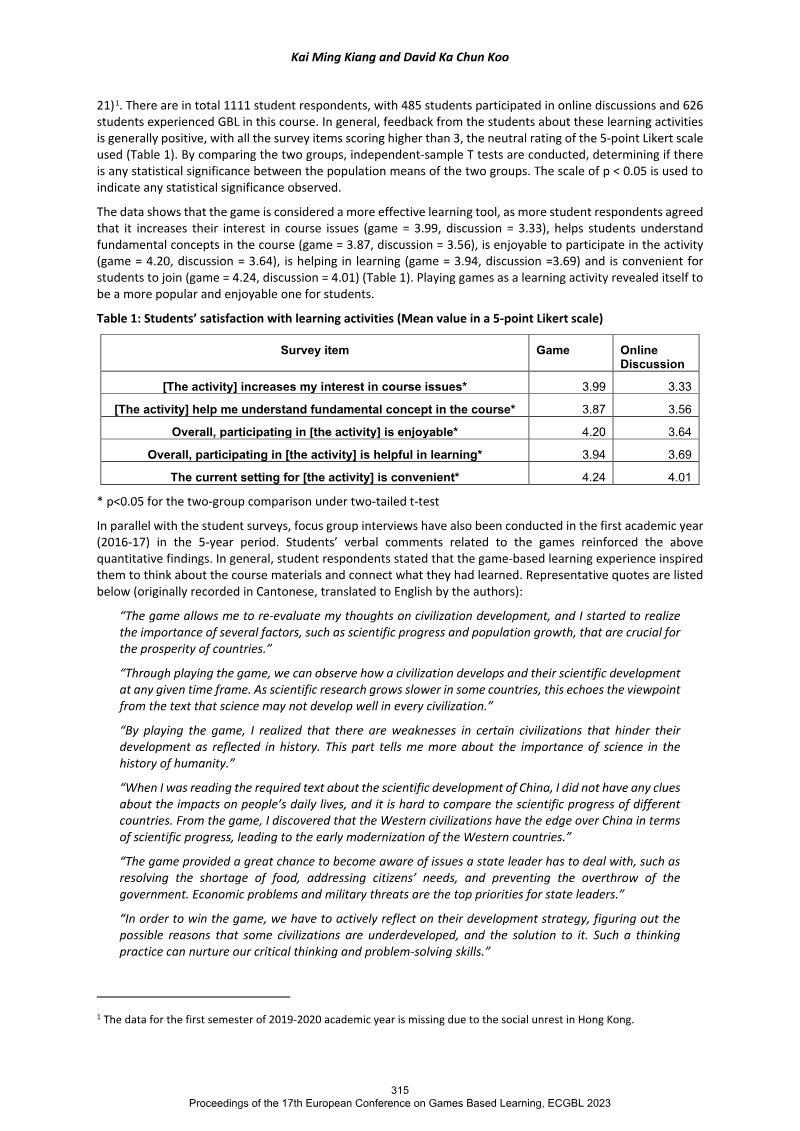
- Across five academic years (2016-17 to 2020-21) and 1,111 student respondents, the 626 game-based students rated the activity significantly higher than the 485 Blackboard discussion students on interest, conceptual understanding, enjoyment, helpfulness, and convenience (5-point Likert scale).
- Game-based students reported higher self-perceived attainment of course learning outcomes (6-point scale) and earned slightly higher course grades (3.236 versus 3.180 on a 4-point scale).
A Simulation Game for Anti-Money Laundering (AML) Using Unity
This paper presents a two-player Unity simulation game designed to teach anti-money laundering concepts, with particular attention to individuals who may be drawn into laundering schemes as money mules.
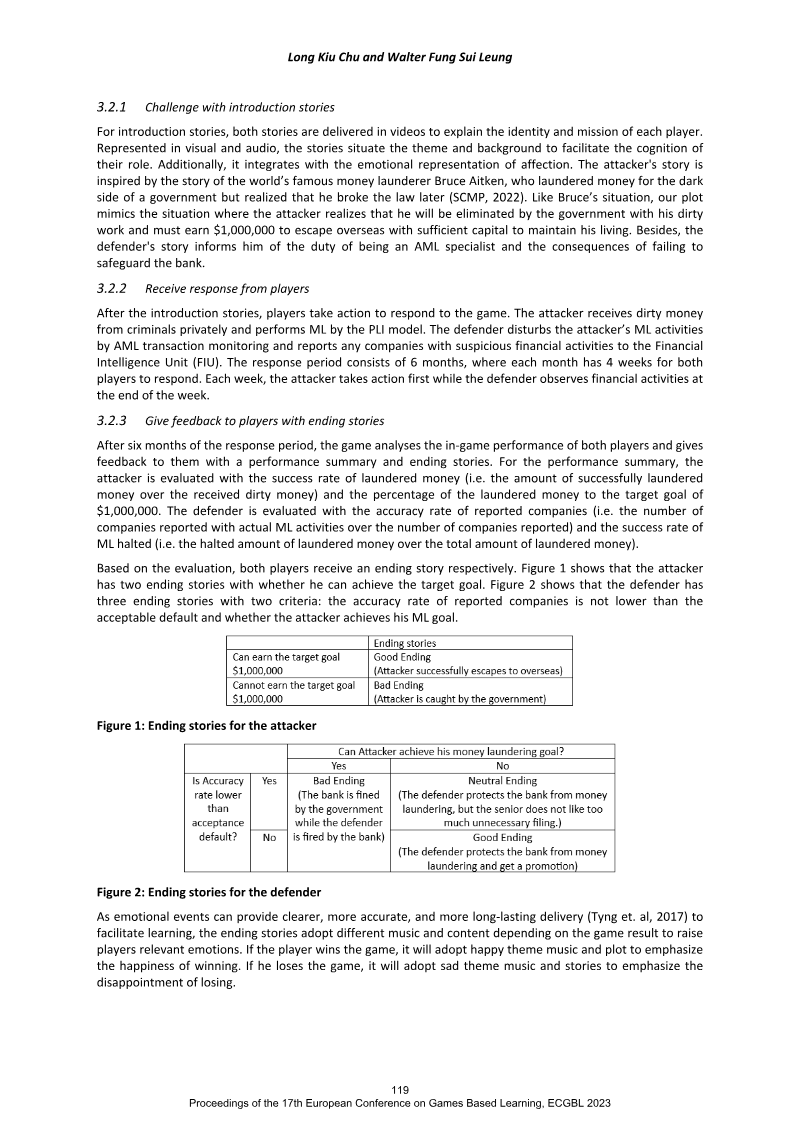
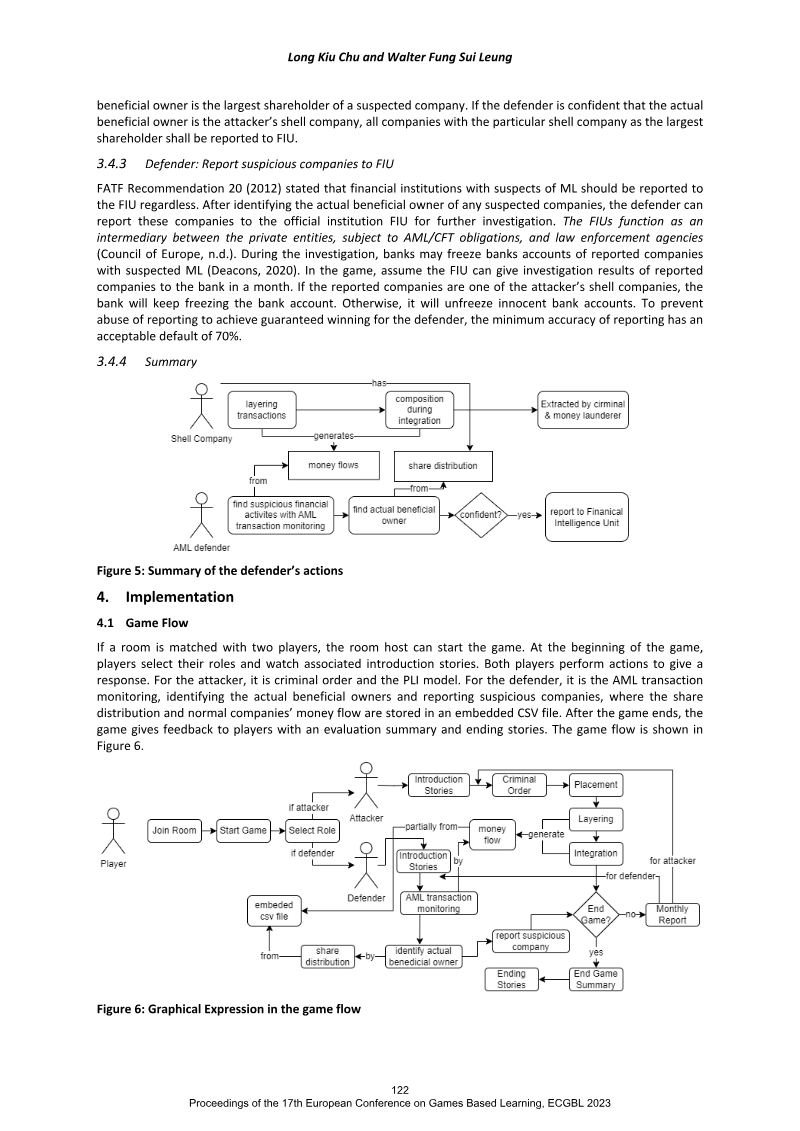
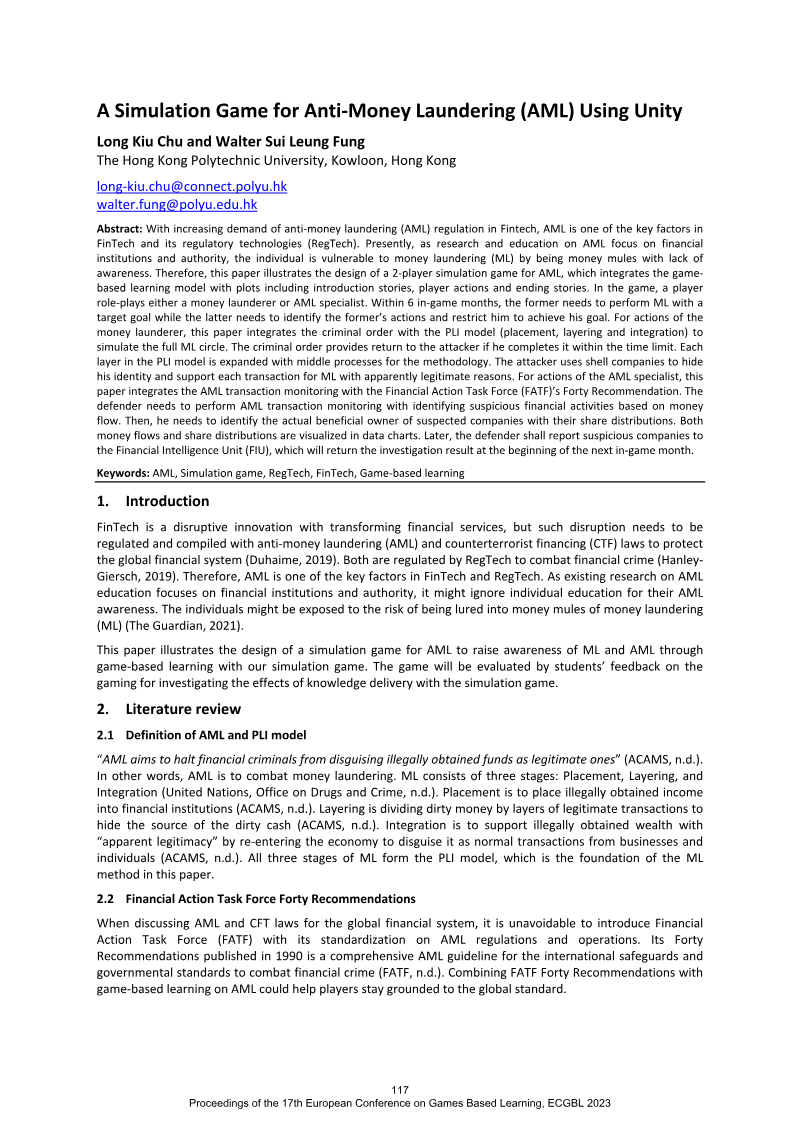
- The game is a two-player Unity simulation in which one player acts as a money launderer using shell companies and the placement-layering-integration model, while the other acts as an AML specialist, targeting individuals such as potential money mules whom existing corporate-focused AML games underserve.
- The AML specialist role applies transaction monitoring, beneficial-ownership identification, and suspicious activity reporting aligned with FATF Recommendations 10 and 20.
- An evaluation with 50 students found post-survey awareness scores of money laundering and AML concepts exceeded pre-survey scores, supporting the authors' conclusion that the game is effective for basic education on ML/AML principles and enforcing institutions.

Evaluating the Impact of Serious Games on Study Skills and Habits
A study of 34 first-year computer science students examined whether study skills and habits relate to engagement with a competitive peer-quizzing serious game featuring leaderboards.
- A study of 34 first-year computer science students found a moderate-to-strong overall correlation between study skills and engagement with a competitive peer-quizzing serious game (R = 0.739), but the regression models were not statistically significant.
- The first analysis explained only about 21 percent of variance after adjustment (p = 0.158), with no individual predictor reaching the 0.05 threshold; academic stress came closest (p = 0.073).
- In the second analysis predicting questions created, the overall model was non-significant (ANOVA p = 0.279, adjusted R² = 0.121), but goal setting was the sole individually significant predictor (p = 0.016, coefficient 2.15).
Guidelines for Playful Learning Design in VR/AR: Insights from Student Productions
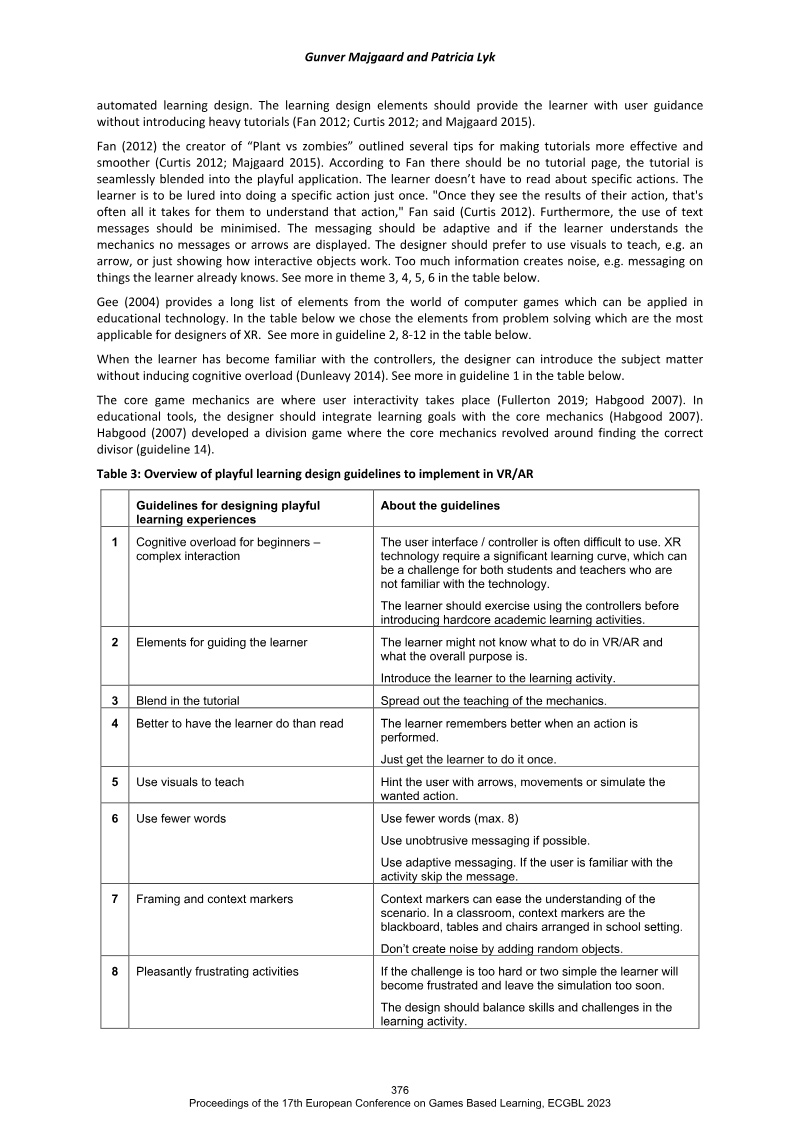
This paper presents a three-part framework for designing VR and AR (collectively "XR") as educational technology: the learning attributes of XR, the practical issues and problems that accompany its use, and a set of playful learning design guidelines.
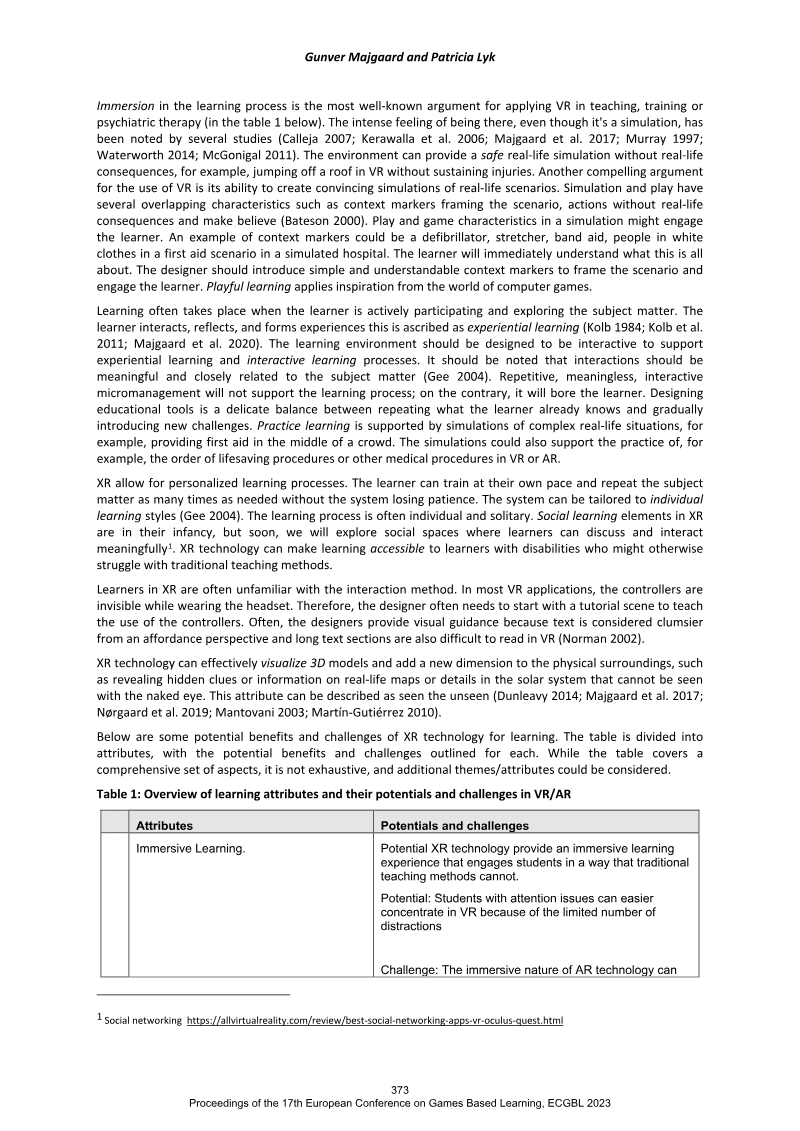
- The report offers a three-part framework for XR (VR/AR) educational design: learning attributes of XR, practical challenges, and playful learning design guidelines, grounded in social constructivism and Vygotsky's zone of proximal development.
- It identifies twelve XR learning attributes, including immersion, safe simulation, experiential and interactive learning, personalized pacing, and making the unseen visible, each paired with potentials and challenges.
- Key practical barriers are high hardware and content costs, cybersickness, immature technology, and physical safety risks during immersion, with mitigations such as reducing movement mismatch and limiting peripheral visual clutter.
Vocabulary Acquisition in New and Learned Contexts Using Immersive Virtual Reality
This study investigates whether recycling vocabulary in immersive virtual reality (IVR) across new or learned contexts affects learners' ability to retrieve words in a new context.
- Recycling words across a changed context versus an unchanged one in immersive VR produced no statistically significant difference in retrieval on either the immediate or the one-week delayed test.
- On the immediate post-test, the learned context group (same environment and appearances, only object placement changed) reached a median of about 89% versus about 80% for the new context group.
- On the one-week delayed test, median performance was about 77% for the learned context group and about 73% for the new context group, a gap that was not significant.
Need-Based Game Design: Developing a CT Game Based on Educational Needs
This study investigates how need-based game design can support the teaching of computational thinking in higher education, responding to persistent problems in introductory programming courses, including low enrolment, high dropout, and poor pass rates.
- The study addresses persistent problems in introductory programming courses, including low enrolment, high dropout, and poor pass rates, using a Swedish university context.
- Based on structured e-mail interviews with 15 programming teachers (from 18 invited), teachers consistently reported that students struggle when moving from basic concepts to methods, classes, and object-oriented programming.
- The transition difficulty stems from needing holistic reasoning about data and logic alongside substantial memorisation of code.
PIXEL: Challenges of Designing a Professional Board Game for Astronomy Education
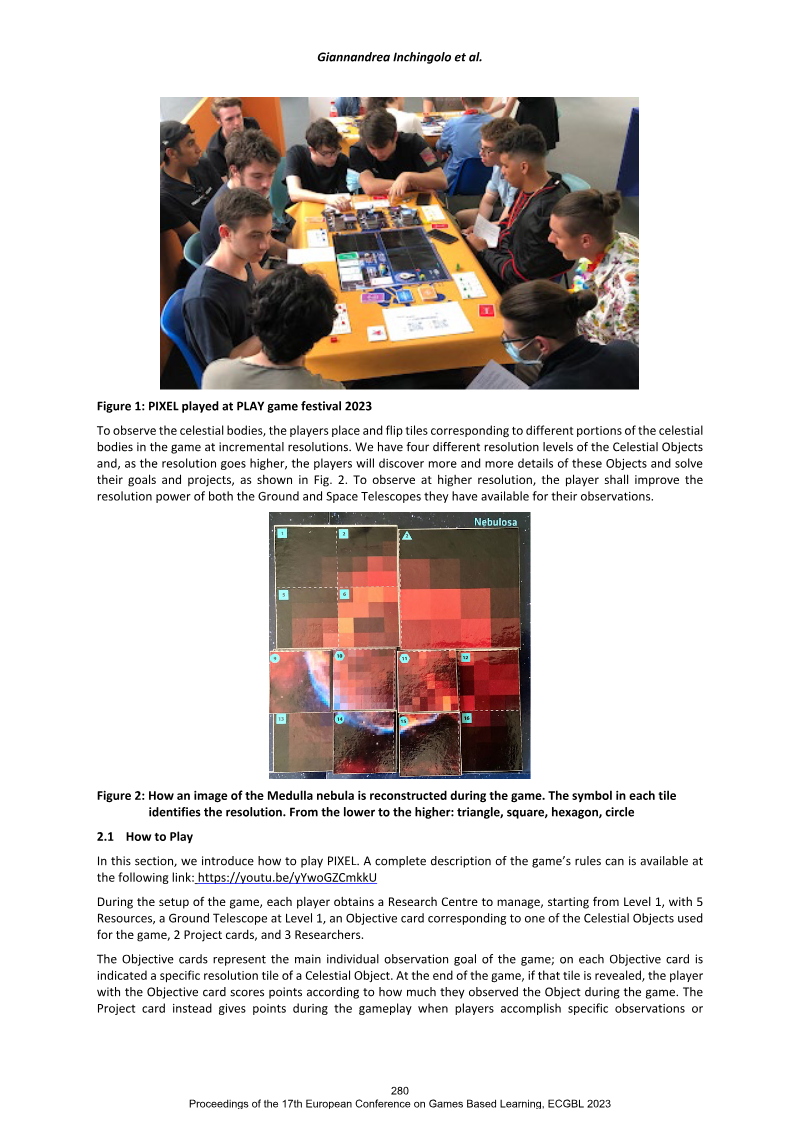
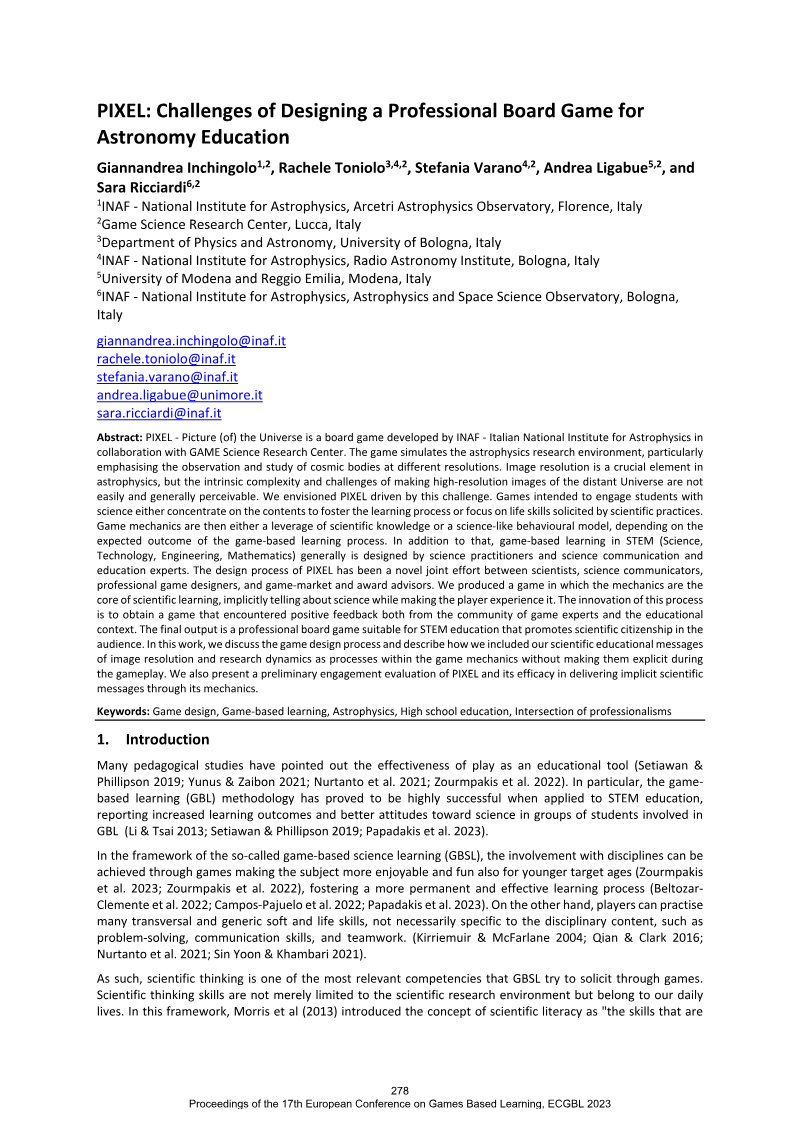
PIXEL is a professional board game developed through collaboration between Italian astrophysicists at INAF and professional game designers, aimed at teaching scientific thinking, particularly image resolution and the research process, through play rather than explicit instruction.
- PIXEL is a professional board game co-developed by Italian astrophysicists at INAF and professional game designers to teach scientific thinking, especially image resolution and the research process, through play rather than explicit instruction.
- In a survey of over 200 teenagers and young adults at public events, PIXEL scored an average of 5.2 out of 7 on enjoyment, and players most often recognized its intended lessons: higher-resolution observations demand more time and technology, and research is multidisciplinary collaboration.
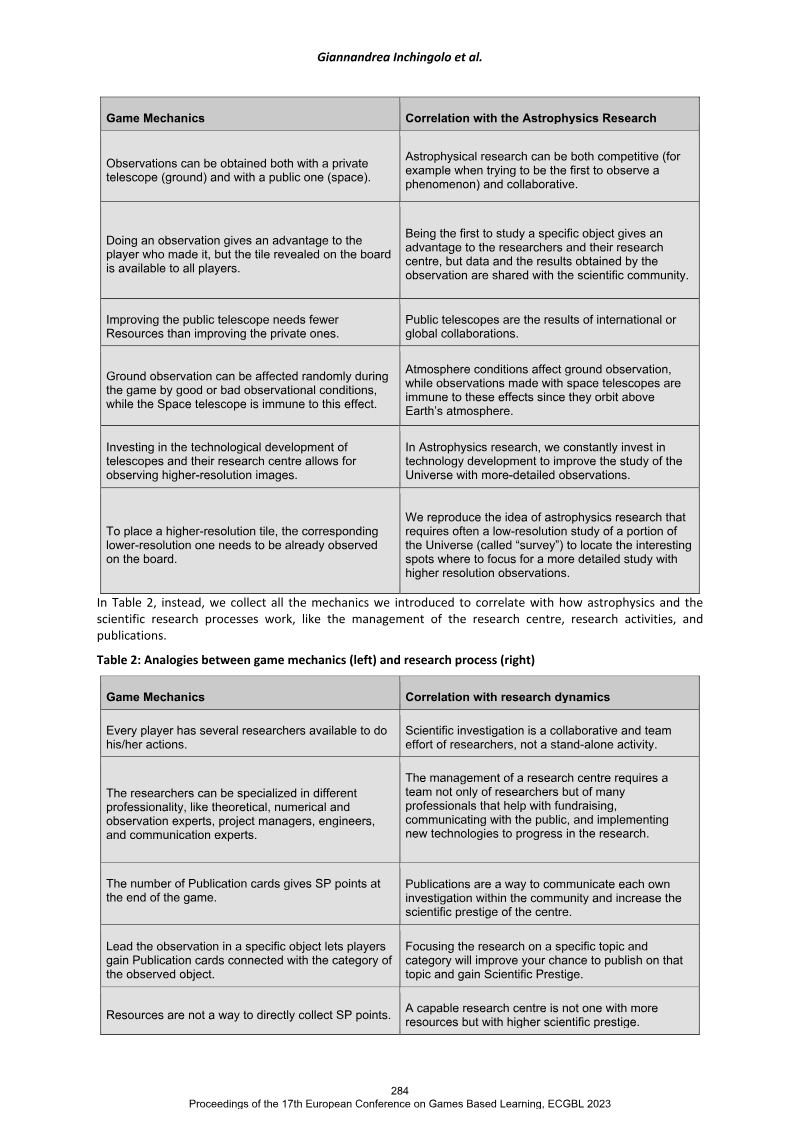
- The game's mechanics, including worker placement, resource management, and tile-based image resolution (tiles representing levels from 8x8 to 128x128 pixels), are mapped to real astrophysical research processes.
Barriers and Hindrances to the Effective Use of Games in Education: Systematic Literature Review and Intervention Strategies
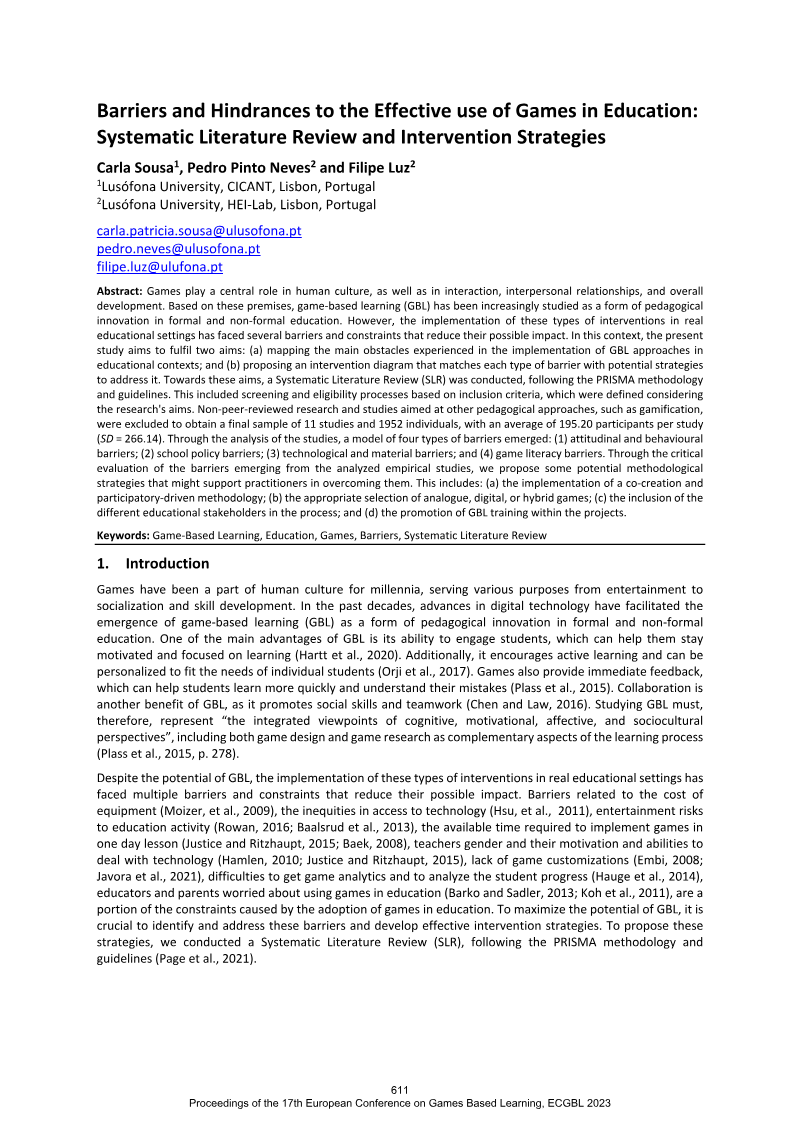
This systematic literature review examines the barriers that hinder effective use of games in education and proposes strategies for overcoming them.
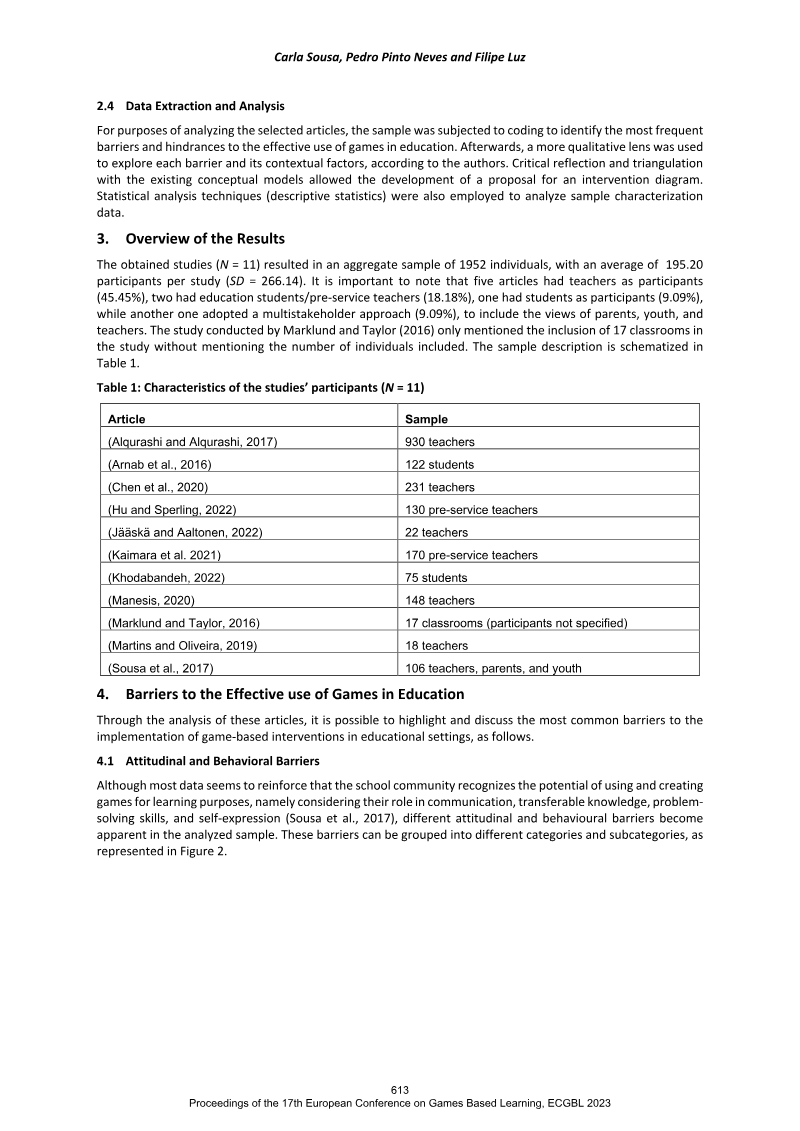
- The review synthesises 11 peer-reviewed empirical studies involving 1,952 participants and identifies four categories of barriers to game-based learning: attitudinal and behavioural, school policy, technological and material, and game literacy.
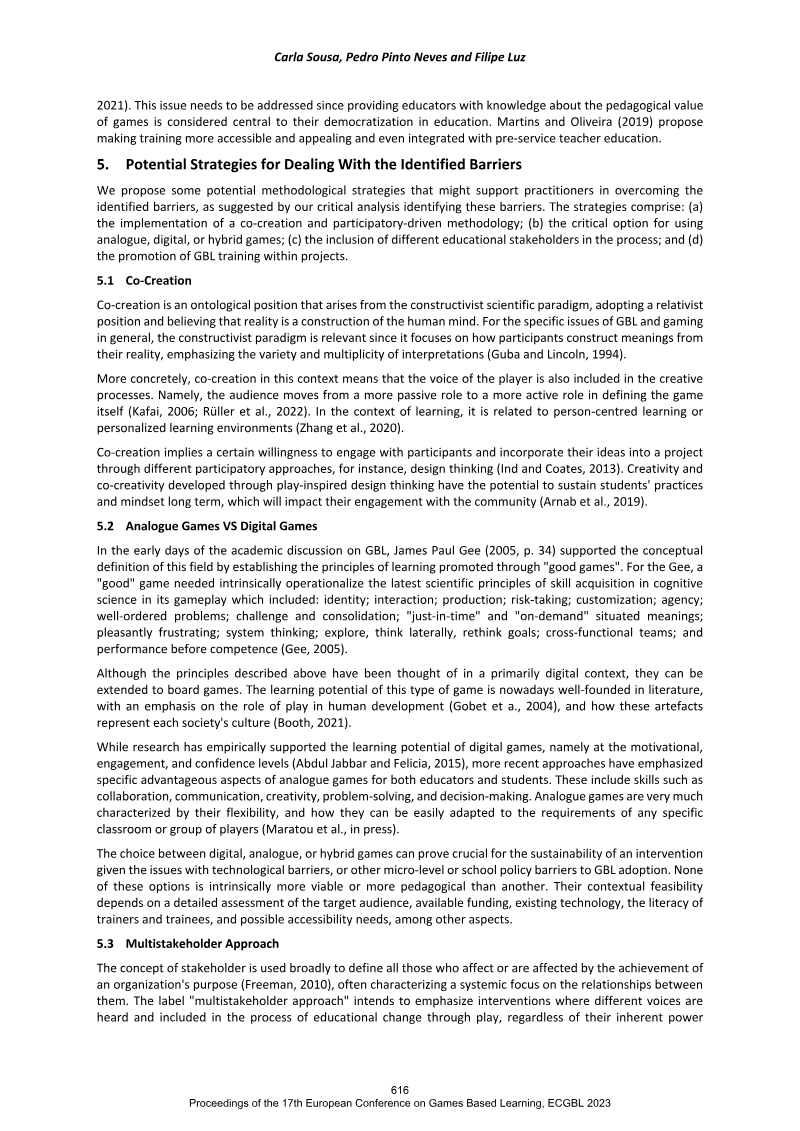
- The central thesis is that game-based learning is constrained less by the pedagogical value of games than by the readiness of teachers, students, institutions, and infrastructure to adopt them.
- Teachers commonly rate their own technological knowledge as low, while students often prefer conventional teaching methods and view games mainly as entertainment rather than legitimate learning tools.