
ETC Press
ETC Press is an academic publisher run out of Carnegie Mellon University's Entertainment Technology Center. It publishes books, conference proceedings and edited volumes on game studies, game design, analog games and play.
Documents

Gameplay, Emotions and Narrative: Independent Games Experienced
Gameplay, Emotions and Narrative: Independent Games Experienced is a collection of close-reading case studies arguing that narrative and ludic (mechanical) elements work together to shape players' emotional experiences, and that interactivity allows games to tell stories no other medium can.
- The report analyses independent (non-Triple-A) games, ranging from free or pay-what-you-want releases to products from small teams or small publishers with limited budgets, arguing these titles use game mechanics to explore emotion and narrative.
- Chapter One examines Hellblade: Senua's Sacrifice (2017), arguing it renders the mindscape of a person who is mentally ill through ludic mechanics, with particular focus on belief and imagination as central to its portrayal of mental and emotional states such as shame, guilt, despair and terror.
- In Hellblade, the 'darkness' is visualised as progressive decay that the Narrator calls 'rot'; although the game warns it will kill Senua, the rot only frightens her and the player rather than actually killing her, mirroring how Zynbel's abusive claims prove untrue within the narrative.
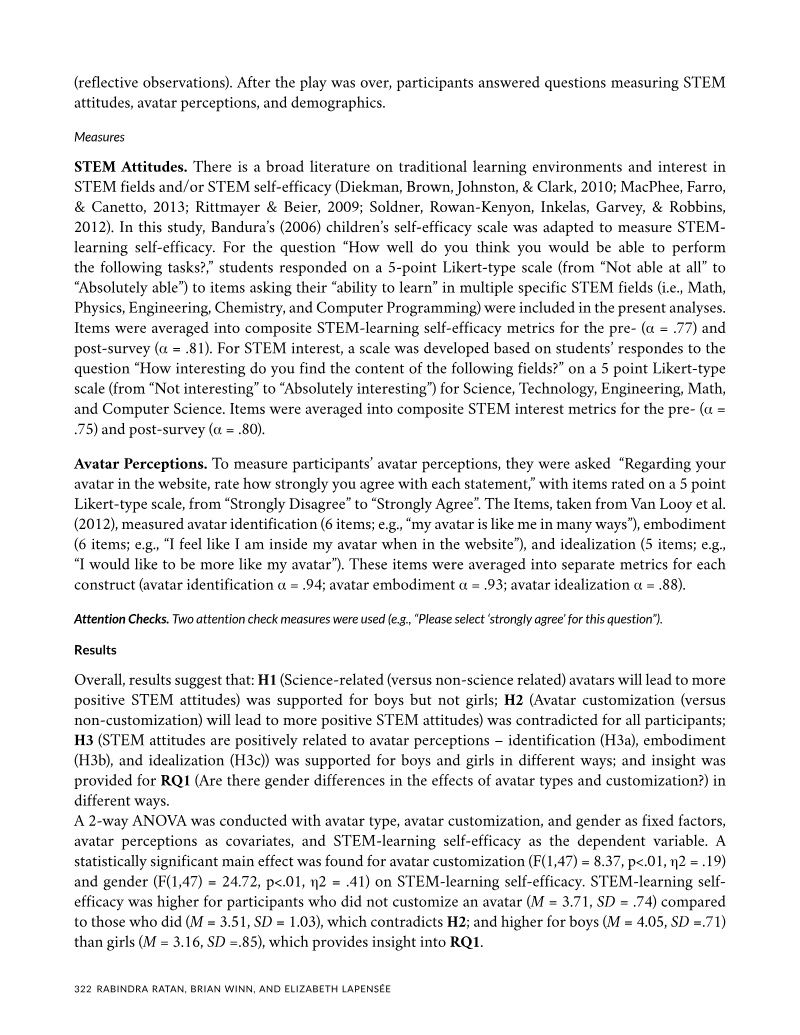
Meaningful Play Proceedings 2018
The 2018 Meaningful Play Proceedings is a collection of research papers, extended abstracts, and case studies examining how games and play can produce educational, social, emotional, and civic outcomes.
- Educational sickle cell anemia games improved health awareness but rarely delivered their intended STEM content, highlighting a gap between designer goals and what players actually take away.
- Incremental games were linked to recovery from work fatigue when played during work, though they supported only certain recovery dimensions.
- In crowd contributions, linear point-scoring produced better response quality than exponential scoring.

Game Design Snacks: Easily Digestible Game Design Wisdom
"Game Design Snacks," edited by José P. Zagal and published by Carnegie Mellon's ETC Press, is a collection of short, digestible game design lessons aimed at helping readers articulate design knowledge from a designer's perspective rather than a fan's.
- Good game design shapes player understanding, engagement, and learning through deliberate design choices rather than explicit instruction or sheer content volume.
- Enemy intent should be visibly telegraphed through animation, and failure states should be fair and purposeful so players can learn from them.
- Shortcuts can double as checkpoints, and indirect navigation cues such as 'weenies' can guide players without explicit instruction.


The Game Beat: Observations and Lessons from Two Decades Writing About Games
Kyle Orland's The Game Beat is a two-decade collection of his writing on video game journalism, tracing his path from blogger to staff writer while asking fundamental questions about how games should be reviewed, previewed, reported, and covered.
- The 2003 EGM "Quartermann" rumor column averaged a truth rating of 3.03 on a five-point scale across 88 rumors, meaning its predictions were roughly as likely to be false as true.
- The book's central argument is that games journalists are disadvantaged by publisher control over access and marketing, which makes skepticism toward publisher access and hype essential.
- A 2007 analysis of "most anticipated" lists found sequels and licensed titles made up 64 percent of picks, and 31 percent of those picks were still unreleased by early 2008.

Video Games and the Global South
"Video Games and the Global South" is an edited volume that argues game studies has long marginalized the Global South, treating it as a technological periphery despite rich and distinct histories of game production and consumption across Latin America, the Middle East, Africa, South and East Asia, and Australia.
- The volume argues that game studies has long marginalized the Global South as a technological periphery, and it grounds games in local economic, political, and cultural conditions such as trade embargoes, copied hardware, piracy, state censorship, and state-led industrial policy.
- Rather than relying on center-periphery binaries, the editors propose "border thinking" and attention to heterogeneous local contexts, drawing on decolonial and postcolonial theory.
- Piracy, peer-to-peer sharing, public gaming venues, and mobile access recur as central mechanisms of game access in the Global South, which the authors view as a democratizing force.


A Cure for Toxic Masculinity: Male Bonding and Friendship in Final Fantasy XV
Dr. Amy M. Green argues that Final Fantasy XV (Royal Edition) offers a rare and valuable depiction of male friendship that is emotionally honest and free of toxic masculinity.
- The article argues that Final Fantasy XV counters toxic masculinity primarily by ignoring it: its four male protagonists (Noctis, Gladio, Ignis, Prompto) do not engage in toxic masculine behaviours, and the narrative instead emphasises emotional openness and intimacy among them.
- The author's central thesis is that the game's main narrative is less about the razing of Insomnia than about how the losses of life and home test the bonds of friendship among the four main characters, with the fall of Insomnia already revealed in the prequel film Kingsglaive.
- Game director Hajime Tabata, quoted in a 2015 GameSpot interview, said an all-male party feels more approachable for players because the presence of even one female would change how the group behaves, making the friends feel more sincere and natural.
Analog Game Studies: Volume 3
"Analog Game Studies: Volume 3" examines tabletop and analog games through the lenses of culture, ethics, emotion, and design, with the central argument that games are complex social and affective systems whose meanings extend well beyond their formal rules.
- The volume's central argument is that games are complex social and affective systems whose meanings extend well beyond their formal rules, with 'affective structuring' (aesthetics, roles, and social dynamics) treated as essential to understanding play.
- The Gift of Food was co-developed with Pacific Northwest Native communities as a culturally responsive tool for intergenerational knowledge transfer and language revitalization.
- Several essays critique colonial and orientalist themes in games including Goa, Navegador, and Advanced Dungeons & Dragons' Oriental Adventures, while analyses of Catan, the COIN series, Troubled Lands, and cooperative titles examine how mechanics produce distinct emotional networks such as meaningful sacrifice and enjoyable failure.

Behind the Black Box: Sessions with Game Engine Professionals
"Behind the Black Box: Sessions with Game Engine Professionals" is a collection of interviews and essays produced by a student team at Carnegie Mellon's ETC Press, designed to demystify game engine development for newcomers.
- Qualified game engine programmers are scarce, and the role demands strong 3D math and low-level systems knowledge.
- Most professional engine work is 'plumbing' and legacy management in codebases too large to fully comprehend, making targeted navigation, profiling before optimizing, and disciplined documentation essential.
- Contributors consistently advocate simple, minimally coupled, data-oriented architectures, two-tier APIs serving both experts and general users, and tightly integrated engine and tools teams.
The Transformational Framework: A Process Tool for the Development of Transformational Games
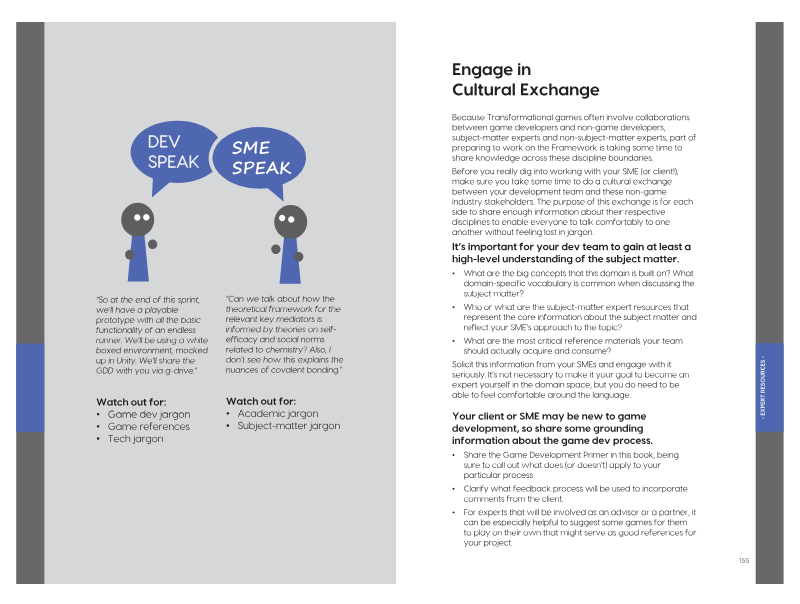
"The Transformational Framework" is a process tool developed from Schell Games' work with Carnegie Mellon's Entertainment Technology Center, designed to help development teams plan games intended to change players in ways that extend beyond play itself.
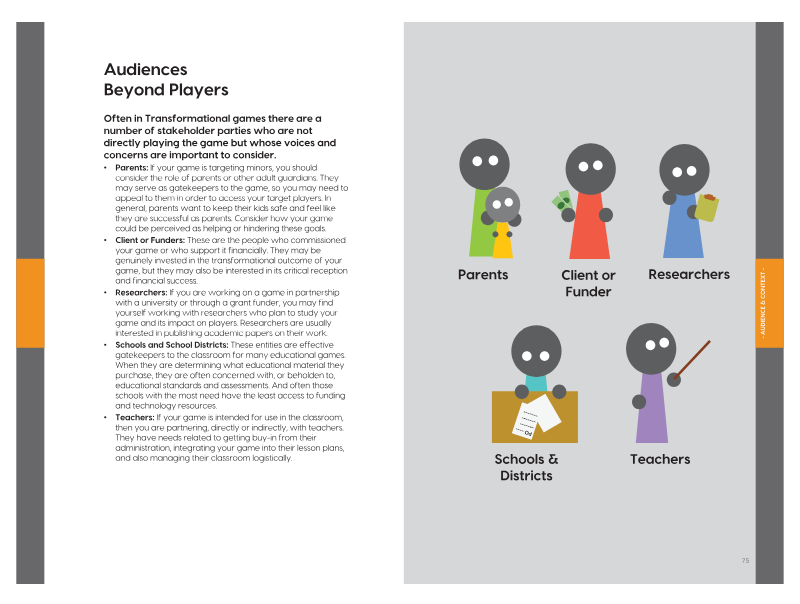
- Transformational games are defined by three hallmarks: deliberate intent to change players, transfer of that change to the real world, and persistence of the change after play ends, distinguishing them from entertainment games where player change is incidental.
- The Transformational Framework is an eight-part, iterative process completed during pre-production, beginning with a high-level purpose framed around the impact a team wants to make rather than the game itself.
- Player transformations should be defined as specific, measurable, player-centered changes, drawing on a typology that extends beyond Bloom's Taxonomy to include behavior, belief, relationships, identity, and society.

Physics Is Still Your Friend: World of Goo @ 10
World of Goo, a 2D physics-based puzzle game created by the two-person studio 2D Boy, is examined in this ten-year retrospective as both a landmark of the independent games movement and a model of thoughtful interactive design.
- World of Goo originated as the seven-day prototype Tower of Goo at Carnegie Mellon's Entertainment Technology Center, after which creators Kyle Gabler and Ron Carmel left Electronic Arts in 2007 to build the full game over roughly two years.
- Refinement through community beta testing and playtesting with non-gamers produced a smoothed difficulty curve and physics that feel fair to players.
- The game's six islands and 48 levels escalate gradually through new goo types, the whistle, and satirical story beats, with narrative delivered alongside play via the Sign Painter's messages and cutscenes.
Thought-Provoking Play: Political Philosophies in Science Fictional Videogame Spaces from Japan
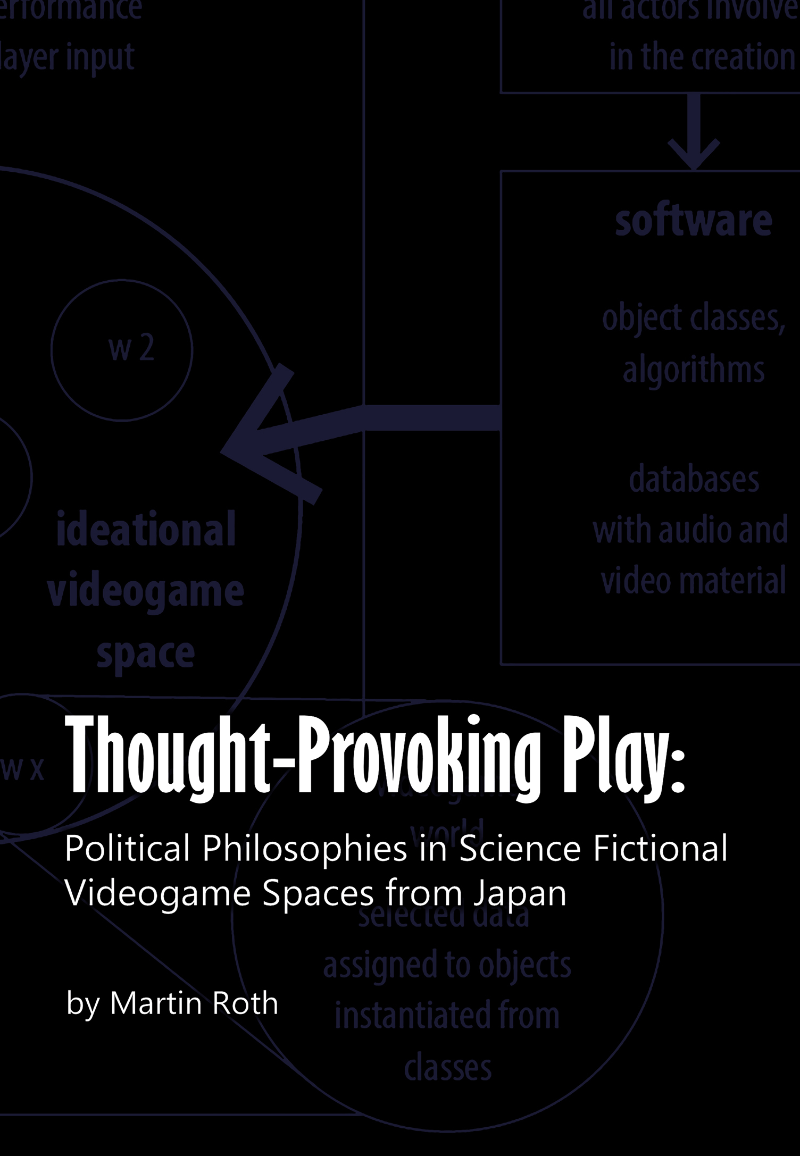
Martin Roth's study examines whether Japanese science-fictional videogames can serve as spaces for political philosophy, specifically by stimulating the political imagination that Roth argues is threatened by neoliberal capitalism's narrowing of perceived alternatives.
- Roth argues that videogames function as an 'ideational' or 'enacted' space co-produced by designers, the computer, and players, where rule systems, narrative, representation, and randomness generate conflicts that resist full simulation; he frames this as a hypothesis tested through close analysis rather than a demonstrated finding.
- The study is motivated by the claim that neoliberal capitalism narrows perceived alternatives and threatens the political imagination, and it proposes Japanese science-fictional games as spaces that can stimulate that imagination.
- Science-fiction titles accounted for only seven of 204 million-selling Japanese games, yet held a steady 10 to 15 percent of annual top-100 sales between 2000 and 2011, with the market dominated by Gundam franchises.
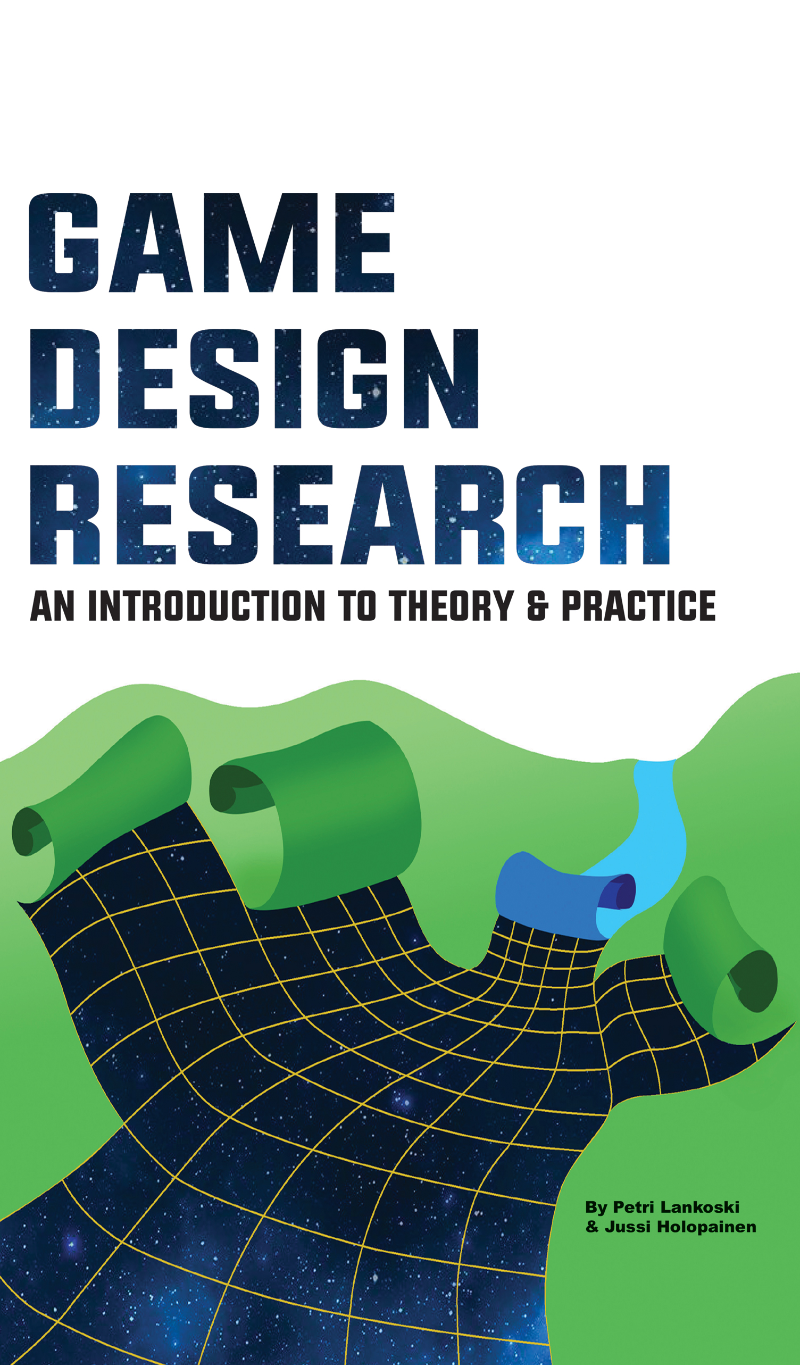
Game Design Research: An Introduction to Theory & Practice
Game Design Research: An Introduction to Theory & Practice, published by ETC Press, argues that game design research should be recognized as a distinct, systematic field within design research, one that studies how games are made and the knowledge produced in that making.
- The book argues game design research should be recognized as a distinct, systematic field within design research that studies how games are made and the knowledge produced in that making, moving away from norm-driven autobiographical accounts and rigid rationalist 'applied science' models.
- It proposes a clearer epistemological foundation drawing on Schön's reflective practice and Cross's 'designerly ways of knowing', and advocates practice-based approaches such as research through design, precedent studies, experimental prototyping, and studies of designers at work.
- A survey of methods including design documents, the MDA framework, design patterns, Petri nets, and diagrammatic tools finds most have seen limited industry adoption due to accessibility problems and weak theoretical grounding.