1 free read left. Create a free account for unlimited reading + AI research.
Create free accountWhitepaper ETC Press
1 free read left. Create a free account for unlimited reading + AI research.
Create free accountWhitepaperETC Press
Dr. Amy M. Green argues that the four protagonists model supportive bonding. She frames this portrayal as especially significant given the game's young, wide, T-rated audience.
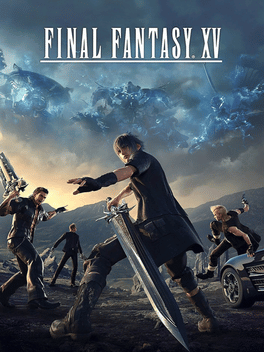
Dr. Amy M. Green argues that Final Fantasy XV (Royal Edition) offers a rare and valuable depiction of male friendship that is emotionally honest and free of toxic masculinity. Drawing on personal experience as a lifelong gamer and academic, along with conversations about how men typically bond through shared activities and humor rather than open affection, she contends that the game's young, wide, T-rated audience makes its portrayal of intimacy especially significant. Her central claim is that the four protagonists, Noctis, Ignis, Gladio, and Prompto, model supportive bonding that never shames vulnerability.
The analysis supports this thesis through close attention to the game's narrative and mechanics. Everyday moments such as Ignis cooking, Prompto taking photographs, and the characters fishing and reading are treated with warmth rather than mockery, in contrast to the Western "bromance" trope, which tends to deflect male intimacy through comedy. The characters respond to catastrophe, including the fall of Insomnia, by turning to one another for comfort rather than violence. The author highlights the shift of the Regalia and campsites from symbols of freedom into markers of loss, the optional "tour" quests that develop individual interests, and the "Episode Ignis" scene, in which grief is met with emotional depth rather than bitterness. Gladio's outburst after Altissia is read as concern over Noctis's fitness to rule rather than simple toxic masculinity.
The study also identifies limitations and points of tension. Some dialogue options allow dismissive responses that conflict with Noctis's characterization, and the post-Altissia tonal shift is seen as a missed opportunity to deepen the friendships. The English localization of Noctis's "I love you guys" as "You guys are the best" is identified as muting the emotional weight of the final campsite scene, which the author attributes partly to Western discomfort with male emotional expression. The all-male party is treated as a deliberate design choice, and the Noctis-Luna relationship is characterized as duty-bound friendship rather than romance. Fan fiction that reinterprets these bonds as romantic is treated as a separate matter.
Each row is a game or company this document names, each column a document, oldest first. A mark means that document names it. Select a row to see those documents.
ETC Press · 2023
ETC Press · 2022
ETC Press · 2022
ETC Press · 2021

ETC Press · 2021
ETC Press · 2021
ETC Press · 2020
ETC Press · 2020
ETC Press · 2020
ETC Press · 2020
ETC Press · 2020
ETC Press · 2020
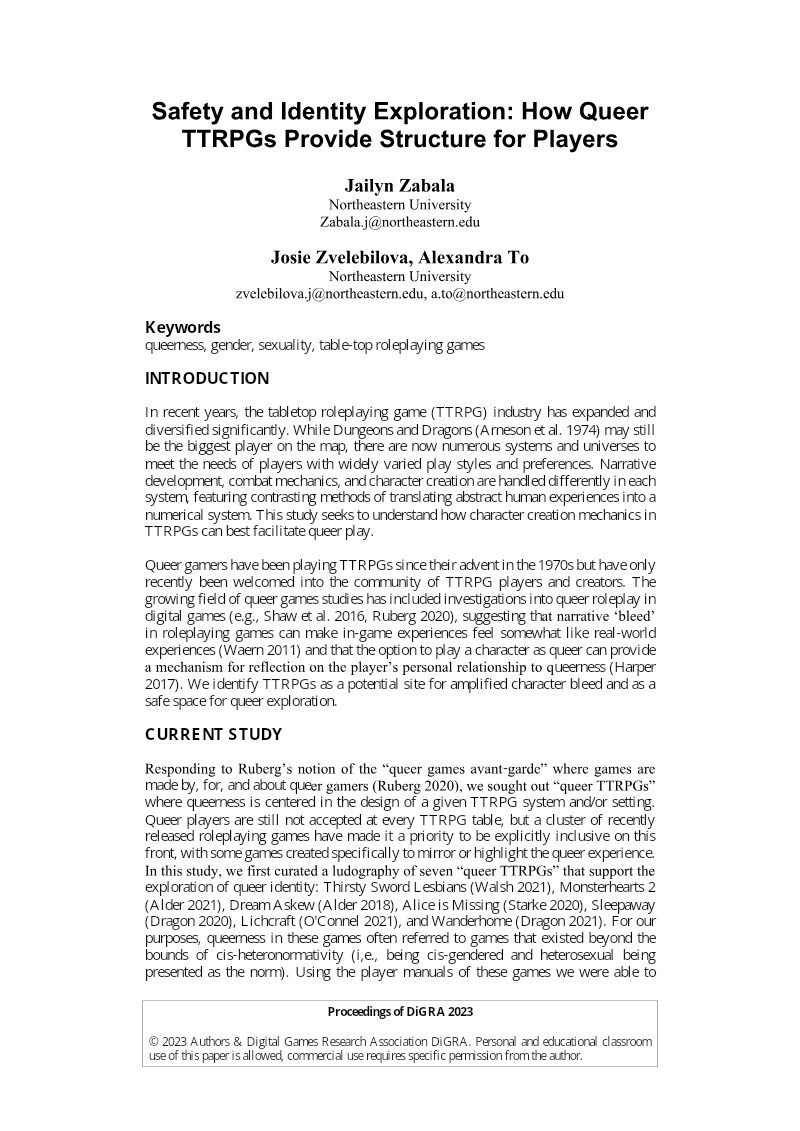
DiGRA · 2023