1 free read left. Create a free account for unlimited reading + AI research.
Create free accountReport ETC Press
1 free read left. Create a free account for unlimited reading + AI research.
Create free accountReportETC Press
The book describes qualified game engine programmers as scarce, with demanding prerequisites in 3D math and low-level systems knowledge.
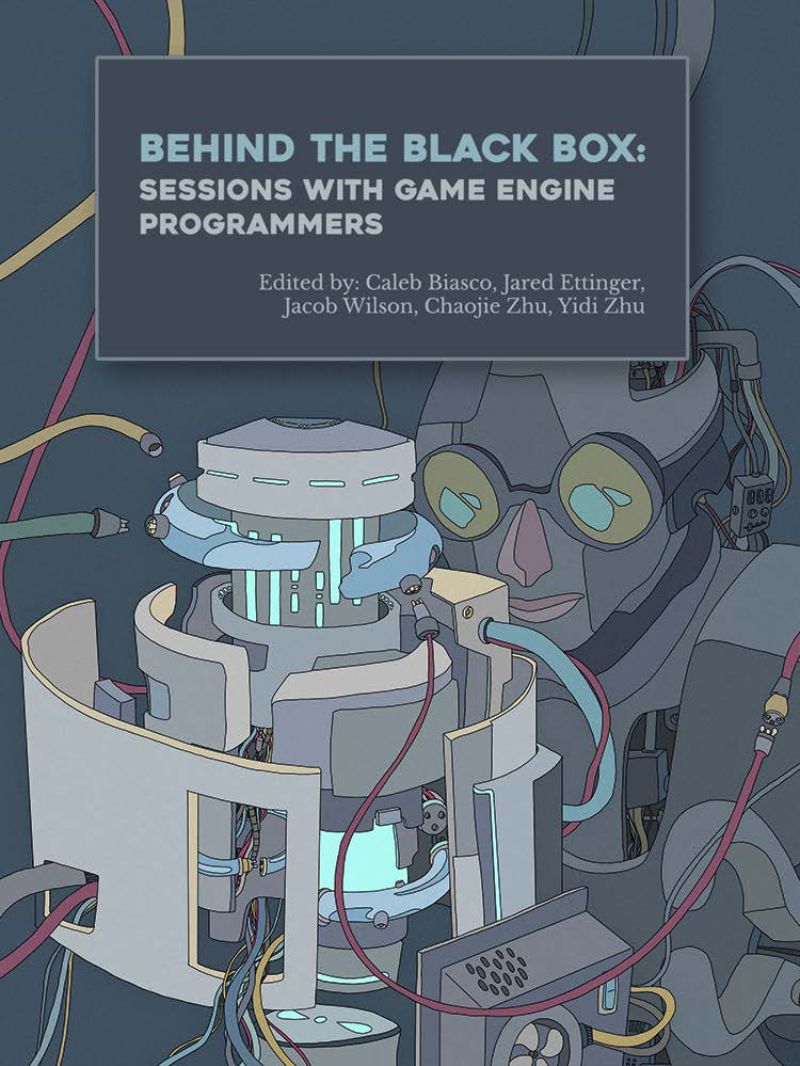
"Behind the Black Box: Sessions with Game Engine Professionals" is a collection of interviews and essays produced by a student team at Carnegie Mellon's ETC Press, designed to demystify game engine development for newcomers. Its central aim is to make knowledge that was once closely guarded accessible, offering practical guidance on the skills, architecture, and workflows that engine programmers depend on. Contributors span a wide range of experience, from independent developers and Google engineers to lead programmers on well-known titles and Unity and Insomniac engineers, and the book treats engine work as a discipline built on real-time simulation, low-level performance, and sustained teamwork rather than on any single tool.
The book's recurring findings center on a few themes. Qualified engine programmers are described as scarce, with demanding prerequisites in 3D math and low-level systems knowledge. Most professional work is "plumbing" and legacy management, often in codebases too large to fully comprehend, which makes targeted navigation, profiling before optimizing, and disciplined documentation essential. Contributors consistently argue for simple, minimally coupled, data-oriented architectures, two-tier APIs that serve both experts and general users, and tightly integrated engine and tools teams. A notable cautionary case is Insomniac's move to web-based tools, which failed to deliver promised gains in hiring, performance, or feature completeness.
Coverage ranges across console generations and platforms, including early Xbox DVD loading, PS3 optimization, the split memory architecture challenges of BioShock's port, and mobile memory constraints. The book also looks forward, noting uncertainty around cloud rendering and VR, growing console memory demands, and a broader industry shift toward unified, cross-platform architectures and low-level APIs such as Vulkan and Metal. Its overall conclusion is that the future of engines is not predetermined but will be shaped by ideas that meet real market demand.


ETC Press · 2021