
DiGRA
The Digital Games Research Association: the international association of academics and professionals who study digital games. Its Digital Library holds the proceedings of the DiGRA conferences since 2002.
Documents

Long-Term Motivations to Play MMOGs: A Longitudinal Study on Motivations, Experience and Behavior
This longitudinal study examines the motivations, gameplay experience, and playing behavior of players of Space Merchant Realms, a text-based browser game that requires no local installation.
- The most important motivations for playing Space Merchant Realms, a text-based browser MMOG, were competition and learning, integration of reality and friendship, and escapism, with ten motivation factors explaining 67.2% of variance across 35 items.
- Players were heavily engaged, averaging 5.33 hours of daily play on weekdays and 4.29 hours on weekends, with many playing during work or school hours.
- Monetary willingness to pay was low: 61.7% of players were unwilling to spend money on browser games, and the average stated monthly willingness was about US$3.17.
Stealing from Grandma or Generating Cultural Knowledge? Contestations and Effects of Cheats in a Tween Virtual World
Fields and Kafai's study examines how cheat sites function within Whyville, a non-commercial tween virtual world, drawing on a sample of 257 Google-listed cheat sites and a 2000–2005 archive of more than 100 articles from the community newspaper, The Whyville Times.
- Cheat sites in Whyville, a non-commercial tween virtual world, were studied through 257 Google-listed sites and over 100 articles from the community newspaper The Whyville Times (2000–2005), with the authors arguing that player-made cheat sites signal an active community and offer cultural and learning value rather than just shortcuts.
- Only about 15 percent of sampled cheat sites offered near-complete solutions with cultural tips, while most were partial or low quality, and the Salen and Zimmerman cheat-site typologies from commercial games applied in this setting too, ranging from solid solutions to scams and copied material.
- Newspaper coverage was largely negative toward cheating: roughly 30 percent of articles condemned cheating in salary-raising games, about 20 percent debated Smart Cars tactics, another 20 percent addressed ballot stuffing, and around 10 percent warned against scams, though some writers recognized creative or useful aspects.
What's My Game Character Worth: The Value Components of MMOG Characters
This analysis examines how massively multiplayer online game (MMOG) characters acquire value for their players, arguing that avatars function as the central focus of virtual play and identity.
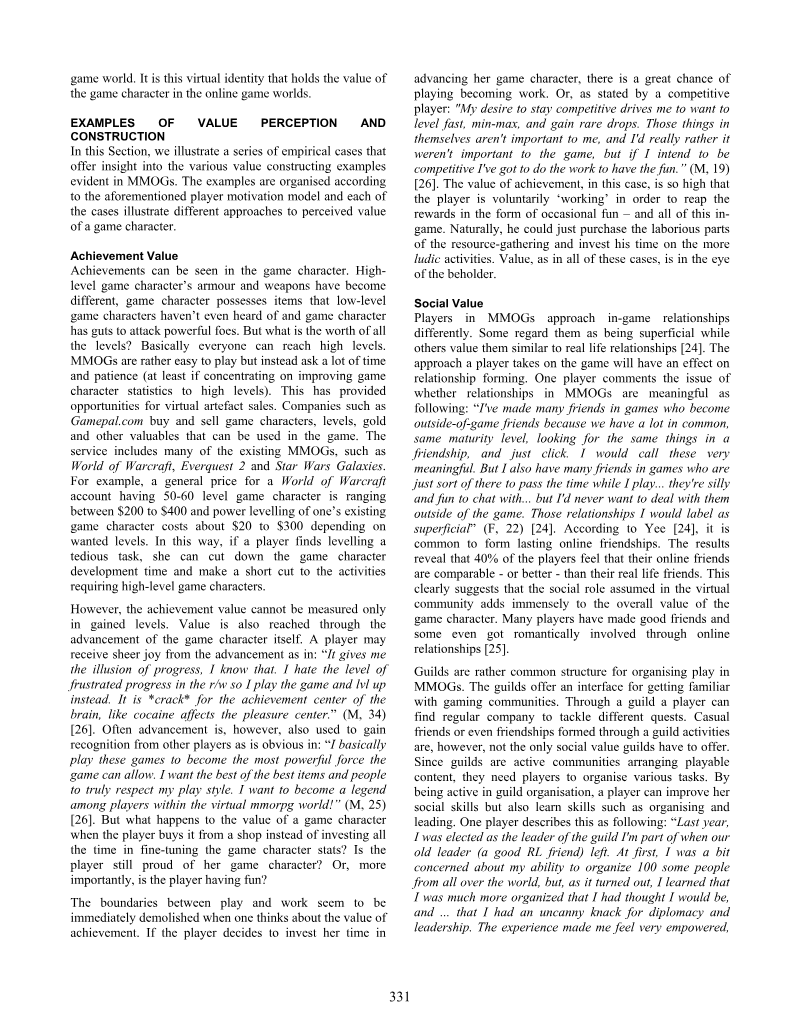
- Character value in MMOGs is multidimensional, arising from the interplay of numerical competence and status, the relationships and reputation built through play, and the personal identity and meaning players invest in their avatar, rather than from any single factor.
- The framework draws on Yee's motivational categories of achievement, social, and immersion components to explain why players value characters differently.
- Some players pay real money to skip progression, valuing a character's social or immersive dimensions over the effort of advancing it, while others deliberately pursue competitive standing as the core of their investment.
Emotions about the Deniable/Undeniable: Sketch for a Classification of Game Content as Experienced
Leino's paper argues that emotions in games should be understood as intentional relationships between players and in-game objects, rather than as isolated psychological reactions that can be measured in the abstract.
- Emotions in games are best understood as intentional relationships between players and in-game objects, not as isolated psychological reactions measurable in the abstract, and extreme emotional moments cannot represent the full range of player experience.
- The central thesis holds that understanding game emotion depends on whether players believe in or deny the game's fiction, a stance shaped by their "lusory attitude" toward its rules.
- The paper classifies game content as experienced into "deniable" meanings, which a player can reject without losing standing as a player, and "undeniable" meanings, whose acceptance is required to keep playing.
Ergonomic Evaluation of Portable Videogame Software
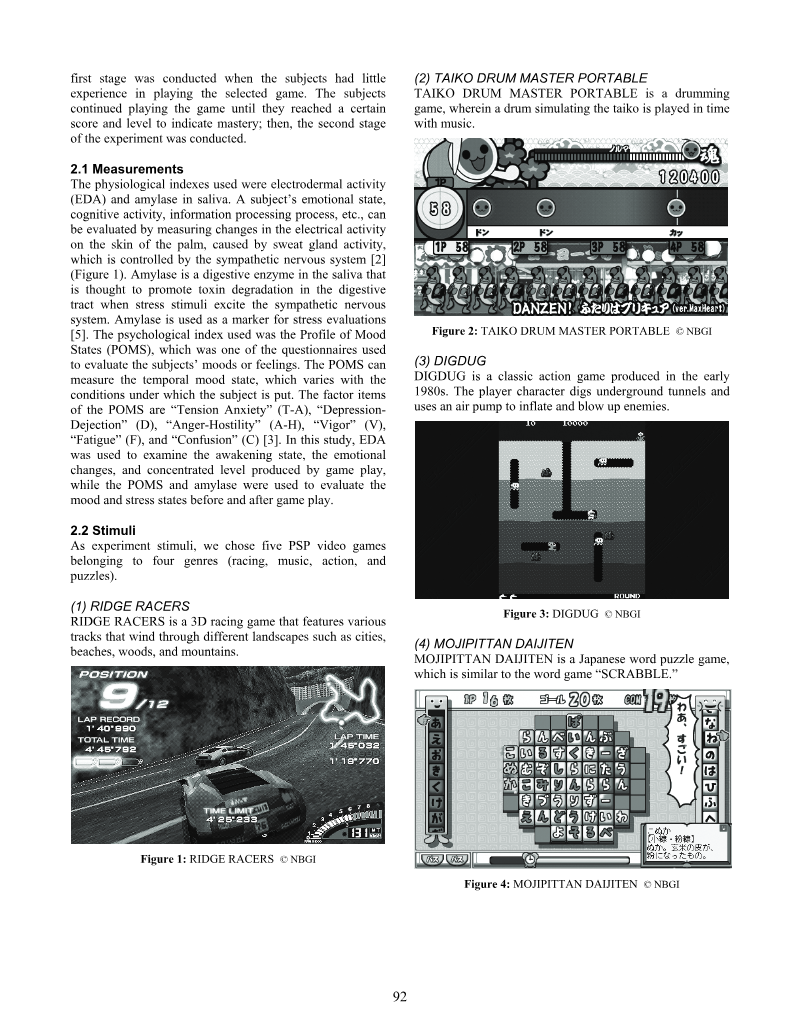
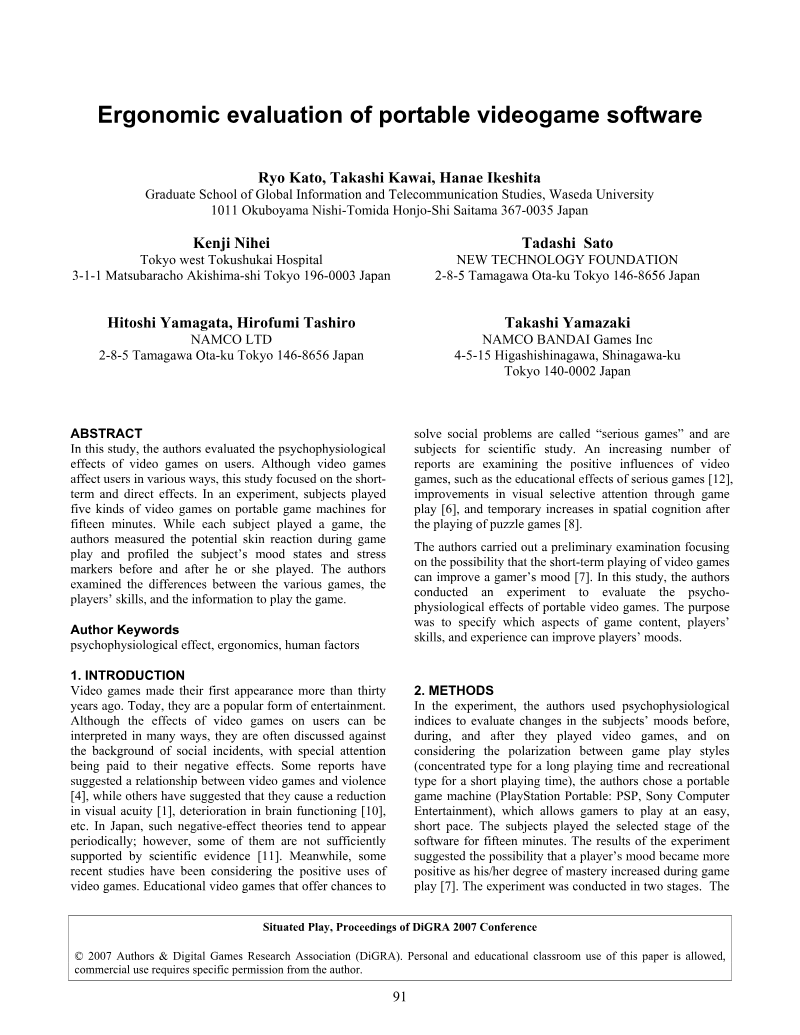
This study, a 2007 DiGRA conference paper, examines the short-term psychophysiological effects of playing video games on portable consoles, with a focus on whether brief play can improve players' moods.
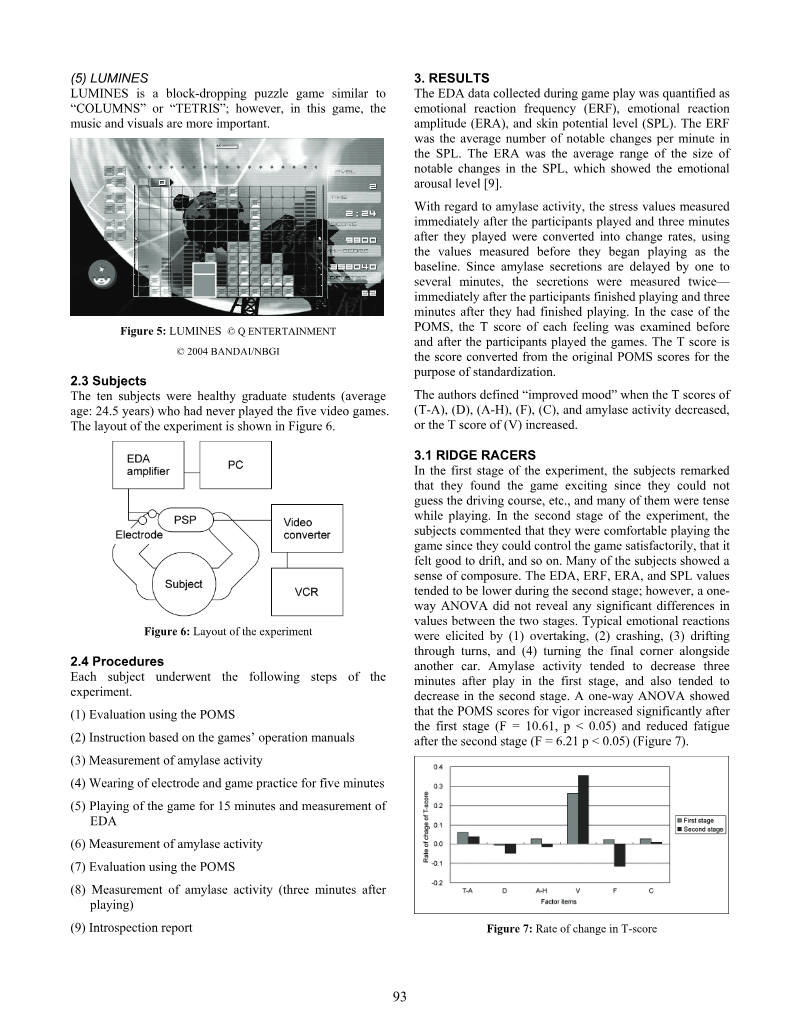
- A 2007 DiGRA study of ten healthy graduate students (average age 24.5) playing five PlayStation Portable titles for fifteen minutes each found that video games can produce measurable psychophysiological changes, with the direction of effects depending on the game and the player.
- Ridge Racers and Mojipittan Daijiten were associated with increased vigor and reduced fatigue, though salivary amylase, a stress marker, rose during Mojipittan Daijiten play.
- Lumines produced increased vigor and decreased fatigue alongside low physiological arousal, suggesting a relaxing effect.
Gaming DNA: On Narrative and Gameplay Gestalts
Douglas Brown's paper, presented at the DiGRA 2007 conference, challenges Craig Lindley's claim that gameplay gestalts inherently conflict with narrative gestalts in videogames.
- Douglas Brown argues, against Craig Lindley's view, that narrative and gameplay gestalts are not inherently in conflict but form an interwoven "double helix" that can catalyse, reinforce, or sometimes undermine each other.
- Brown concludes that the most successful games are those in which narrative and gameplay gestalts unify, and that the field suffers from a notable shortage of narrative depth.
- The paper contends that Hollywood's three-act structure is often a poor fit for games, and that over-reliance on it creates friction in game design.
The Spontaneous Playfulness of Creativity: Lessons from Interactive Theatre for Digital Games
This paper argues that the practices and theories of improvisational and activist theatre can enrich digital game design by introducing spontaneous, playful creativity into how developers conceive characters, relationships, social issues, and gameplay.
- The paper argues that improvisational and activist theatre methods can introduce spontaneous, playful creativity into digital game design, shifting developers away from a sole focus on technical topics like facial rendering and AI agents.
- It proposes adapting Uta Hagen's character analysis questions and Stanislavski-inspired "inside out" development to build digital characters from the inside rather than from surface traits.
- It applies Chris Crawford's arithmetic formulation of relationship motivation, along with Keith Johnstone's status-tower and "Lists" exercises, to construct relationship dynamics and generate first-instinct game ideas.
Digital Games for Education: When Meanings Play
The document, "Digital Games for Education: When Meanings Play," examines how educational games can be designed and evaluated, using the experimental web-based game Contagion as its central case.
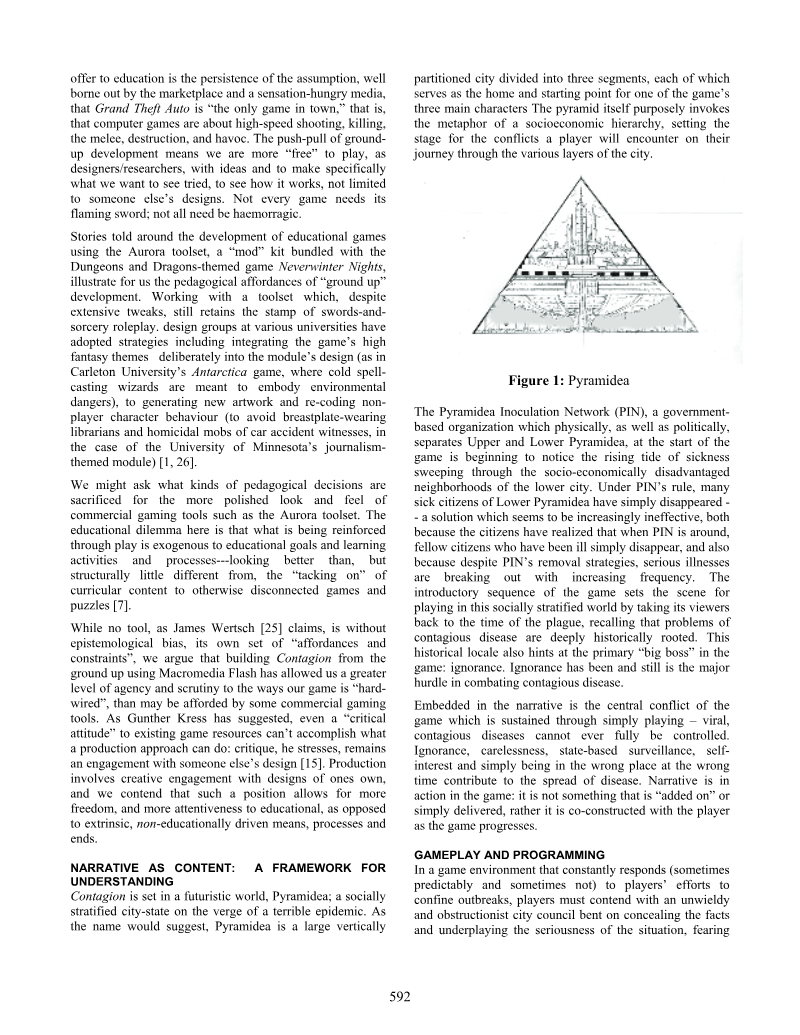
- The authors argue that educational meaning is embedded in every element of a game's design, including character selection, art, narrative, programming, goals, and play itself, not just its subject matter.
- The project Contagion, built in Macromedia Flash for ages 10 to 15, covers four infectious diseases (SARS, West Nile Virus, Avian Flu, and AIDS) and was developed through design-based research at Simon Fraser University and York University.
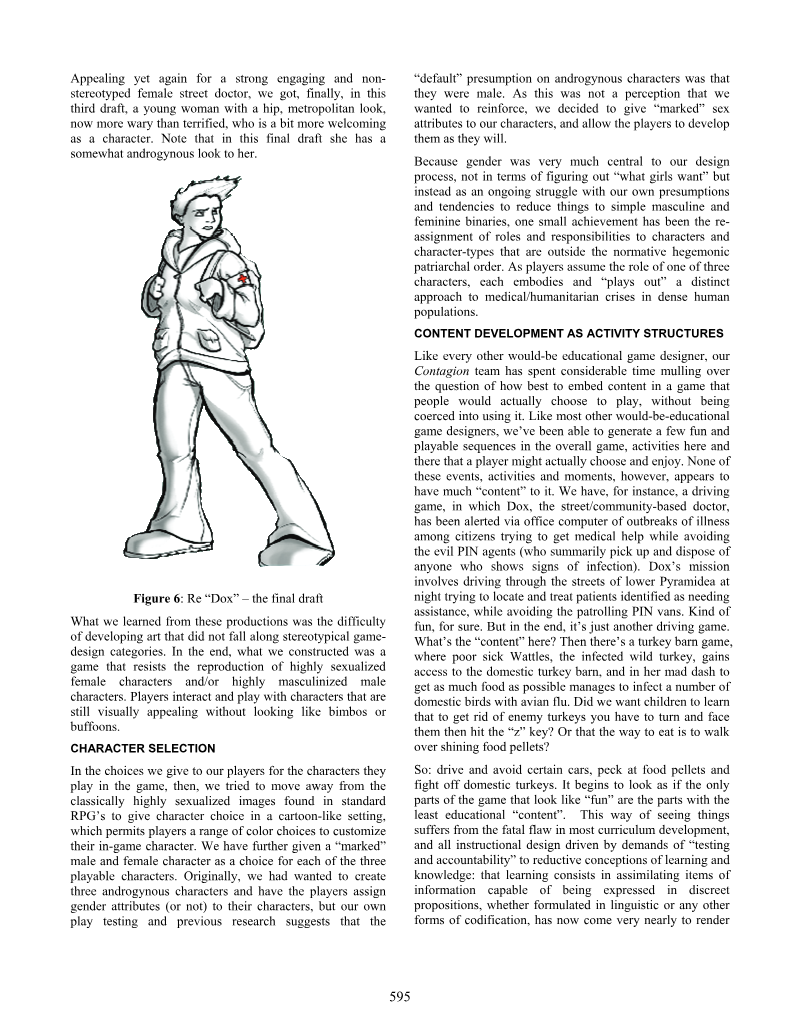
- The authors found that their initial character art and pronoun choices reproduced gender stereotypes, and they revised toward more ambiguous, "marked" characters.
Leaving a Never-Ending Game: Quitting MMORPGs and Online Gaming Addiction
This study, drawn from a Taiwanese academic setting, examines why gamers stop playing massively multiplayer online role-playing games (MMORPGs) after having been addicted to them.
- Quitting a heavily played MMORPG is best understood as a gradual process over time rather than a single decision, and the factors that drew players into addiction often drive their eventual departure.
- The study's central hypothesis is that existing game-addiction research has focused on diagnostic criteria, personality traits, and structural game features while neglecting how attachment rises, changes, and declines over time.
- Addicted players showed self-awareness: they monitored their own behavior, felt guilt or social disapproval, and sought advice on forums, where suggestions ranged from pursuing other activities to deleting accounts.
Effect of Video Games on Children's Aggressive Behavior and Pro-social Behavior: A Panel Study with Elementary School Students
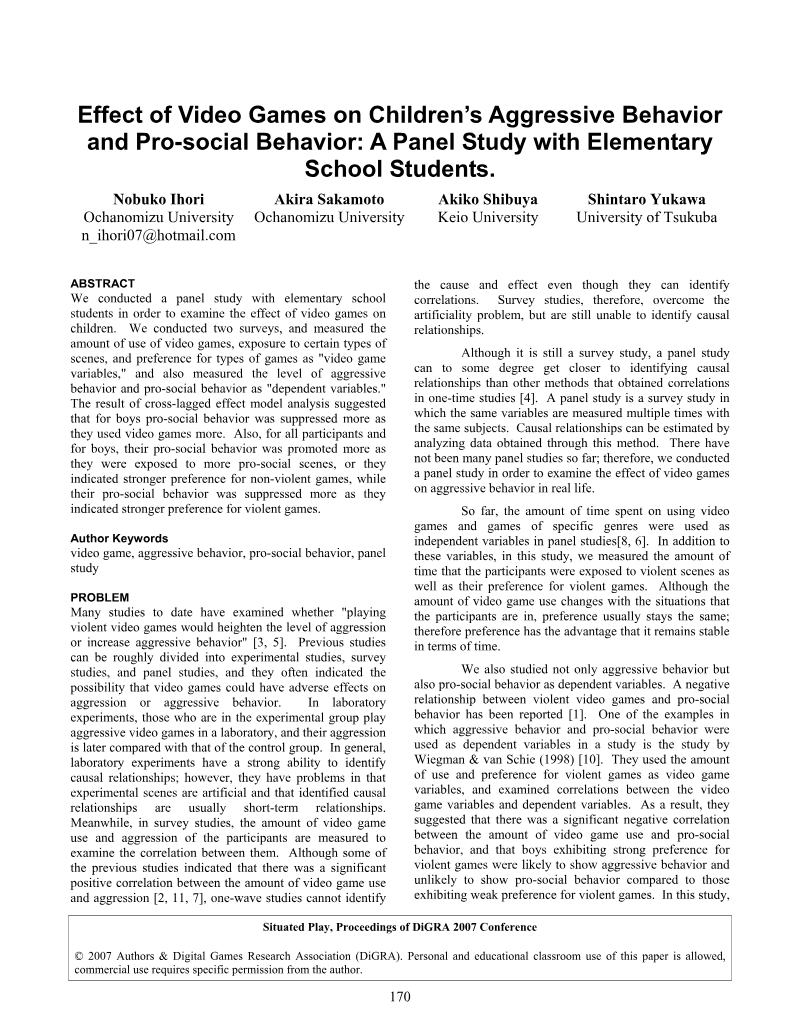
This panel study examines whether video game use, exposure to specific on-screen content, and genre preference affect aggressive and pro-social behavior among Japanese fifth graders.
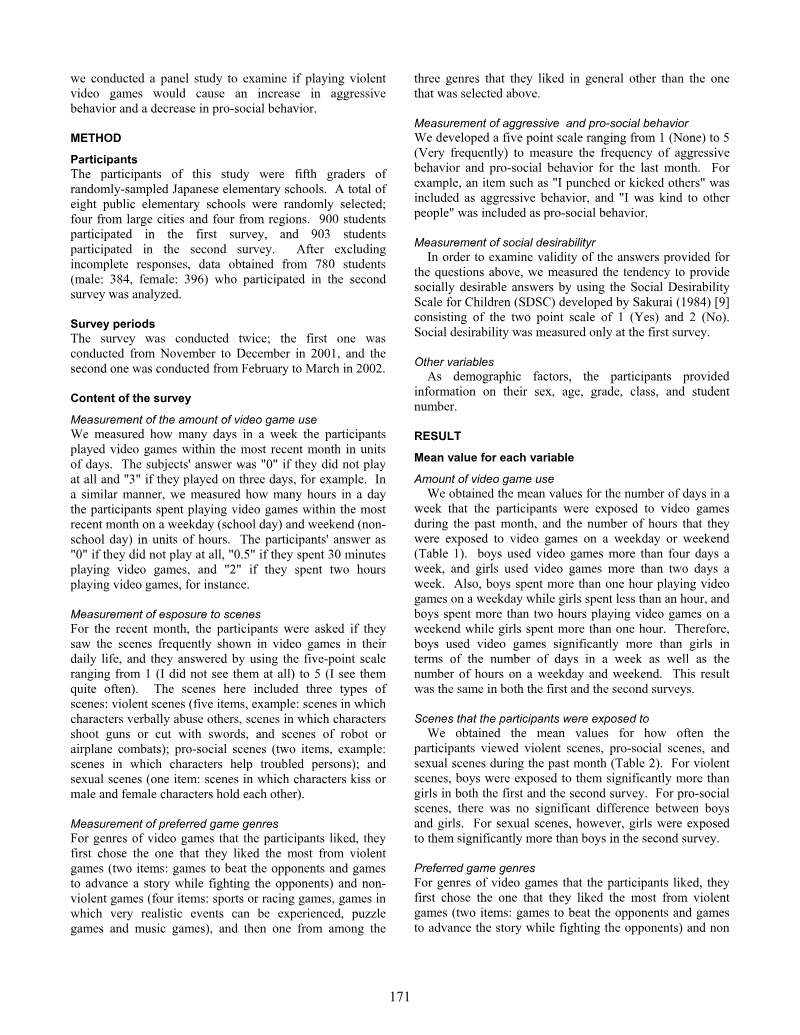
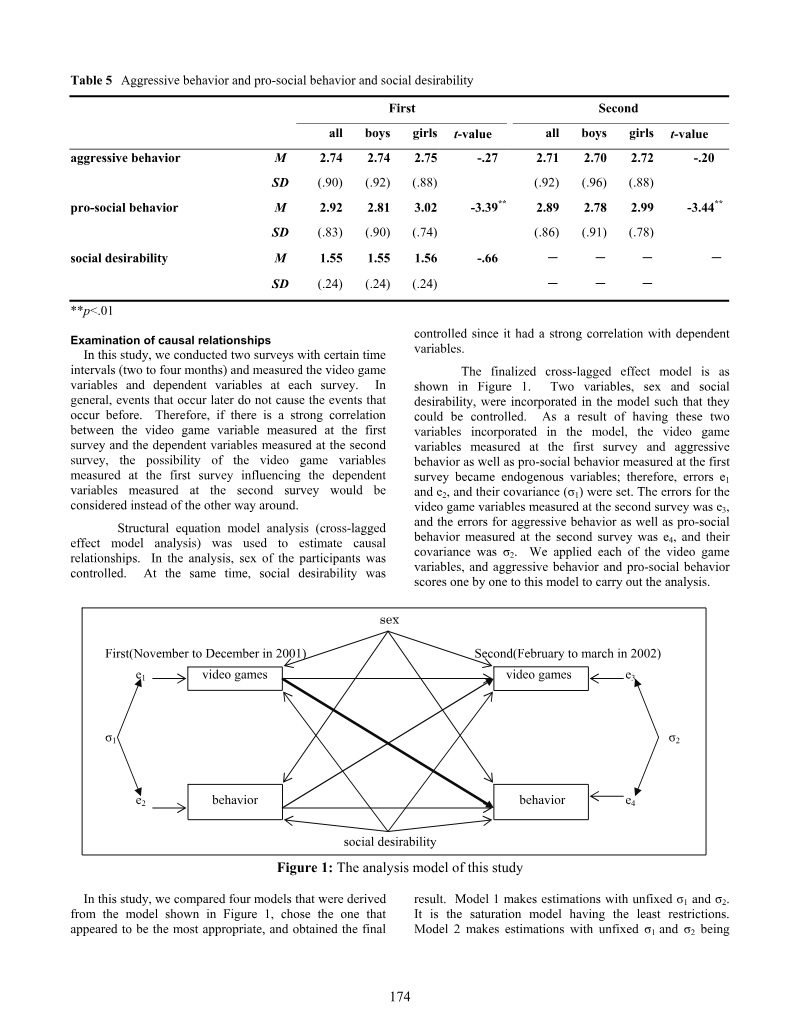
- A panel study of 780 Japanese fifth graders (384 boys, 396 girls), surveyed two to four months apart in late 2001 and early 2002, found no significant effect of video game use or violent content on aggressive behavior, departing from several earlier correlational findings.
- Violent game preference was negatively associated with pro-social behavior for all participants and for boys specifically, and greater weekday play predicted lower pro-social behavior among boys.
- Exposure to pro-social scenes was positively associated with pro-social behavior, while exposure to neither violent nor sexual scenes significantly predicted aggressive behavior.
Cash Trade Within the Magic Circle: Free-to-Play Game Challenges and Massively Multiplayer Online Game Player Responses
This study examines how the cash trading of virtual items in free-to-play massively multiplayer online games (MMOGs) affects players' sense of immersion, fairness, and the "magic circle," Huizinga's concept of a bounded play space.
- The study argues that cash trading of virtual items in free-to-play MMOGs shifts players from community members toward consumers, reshaping their norms of fairness, immersion, and self-image within the 'magic circle' of play.
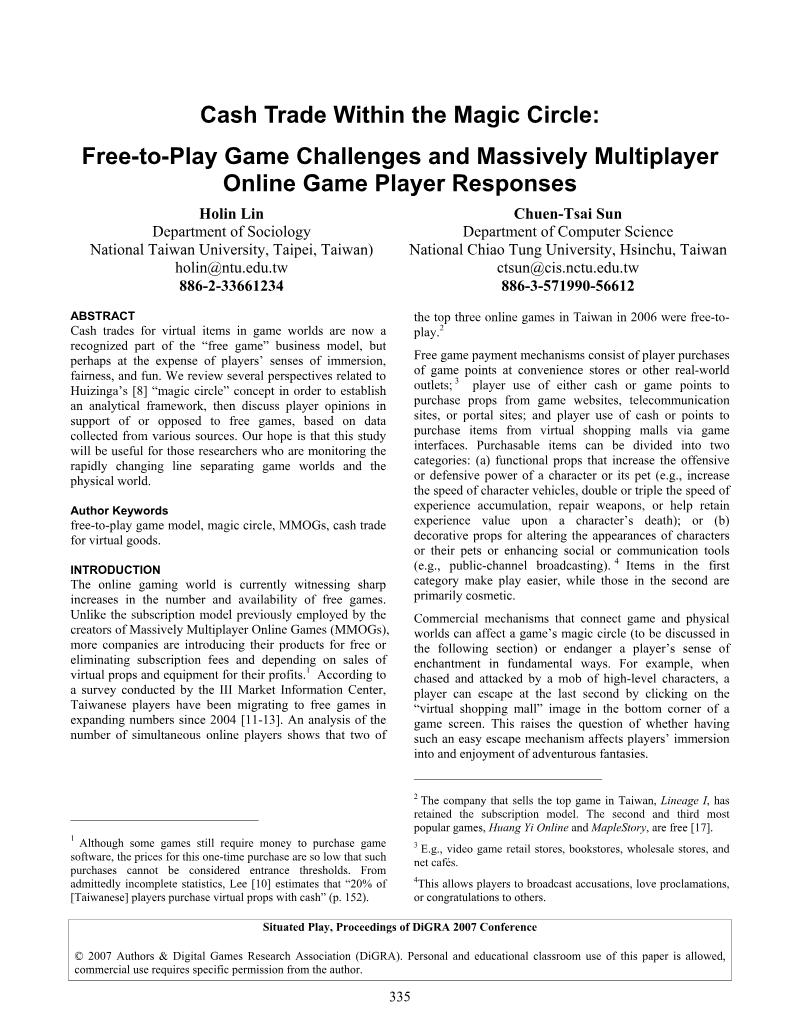
- Focusing on Taiwanese players, who began migrating to free-to-play titles from 2004 onward, the authors estimate that about 20 percent reportedly bought virtual props with cash.
- The analysis codes 1,176 posts from Taiwanese forums such as Gamebase and Bahamut, where critics raise concerns about pay-to-win imbalances, a 'one game, two experiences' divide between paying and non-paying players, and declining community order.
Mobile Gaming with Children in Rural India: Contextual Factors in the Use of Game Design Patterns
This study examines whether game design patterns can produce engaging mobile games for children in rural India, a population that has received little attention in games research.
- The study tested whether games built with design patterns would be more enjoyable for rural Indian children, and the hypothesis was not supported: pattern use alone did not predict enjoyment.
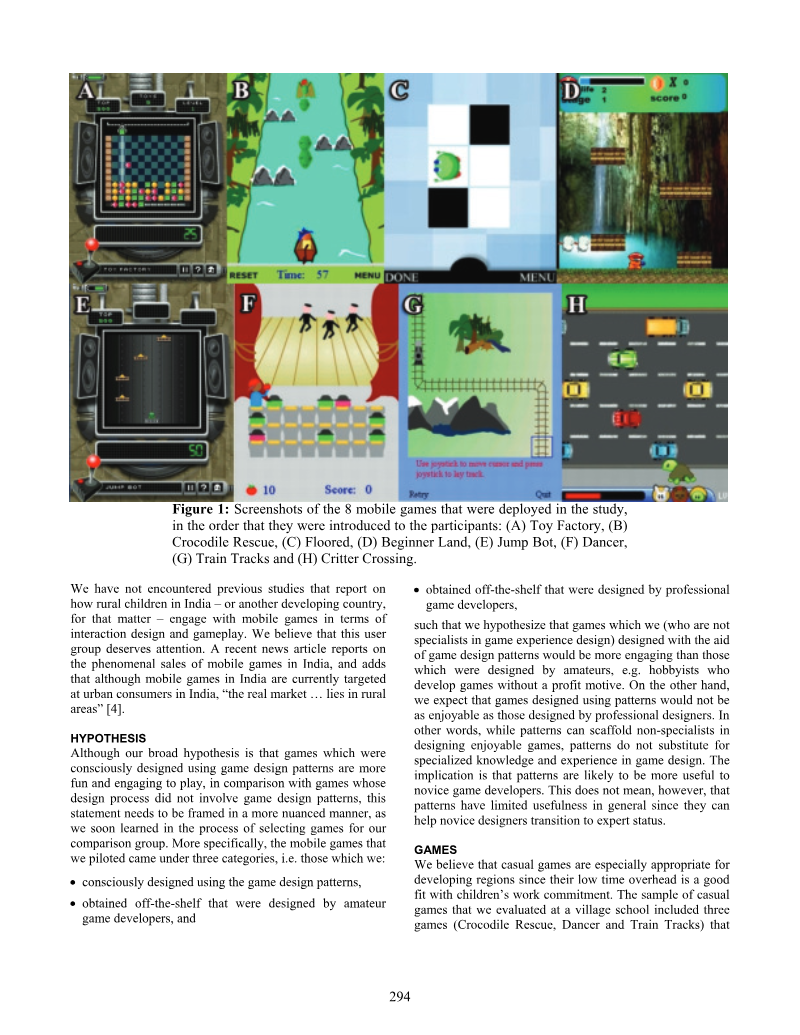
- In a 10-day field study with 24 first- and second-grade children at a rural Indian school, the top-rated games, Floored and Critter Crossing (both 4.5), and Jump Bot (4.1), were not built using patterns, while pattern-based games varied widely from Floored's top score to Crocodile Rescue's 3.4.
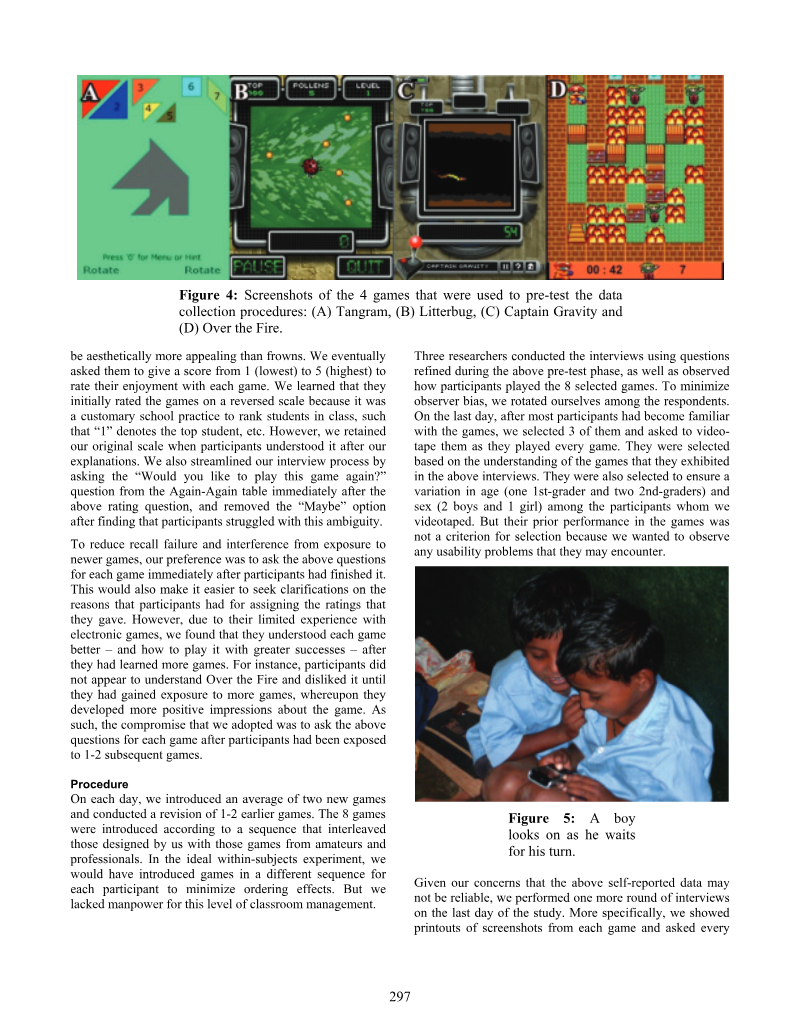
- Enjoyment was measured with adapted Fun Toolkit instruments, comparing three pattern-based games against five off-the-shelf titles made by amateur and professional developers.