
DiGRA
The Digital Games Research Association: the international association of academics and professionals who study digital games. Its Digital Library holds the proceedings of the DiGRA conferences since 2002.
Documents
Narrative Friction in Alternate Reality Games: Design Insights from Conspiracy for Good
The study examines Conspiracy for Good (CFG), a 2010 commercial alternate reality game sponsored by Nokia that combined roughly four months of online puzzle play with four live events staged on the streets of London.
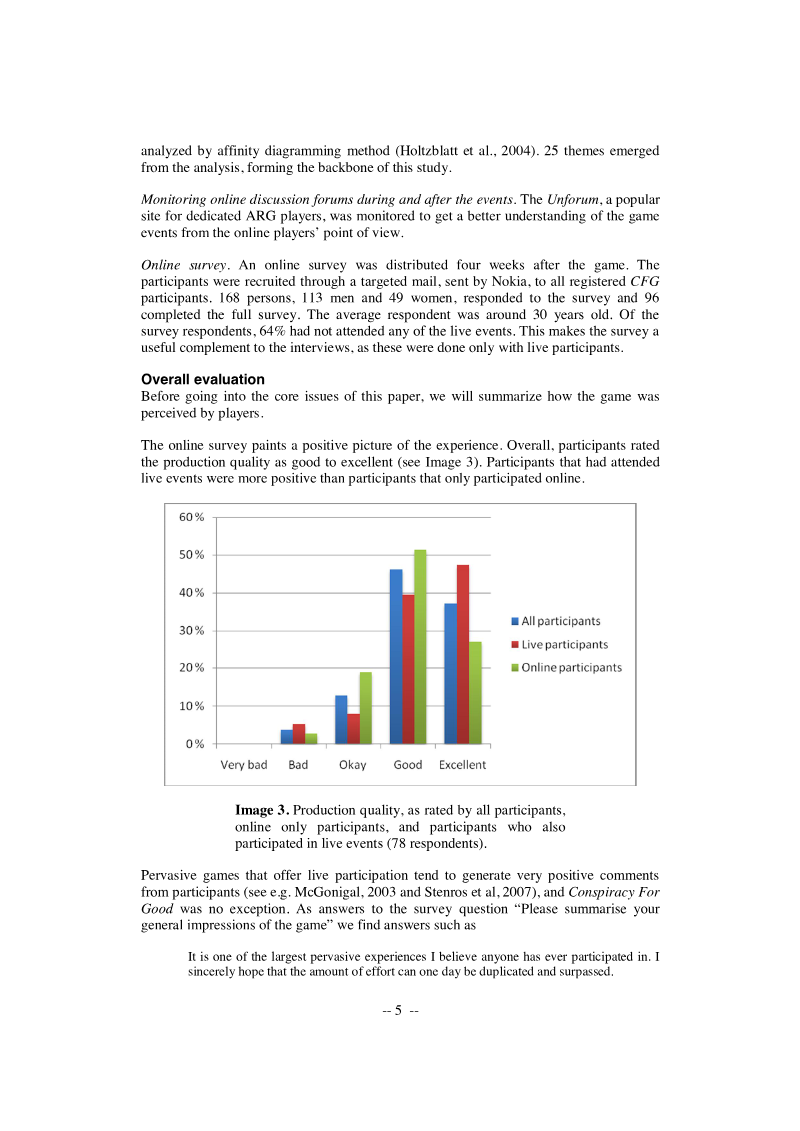
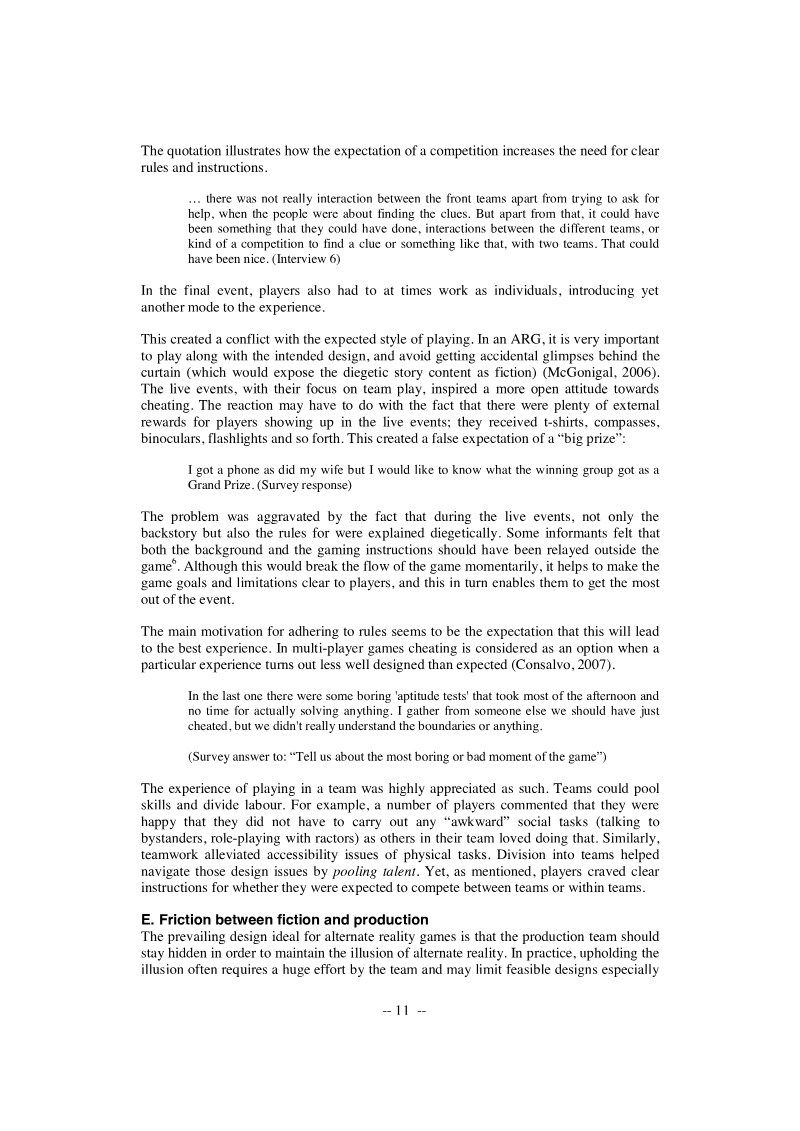
- The study's most consequential finding is that Conspiracy for Good effectively functioned as two separate games for two audiences: live players who often lacked knowledge of the online backstory and adopted a treasure-hunt framing, and online players who frequently felt excluded from the physical events.
- Narrative friction, where the fiction, gameplay, and audience expectations failed to align, was identified as the game's главный design problem rather than technical or aesthetic issues.
- Participants reported mixed experiences of agency, with some feeling meaningful choice while others described railroading or social loafing, and visible production elements such as filming and staff presence repeatedly broke the fictional illusion.
Breaking Reality: Exploring Pervasive Cheating in Foursquare
René Glas's analysis examines cheating in Foursquare, the location-based social app, arguing that such practices reveal how gamification and pervasive games blur the boundary between play and everyday life.
- Foursquare's 'I'm on a Boat!' badge was earned by tagging Amsterdam Central Station as a boat, illustrating how easily check-in gamification can be gamed.
- Because Foursquare blends gameplay with ordinary social use, cheating can pull non-players into the game without their consent, blurring the boundary of the 'magic circle' that separates play from everyday life.
- Cheating in Foursquare has mostly affected others indirectly, but it still disrupts standard players' experience, especially when dishonest check-ins are used to capture mayorships.

Putting Brands into Play: How Player Experiences Influence the Effectiveness of In-Game Advertising
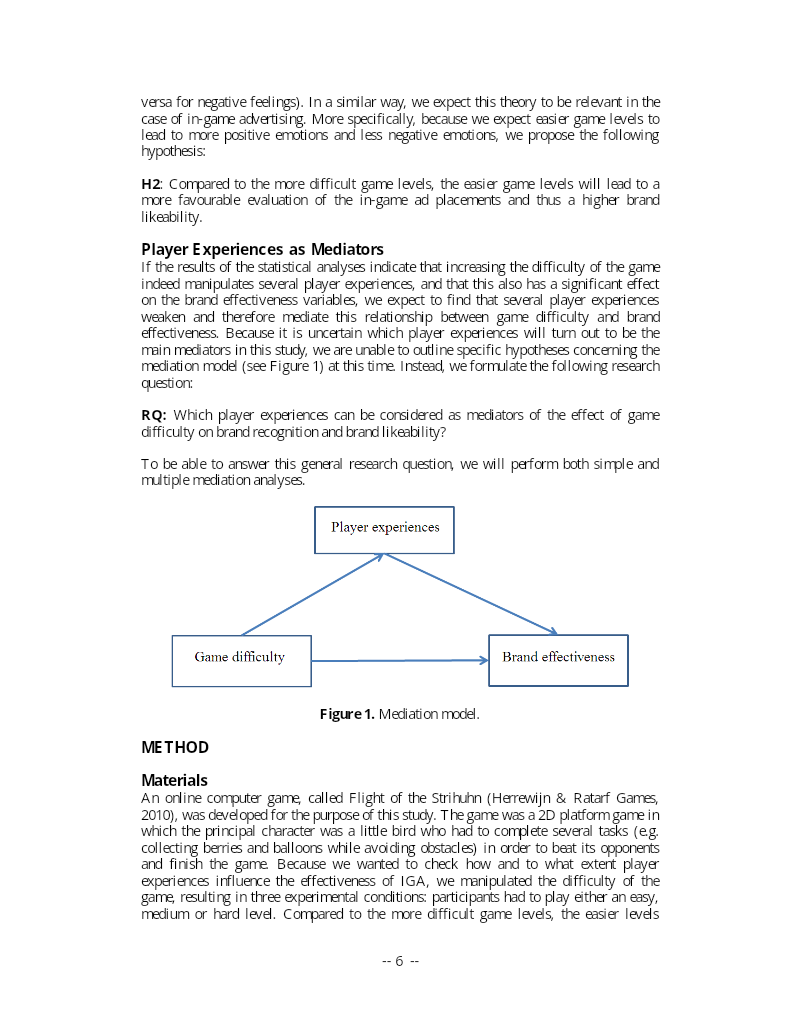
Herrewijn and Poels examine whether the emotional and cognitive experiences players have while playing a video game shape how well in-game advertising is remembered and liked.
- Easier game difficulty produced more positive and less arousing player experiences (higher pleasure, dominance, and competence; lower arousal, tension, and challenge), which in turn strengthened how players processed embedded advertising.
- Players in the easy condition showed significantly better brand recognition than those in the hard condition, and brand likeability was marginally higher, with the easy-versus-hard contrast reaching significance for both outcomes.
- Competence partially mediated the effect of difficulty on product and billboard recognition, indicating that feeling skilled is one mechanism linking gameplay difficulty to ad memory.
Cultures of Independent Game Production: Examining the Relationship Between Community and Labour
This study examines how communities of independent game developers help them cope with precarious, flexible labour conditions and regain a measure of creative control.
- Independent game production is framed as fundamentally collective rather than individual, with community networks functioning as an alternative infrastructure outside conventional industry structures.
- Based on 23 interviews and ethnographic fieldwork conducted in 2010, largely in the United Kingdom, the study identifies community practices such as experimentation, playtesting, skill-sharing, and moral support as central to indie development.
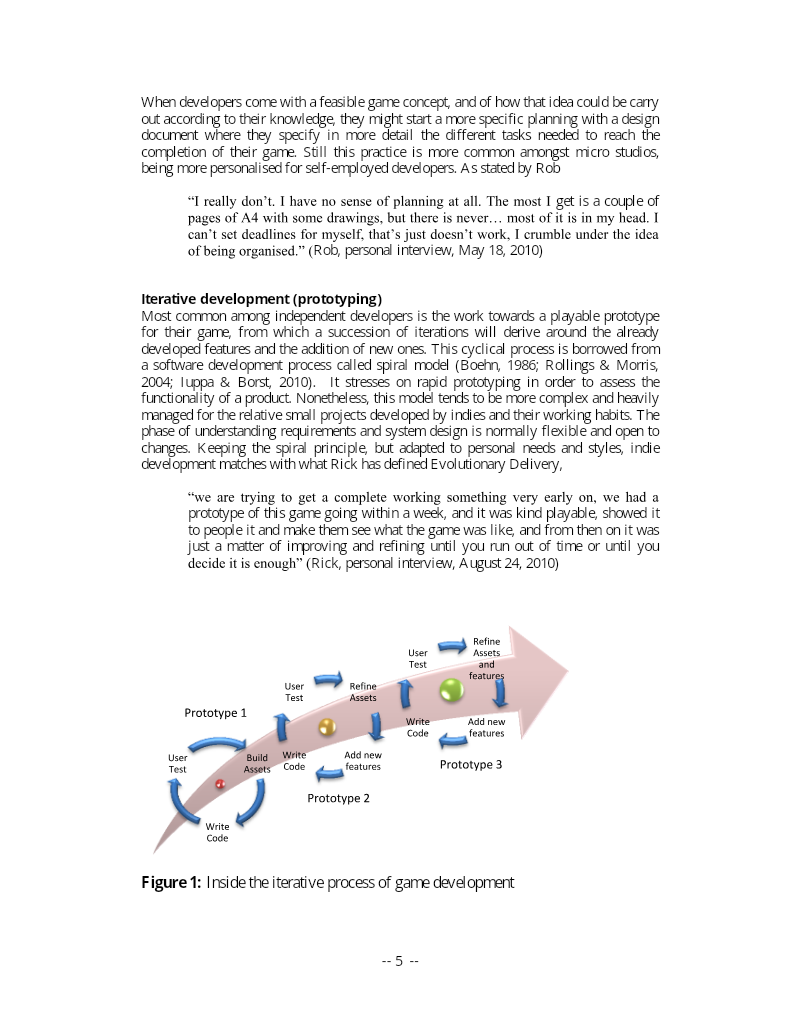
- The author proposes a two-phase, iterative model of indie production moving from experimentation to prototyping, in which community networks reduce costs and speed development through knowledge exchange, code sharing, and rapid feedback.
Towards a Playful Organization Ideal-Type: Values of a Playful Organizational Culture
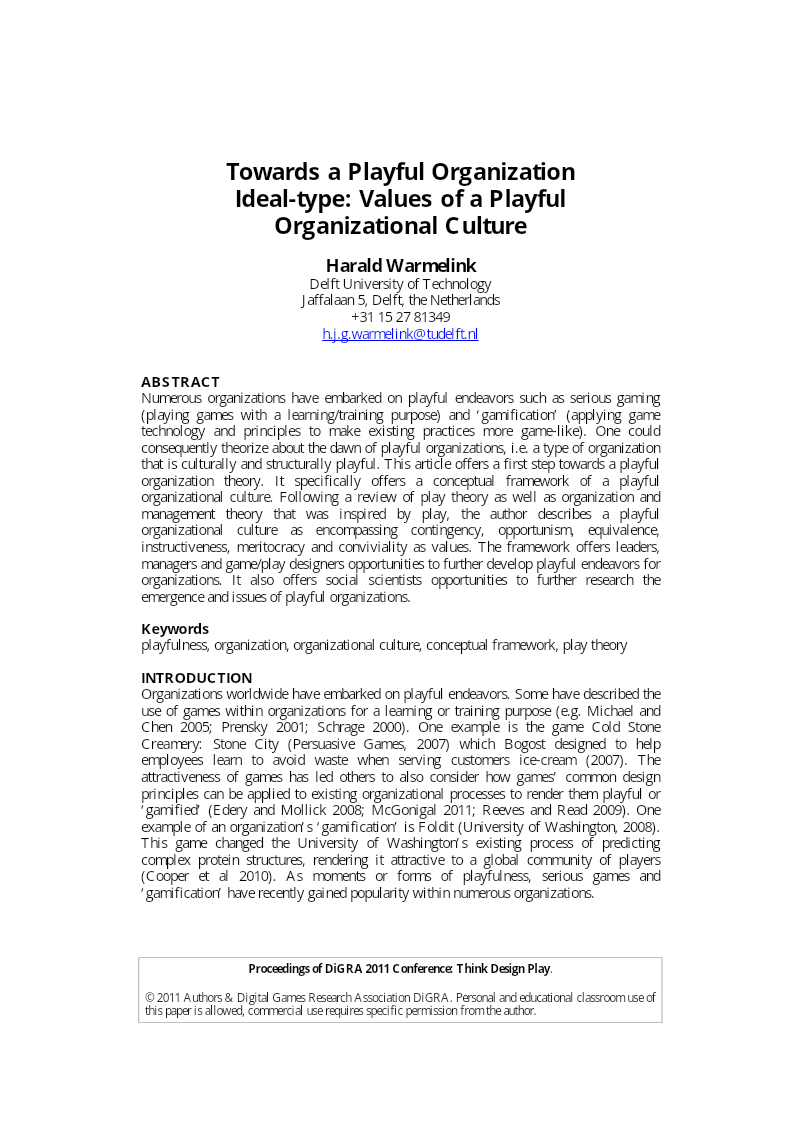
"Towards a Playful Organization Ideal-Type" proposes a conceptual framework for understanding organizations in which work is experienced as play.
- The paper proposes six core values defining a playful organizational culture: contingency, opportunism, equivalence, instructiveness, meritocracy, and conviviality.
- The framework is explicitly theoretical: it presents no empirical data showing that playful organizational values improve performance or effectiveness, so its conclusions are propositions awaiting validation.
- Conviviality is the paper's central contribution, argued to boost engagement, reduce the perceived consequences of failure, and encourage employees to take risks.
Player Communities in Multiplayer Online Games: A Systematic Review of Empirical Research
This systematic review synthesizes 31 selected empirical publications from 2000 to 2010 on player communities in multiplayer online games, drawing on multidisciplinary databases and game studies journals.
- The review synthesizes 31 empirical publications from 2000 to 2010, retaining 17 for detailed analysis, with the 2000 start tied to the rise of graphical MMOs such as Ultima Online and EverQuest.
- Ethnography and participant observation dominated the field, appearing in 13 of the 17 retained studies, while quantitative methods such as data mining, surveys, and network analysis were less common.
- Sample sizes ranged from a handful of players to several thousand, and fieldwork lasted from a few months to several years; the most studied games were World of Warcraft, EverQuest, and Lineage.
Of Discs, Boxes and Cartridges: The Material Life of Digital Games
Toivonen and Sotamaa's DiGRA 2011 paper, "Of Discs, Boxes and Cartridges: The Material Life of Digital Games," argues that physical game copies carry meanings that digital distribution does not easily replace.
- Physical game copies carry meanings that digital distribution does not easily replace: players value the tactile presence and reliable sense of ownership that physical media provide.
- Respondents associated downloads with service closures, revoked access, and dependence on internet connectivity, while physical copies offered a sense of permanence.
- Digital distribution accounted for under 10 percent of game sales at the time, and the authors judge it unlikely to eliminate physical copies quickly.
Participatory Game Design to Engage a Digitally Excluded Community
This paper examines a participatory design project in which young people aged 11 to 19 from Lancaster and Manchester, both communities identified as digitally and socially excluded, co-designed a location-based mobile game to explore their sense of place and belonging.
- Relationship-building consumed most of the early timeline: a researcher spent roughly three months building rapport with a Lancaster youth group before any design work could begin.
- The Lancaster project co-designed marshOtron, a grid-based light-cycle variant built on Nokia N8 phones using GPS and a game server, after playtesting at Lancaster University exposed GPS and connectivity limitations that shaped the final grid-based design.
- The nine participants who engaged were all male, while six girls showed little interest; the male group favoured physical chase mechanics, whereas the female group had limited gaming experience and was more drawn to Facebook access.
Preventing a POX Among the People? A Design Case Study of a Public Health Game
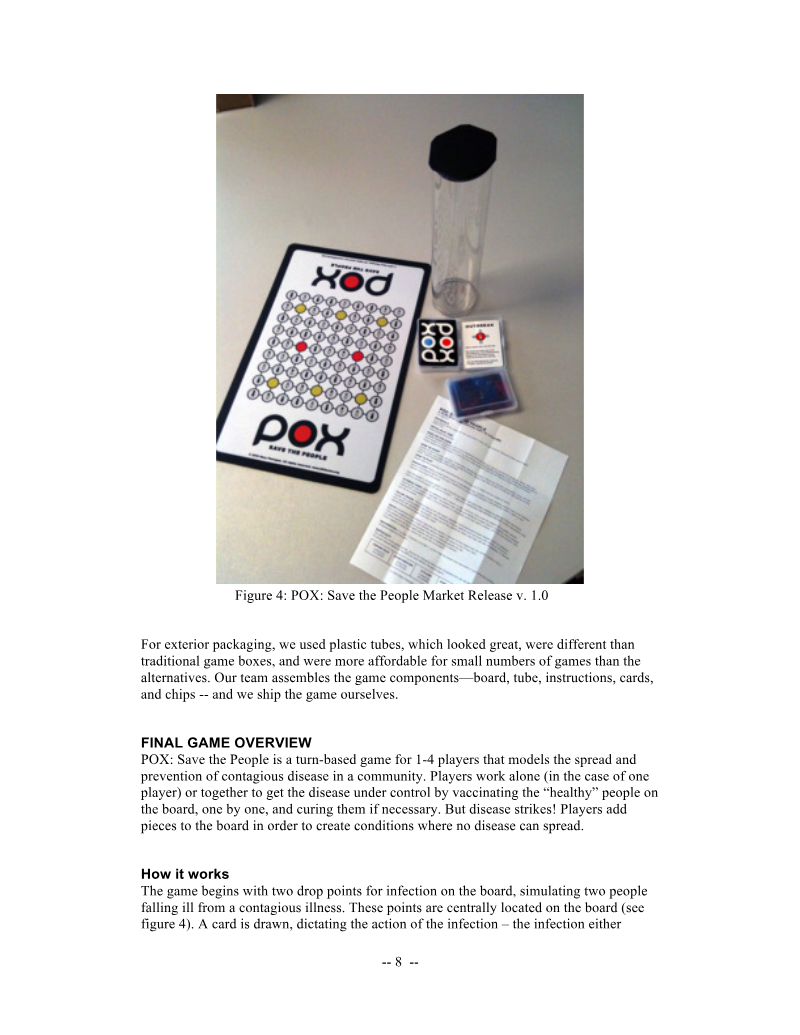
The paper presents the design, development, and evaluation of POX: Save the People, a cooperative board game created by the Tiltfactor Laboratory at Dartmouth College in collaboration with the Mascoma Valley Health Initiative in New Hampshire.
- POX: Save the People is a cooperative board game created by Dartmouth's Tiltfactor Laboratory with the Mascoma Valley Health Initiative in New Hampshire, designed to teach herd immunity and the role of vaccination.
- The game is grounded in epidemiology, explaining herd immunity thresholds for measles, pertussis, and polio, and citing 2003 outbreaks in the Marshall Islands and Mexico as examples of what happens when vaccination coverage falls below those thresholds.
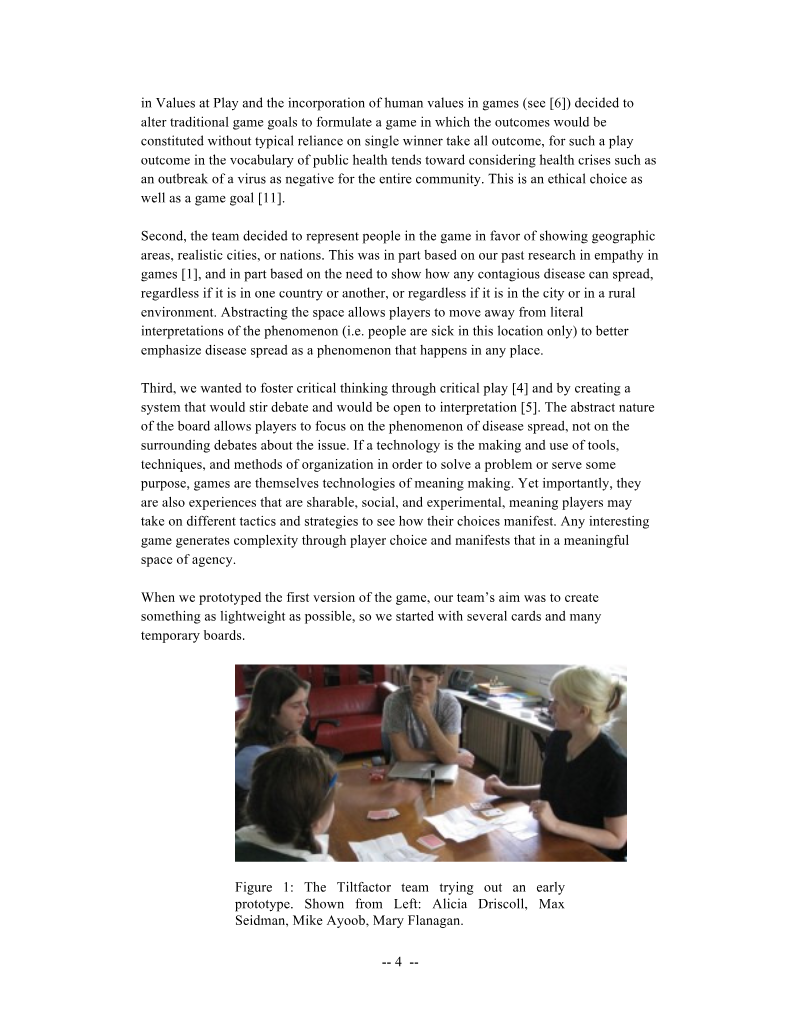
- The design process took about six months starting in summer 2010, moving from lightweight prototypes through hex and grid formats, and deliberately favored abstract characters, collaborative rather than winner-take-all outcomes, and player-chosen outbreak locations.
Games and Machinima in Adolescents' Classrooms
This study examines how commercial video games and machinima, films produced inside game engines, can be used in Spanish secondary classrooms to develop new literacies within the curriculum.
- The study ran during the 2008–2009 school year with roughly 300 students aged 11 to 16 and 17 teachers in Spanish secondary classrooms, using commercial video games and machinima (films produced inside game engines).
- The authors report no measured learning outcomes; their claim that the approach is effective rests mainly on their own experiential observations as practitioners rather than quantitative evidence.
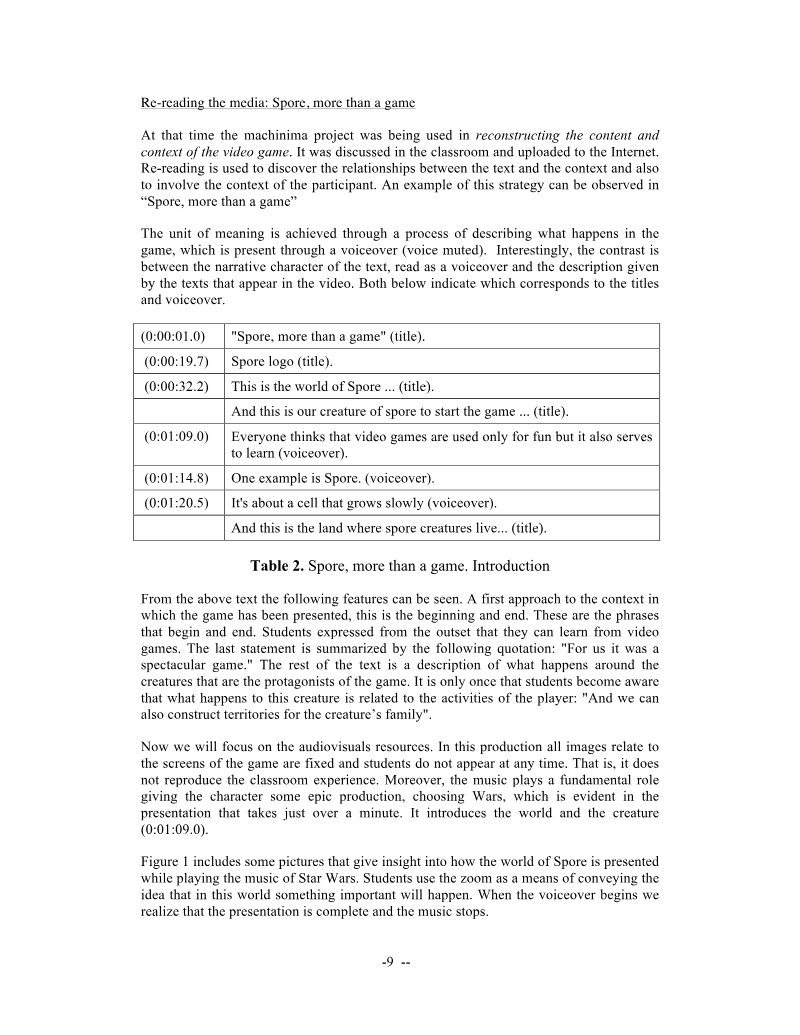
- The methodology alternates dialogue, play, and reflection in workshops, culminating in student-made machinima, with the stated aim of generating knowledge for designing game-based learning scenarios.
Framework for Designing and Evaluating Game Achievements
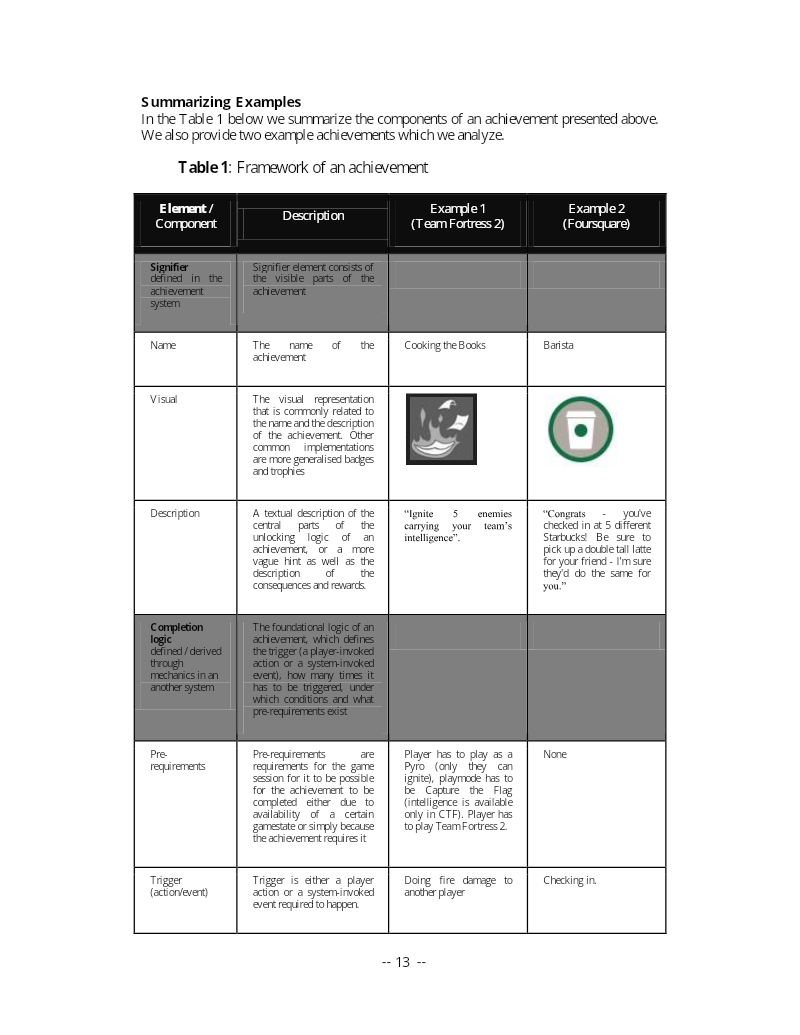
Hamari and Eranti's framework proposes a design-independent model for game achievements, defining them as goals within a separate reward system whose fulfillment is triggered by events in the core game.
- Achievements have a dual nature: they exist simultaneously in a meta-game layer separate from the core game and within the individual game where their completion conditions are met, which the authors argue explains why earlier definitions and compilations have been inconsistent or disruptive to core gameplay.
- The authors propose treating achievement systems as games in their own right, since players who pursue every badge stop treating achievements as optional or secondary.
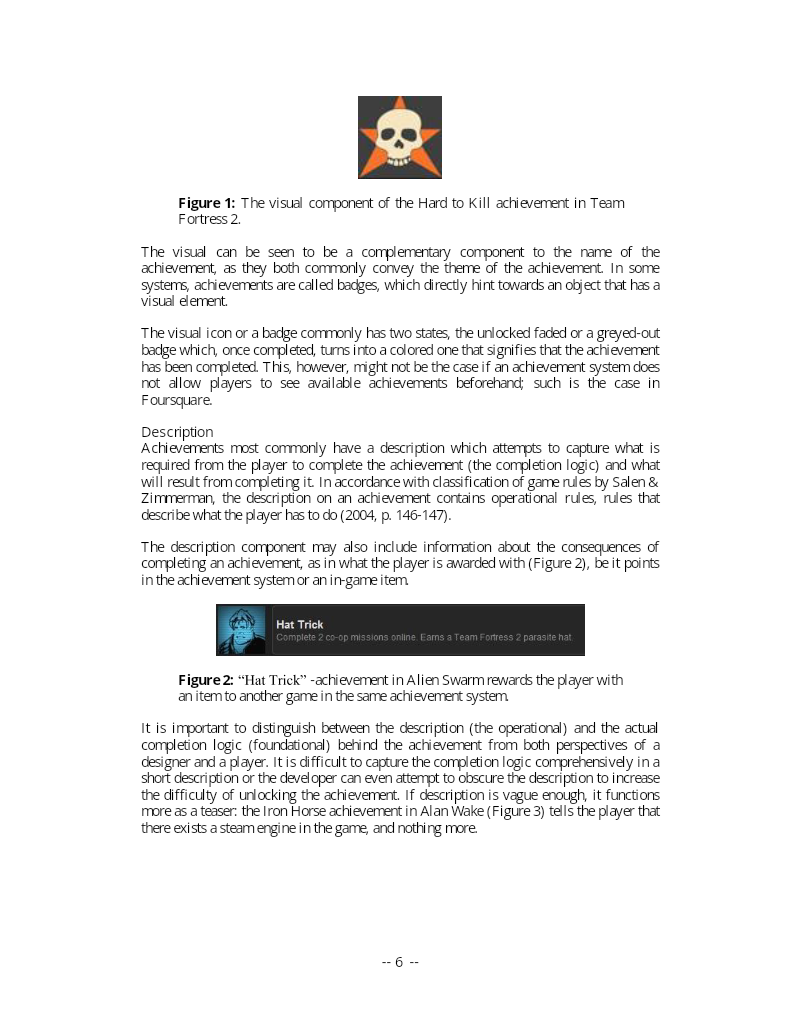
- Across nine Steam titles (475 of 720 achievements completed) and examples from Xbox Live, Foursquare, World of Warcraft, Team Fortress 2, Left 4 Dead 2, and Call of Duty: Modern Warfare 2, achievements share a consistent structure of signifier, completion logic, and reward.
Making Sense of Game-Play: How Can We Examine Learning and Involvement?
This study sets out to clarify how learning and involvement interact during game-play, arguing that existing theories of play, including accounts by Malone, Ryan and colleagues, Calleja, and Gee, lack empirical grounding for explaining how players actually learn through games.
- The study argues that existing theories of play (Malone, Ryan and colleagues, Calleja, Gee) lack empirical grounding for explaining how players actually learn through games, and proposes methods that capture both moment-to-moment breakdowns and breakthroughs during play and learning that extends beyond it.
- The research is a mixed-methods multiple case study of eight cases involving nine participants, combining laboratory observation, physiological measures (galvanic skin response, electrocardiography, electromyography), cued post-play interviews, and three-week gaming diaries.
- Video-plus-interview procedures were the most productive method, surfacing rich evidence of when players stalled and when they experienced breakthroughs, whereas physiological data was hard to interpret in real time and was treated only as a supplementary source.