
DiGRA
The Digital Games Research Association: the international association of academics and professionals who study digital games. Its Digital Library holds the proceedings of the DiGRA conferences since 2002.
Documents
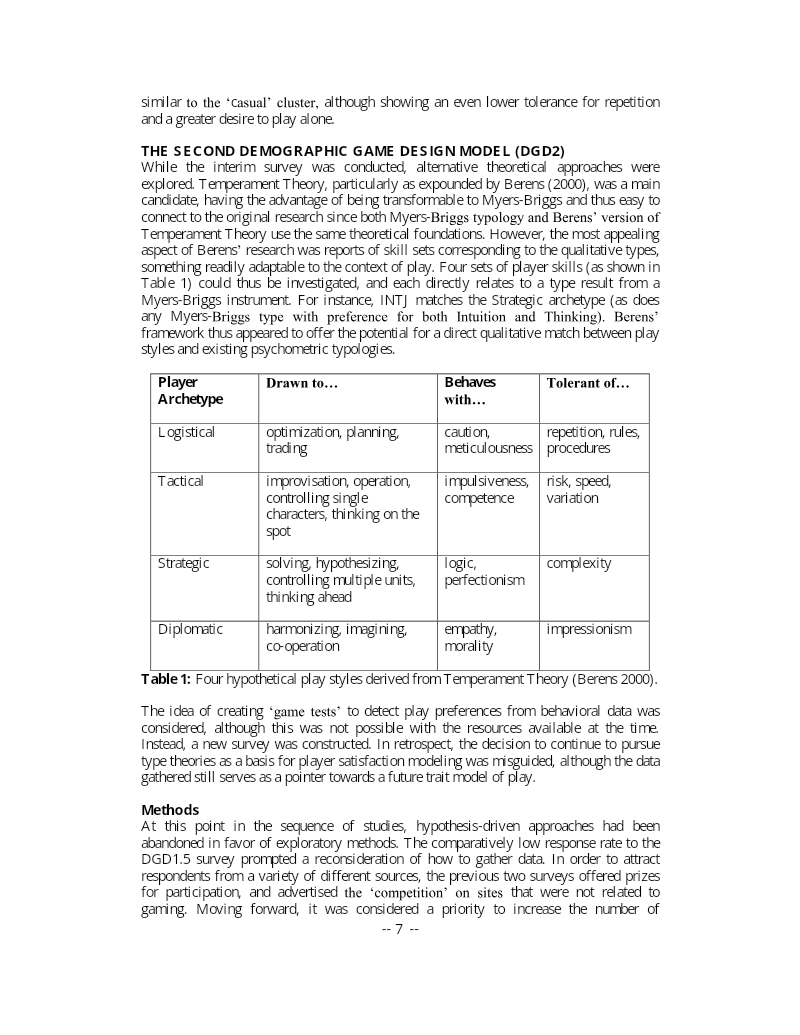
Player Typology in Theory and Practice
Bateman, Lowenhaupt, and Nacke's "Player Typology in Theory and Practice" argues that type-based personality frameworks, including Myers-Briggs and Bartle's player types, have proven inadequate for understanding players, and that a robust player typology should instead rest on a trait theory of play.
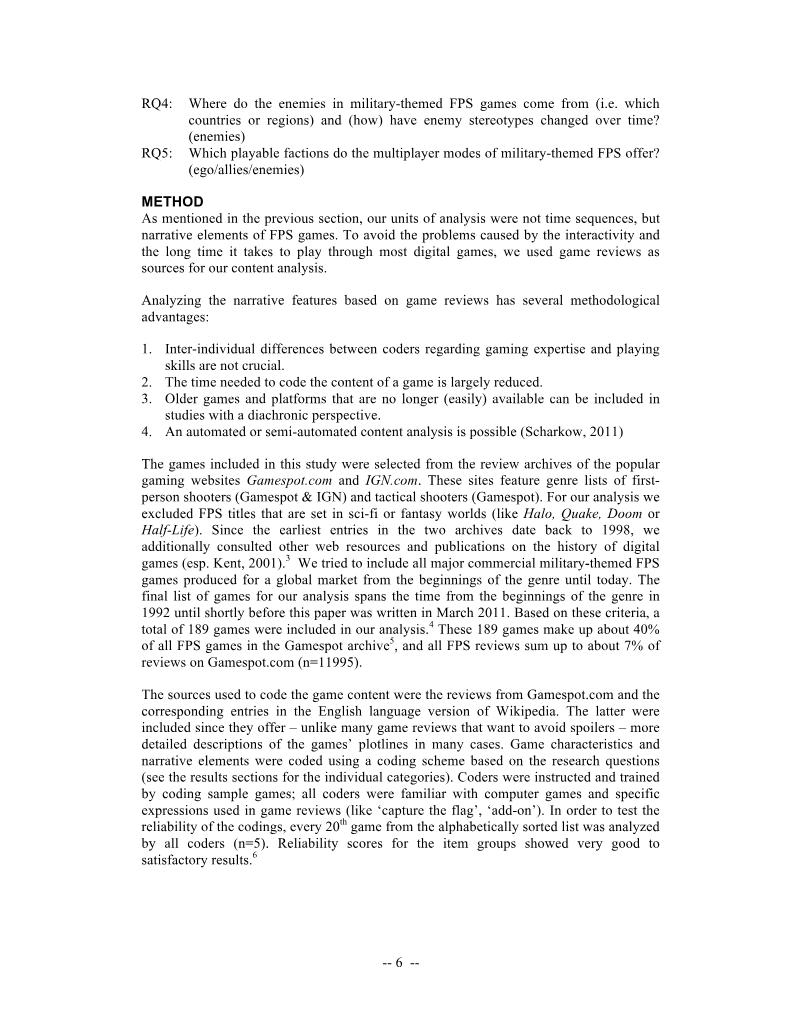
In the Army Now: Narrative Elements and Realism in Military First-Person Shooters
This study examines 189 military-themed first-person shooters released between 1992 and 2010, responding to a gap in empirical research on FPS content despite theoretical claims about the military-entertainment complex and possible persuasive effects on players.
- Analysis of 189 military first-person shooters released between 1992 and 2010 found that World War II settings account for 63.6 percent of depicted conflicts.
- Protagonists are overwhelmingly American (82.3 percent) and white (95.5 percent), and the most common enemies are Germans (28.8 percent) and Russians (15.9 percent).
- The range of adversaries diversified after 2001, with Middle Eastern and North American opponents appearing more often in war-on-terror and future-conflict titles.
Forbidden or Promising Fruit? An Experimental Study into the Effects of Warning Labels on the Purchase Intention of Digital Gamers
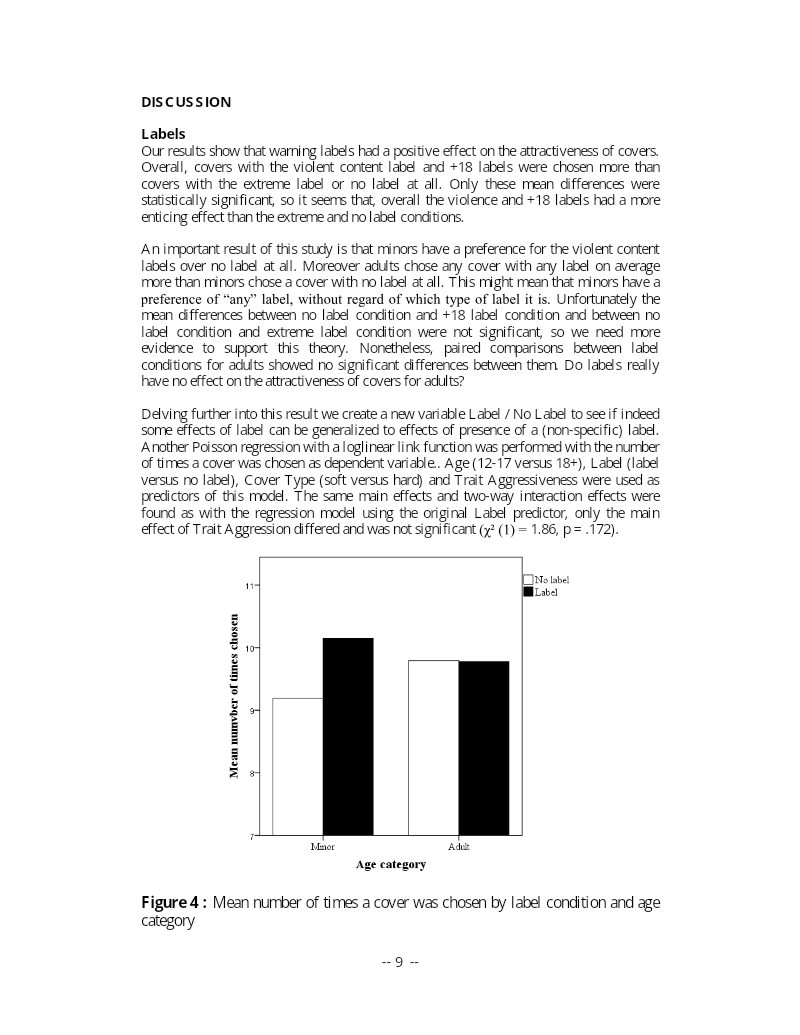
This study, a forced-choice experiment with 41 Dutch participants (20 minors and 21 adults), examines whether warning labels on digital game covers make the games more attractive, and whether this effect is better explained by a "forbidden fruit" account rooted in psychological reactance or a "promising fruit" account in which…
- Warning labels increased cover preference among minors (aged 12–17) but produced no comparable effect among adults in this 41-participant Dutch forced-choice experiment (20 minors, 21 adults), consistent with the forbidden fruit hypothesis.
- Violence and 18+ labels drew the most choices, while a fictional 'extreme' label had no measurable influence, likely because participants did not recognize it.
- Label effects appeared only among minors and only on soft covers (those depicting less violence), indicating the effect was concentrated in specific conditions.
Meaning Making Through Constraint: Modernist Poetics and Game Design Analysis
This analysis argues that constraint, far from limiting meaning, is the mechanism through which both poetry and games generate it.
Social Architecture and the Emergence of Power Laws in Online Social Games
Online social games, according to this analysis, exhibit a consistent power-law pattern in which a small fraction of players generates a disproportionate share of social interaction.
- The report claims that online social games show a consistent power-law pattern in which a small fraction of players generates a disproportionate share of social interaction, and that a scaling exponent α can serve as a comparable measure of a game's sociability.
- The central thesis is that 'social architecture' (the combination of mechanics, interfaces, and social context) is largely determined by game mechanics rather than the specific player population, and can be quantified through the exponent.
- Evidence comes from six game datasets, including Fighters' Club, Familiars 1, and PASION Fruit, where the power-law pattern appeared consistently.
Narrative Friction in Alternate Reality Games: Design Insights from Conspiracy for Good
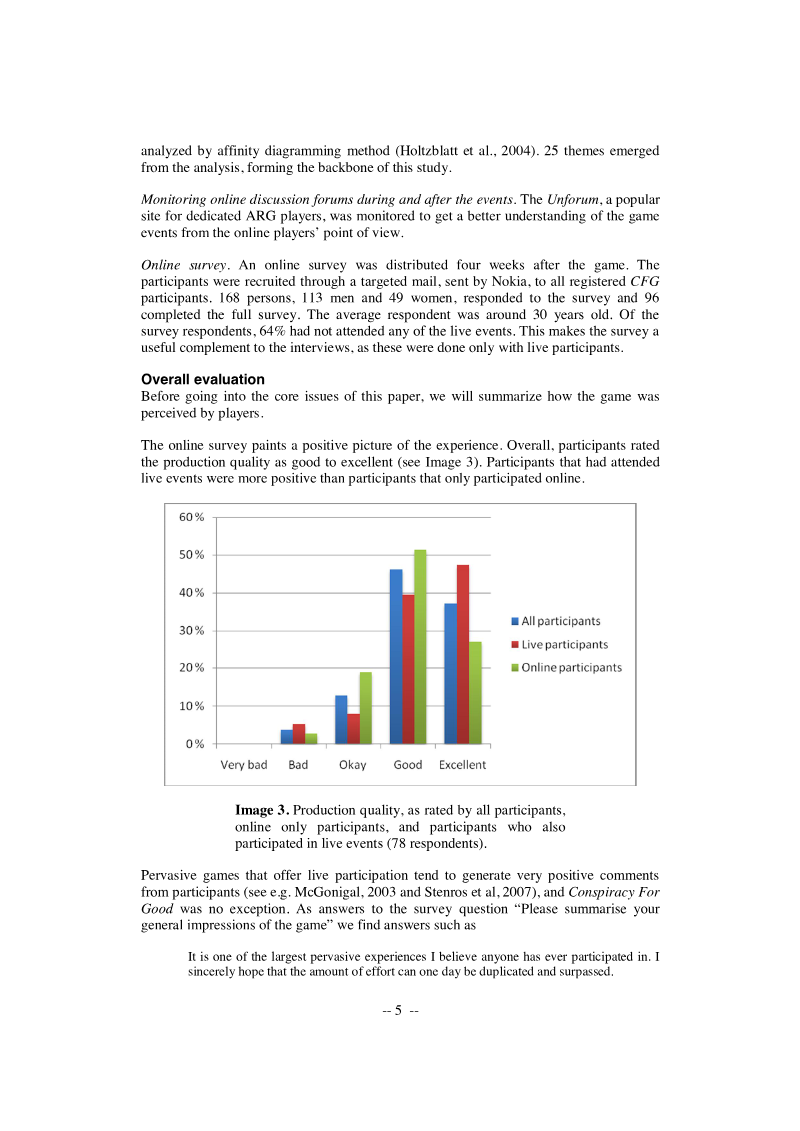
The study examines Conspiracy for Good (CFG), a 2010 commercial alternate reality game sponsored by Nokia that combined roughly four months of online puzzle play with four live events staged on the streets of London.
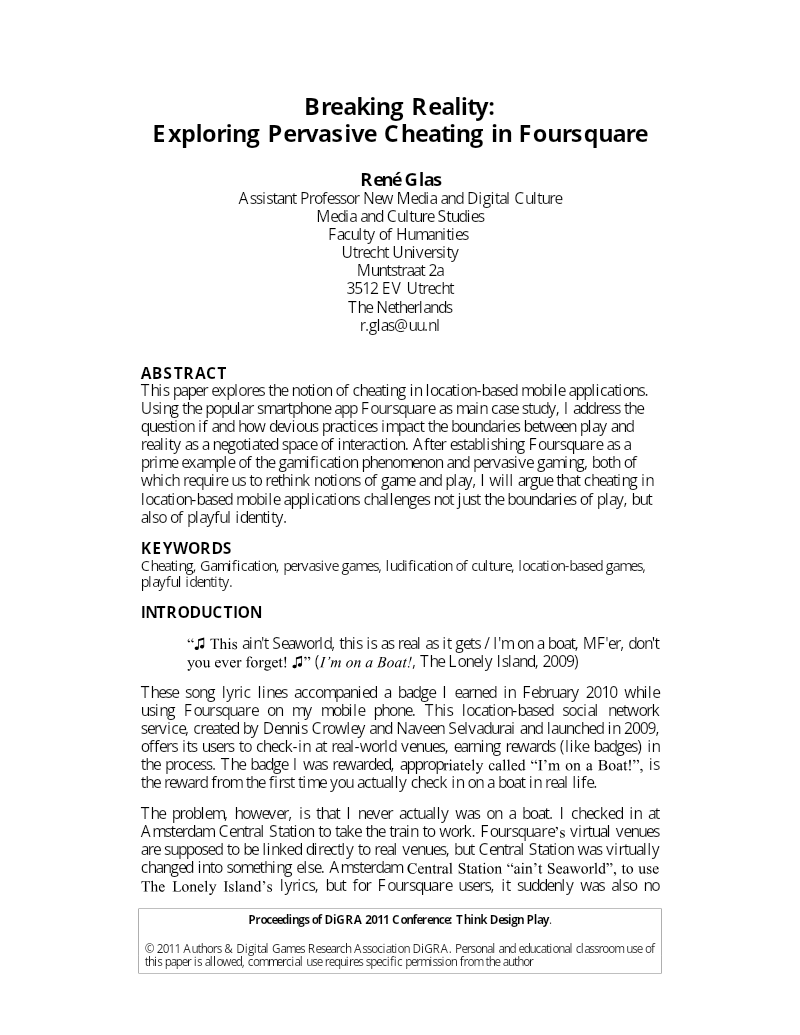
Breaking Reality: Exploring Pervasive Cheating in Foursquare
René Glas's analysis examines cheating in Foursquare, the location-based social app, arguing that such practices reveal how gamification and pervasive games blur the boundary between play and everyday life.
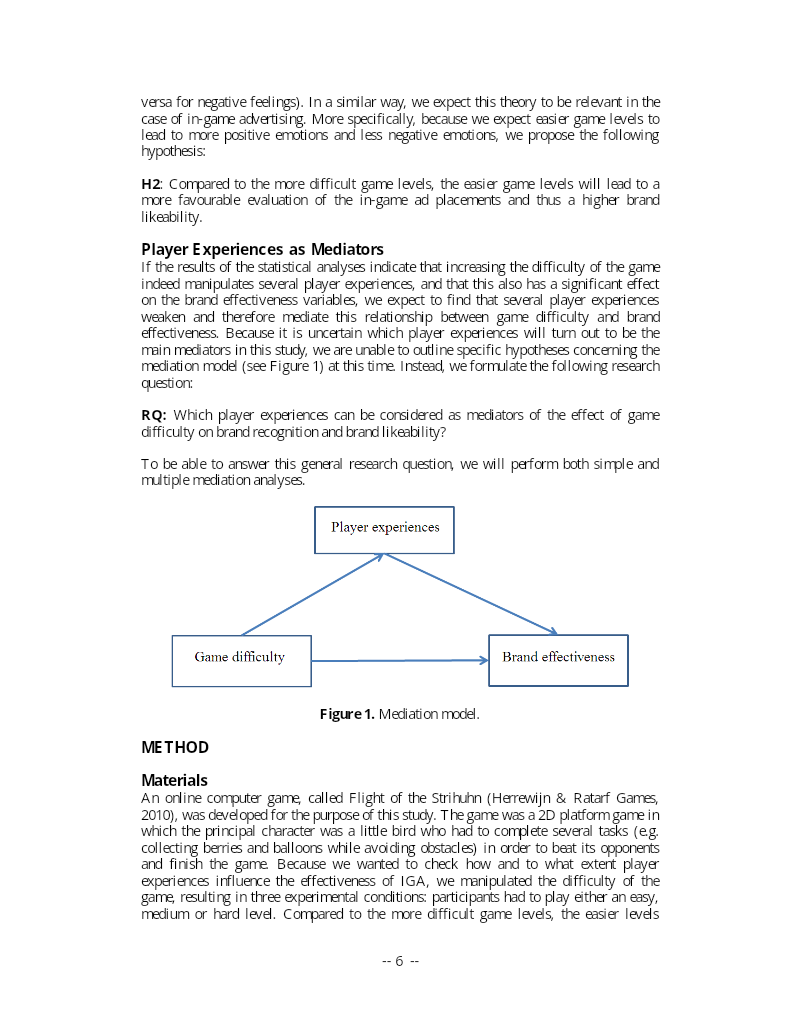
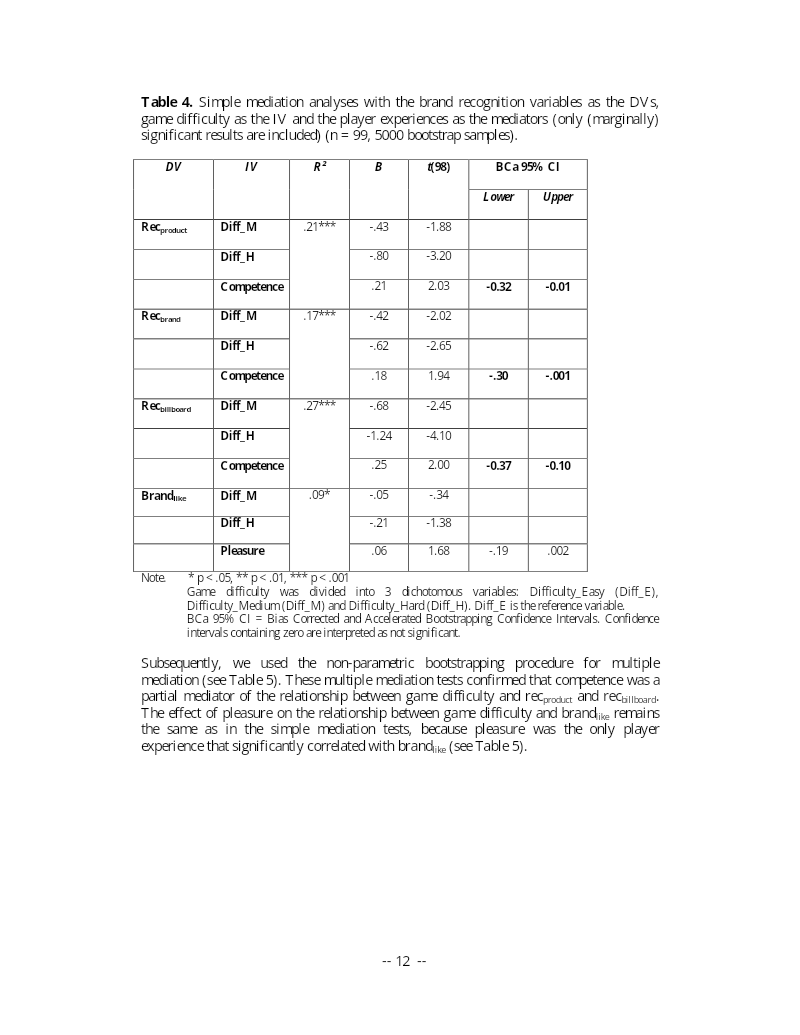
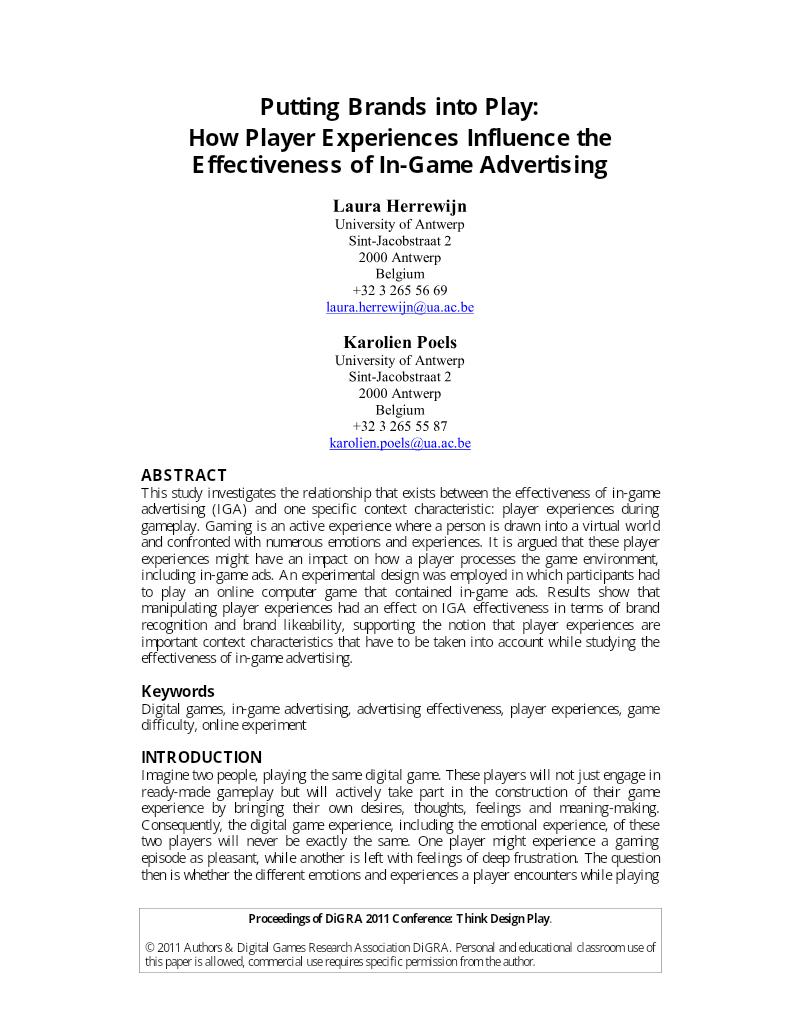
Putting Brands into Play: How Player Experiences Influence the Effectiveness of In-Game Advertising
Herrewijn and Poels examine whether the emotional and cognitive experiences players have while playing a video game shape how well in-game advertising is remembered and liked.
Cultures of Independent Game Production: Examining the Relationship Between Community and Labour
This study examines how communities of independent game developers help them cope with precarious, flexible labour conditions and regain a measure of creative control.
- Independent game production is framed as fundamentally collective rather than individual, with community networks functioning as an alternative infrastructure outside conventional industry structures.
- Based on 23 interviews and ethnographic fieldwork conducted in 2010, largely in the United Kingdom, the study identifies community practices such as experimentation, playtesting, skill-sharing, and moral support as central to indie development.
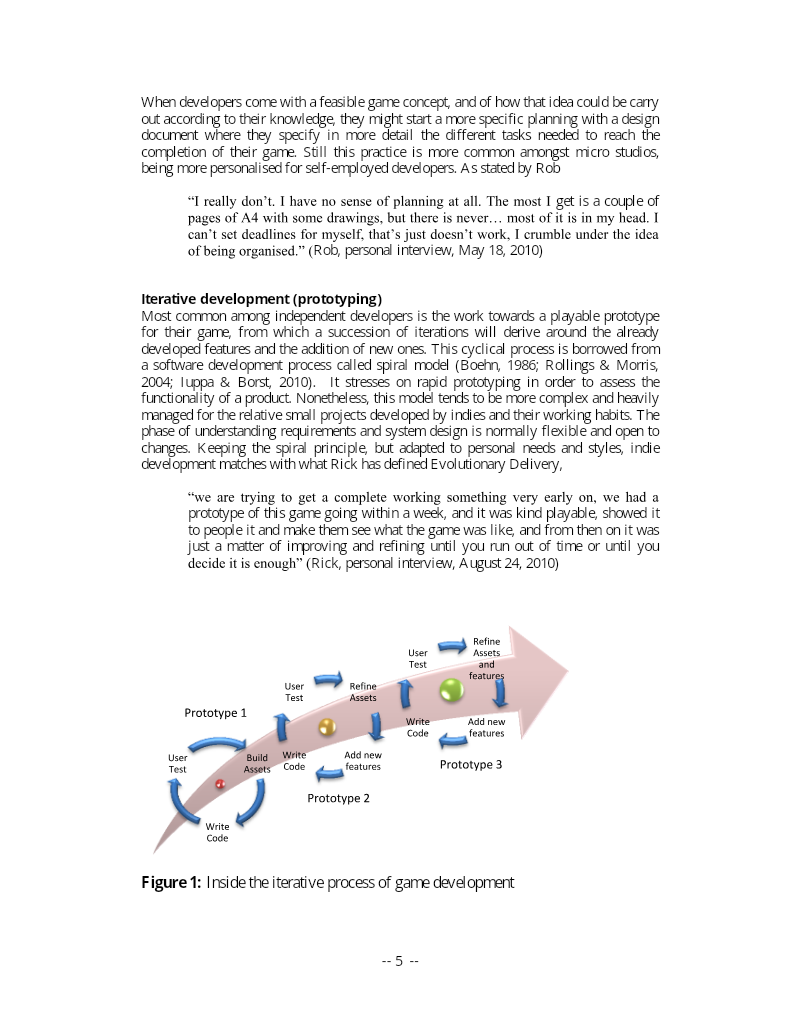
- The author proposes a two-phase, iterative model of indie production moving from experimentation to prototyping, in which community networks reduce costs and speed development through knowledge exchange, code sharing, and rapid feedback.
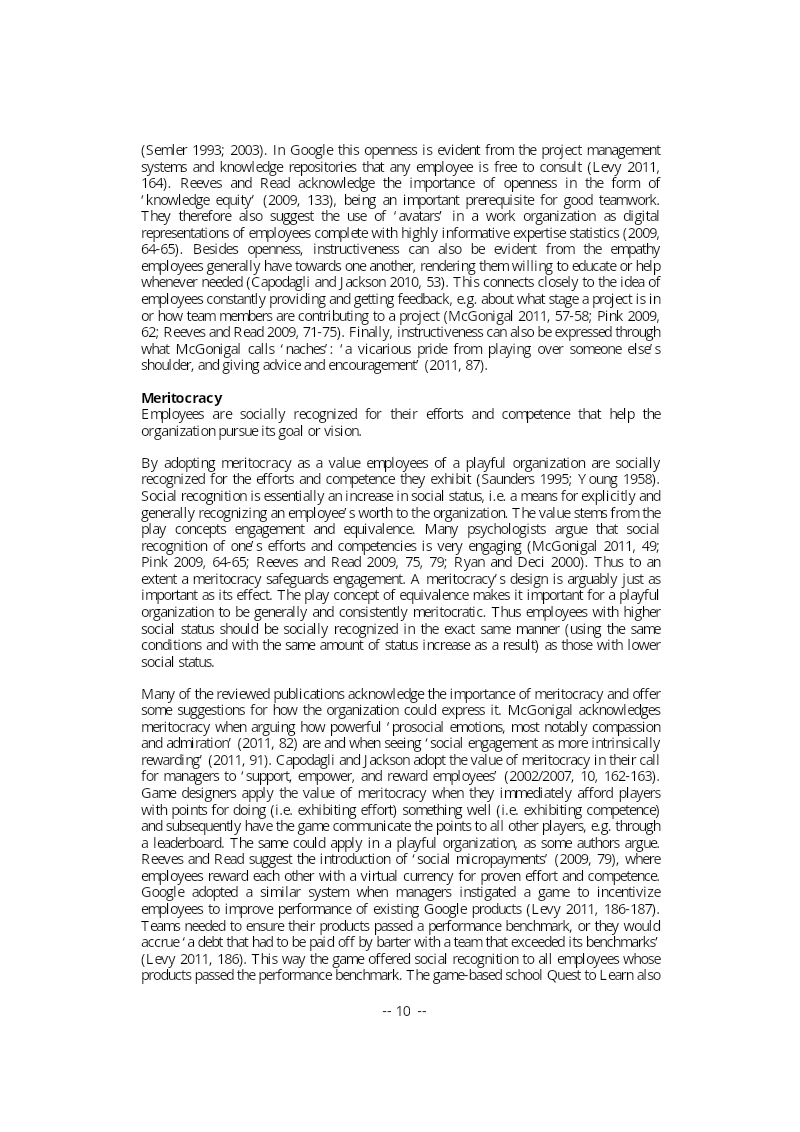
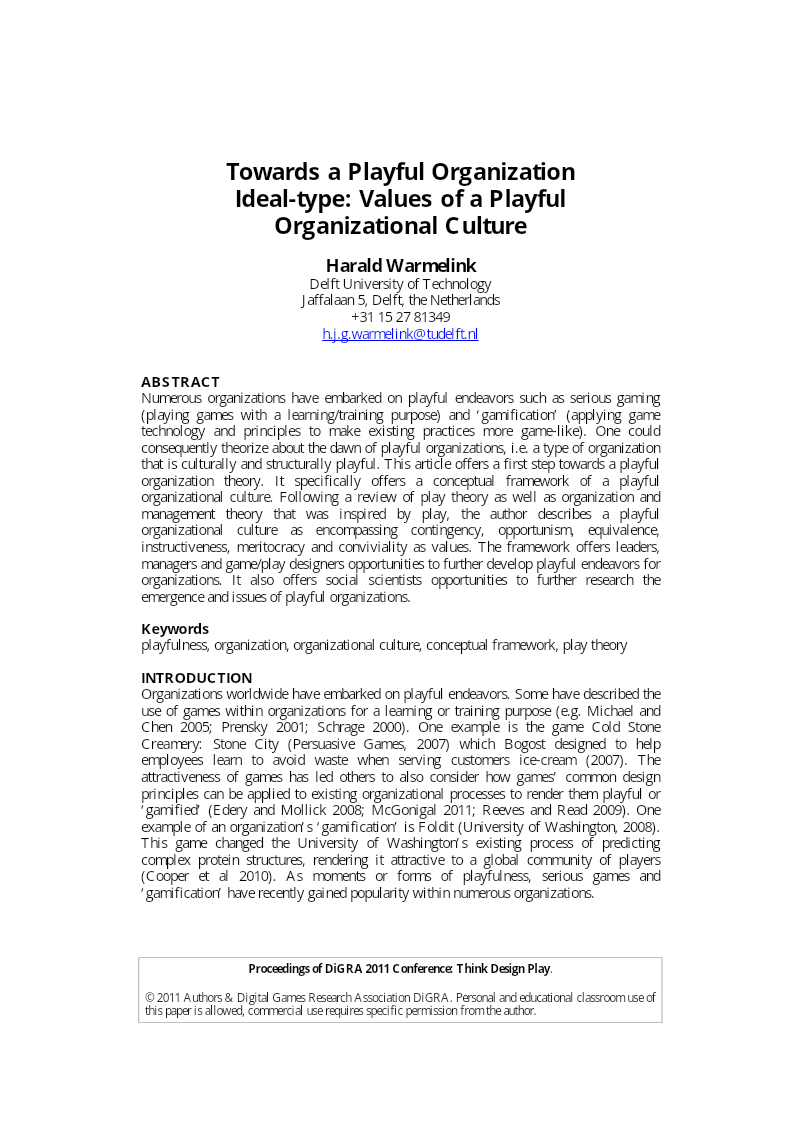
Towards a Playful Organization Ideal-Type: Values of a Playful Organizational Culture
"Towards a Playful Organization Ideal-Type" proposes a conceptual framework for understanding organizations in which work is experienced as play.
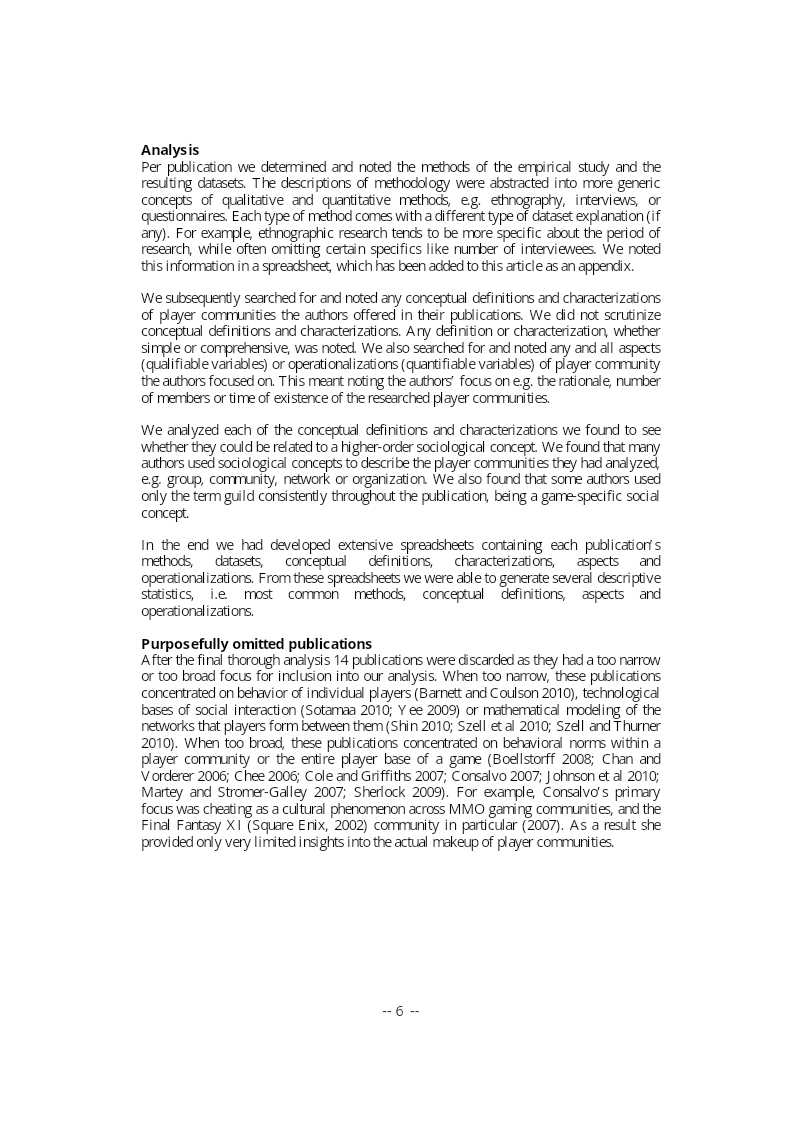
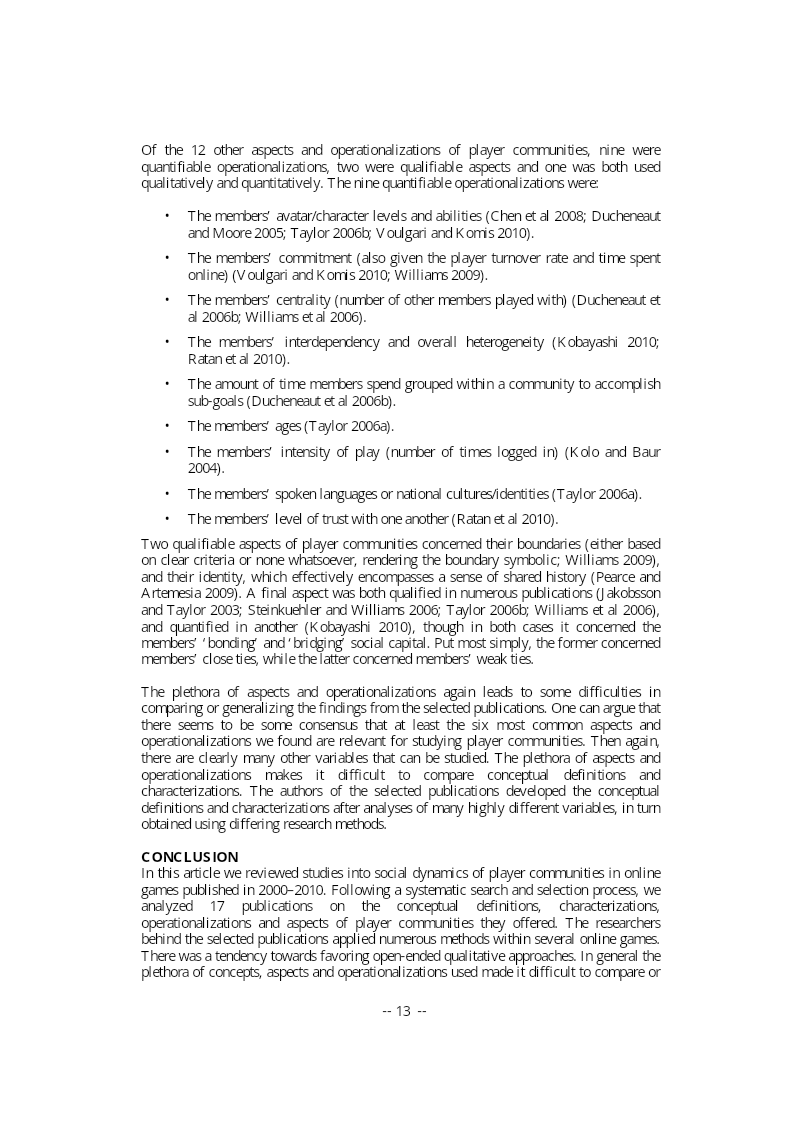
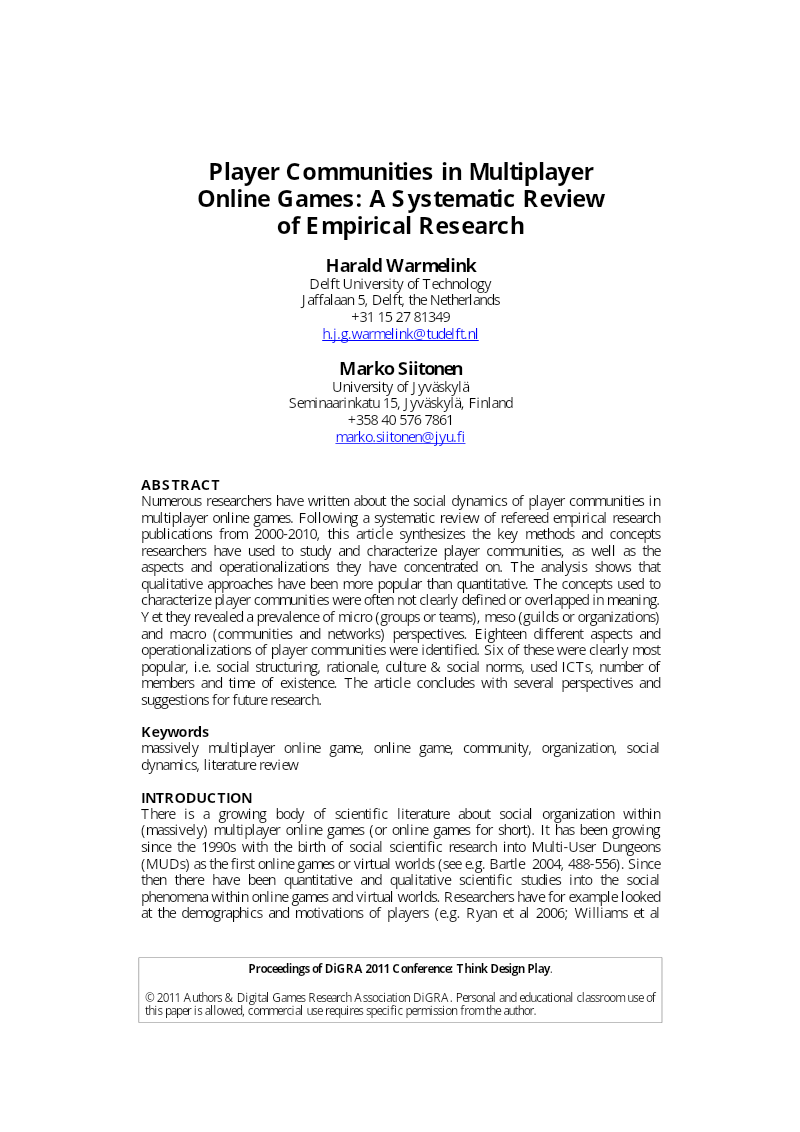
Player Communities in Multiplayer Online Games: A Systematic Review of Empirical Research
This systematic review synthesizes 31 selected empirical publications from 2000 to 2010 on player communities in multiplayer online games, drawing on multidisciplinary databases and game studies journals.
- The review synthesizes 31 empirical publications from 2000 to 2010, retaining 17 for detailed analysis, with the 2000 start tied to the rise of graphical MMOs such as Ultima Online and EverQuest.
- Ethnography and participant observation dominated the field, appearing in 13 of the 17 retained studies, while quantitative methods such as data mining, surveys, and network analysis were less common.
- Sample sizes ranged from a handful of players to several thousand, and fieldwork lasted from a few months to several years; the most studied games were World of Warcraft, EverQuest, and Lineage.
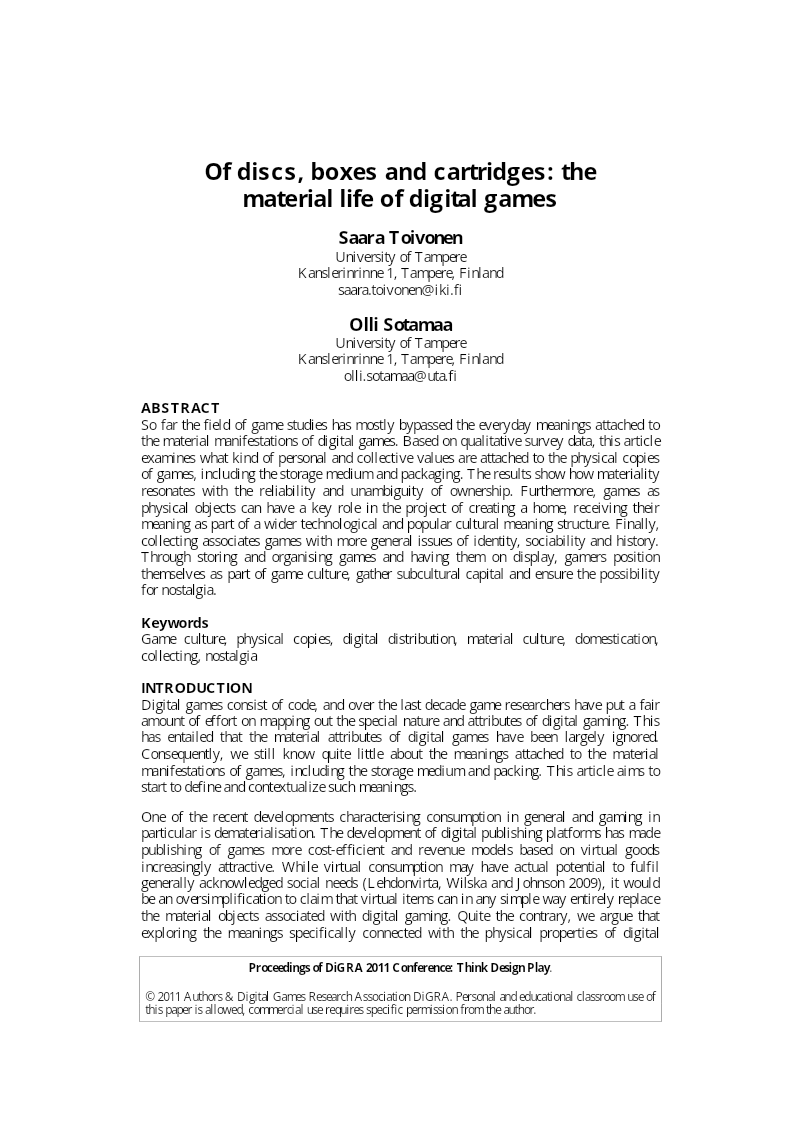
Of Discs, Boxes and Cartridges: The Material Life of Digital Games
Toivonen and Sotamaa's DiGRA 2011 paper, "Of Discs, Boxes and Cartridges: The Material Life of Digital Games," argues that physical game copies carry meanings that digital distribution does not easily replace.
- Physical game copies carry meanings that digital distribution does not easily replace: players value the tactile presence and reliable sense of ownership that physical media provide.
- Respondents associated downloads with service closures, revoked access, and dependence on internet connectivity, while physical copies offered a sense of permanence.
- Digital distribution accounted for under 10 percent of game sales at the time, and the authors judge it unlikely to eliminate physical copies quickly.