1 free read left. Create a free account for unlimited reading + AI research.
Create free accountWhitepaper DiGRA
1 free read left. Create a free account for unlimited reading + AI research.
Create free accountWhitepaperDiGRA
The authors argue that Myers-Briggs and Bartle's player types have proven inadequate for understanding players. They propose a trait-based theory of play instead.
Bateman, Lowenhaupt, and Nacke's "Player Typology in Theory and Practice" argues that type-based personality frameworks, including Myers-Briggs and Bartle's player types, have proven inadequate for understanding players, and that a robust player typology should instead rest on a trait theory of play. The authors contend that existing approaches suffer from narrow scope, unreliable self-report measures, and weak explanatory power. Zammitto's finding that personality factors account for only 2.6 to 7.5 percent of game preferences is presented as a key illustration of these limits, and this shortfall motivates the trait-based research program that follows.
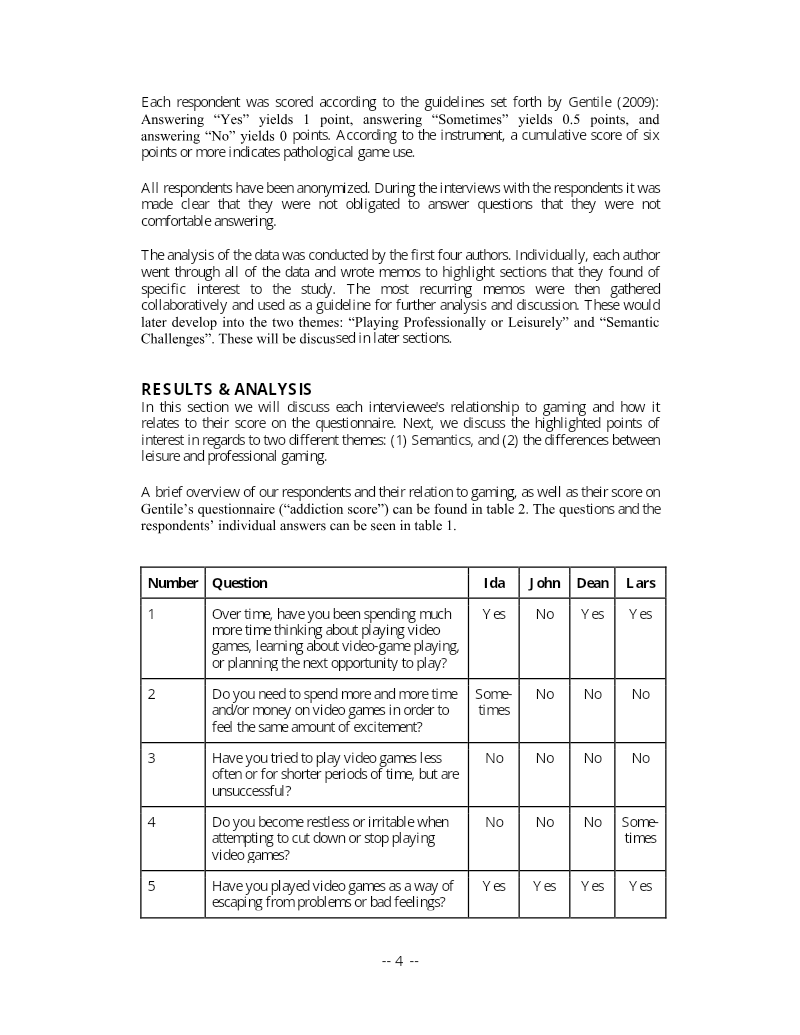
The empirical core rests on the DGD1 and DGD2 studies, the latter drawing on a self-selected survey of 1,040 respondents. Several findings challenge conventional assumptions. Self-labels of "hardcore" and "casual" were found to span all four play styles, which the authors interpret as reflecting openness and imagination rather than persistence. Most respondents reported high game literacy, and positive emotions such as contentment, amusement, and wonderment outscored the anticipated "big three" of fiero, excitement, and curiosity. Gender differences also emerged, with women rating their own gaming skills and several negative and competitive emotions lower than men, a pattern the appendix tables confirm for measures such as tactical skill (t = 7.40, p < .001).
Analysis of the survey data identified three Temperament Theory skill sets (Logistical, Tactical, and Strategic) that were statistically distinct, although factor analysis yielded only two components because of overlap between Logistical and Strategic items. Multiplayer-preferring respondents reported greater challenge orientation, fiero, anger, social emotions, and tactical self-ratings, while higher self-rated ability correlated with stronger obsessive tendencies across skill sets. From these results the authors propose candidate traits for a future play trait theory: openness to imagination, tolerance for frustration, real-time control competence, group versus solo preference, and persistence.
The authors conclude that the hardcore/casual division can no longer be sustained as an organizing framework. They are explicit that their data are self-selected and self-reported, and treat the findings as directions for future research rather than settled conclusions. The scope is primarily survey-based, drawn from a convenience sample of players, with the appendix offering supporting statistical detail but no separate overarching conclusion.
DiGRA · 2018
DiGRA · 2018
DiGRA · 2018
DiGRA · 2018
DiGRA · 2018
DiGRA · 2018
DiGRA · 2018
DiGRA · 2018
DiGRA · 2018
DiGRA · 2018
DiGRA · 2018
DiGRA · 2018