
DiGRA
The Digital Games Research Association: the international association of academics and professionals who study digital games. Its Digital Library holds the proceedings of the DiGRA conferences since 2002.
Documents
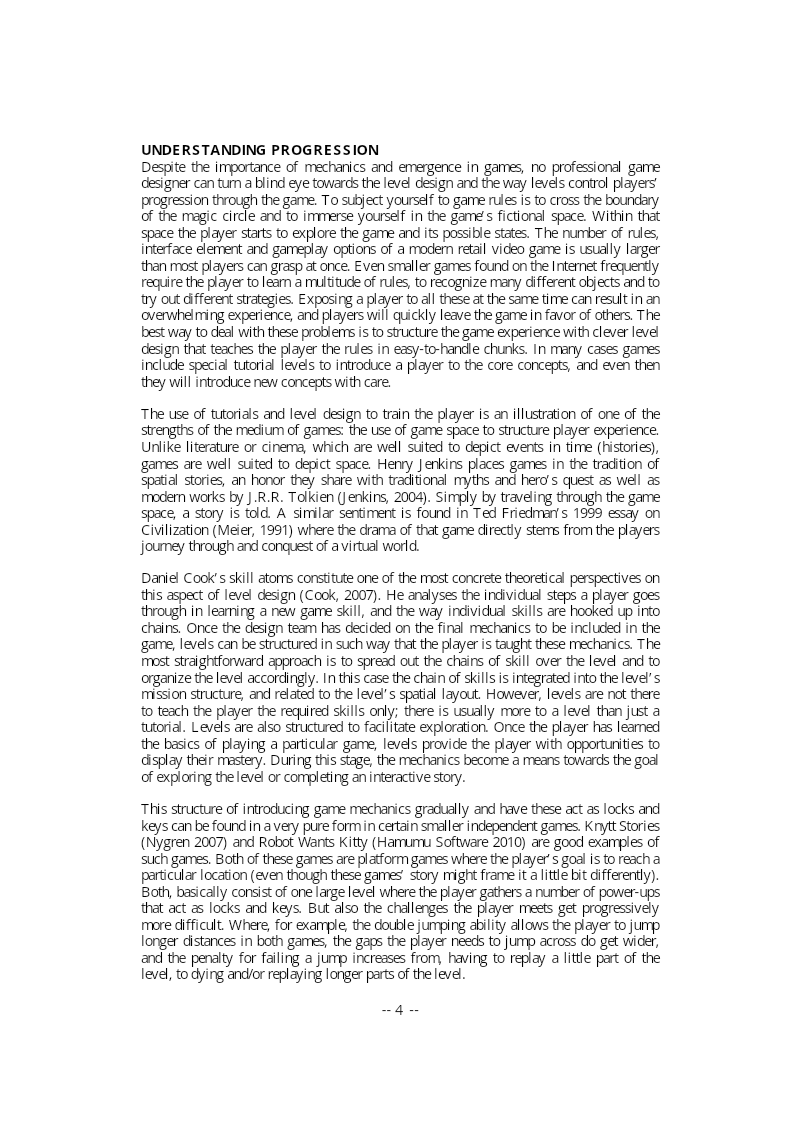
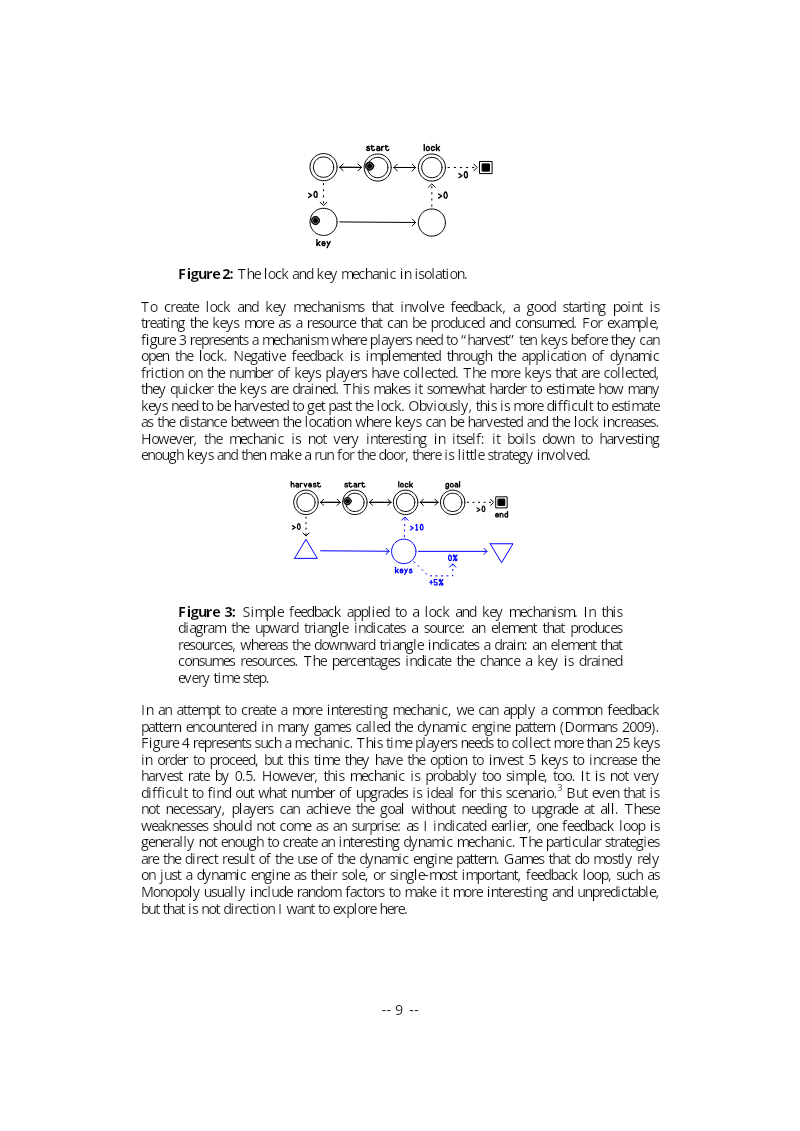
Integrating Emergence and Progression
The document, "Integrating Emergence and Progression," posits that effective game design requires a deliberate integration of emergent gameplay, characterized by dynamic systems and player-driven outcomes, with progressive design, defined by structured challenges and sequential learning.
- Emergence tends to arise when roughly two to four feedback loops operate together within a game's internal economy, and designers can use these loops to make sequenced, designer-controlled progression more dynamic and strategically rich.
- Topology (the logical structure of player tasks) and geography (the physical spatial layout) should be treated as separate design dimensions, since they can be decoupled, as System Shock 2's reuse of a single space for multiple missions illustrates.
- Conventional quest tools such as dialog trees and Boolean-flag milestones are considered inefficient and offer limited player agency, while Machinations diagrams are proposed as a modeling method for designing mission and quest logic.
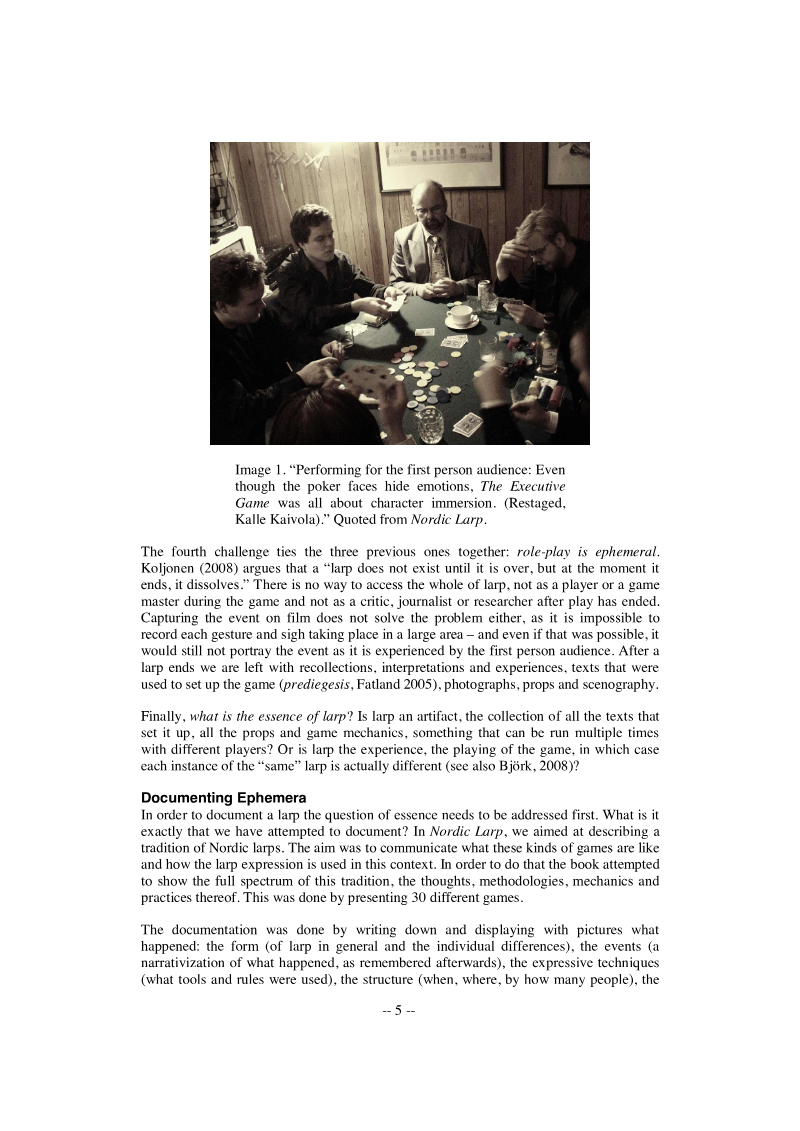
The Making of Nordic Larp: Documenting a Tradition of Ephemeral Co-Creative Play
The "Making of Nordic Larp" document details the complex process of documenting the Nordic larp subculture, which views larp as an expressive art form.
- Larp documentation is difficult because the form is defined by ephemerality, subjectivity, a first-person audience, and co-creative character, so it shares affinities with performance-art documentation but needs game-studies tools adapted to its distinctive features.
- Effective documentation must capture three interrelated dimensions together: the game design itself, individual player experiences, and the subcultural understanding that emerges after play has ended.
- The Nordic Larp book covered thirty Nordic larps selected through community collaboration and soft quotas, and the editors used four strategies: polyphonic case descriptions by multiple authors, diverse sources such as player photographs and debriefs, a requirement that contributors be participants, and standardized infoboxes.
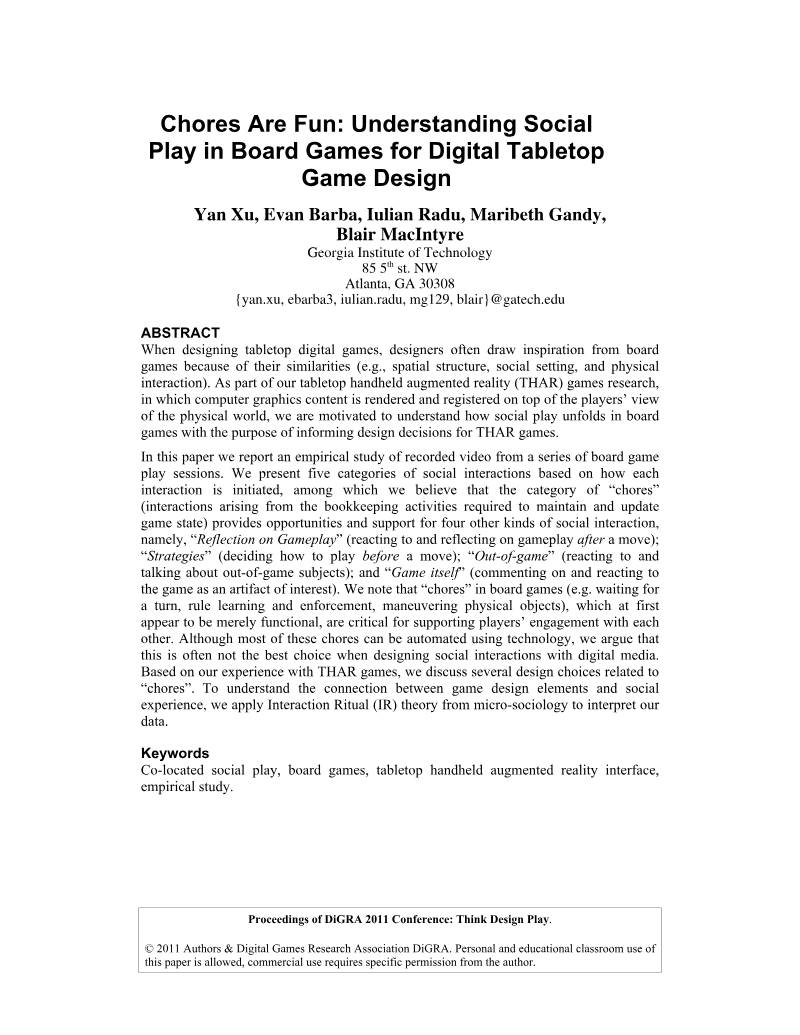
Chores Are Fun: Understanding Social Play in Board Games for Digital Tabletop Game Design
The document investigates the role of social play in traditional board games to inform the design of digital tabletop adaptations, particularly Tabletop Handheld Augmented Reality (THAR) games.
- Board game 'chores' such as bookkeeping, rule enforcement, waiting for turns, and handling physical pieces are argued to be the foundation of social play rather than peripheral to it, and digital games that automate them remove a major source of social interaction.
- The authors' evidence is a video analysis of 262 minutes of play by groups of four to eight players, yielding 358 social events across titles including Heroscape and Fluxx.
- The study identifies five categories of social interaction (chores, reflection on gameplay, strategy discussion, out-of-game talk, and commentary on the game) and positions chores as the base from which the other four emerge.
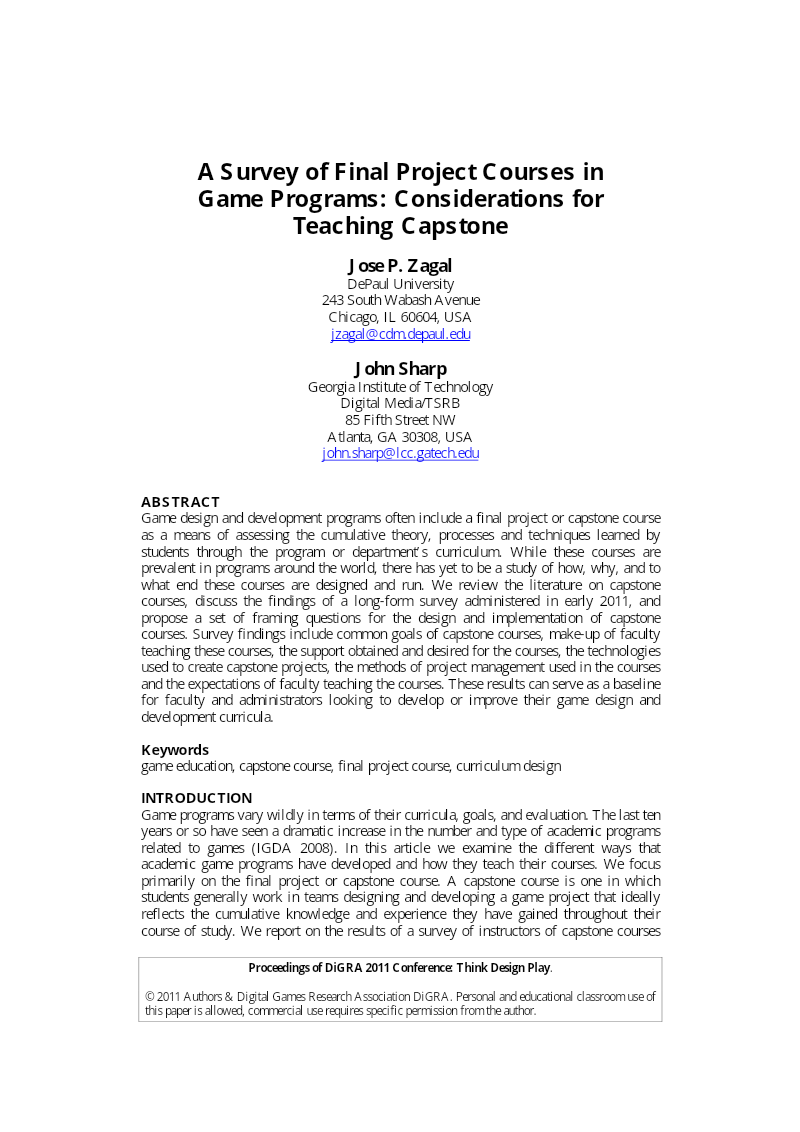
A Survey of Final Project Courses in Game Programs: Considerations for Teaching Capstone
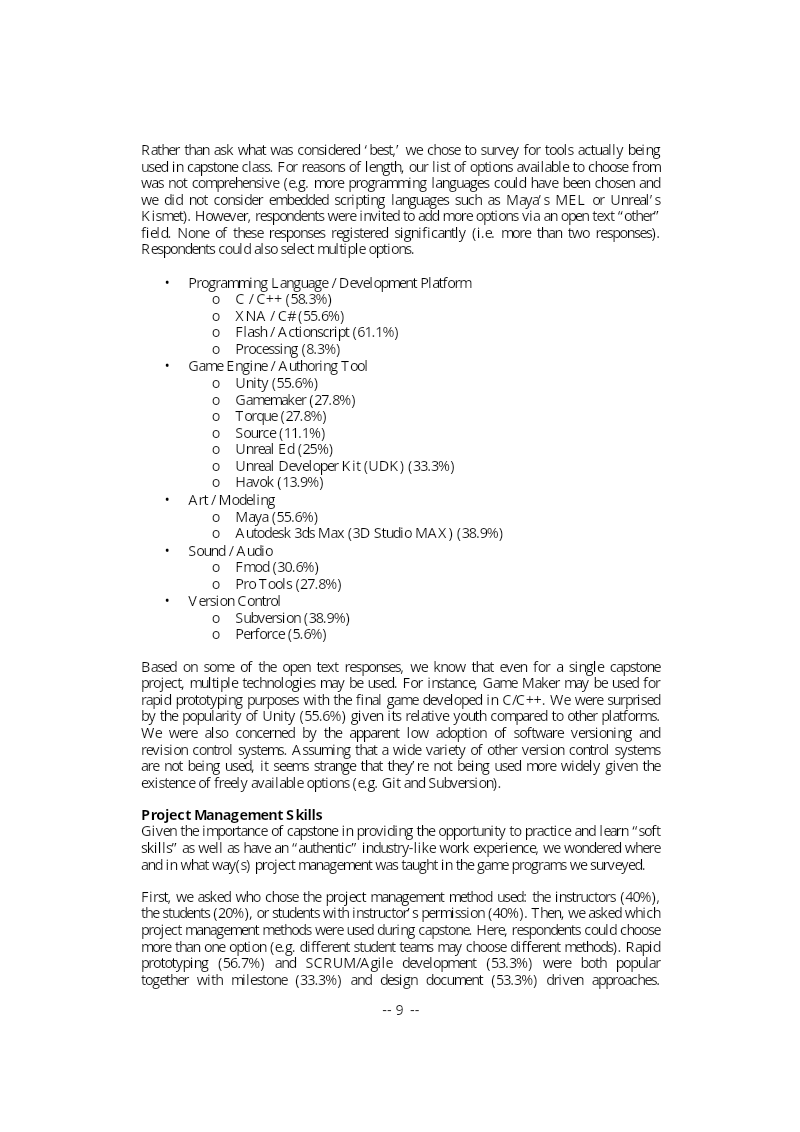
Zagal and Sharp's paper examines how game programs design and deliver capstone courses, aiming to give educators and administrators a clearer picture of current practice and the considerations that should shape capstone design.
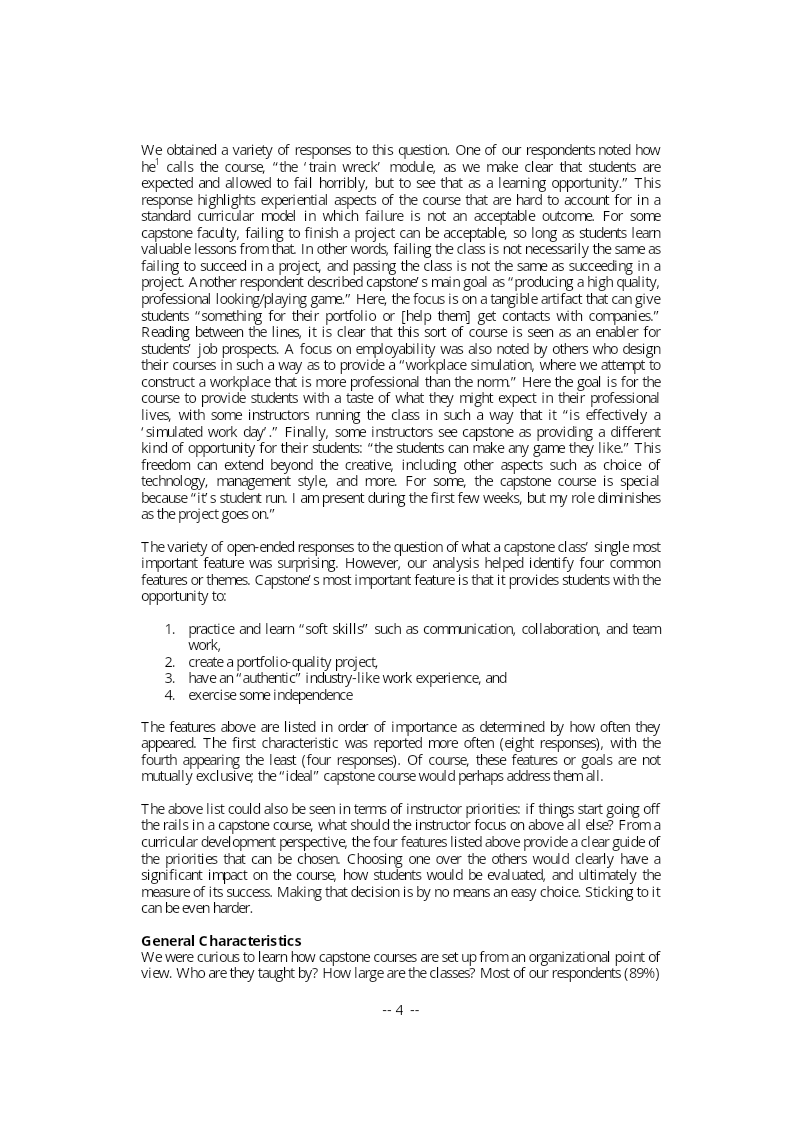
- Capstone courses in game programs are typically taught by one full-time faculty member working with about fifteen students over roughly twenty-one weeks, according to a survey of 37 self-selected game educators.
- Only about 2.5 percent of capstone projects become commercial products, revealing a considerable gap between student expectations and realistic outcomes.
- Educators most often prioritize developing students' soft skills, producing portfolio-quality projects, offering industry-like experiences, and granting student independence, while software, development kits, and game libraries are the most widely available resources.
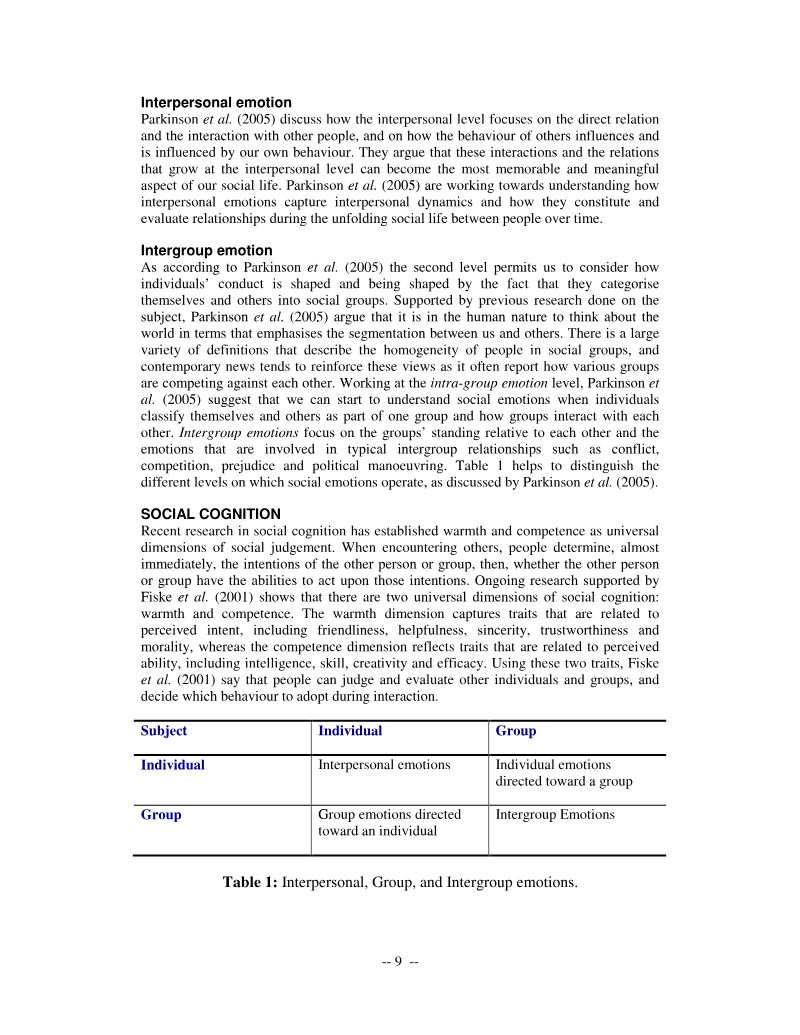
From Individual Characters to Large Crowds: Augmenting the Believability of Open-World Games through Exploring Social Emotion in Pedestrian Groups
The document proposes a novel approach to enhance the believability and player immersion in open-world games by significantly improving non-player character (NPC) crowd simulation.
- The paper argues that open-world games such as GTA IV render crowds as isolated, unresponsive individuals, while Assassin's Creed and Call of Duty: MW2 show more convincing crowd reactions.
- Its central thesis is that crowd simulation has neglected group structure and emotion, even though real crowds are largely composed of small social groups whose members influence one another.
- Cited empirical work shows that pedestrian walking speed decreases with group size and that group formations shift as crowd density changes, based on Moussaïd and colleagues' field observations.
PlayFit: Designing Playful Activity Interventions for Teenagers
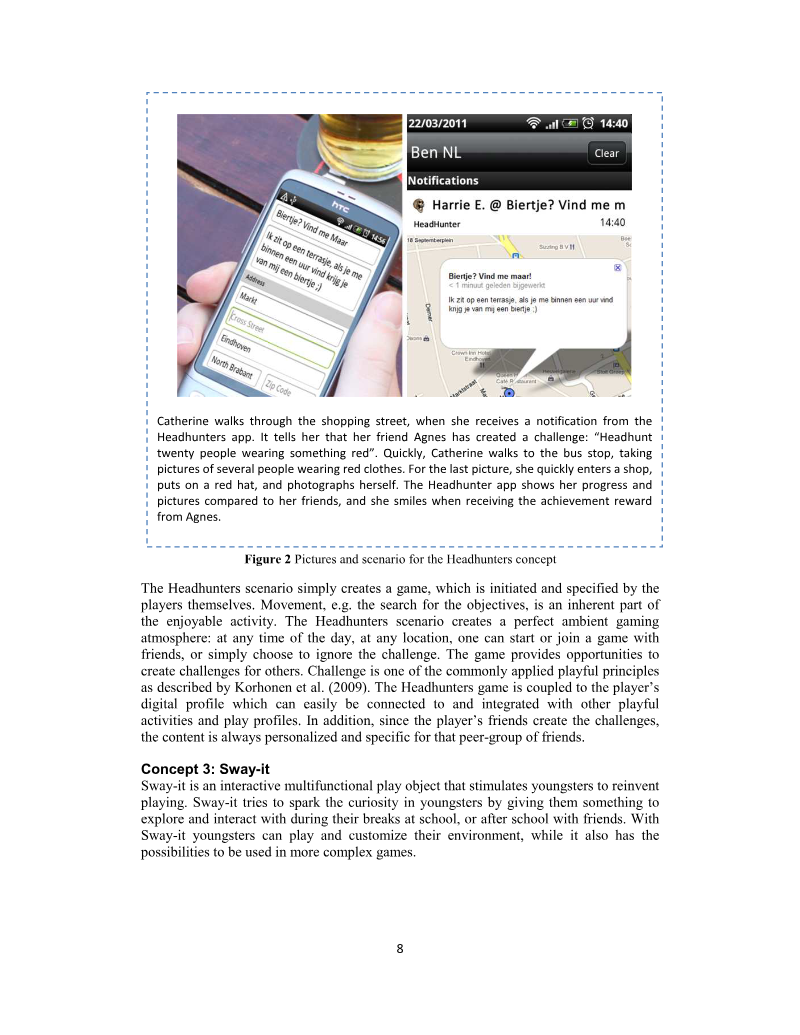
The PlayFit project is an initiative focused on developing innovative interventions to reduce sedentary behavior among teenagers by integrating playful, low-impact physical activity into their daily routines.
- Teenagers aged 12 to 16 in the Netherlands average three hours of daily leisure time spent sitting, compared with a national norm of two hours.
- PlayFit argues that information-based campaigns have produced limited long-term results, and proposes playful, casual movement woven into everyday life as a more promising approach.
- The project is built on three principles: playful persuasion relying on intrinsic motivation, ambient action favoring low-impact movement over organized sport, and play profiles enabling personalization across a heterogeneous target group.
Meta-Rules and Complicity in Brenda Brathwaite's Train
Brenda Brathwaite's 2009 board game Train reliably produces feelings of complicity in a Holocaust-themed system, and this paper argues that the effect stems less from the game's written rules than from its exploitation of the social meta-rules surrounding game play.
- The paper argues that Brenda Brathwaite's board game Train (2009) generates feelings of complicity less through its explicit written rules than through its exploitation of implicit social conventions, or "meta-rules" governing how games are played.
- Logas identifies six meta-rules: games are safe, players do not spoil others' experience, everyone tries to win, groups negotiate ambiguous rules together, players see games through to their conclusion, and observers do not interrupt play.
- Train is a three-player game in which players move tokens representing people toward Terminus cards bearing the names of Nazi extermination camps, and each meta-rule is turned against the player to implicate them in the depicted tragedy.
Theorycrafting: From Collective Intelligence to Intrinsic Satisfaction
The document explores theorycrafting within online games, particularly World of Warcraft, as a sophisticated form of collective intelligence and a techno-social enterprise.
- Theorycrafting, the mathematical analysis of game mechanics to understand how a game works internally, is framed as a collective, knowledge-sharing activity akin to reverse engineering but driven by personal rather than commercial motives.
- Karlsen's research, based on twelve interviews with heavily engaged World of Warcraft players and analysis of player-run sites, found theorycrafting functions as genuine collective knowledge construction rather than isolated individual effort.
- Steinkuehler and Duncan found that 86 percent of posts on a World of Warcraft priest forum constituted social knowledge construction, with 28 percent using data or evidence.
Game Mechanics and Dynamics of Social Actions in a Prototype Multiplayer Game World
The "Game Mechanics and Dynamics of Social Actions in a Prototype Multiplayer Game World" explores the integration of "affective actions" within "The Pataphysic Institute" (PI), a prototype multiplayer game, to analyze how specific game mechanics shape player interaction and behavior.
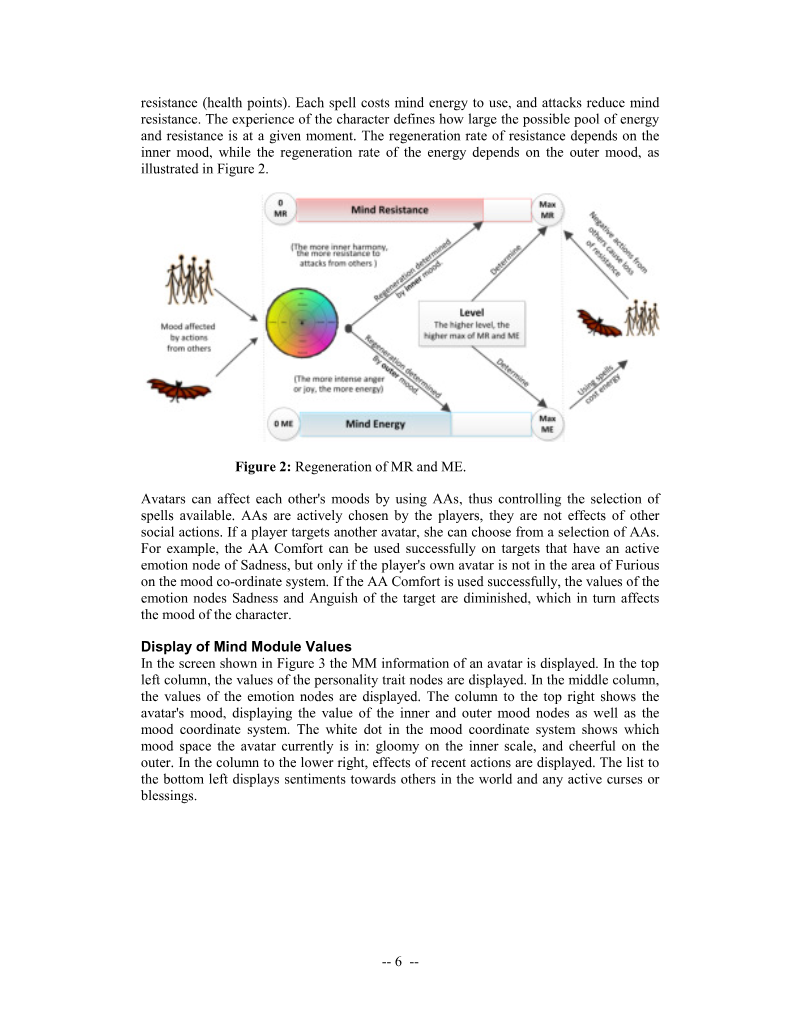
- The Pataphysic Institute (PI) prototype uses 'affective actions' (social actions that shift avatars' emotional states) as a vertical slice showing how one mechanic generates broad play dynamics, with success gated by target mood, performer mood, existing relationships, and prior actions.
- PI's Mind Module architecture decays traits, emotions, sentiments, and moods at different rates, restricting which spells and actions a player can use based on personality and mood, and players gave only partial world information, placing it in the multiplayer role-playing tradition rather than god-like simulation like The Sims 2.
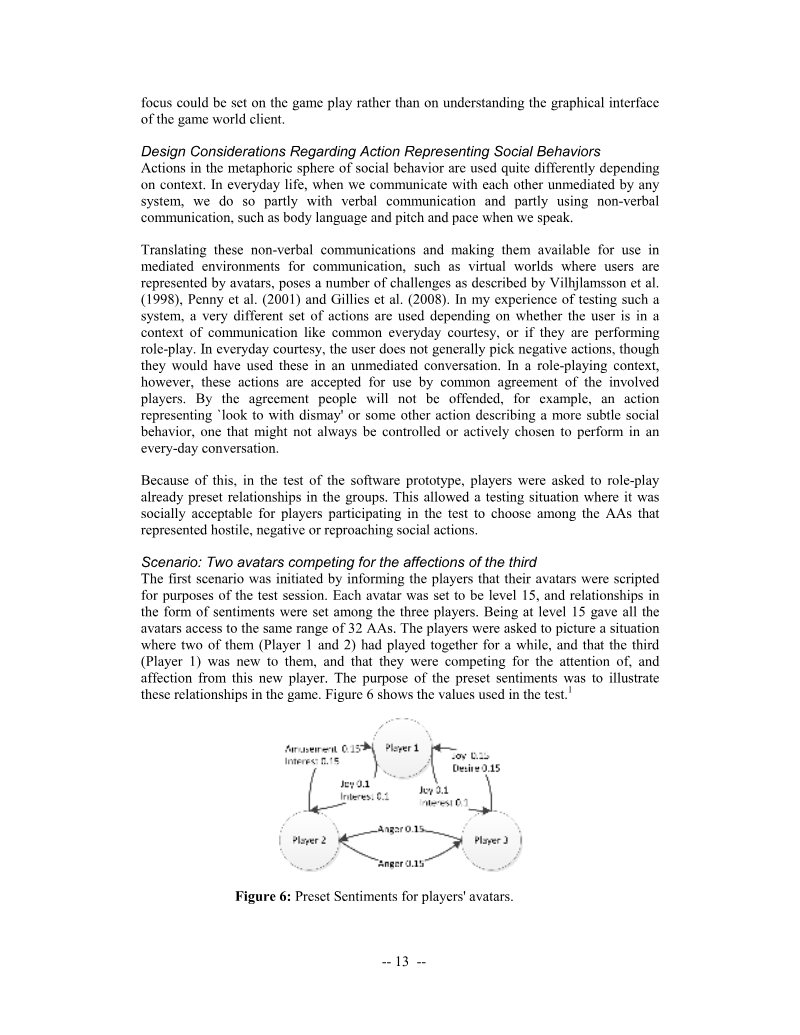
- Iterative playtesting with 10 participants (paper prototype) and 25 participants (software prototype) led to replacing extreme player-requested actions and capping active affective actions at eight per character, one active per type, and four per target, and participants often found the mood system intuitive.
A Chinese Cyber Diaspora: Contact and Identity Negotiation on Taiwanese WoW Servers
The document examines the phenomenon of Chinese World of Warcraft players migrating to Taiwanese servers, driven by delays in expansion releases in mainland China, particularly during the "Burning Crusade Rush" (2007) and the more significant "Wrath of the Lich King Rush" (2009).
- In 2008, many Chinese players moved their World of Warcraft accounts to Taiwanese servers ('the WoW rush') after delays in China's release of expansion content, a movement the authors call 'migration without physical presence.'
- Persistent online game worlds generated durable cross-Strait relationships and ongoing identity negotiation, differing from the brief, politically charged exchanges typical of open internet forums.
- Early friction over etiquette, language, and server overload often escalated into nationalist confrontations in public chat channels and forums; Game First's 2010 ban on political speech in public channels sharply reduced overt conflict but did not end cross-cultural tension.
Using the VNA Ideation Game at Global Game Jam
Kultima and Alha tested whether the Verbs, Nouns, and Adjectives (VNA) card game, effective for open-ended ideation, can be adapted to theme-constrained game design.
- The theme-tuned "Extinction" VNA variant performed best overall, producing ideas that were both theme-related and rated interesting, with every one of its ideas judged interesting by at least one rater.
- Standard VNA generated the most ideas (100 of 188 recorded from 42 participants) but its output was less consistently tied to the jam theme.
- Only 8 of the 11 finalized games could be traced back to recorded ideas, which weakens any direct link between the ideation method and final game outcomes.
And Then You Wait: The Issue of Dead Time in Social Network Games
The document "And Then You Wait: The Issue of Dead Time in Social Network Games" investigates the phenomenon of "dead time" within social network games, defining it as periods of unchallenging waiting for in-game events such as crop growth or energy replenishment.
- The paper's central thesis is that persistent, asynchronous social network games extend play into the player's absence, making waiting a structural feature rather than an incidental one, with "dead time" as the core framework (drawing on Juul).
- The author attributes the experience of dead time to a mismatch between game engine time, which continues running while the player is away, and playing time, which is paused.
- Play halts once a player exhausts energy or actions, creating forced pauses, while the need to return promptly to avoid losing crops or energy makes these "casual" games feel less flexible than their label implies.