1 free read left. Create a free account for unlimited reading + AI research.
Create free accountArticle DiGRA
1 free read left. Create a free account for unlimited reading + AI research.
Create free accountArticleDiGRA
Heather Lee Logas's paper examines Brenda Brathwaite's board game Train (2009), a three-player game in which players move tokens representing people toward Terminus cards bearing the names of Nazi extermination camps. The paper argues that the game's emotional power, which produces feelings of complicity in players and audience members, comes less from its explicit written rules than from its exploitation of the implicit social conventions, or "meta-rules," that govern how games are played. Logas identifies six such meta-rules: games are safe, players do not spoil others' experience, everyone tries to win, groups negotiate ambiguous rules together, players see games through to their conclusion, and observers do not interrupt play. Each is shown to be turned against the player to implicate them in the tragedy depicted.
The analysis draws on a close reading of the game's rules, the designer's interviews and conference talks, a first-hand observation of a public play session at a museum, and a review of the largely online commentary Train has attracted from players and critics. The author notes that prior academic work on meta-rules, including that of Salen and Zimmerman, Sniderman, and Suits, has rarely connected these conventions to the specific mechanics and themes of individual games, and positions Train as a case study for doing so.
The paper concludes that meta-rules can be deliberately exploited to produce strong emotional resonance and to prompt reflection on a player's own relationship to harmful social systems. Logas suggests this approach could extend beyond board games to digital and multiplayer formats and to a wide range of social issues, including the possibility of using meta-rules to produce uplifting rather than harrowing experiences.
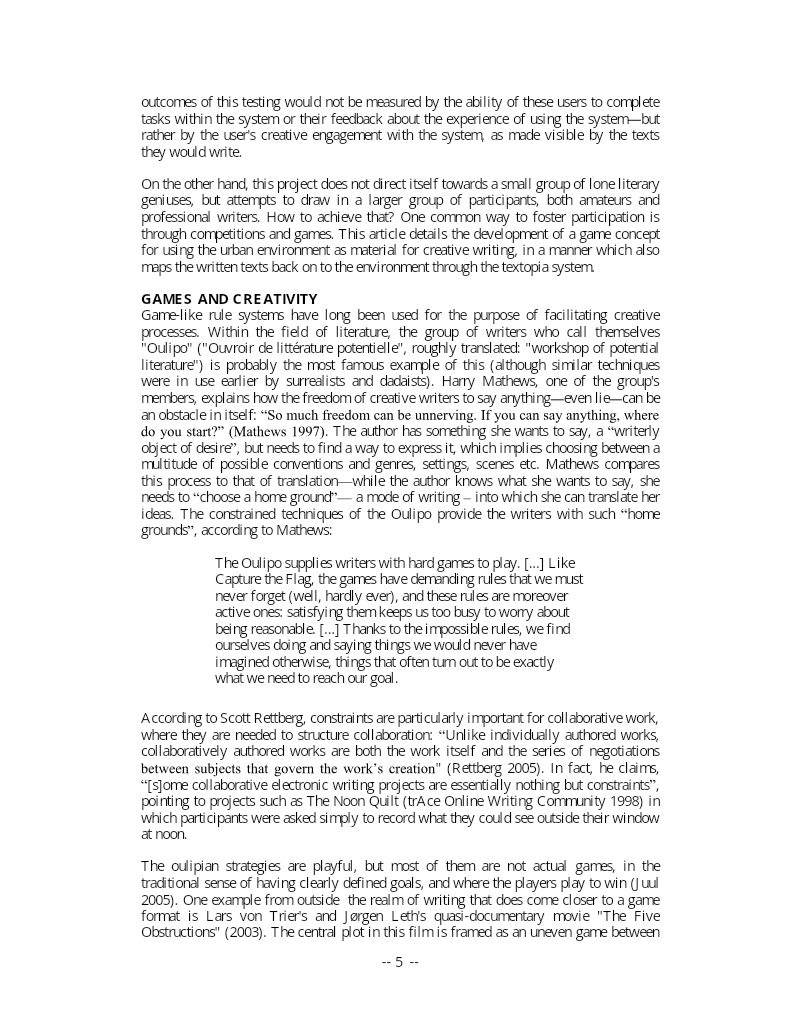
Each row is a game or company this document names, each column a document, oldest first. A mark means that document names it. Select a row to see those documents.
DiGRA · 2012
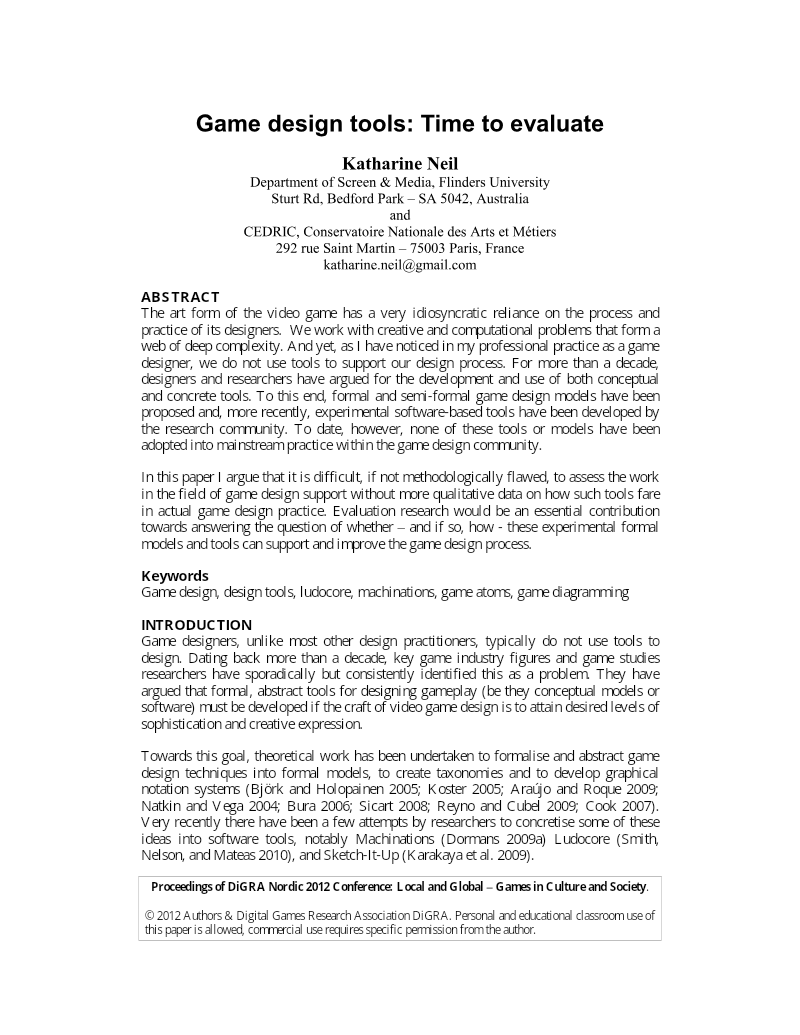
DiGRA · 2012
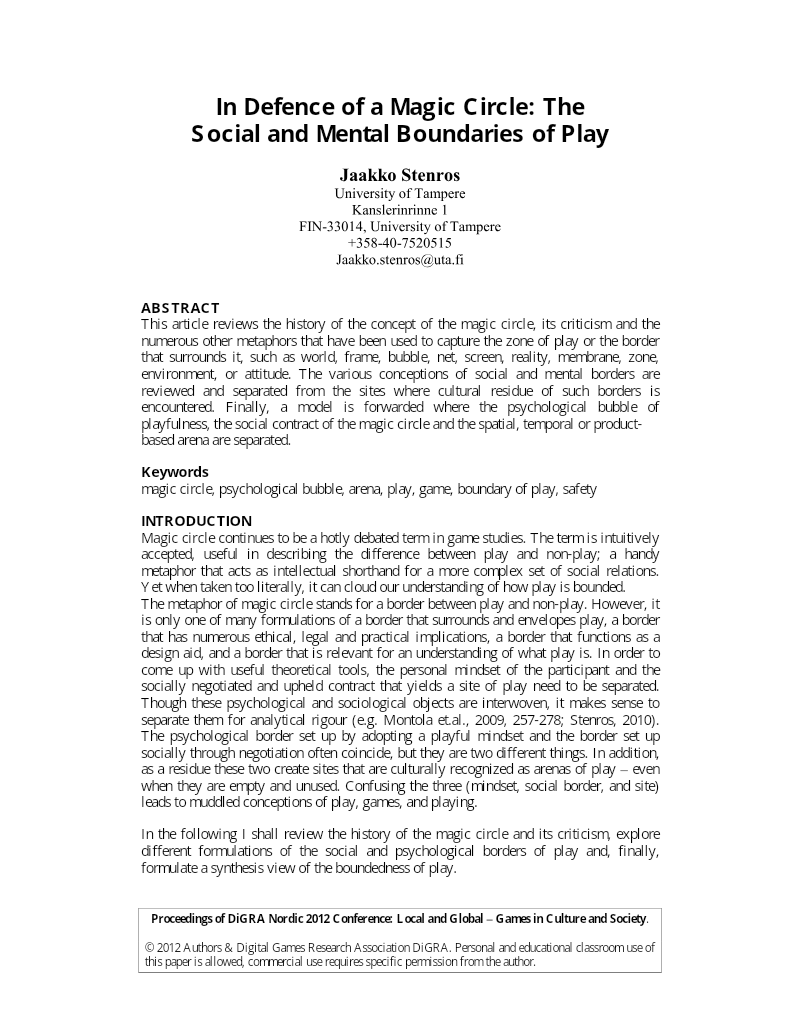
DiGRA · 2012
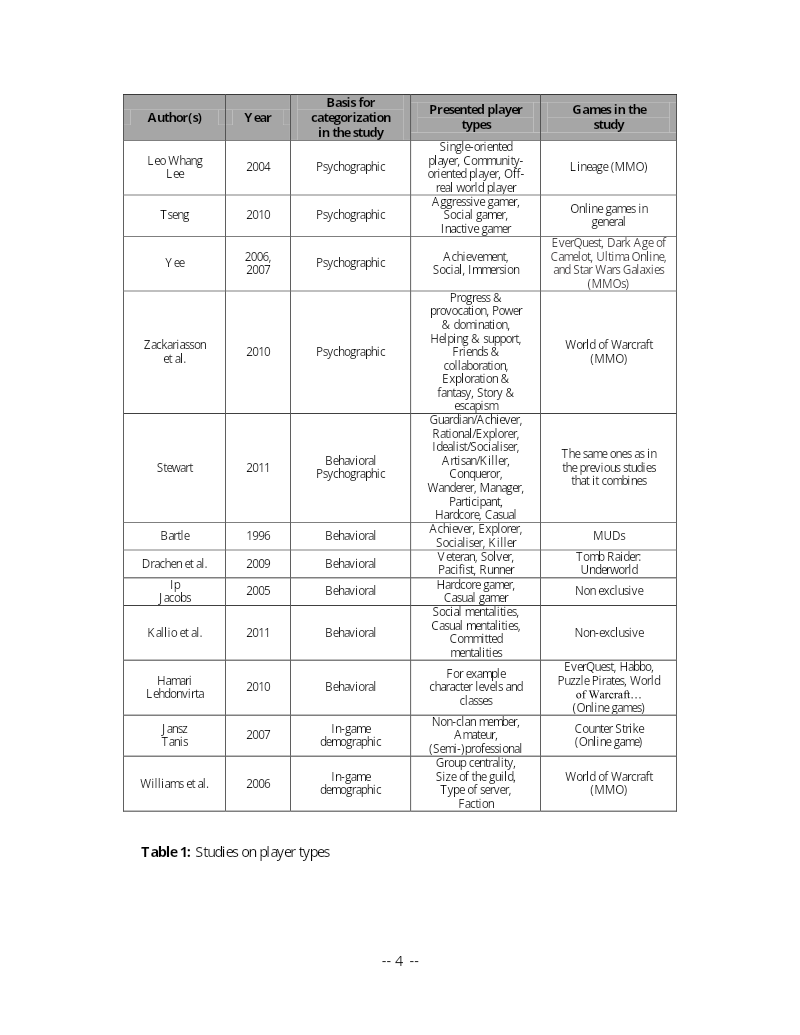
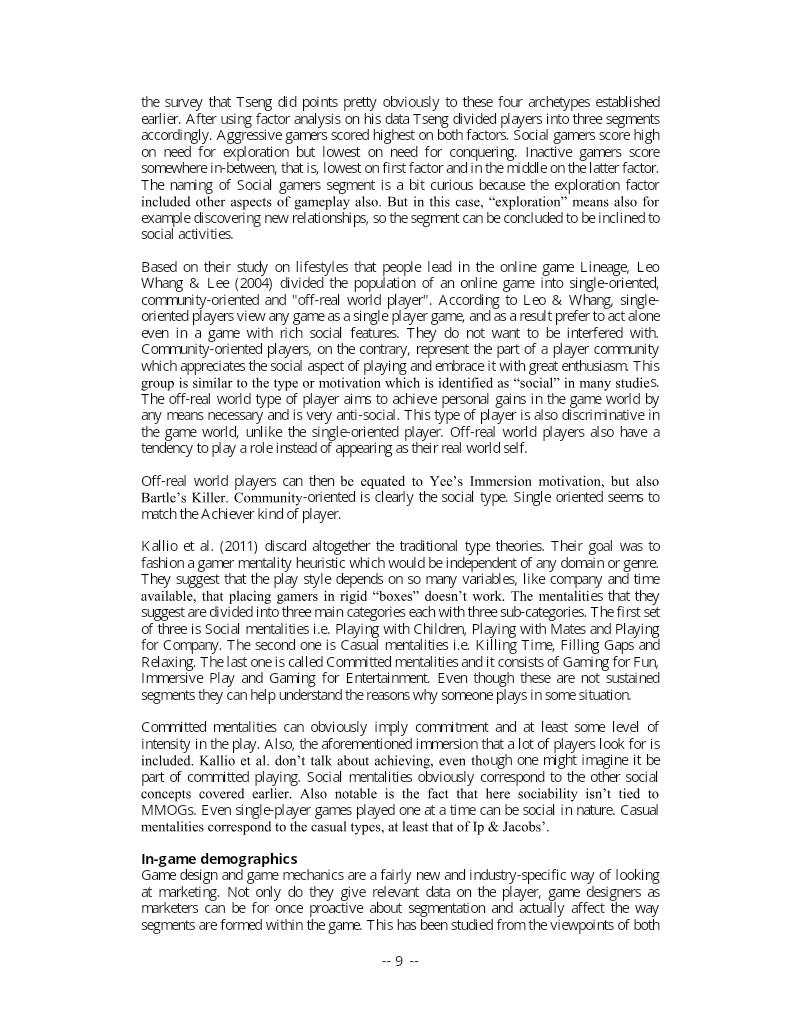
DiGRA · 2012
DiGRA · 2012
DiGRA · 2011
DiGRA · 2011
DiGRA · 2011
DiGRA · 2011
DiGRA · 2011
DiGRA · 2011
DiGRA · 2011
Naavik · 2023