
DiGRA
The Digital Games Research Association: the international association of academics and professionals who study digital games. Its Digital Library holds the proceedings of the DiGRA conferences since 2002.
Documents

Designing Social Behaviour through Play
The document explores the application of interactive play design to cultivate positive social behaviors, primarily among children, young adults, and university students.
- The paper introduces 'transformative play' and argues that open play worlds, which incorporate players' existing social relationships, are better suited to producing social change than closed worlds.
- The authors conclude that a play world's effectiveness depends on interacting factors: whether it is open or closed, the social context of its players, and how well its design aligns with players' motivations as categorised by Bartle's player types.
- Social behaviour in games is shaped more by players' own social values and player-motivated rewards, such as gifting charms or encouraging healthier habits, than by rigid rules.

The Poetics of Game Design: Rhetoric and the Independent Game
The document proposes a novel framework for analyzing and classifying independent games by drawing an analogy to poetic forms and rhetorical devices, rather than traditional visual aesthetics or commercial art comparisons.
- Lindsay D. Grace's paper argues that independent games are best understood as poetry, specifically as compact, dense, thematically unified "sonnets," rather than through the lens of film or visual art.
- The paper proposes classifying games by formal poetic structure, such as meter, stanza, and verb, instead of by genre or subject matter, offering a vocabulary for designers, critics, and archivists.
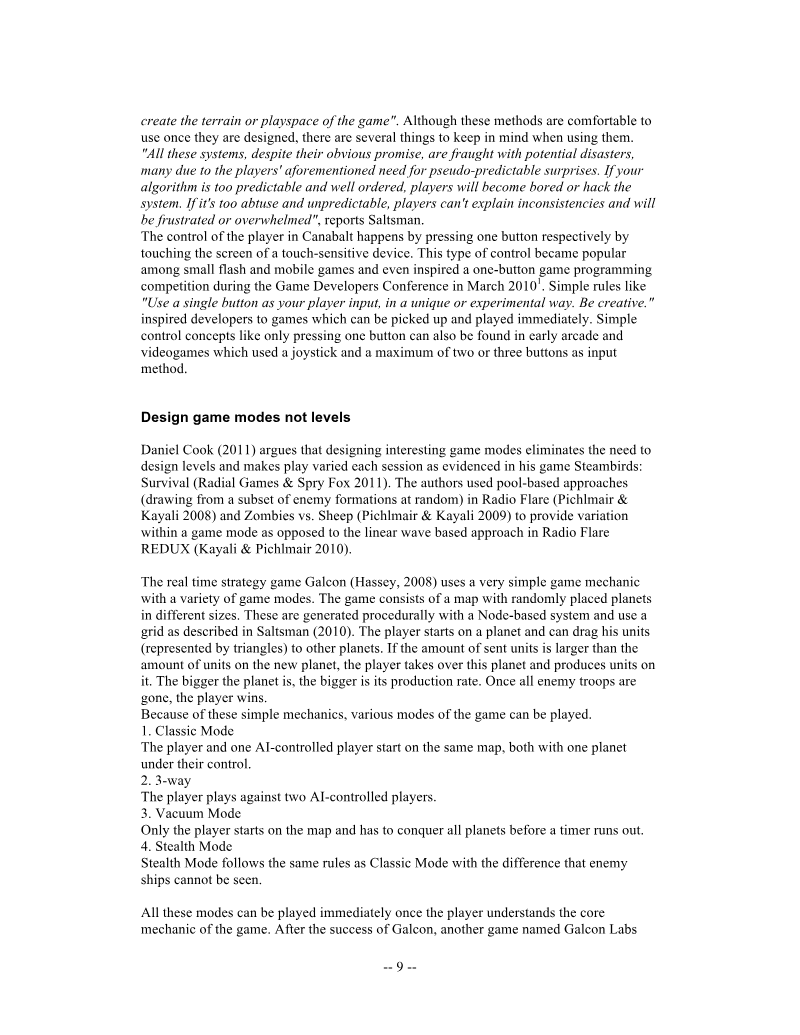
- The game verb is treated as the atomic unit of design, illustrated by Canabalt, where a single verb dominates, and The Unfinished Swan, which reinterprets a real-world verb.

Playful Ambience
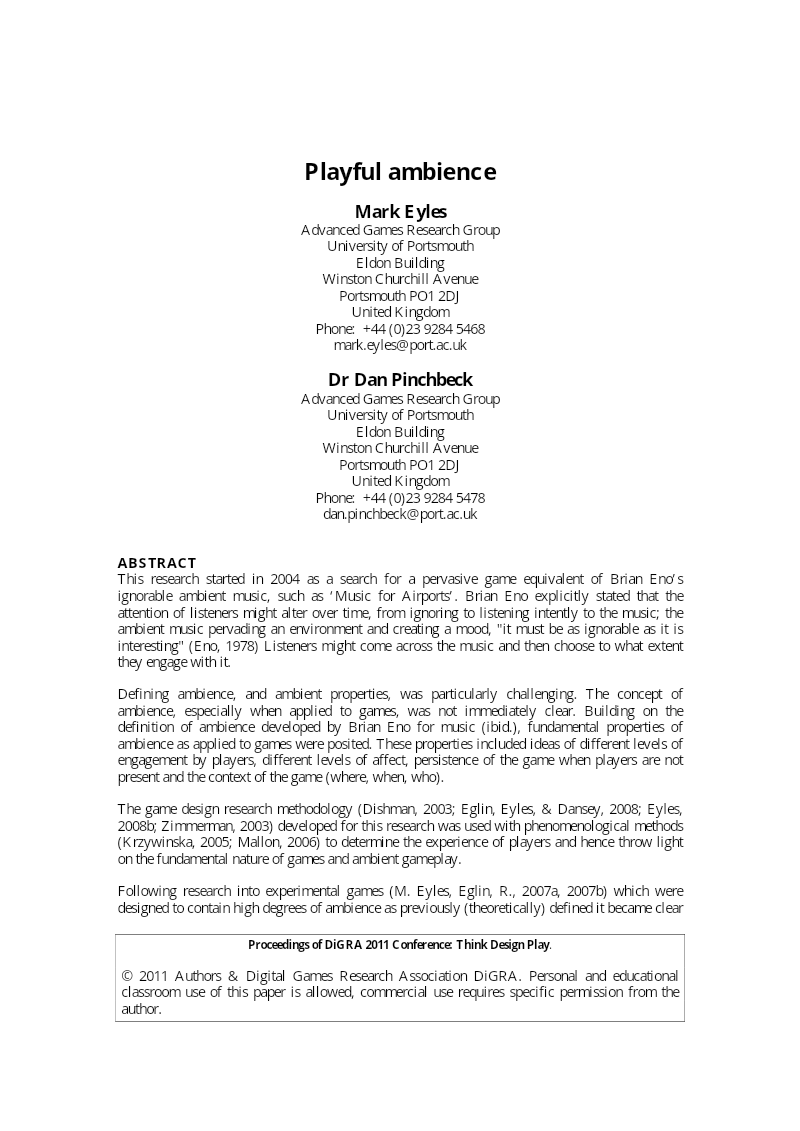
"Playful Ambience" explores the concept of ambient play in video games, drawing parallels to Brian Eno's ambient music to define a spectrum of player engagement from ignorable to intense.
- The report adapts Brian Eno's ignorable-yet-interesting ambient music concept to games, analyzing ambience through four dimensions: engagement, affect, persistence, and context.
- Its central argument is that the existing systemic domain model captured basic features of play but could not explain emergent behaviors, motivating a more refined ambient lens for both experimental and commercial titles.
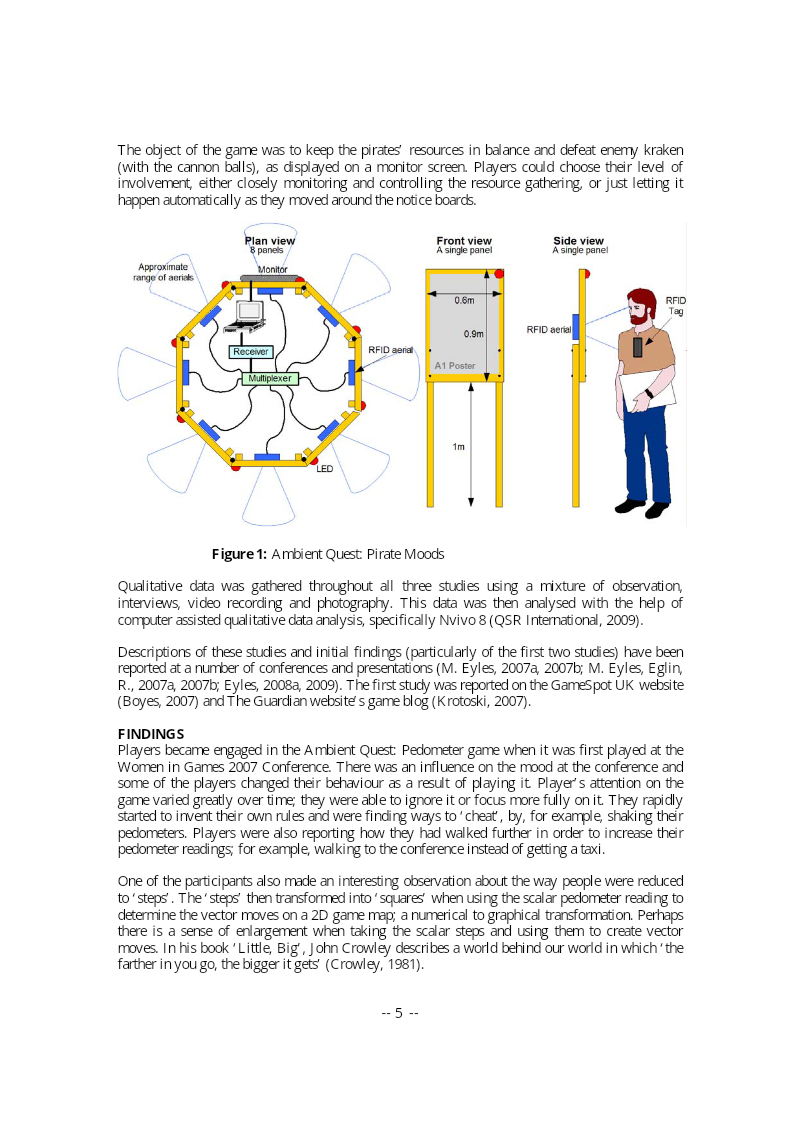
- The framework rests on three studies of experimental "Ambient Quest" games, including a pedometer-based game and an RFID-driven game, where players varied widely in how they engaged, invented personal rules, sometimes cheated against developer intent, and walked more to speed in-game progress.

Retro Evolved: Level Design Practice Exemplified by the Contemporary Retro Game
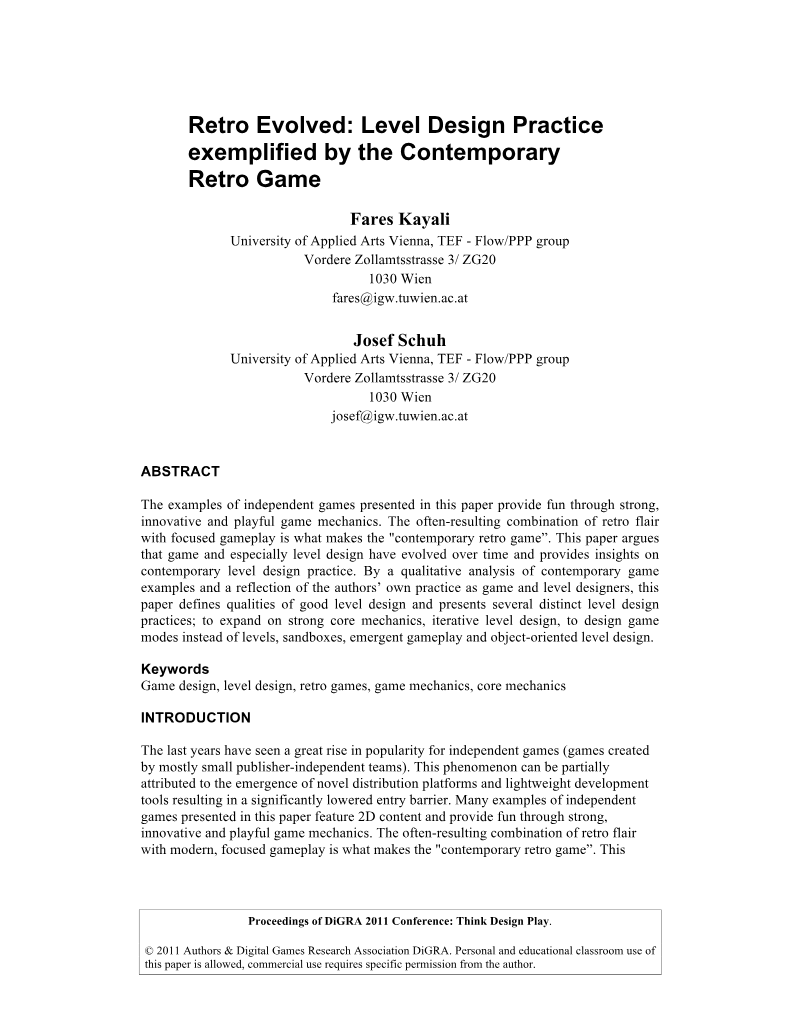
"Retro Evolved: Level Design Practice Exemplified by the Contemporary Retro Game" examines the level design methodologies prevalent in independent "contemporary retro games," which blend nostalgic aesthetics with modern, focused gameplay.
- The paper argues that contemporary retro games treat level design as a deliberate craft, building play experiences on established core mechanics rather than treating levels as incidental content.
- The authors propose qualities of good level design: a balance of difficulty and flow, tension between freedom and constraint, risk and reward, alignment with narrative, and effective player guidance.
- The authors argue these five practices overlap rather than compete, and identify balancing repetition with variation as the key to sustaining player flow.
Jane Fonda's Wii Fit: Continuity, Contingency, and Concordance in Fitness Gaming
This paper examines Nintendo's Wii Fit (2007) through a historical and discursive comparison with Jane Fonda's Workout video (1982), arguing that the two products share structural parallels in how they were adopted by consumers and promoted by their producers.
- The paper argues that exercise content, rather than novelty alone, turned Wii Fit and Jane Fonda's Workout from fleeting entertainment into regular routines, and that this shift drove both products' economic and cultural success.
- Using Celeste Condit's concept of concordance, the author treats new technology adoption as a negotiated process in which producers, existing users, and wider publics contest what a device means and whether it is useful.
- Both products reached audiences broader than their predecessors and relied heavily on women for market penetration, despite the media being typically associated with men.
Replacing Preconceived Accounts of Digital Games with Experience of Play: When Parents Went Native in GTA IV
Public and regulatory perceptions of digital games, the authors argue, rest on cautionary frameworks and non-interactive viewing rather than on actual play.
- Schott and van Vught argue that public and policy debates about digital games rely too heavily on preconceived assumptions, and that understanding should instead come from direct experience of play.
- The study observed 20 parents (7 men and 13 women) playing roughly an hour of Grand Theft Auto IV in a structured session that included the "Ivan the Not So Terrible" moral-dilemma mission and support from an expert gamer.
- Participants often found GTA IV easier and more enjoyable than expected, frequently rejected its violence, and recognized its satire, irony, and moral complexity, though not all deliberately avoided violent encounters.

The Power-up Experience: A Study of Power-ups in Games and Their Effect on Player Experience
The document proposes a novel framework for understanding and categorizing "power-ups" in video games, addressing a gap in existing academic literature.
- Power-ups lack a comprehensive definition in game studies, and their key distinctive property is a shifting experiential role: they act both as means to an end and as goals in themselves.
- The paper's central claim is that power-ups are malleable design affordances whose tuning can deliberately steer what players feel and do.
- In a case study of Metroid Prime, the study identifies Discovery, Challenge, and Sensation as the principal aesthetic goals, with power-ups chiefly sustaining Discovery and Challenge while structuring pacing and control of world access.

In Perpetual Beta? On the Participatory Design of Facebook Games
The document examines the concept of "sociality" in social network games, proposing a new perspective that focuses on the interaction between players and game developers, rather than solely on player-to-player interaction.
- Facebook-based games blend two forms of participatory design: direct participatory design (consulting selected community members) and silent participatory design (monitoring logged player behavior), producing a continuous process that keeps games in a "perpetual beta" state.
- Zynga implements player feedback, including metric data and forum comments, within days rather than the months or years typical of traditional online game developers, as seen in rapid rebalancing of food items, energy, and leveling.
- Farmville's monthly active users fell from over 80 million in 2010 to 30 million by August 2011, while Cityville dropped from 100 million to 76 million over a comparable period.
Computer History and the Movement of Business Simulations
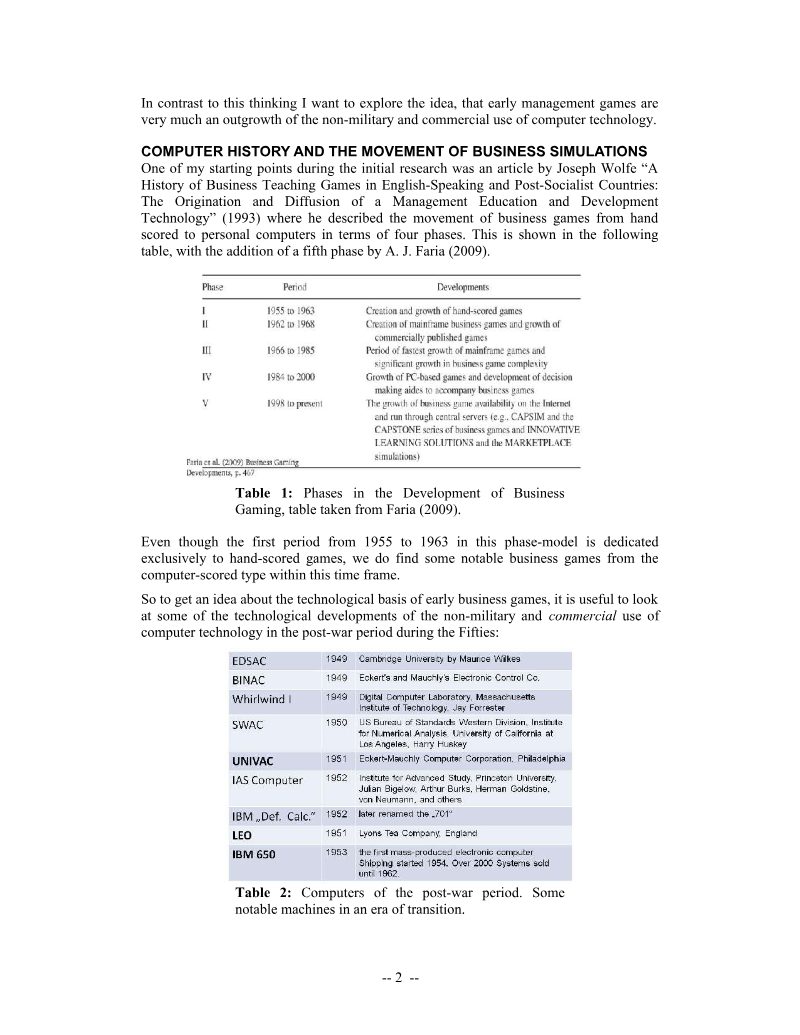
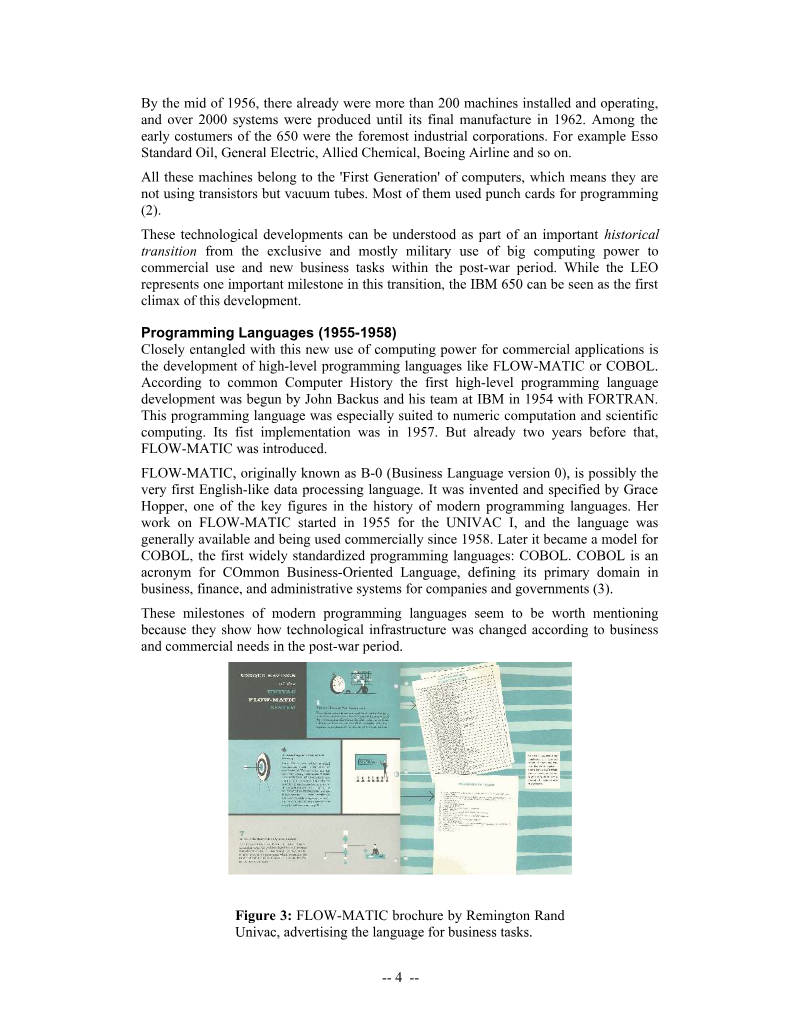
This paper examines the rise of early business games in the post-World War II period, challenging the common notion that they were a direct outgrowth of war games.
- The paper argues that early business simulation games became credible mainly through their association with the computer, which carried cultural connotations of objectivity and rationality.
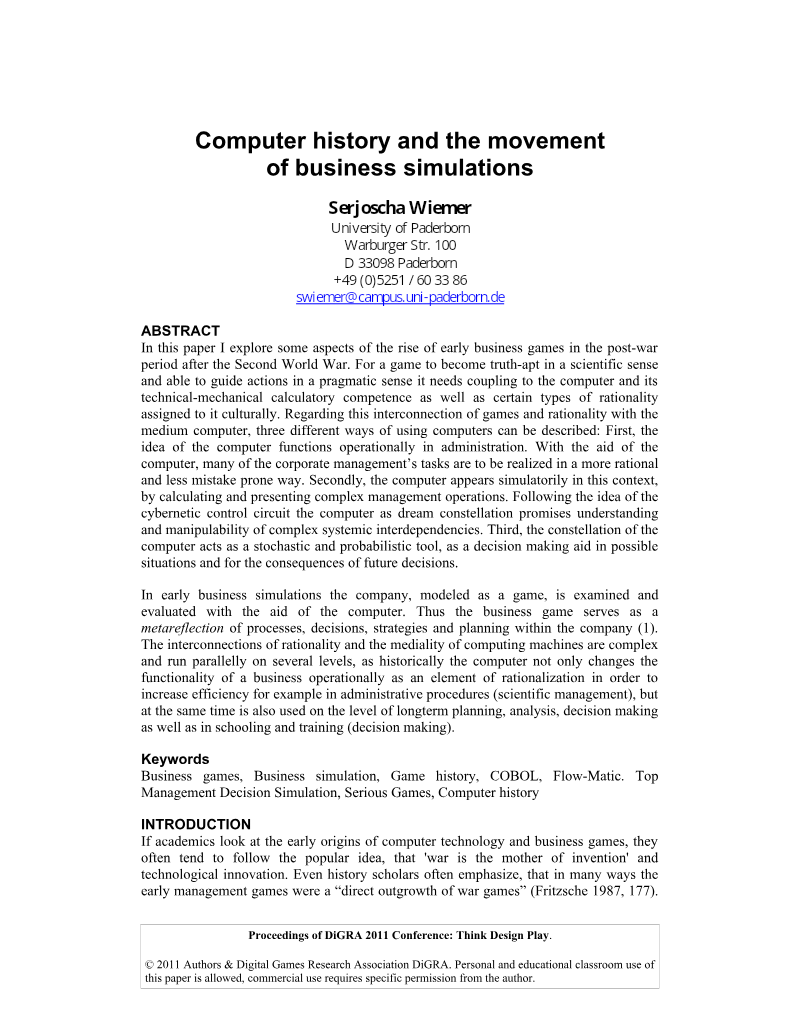
- It challenges the common assumption that business games were a straightforward extension of military war games, arguing instead that they grew out of civilian and commercial computing.
- The author identifies three uses of computers in this context: operational (rationalizing administrative work), simulatory (calculating managerial interdependencies in line with cybernetic control ideas), and stochastic (aiding decisions under uncertainty).
More Than a Craze: Photographs of New Zealand's Early Digital Games Scene
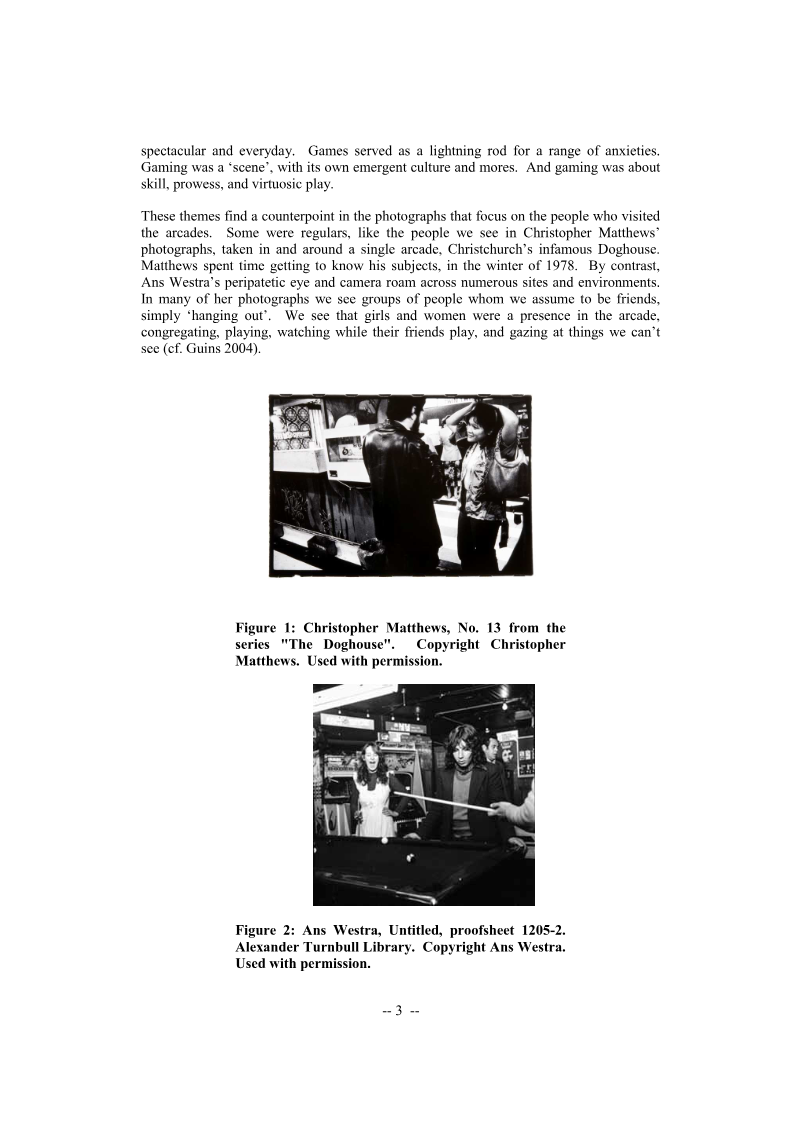
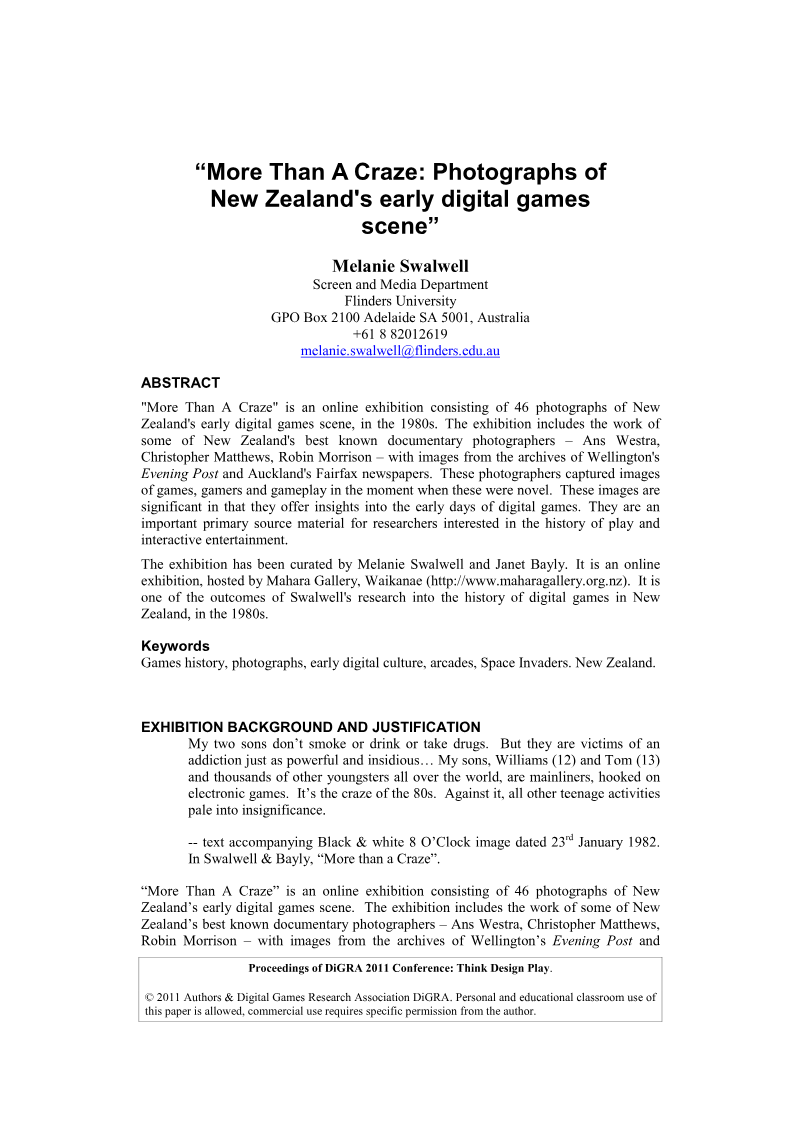
"More Than a Craze: Photographs of New Zealand's Early Digital Games Scene" describes an online exhibition of 46 photographs documenting the nascent digital games culture in New Zealand during the 1980s.
- The exhibition "More Than A Craze" by Melanie Swalwell, curated with Janet Bayly and hosted by Mahara Gallery in Waikanae, presents 46 photographs documenting New Zealand's early digital games scene of the 1980s.
- The photographs are argued to be valuable primary sources for researchers of play and interactive entertainment because they capture games, gamers, and gameplay at a moment of novelty.
- The images draw on documentary photographers Ans Westra, Christopher Matthews, and Robin Morrison, plus archival press images from Wellington's Evening Post and Auckland's Fairfax newspapers.
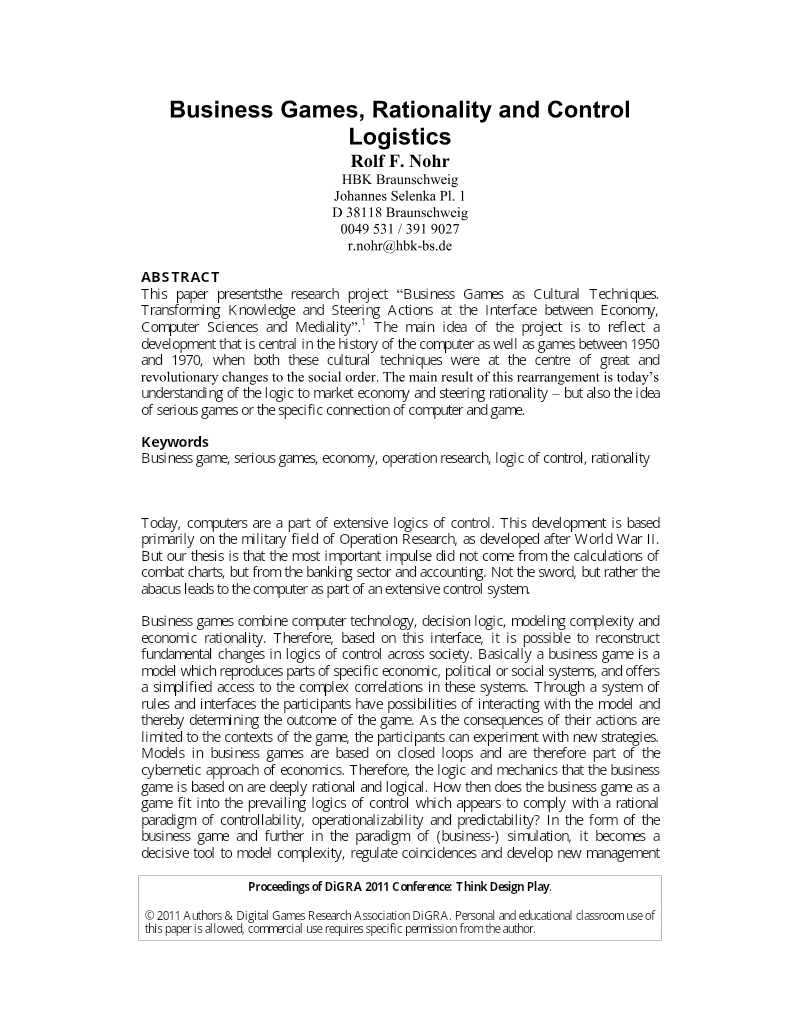
Business Games, Rationality and Control Logistics
The document explores the historical development and significance of business games as cultural techniques, focusing on their role in transforming knowledge and steering actions at the intersection of economy, computer science, and mediality between 1950 and 1970.
- The paper argues that the decisive impulse for modern computing and control systems came less from military combat calculations than from banking, accounting, and corporate management, with business games central to turning economic rationality into an internalized managerial competence.
- Wartime economies rendered market steering instruments inoperative, prompting economists, engineers, and mathematicians to develop Operations Research for modeling supply chains and commodity flows, techniques that later migrated into corporate management through consultants.
- Business games spread from the 1950s first in the United States and Great Britain, then to Germany, the Netherlands, Poland, Hungary, and the Soviet Union, where planned economies were seen as especially compatible with rational steering concepts.


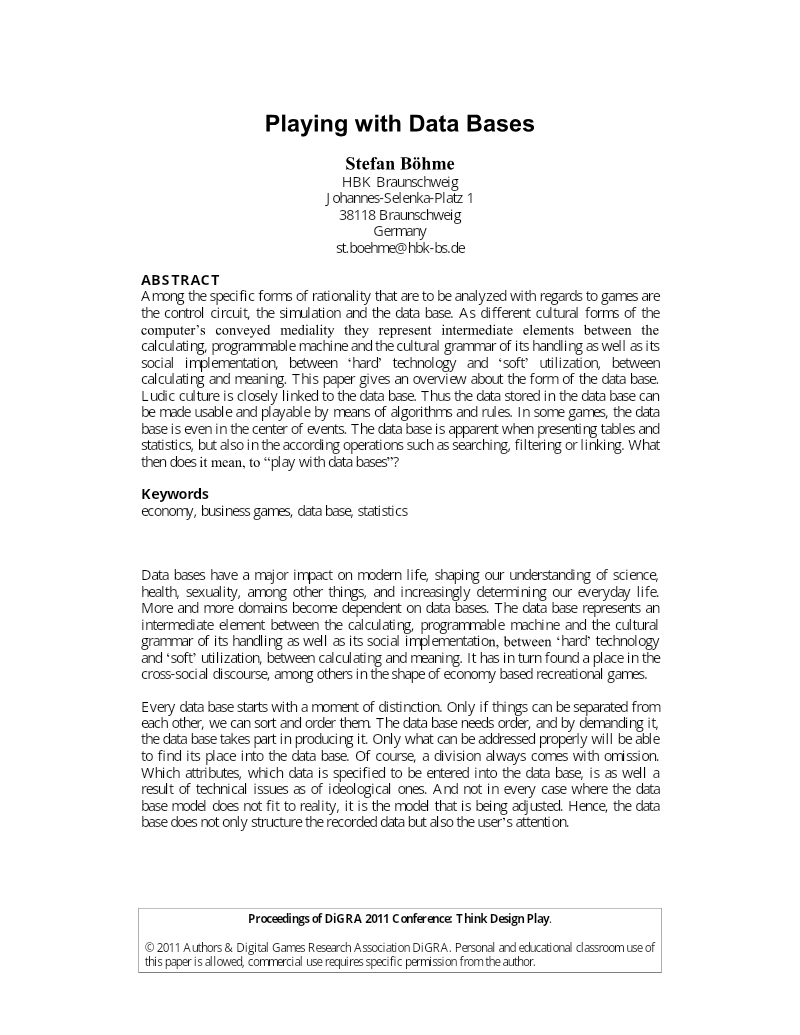
Playing with Data Bases
This paper explores the pervasive influence of databases on ludic culture, arguing that databases serve as a crucial intermediate element between computing technology and its cultural application.
- Data bases do not merely store information; every data base begins with a categorical distinction that sorts things into classes, and those choices reflect technical and ideological decisions that shape what users notice and how they think.
- The author frames 'playing with data bases' as adopting a data-base perspective: a mode of reasoning built on searching, filtering, linking, and ordering.
- The Parship dating platform turns personal life into categorized, comparable records via a roughly 80 to 90 question compatibility test, then matches users algorithmically and narrows results through filters.