
DiGRA
The Digital Games Research Association: the international association of academics and professionals who study digital games. Its Digital Library holds the proceedings of the DiGRA conferences since 2002.
Documents
Super Mario as a String: Platformer Level Generation Via LSTMs
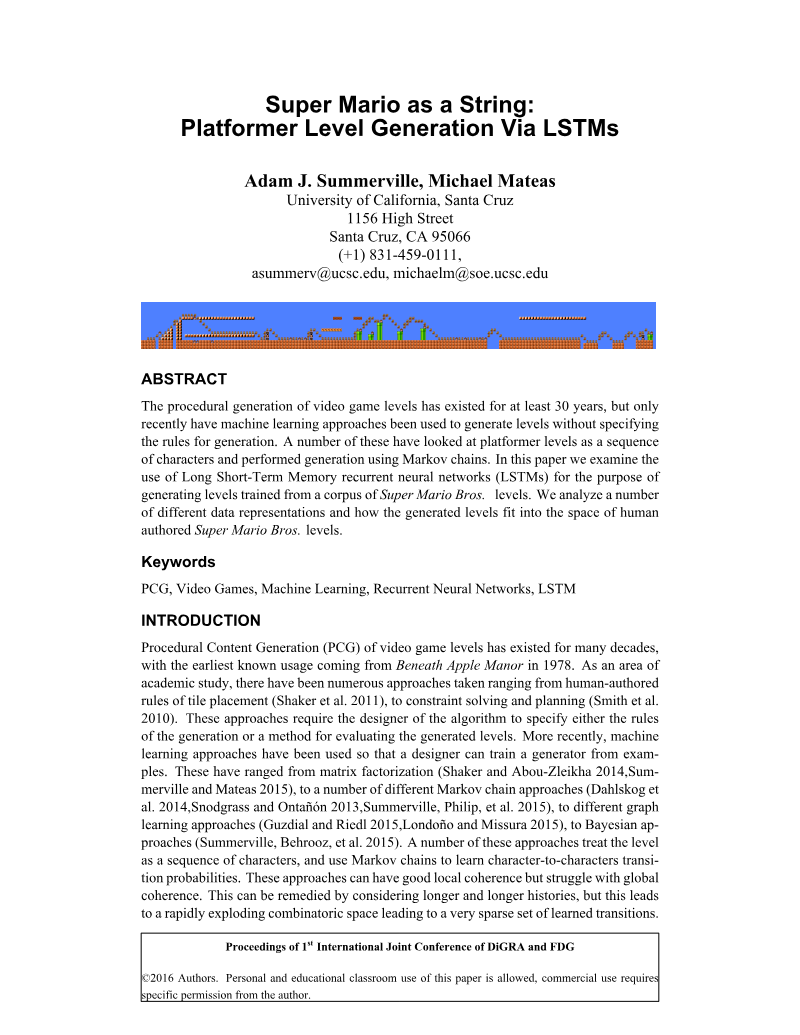
This paper investigates the application of Long Short-Term Memory (LSTM) recurrent neural networks for the procedural generation of Super Mario Bros. levels, aiming to overcome limitations of traditional rule-based or Markov chain methods.
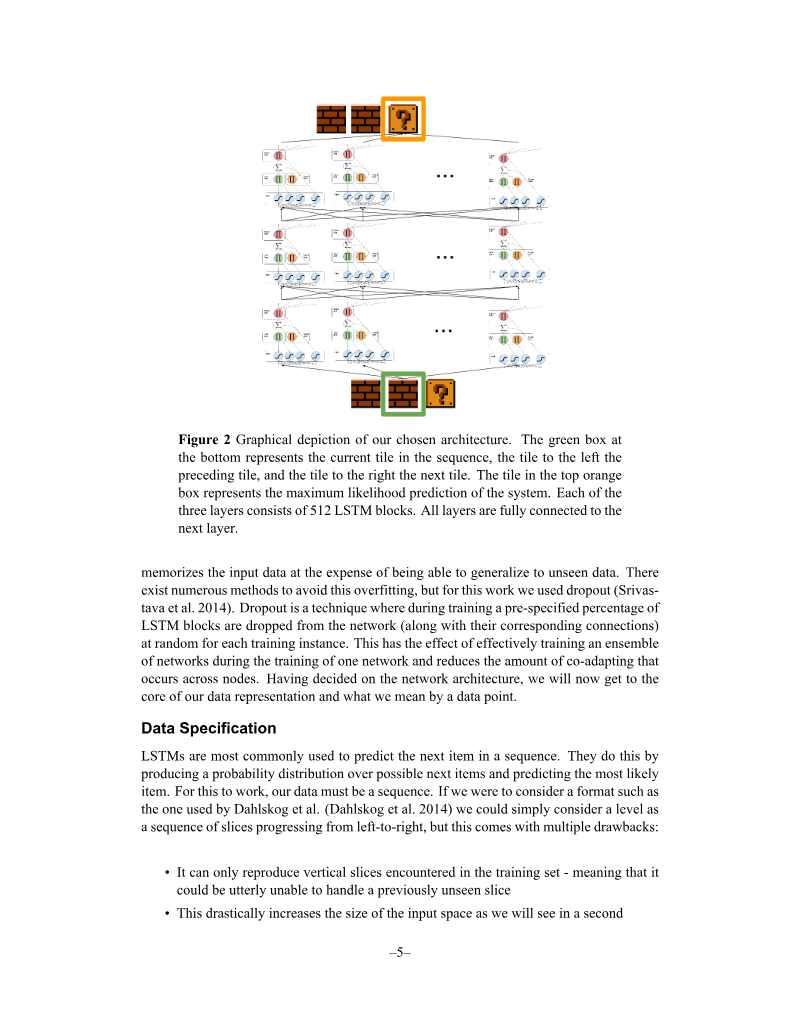
- Applying LSTM recurrent networks to Super Mario Bros. level generation aims to capture longer-range structural dependencies than Markov-chain and graph-based generators, which have struggled with global coherence.
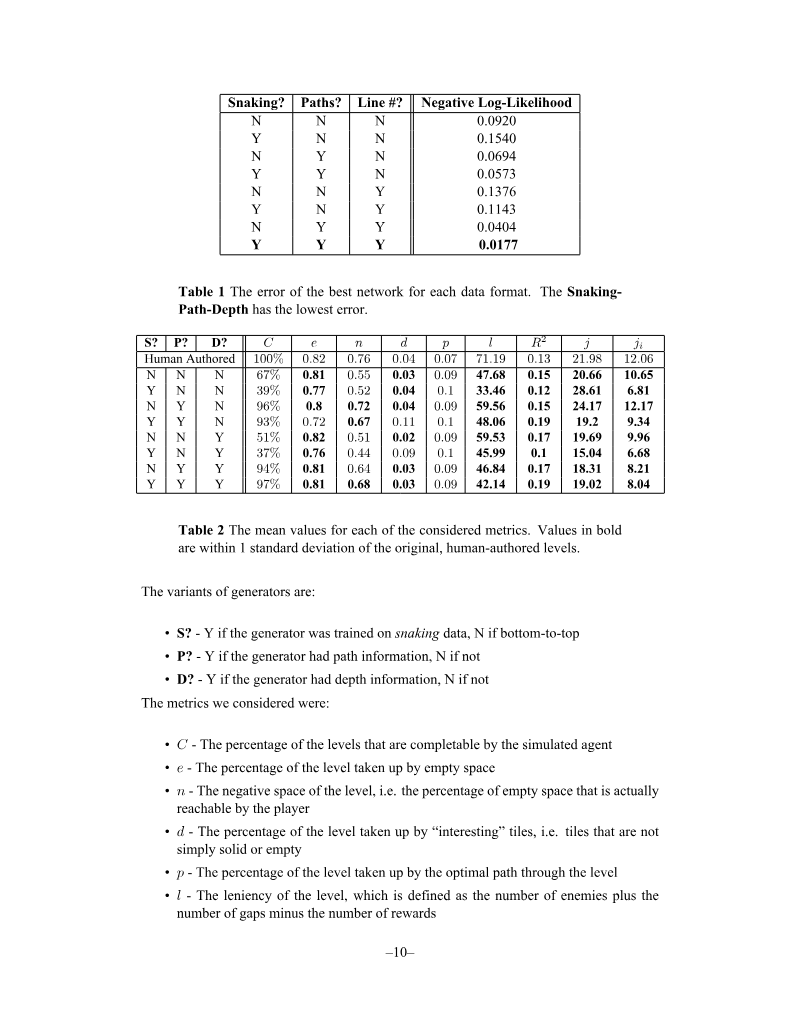
- The strongest result came from encoding player path information: the best configuration, combining snaking tile ordering, path data, and column depth markers, reached a negative log-likelihood of 0.0177.
- The best configuration produced levels that a simulated agent could complete 97 percent of the time, compared with a previously reported best of 66 percent for machine-learning-based level generators.
The Impact of Co-Located Play on Social Presence and Game Experience in a VR Game
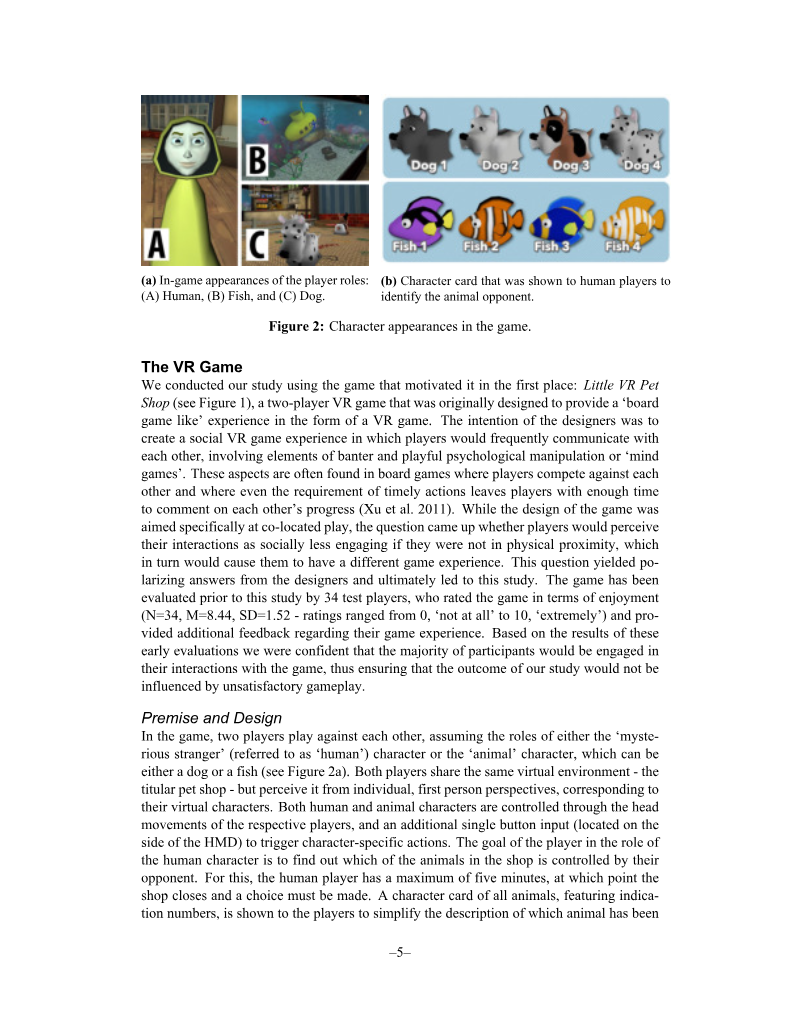
This exploratory case study examined the influence of co-located versus physically separated play on social presence and overall game experience within a two-player virtual reality (VR) game.
- A study of 34 friend-pair participants playing the two-player VR game Little VR Pet Shop found no meaningful difference in game experience or social presence between co-located play in the same room and separated play connected by intercom.
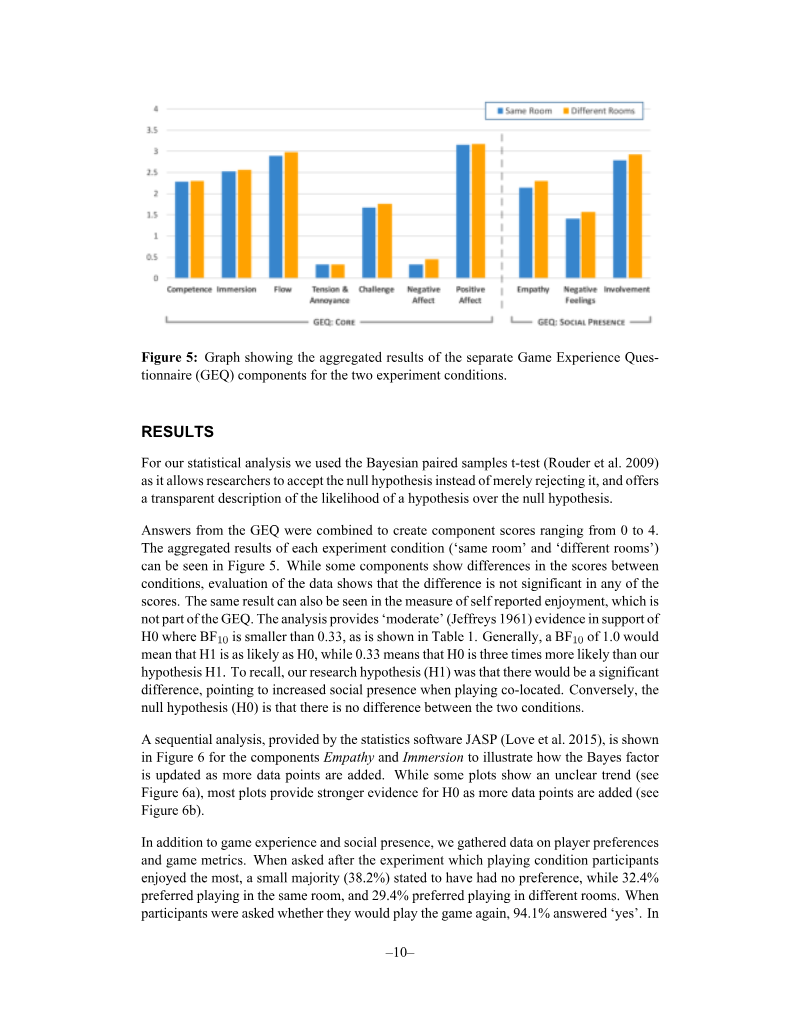
- Bayes factors mostly below 0.33 indicated moderate to anecdotal evidence in favor of the null hypothesis, with no significant differences across GEQ core dimensions, social presence components, or self-reported enjoyment.
- 94.1 percent of participants said they were willing to play again, and most expressed no preference between the shared-room and separated conditions.



"We Don't Sell Blocks": Exploring Minecraft's Commissioning Market
This ethnographic study investigates a distinct commissioning market operating within Minecraft's creative community, challenging conventional understandings of user-generated content and free labor.
- Minecraft's end-user licence agreement prohibits selling in-game material, so players instead trade the time and creative labour of building custom structures, forming a commissioning market.
- The market has three actor types: clients (mostly server owners, but also YouTubers and corporations), contractors (team managers, union members, and freelancers who route orders), and builders who create the work.
- Team managers typically keep a commission of roughly 30 to 40 percent to cover overhead, with builders receiving the remainder, a hierarchy that partly prompted the emergence of unions promoting direct client relationships and "fair pay for fair work."



Prank, Troll, Gross and Gore: Performance Issues in Esport Live-Streaming
The document, "Prank, Troll, Gross and Gore: Performance Issues in Esport Live-Streaming," investigates the impact of disruptive behaviors, specifically pranks and trolling, on personal esport live-streaming aesthetics and competitive integrity.
- Spectator interference in live esports streams, such as pranks, trolling, and mass food orders, disrupts the 'interview frame' of streamer-viewer conversation, and the streamer responds by sustaining a consistent, humorous persona.
- Live-stream viewers actively seek to alter match outcomes and broadcast direction, and the resulting unpredictability creates a distinctive dramatic appeal that drives viewership, differing fundamentally from traditional sport or esport spectatorship.
- The study's single case study, League of Legends streamer Gross Gore, drew over ten million viewers and £106,033 in fan donations in 2015, illustrating the economic scale of such performances.



4X Gamer as Myth: Understanding Through Player Mythologies
The document, "4X Gamer as Myth: Understanding Through Player Mythologies," argues that games are textual systems best understood through semiotics and player mythologies, rather than solely through their internal mechanics.
- Digital games can be analysed as ergodic textual systems whose signs are continually renegotiated through player interaction, while surrounding cultural 'mythologies' persist and shape how those signs are read.
- The study grounds its framework in Espen Aarseth's cybertext, Ian Bogost's unit-operational criticism, and Roland Barthes's semiotics, extending Barthesian myth to the 'gamer' identity and sub-mythologies such as the 'true gamer'.
- The 4x strategy genre is the central case, examining how signs like hexagonal tiles, beakers, and heater-shields carry specific meanings for 4x players that may be opaque to others.



An Impression of Home: Player Nostalgia and the Impulse to Explore Game Worlds
The document posits that nostalgia, understood as an affective player state rather than merely a period style, significantly enhances player motivation for exploration within game worlds.
- Nostalgia is framed as an internal affective state that motivates players to explore game worlds, rather than merely a period aesthetic or form of remediation.
- Nostalgia in the studied games arises mainly from generic familiarity (homely interiors, children's drawings, personal objects) that triggers players' own memories, not from explicit historical styling.
- Impressionistic, non-period audiovisual design, such as golden-hour lighting and a timeless orchestral score, can evoke personal nostalgia across a broader audience than period pastiche, which relies on shared cultural references.



Creative Communities: Shaping Process through Performance and Play
The document, "Creative Communities: Shaping Process through Performance and Play," posits that structured play and cross-disciplinary interaction are essential for fostering creativity and innovation within professional communities, particularly in digitally mediated art and game development.
- The authors argue that play can disrupt entrenched conventions in communities of practice, such as generic game-engine styles and oversaturated videogame genres, which they claim limit creative output.
- They propose a 'context provider's framework' in which creative hubs and universities design spaces and conditions that support creative process, while acknowledging that a community of practice itself cannot be designed.
- The Development Cultures study (2014) ran for six months with reflective seminars and two game jams, and participation grew from 23 to 46.
Good Violence, Bad Violence: The Ethics of Competition in Multiplayer Games
Nguyen and Zagal's paper argues that competition in multiplayer games constitutes a form of "mere violence," in the sense that it frustrates an opponent's in-game plans, yet this violence can be transformed into an ethically positive experience.
- Competition in multiplayer games is framed as 'mere violence': it frustrates an opponent's in-game plans, but it can be transformed into an ethically positive experience.
- The authors reject the 'magic circle' idea that games are insulated from moral consequence, arguing that the ethics of competitive play depend on design, mutual consent, and psychological fit between opponents rather than on fixed rules.
- The central thesis is that competitive games can be 'competitive in their individual moments but collaborative as a whole,' which requires deliberate effort from both designers and players.



Toward Ludic Gerontechnology: A Review of Games for Dementia Care
The document, "Toward Ludic Gerontechnology: A Review of Games for Dementia Care," examines the evolving landscape of digital games designed for individuals with dementia.
- The field of games for dementia care is still largely at a prototype or early-validation stage, with promising but preliminary results.
- Cognitive rehabilitation games dominate current work, yet their efficacy evidence is limited, and brain-training effects have proven highly task-specific, so larger clinical trials are still needed.
- People living with dementia can often play these games independently, though findings diverge by level of impairment and other variables that require further study.
Affect, Responsibility, and How Modes of Engagement Shape the Experience of Videogames
Videogames occupy a unique position within narrative media by fostering a distinct sense of player responsibility rooted in hybrid engagement.
- Videogames create a unique sense of player responsibility by binding the user’s agency to narrative outcomes, transforming passive observation into active accountability.
- Affective investment—the emotional connection to a game world—is directly reinforced by the player’s role as the primary agent of action within the game's structure.
- Consistent internal logic is essential for fostering authentic emotional responses like guilt or remorse, as seen in titles such as Gone Home, Deus Ex, and Portal 2.
Tokimeki Memorial Girl's Side: Enacting Femininity to Avoid Dying Alone
Tokimeki Memorial Girl’s Side functions as a digital training ground that reinforces heteronormative social expectations and traditional Japanese gender roles.
- Tokimeki Memorial Girl’s Side functions as a digital training ground that enforces heteronormative social expectations and traditional Japanese gender roles.
- Gameplay mechanics mandate that players adopt feminine behaviors, such as aesthetic conformity and the suppression of personal preferences, to satisfy the male gaze.
- The game design actively penalizes female agency and independent opinion, framing submissiveness and docility as essential strategies for social success.
Blackout! Unpacking the Black Box of the Game Event
The SOC ontology provides a comprehensive framework for analyzing the video game experience by synthesizing Actor-Network Theory, phenomenology, and Goffman’s frame analysis.
- The SOC ontology framework analyzes the gaming experience by treating the game event as a dynamic, unpredictable network of human and non-human actors rather than a static product.
- The model defines play as a continuous performance occurring across three interconnected spheres: the Social, the Operative, and the Character worlds.
- Players maintain immersion through 'upkeying' and 'downkeying,' processes that allow for fluid shifts in disposition and engagement with the game's internal logic.
Do you work at DiGRA? Get a free report of how these documents are read and cited here.