1 free read left. Create a free account for unlimited reading + AI research.
Create free accountWhitepaper DiGRA
1 free read left. Create a free account for unlimited reading + AI research.
Create free accountWhitepaperDiGRA
This paper argues that digital games can be analysed as textual systems whose constituent signs are continually renegotiated through player interaction, while the broader cultural "mythologies" surrounding those signs persist and shape how they are read. Drawing on Espen Aarseth's concept of cybertext, Ian Bogost's unit-operational criticism, and Roland Barthes's semiotics, the author contends that understanding these player mythologies can improve systemic classification of games and help designers and critics move beyond the constraints those mythologies impose. The study uses the 4x strategy genre as its central case, examining how signs such as hexagonal tiles, beakers, and heater-shields signify specific meanings to 4x gamers that may be opaque to other players.
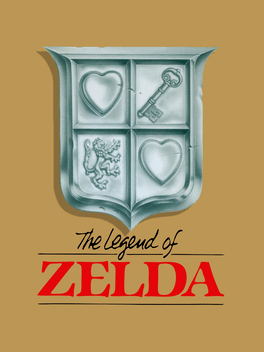
The argument proceeds through a sequence of theoretical moves: establishing games as ergodic textual systems, distinguishing signs, signifiers, and signified meanings, and extending Barthesian myth to the "gamer" identity and its sub-mythologies, such as the "true gamer." The author illustrates these claims with examples drawn from The Legend of Zelda, Civilization, Endless Space, Tropico 5, Portal, and And Yet It Moves. A key finding is that 4x games display unusually stable narrative, objective, and operative features, which makes it easier to isolate genre-specific signs and trace their remediation over time, for instance the shift from square to hexagonal tiles between Civilization IV and Civilization V.
The paper also proposes applications of this framework, including a genrification method grounded in shared mythology rather than purely narratological or ludic criteria, and the procedural generation of game content based on isolated significant signs. It further suggests that subverting 4x conventions, such as playing as barbarians, could offer critical reflection on colonial rhetoric in the genre. The study is primarily theoretical and conceptual, offering no quantitative survey or empirical sample, and its conclusions are framed as propositions for further analysis rather than established findings.
Each row is a game or company this document names, each column a document, oldest first. A mark means that document names it. Select a row to see those documents.
DiGRA · 2016
DiGRA · 2016
DiGRA · 2016
DiGRA · 2016
DiGRA · 2016
DiGRA · 2016
DiGRA · 2016
DiGRA · 2016
DiGRA · 2015
DiGRA · 2015
DiGRA · 2015
DiGRA · 2015