
Atari
1 document by Atari in the Game Industry Library, the newest “Atari Rapport Financier Annuel: Exercice 2012/2013” (2013).
Documents
Atari Rapport Financier Annuel: Exercice 2012/2013
VERITABLE INNOVATEUR DU JEU VIDEO Société anonyme au capital de 14.767.375,50 euros Siège social : 78 rue Taitbout 75009 PARIS - France AXIF AUTORITE Le présent Document de référence a été déposé auprès de l'Autorité des Marchés Financiers le __ 2013, conformément à l'article 212- 13 de son Règlement général.
Reports about Atari
109 documents by other writers name Atari in the title or summary.



Annual Report and Consolidated Financial Statements for the Year Ended 31 December 2023
tinyBuild's 2023 annual report presents a year of sharp financial deterioration and strategic reset for the video game publisher and developer.
- TinyBuild reported a 29% revenue decline to $44.7 million in 2023, resulting in a $62.8 million comprehensive loss driven by $48.1 million in asset impairments and studio closures.
- To address a year-end cash low of $2.5 million, the company secured $12.3 million in early 2024 funding, which included an investment from Atari and increased CEO Alex Nichiporchik’s ownership to 57.9%.
- The company is shifting from an acquisition-led strategy to a leaner internal-production model, focusing on 'games as a service' and high-potential emergent gameplay titles.
Shareholder Circular
TinyBuild, Inc. is undertaking a critical fundraising initiative to raise approximately $14.16 million (£10.3 million) to address a severe liquidity crisis.
- TinyBuild faces a critical liquidity crisis and potential Chapter 11 insolvency if it fails to secure $14.16 million (£10.3 million) in new capital by January 2024.
- The fundraising strategy includes a share issuance priced at 5 pence, a $2 million private placement from Atari, and an open offer for existing stockholders.
- CEO Alex Nichiporchik is underwriting up to $10 million of the raise, a move that could increase his ownership stake from 37.8% to 59.1% and requires a regulatory 'whitewash' waiver.

Where You Can Find My Articles
This document serves as a comprehensive directory of articles and professional engagements by Shannon Liao, a journalist specializing in the gaming industry.
- Shannon Liao, formerly of The Washington Post, transitioned to independent freelance journalism in March 2023.
- Her current portfolio features contributions to major outlets including The Verge, The New York Times, Popular Science, IGN, and Vulture.
- Core reporting themes include the impact of artificial intelligence on game development and labor, as well as the business implications of major corporate acquisitions like Microsoft’s.
Play Value, Gameplay, and Immersion in the Early Videogame Industry
This paper explores the concept of "play value" and its profound influence on the early United States videogame industry, particularly during the 1970s and early 1980s.
- The paper argues that "play value," a term borrowed from the toy industry, offers a historically grounded lens for understanding the design, development, and reception of early US videogames in the 1970s and early 1980s, linking a product's engaging use-value to its commercial exchange-value.
- Toy companies such as Coleco, Mattel, and Milton Bradley shaped early console design, and play-value and play-pattern framing was applied to consoles including the Atari VCS, Odyssey, Fairchild Channel-F, and Intellivision.
- The central claim is that designers constrained by severe memory limitations boosted engagement by incrementally adding actions, movement, graphics, and variations to cartridges, as seen in Atari VCS game variations and feature-by-feature expansion of sports titles.
Are Video Games Really More Expensive?
Video games feel more expensive than ever, but inflation-adjusted analysis shows they have become cheaper over time.
- While the absolute price of new console games has increased over time, they have become significantly cheaper in relative terms, with the average relative price declining by nearly 2% annually between 1977 and 2020.
- If game prices had tracked with inflation, a 2013 game priced at $59.99 would cost $76.30 today, and a 2020 game priced at $69.99 would cost $80.13, representing a 14% increase in purchasing power loss.
- Between 2018 and 2021, the average price of physical and digital games for the Switch, PS4, and Xbox One declined by a compound annual growth rate (CAGR) of -6.4%.

Funding the Pain Away: Startup Culture as a Remedy to Corporate Toxicity
Venture capital's rush to fund studios founded by departing Activision Blizzard employees, including Frost Giant, Lightforge, Dreamhaven, and Notorious Studios, is framed as a reasonable response to industry consolidation and echoes the 1970s-80s Atari exodus that produced Activision.
- Venture capital is aggressively funding new independent studios formed by former Activision Blizzard employees, though these startups often struggle to improve demographic diversity compared to the corporate environments they left.
- Microsoft is expanding its Game Pass service into the Samsung Smart TV market, which accounts for 32 percent of global television ownership, to drive platform-agnostic distribution.
- Diablo Immortal highlights the conflict between Western loot box regulations and Asian market monetization, generating $1.8 million in daily gross revenue shortly after its launch.

The McDonaldization of Gaming VCs
Large generalist venture funds are entering gaming, and a16z's $600 million Games Fund One, announced in May 2022, is the signal case.
- The gaming industry experienced explosive growth between 2012 and 2021, with market value expanding from $52 billion to $219 billion.
- The entry of generalist venture capital firms, such as Andreessen Horowitz and its $600 million Games Fund One, has validated gaming as a mainstream asset class while shifting the industry toward standardized, high-stakes financial models.
- Large-scale institutional investors often prioritize franchise-driven content and view any project outcome under $1 billion as a failure, which risks stifling creative risk-taking.
Platform Power by the Numbers
Platform holders have overtaken publishers at the top of the global games industry, and that shift is reshaping leverage for independent creators.
- Platform holders now dominate the industry, accounting for eight of the top ten gaming companies compared to only five in 2012.
- Between 2012 and 2022, platform revenue grew at a 17% compound annual growth rate, rising from $28 billion to $133 billion.
- Traditional publisher revenue remained nearly stagnant over the decade, increasing only from $13 billion to $14 billion.

Line Goes Down
Ubisoft's push into NFTs is failing to win over players, and its executive's response to the backlash is making matters worse.
- Ubisoft executive Nicolas Pouard defended the company's NFT strategy by claiming player backlash stems from a lack of understanding regarding the benefits of digital secondary markets.
- Critics of NFT integration in gaming have become increasingly informed and vocal, rejecting the industry's narrative that resistance is merely due to a lack of technical comprehension.
- Ubisoft discontinued its battle royale title Hyper Scape, highlighting the risks of publishers adopting industry trends without aligning with audience expectations.
From Trash to Treasure: Exploring How Video Games Are Moving from Popular Culture to Cultural Heritage
The document examines the evolving status of video games, arguing they are transitioning from popular culture phenomena to recognized cultural heritage.
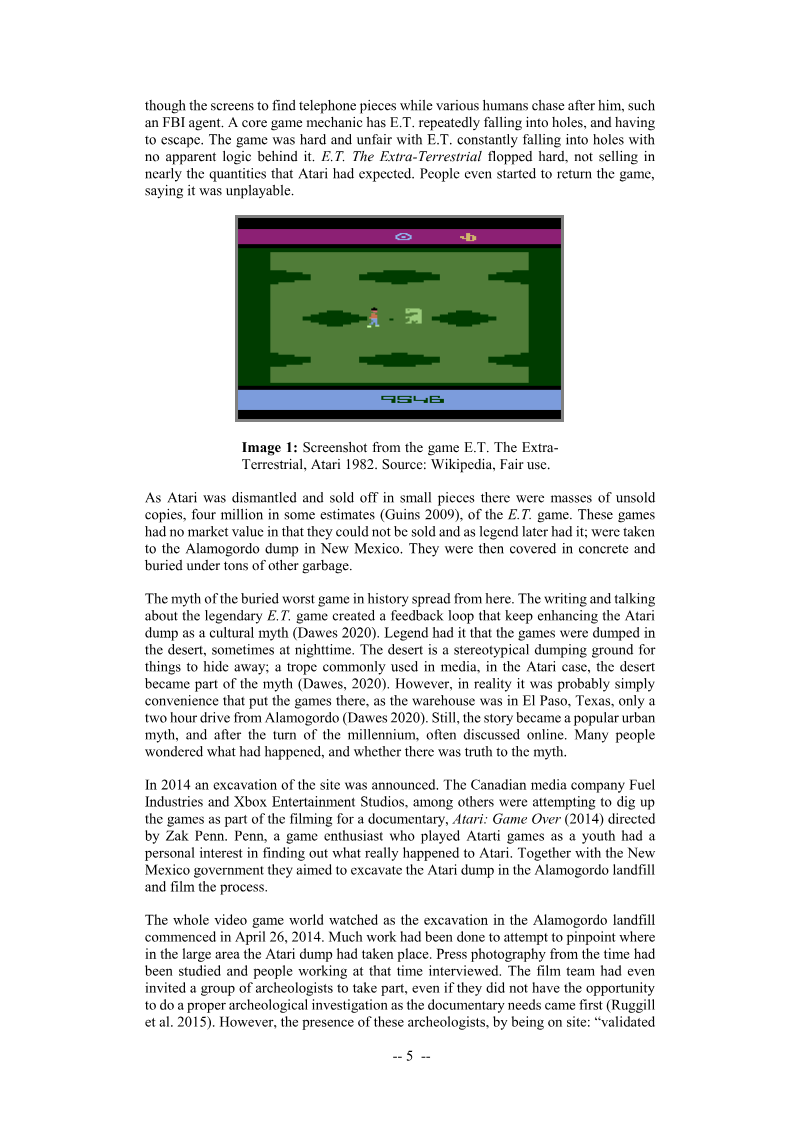
- The 2014 excavation of an Alamogordo, New Mexico landfill recovered roughly 1,300 Atari E.T. cartridges, turning a long-standing cultural myth into tangible artifacts.
- Heritage value is socially constructed rather than inherent in objects; the spectacle and emotional investment surrounding the dig gave the recovered games new meaning.
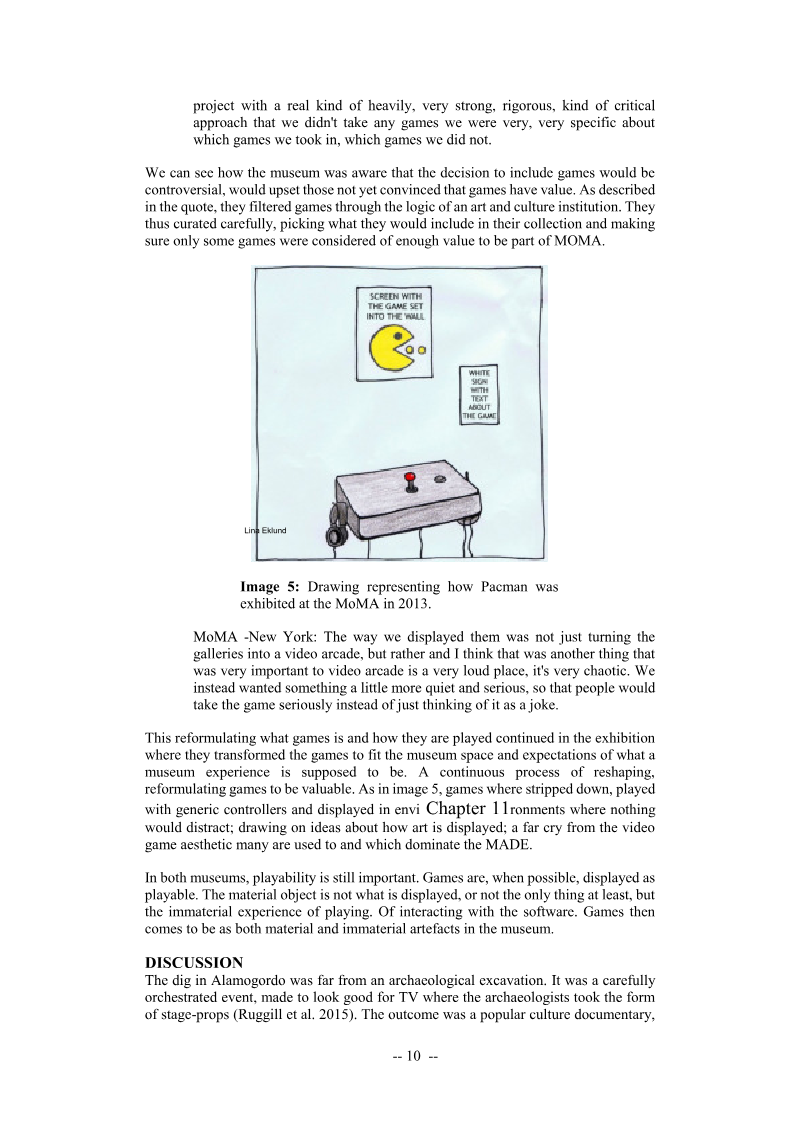
- MoMA pursues a selective, art-focused collecting strategy, while The MADE, a volunteer-run Oakland institution, aims to preserve nearly everything from an enthusiast-driven, bottom-up perspective.

Castles Made of Sand
Nathan Brown's Hit Points newsletter (November 29, 2021) offers a skeptical hands-on assessment of The Sandbox, a blockchain-based, play-to-earn "metaverse" platform whose public alpha launched that day.
- The Sandbox, a blockchain-based game owned by Animoca Brands, launched its public alpha in November 2021 following a $93 million funding round led by SoftBank.
- Full access to the game's 'play-to-earn' features requires an Alpha Pass, which is restricted to a limited supply of 5,000 units obtainable through raffles for LAND owners or secondary market purchases.
- The cost of entry for the game's ecosystem is high, with LAND parcels on OpenSea priced at approximately 25 Ethereum (over $107,000) and Alpha Passes trading for around 0.25 Ethereum (£800) shortly after launch.

Crypto Games Culture War
This November 2021 games industry newsletter argues that the industry's backlash against blockchain gaming is largely misplaced, even as crypto game makers overestimate their own disruptive power.
- Blockchain technology in gaming is currently in a nascent, experimental phase that may follow the historical integration path of previous disruptions like digital distribution and free-to-play models.
- While critics label blockchain games like Axie Infinity as Ponzi schemes due to high entry costs of approximately $1,000, traditional mobile gaming already utilizes similar 'whale-hunting' economic models.
- Environmental criticisms of crypto-gaming are contextualized by data showing that the U.S. gaming industry already consumes energy equivalent to 85 million refrigerators annually.
Do you work at Atari? Get a free report of how these documents are read and cited here.