VR reports and market data
Documents

UGC Impact Report 2025
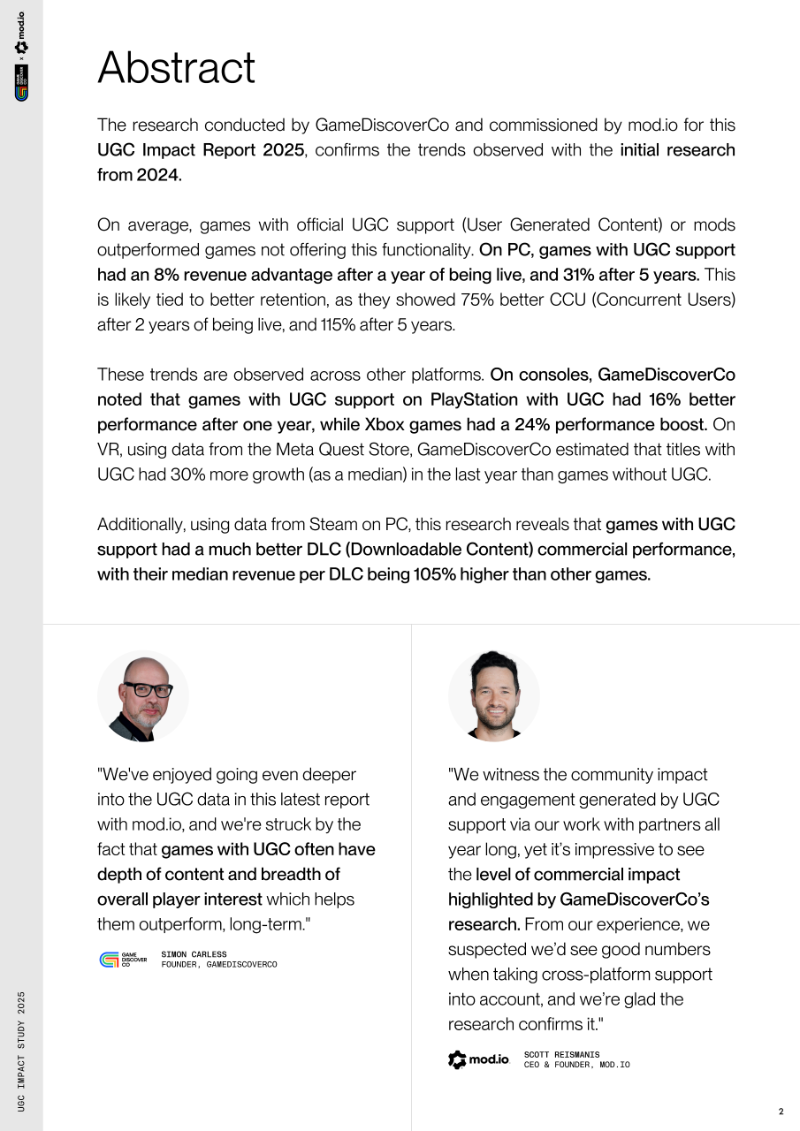
The UGC Impact Report 2025 provides a comprehensive analysis of how official user-generated content (UGC) and modding support influence the long-term commercial success and player retention of video games.
- Games with official UGC support on Steam show a 31% revenue advantage five years post-launch compared to titles without such support.
- UGC-supported titles on Steam maintain 115% higher concurrent user counts five years after release, significantly extending the game's lifecycle.
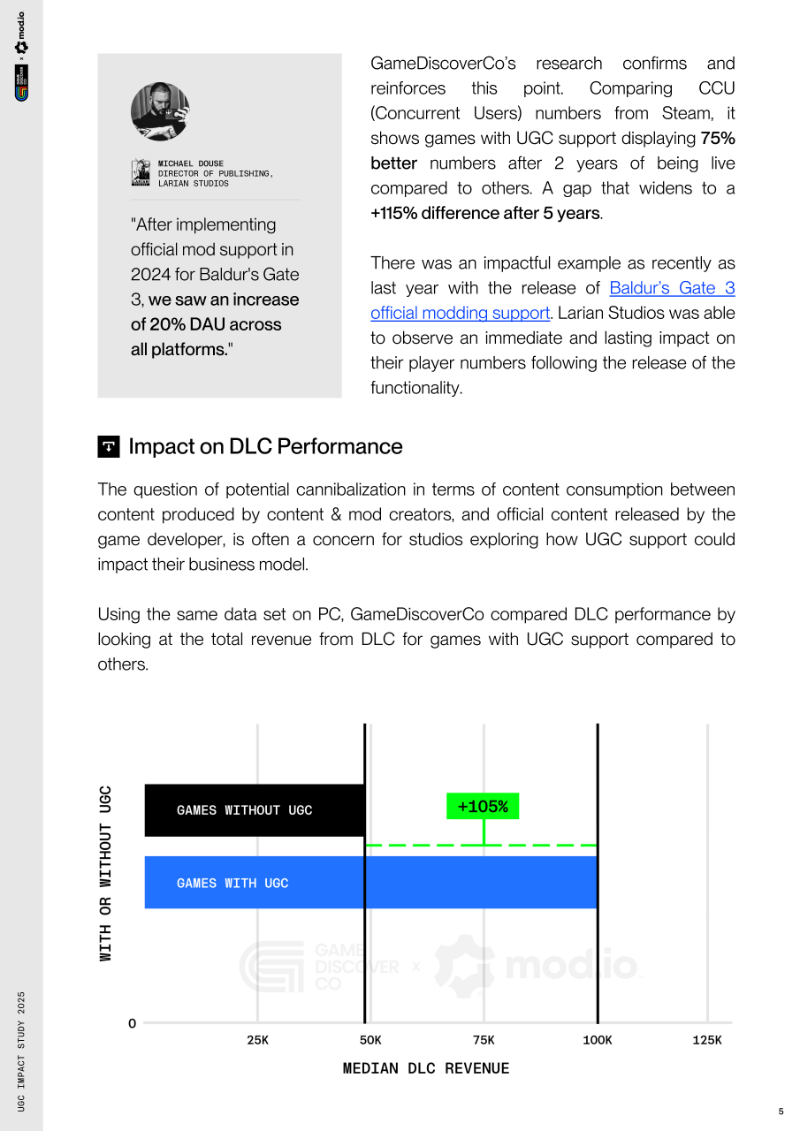
- Official UGC support does not cannibalize sales, as these titles generate 105% higher median revenue per DLC than games without community content.


Power of Play 2025: Global Video Games Report
Video games have evolved into a fundamental cultural and social phenomenon that extends far beyond traditional entertainment.
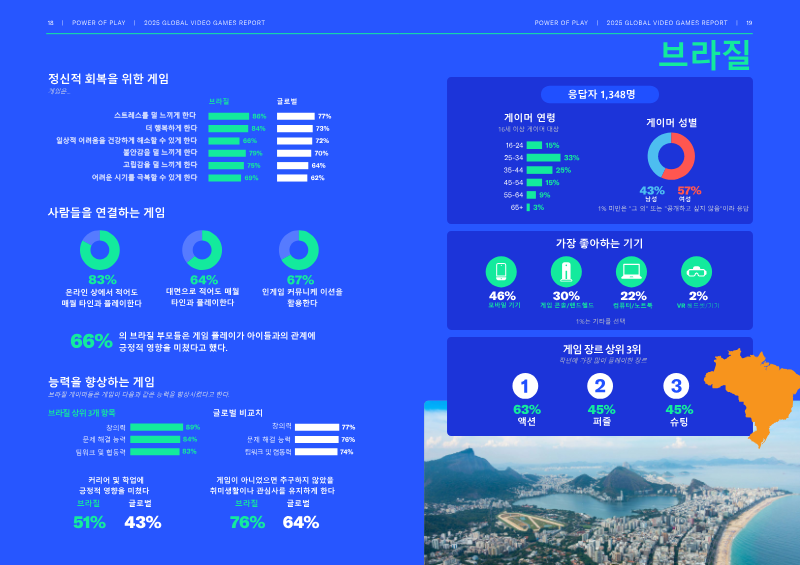
- The report analyzes data from 24,216 gamers across 21 countries to establish gaming as a primary tool for mental well-being, stress relief, and mitigating social isolation.
- Mobile devices are currently the most preferred platform for gaming, driving widespread accessibility and consistent social interaction.
- Gaming is increasingly utilized as a professional training mechanism in high-stakes fields, specifically medicine, aviation, and emergency response.

Alien: Rogue Incursion | Bridging VR and Flat Screen Experience with Ross DeVito | 366
The development of Alien: Rogue Incursion represents a strategic effort to bridge the gap between immersive virtual reality and traditional flat-screen gaming.
- Adapting VR titles for flat-screen platforms requires implementing subtle aim-assist trajectory modifications and recoil curves to replicate the immersive feel of VR movement while accounting for the higher precision of mouse and keyboard inputs.
- The development team for 'Alien: Rogue Incursion' utilizes in-house 'flat screen' (FS) terminology to distinguish non-VR ports from native virtual reality experiences, focusing on optimizing gameplay for traditional console and PC hardware constraints.
- PlayStation 5's DualSense controller features linear haptic motors that function similarly to audio speakers, allowing developers to map sound waves directly to physical vibrations for enhanced tactile feedback.
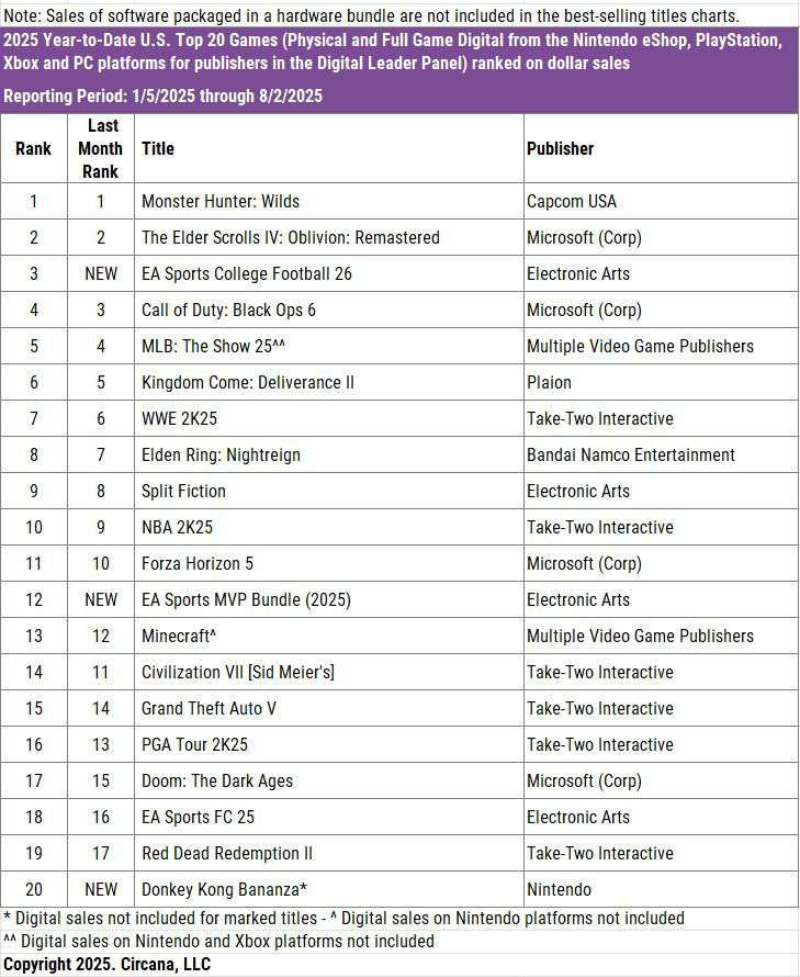
U.S. Video Game Market Highlights: July 2025
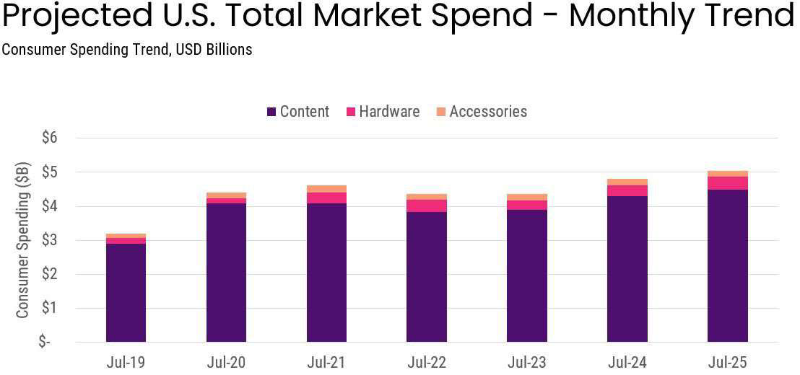
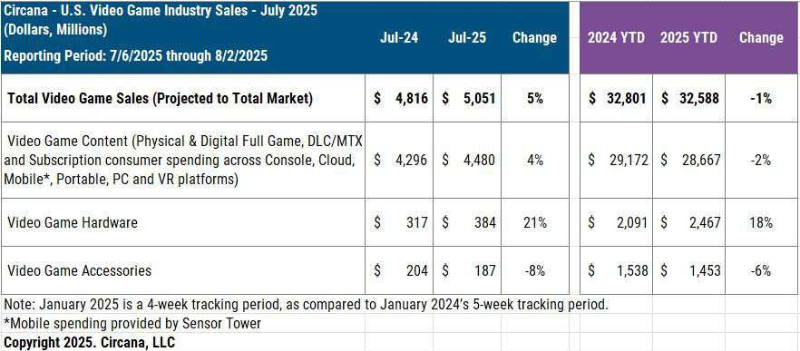
The United States video game market experienced a modest recovery in July 2025, with total consumer spending reaching $5.051 billion.
- Total U.S. video game consumer spending reached $5.051 billion in July 2025, marking a 5% increase compared to July 2024.
- Hardware sales were the primary growth driver, surging 21% to $384 million, while video game content spending rose 4% to $4.480 billion.
- Despite the positive monthly performance, total year-to-date market spending remains 1% behind the figures recorded during the same period in 2024.

Making New Consoles is Hard - Just Ask VR | Design Club
Launching a new gaming console is an exceptionally high-stakes endeavor that requires far more than innovative hardware design.
- The 'hardware install base' problem is the primary barrier for new platforms; developers cannot recoup investments or achieve profitability unless the hardware reaches a critical mass of users to drive software sales.
- Launching new hardware requires simultaneous mastery of multiple complex domains, including custom operating system design, specialized user interface paradigms, and the creation of a fully functional global storefront.
- New hardware platforms face significant testing hurdles because they often lack standard input methods like keyboards or traditional controllers, making debugging and user experience validation difficult and prone to failure.

“It was amazing to have PlayStation behind us”
Innovation and team culture serve as the primary drivers of success in the gaming industry, outweighing the influence of rigid business models or hardware specifications.
- The gaming industry should shift from a AAA-focused model toward a double-A development approach, prioritizing small, agile teams to foster innovation and creative ownership.
- Studio closures are frequently caused by a misalignment between a team's creative identity and the shifting strategic demands of large corporate partners like PlayStation and Meta.
- The industry's reliance on hire-fire staffing models and commoditized development cycles is actively undermining the collaborative environments required for long-term stability and genuine innovation.
Finding the Fun in VR with AstroBeam and Schell Games
Successful virtual and mixed reality development relies on first-principles thinking that prioritizes intuitive, user-driven interactions over traditional controller-based logic.
- Successful VR design relies on first-principles thinking, such as the approach used in Job Simulator, which constrained players to stationary positions to solve the problem of movement-based motion sickness and controller complexity.
- Generative AI in gaming is currently overhyped as a 'magic' solution for instant development, but it is underhyped regarding its potential to evolve NPC behavior and voice-based interaction when paired with significant manual design effort.
- Designing for VR requires strict adherence to accessibility; for example, developers at Alchemy Labs found that avoiding complex button combinations like simultaneous trigger and grip usage significantly improved the mainstream user experience.

Building a #1 Earning VR Game
Spatial has successfully transitioned from an augmented reality collaboration platform into a leading developer of user-generated content within the virtual reality sector.
- Spatial achieved enterprise-wide profitability as of December by transitioning from an AR collaboration platform to a leading developer of user-generated VR content.
- The success of the top-earning title 'Animal Company' is driven by a social-adventure gameplay loop supported by consistent live operations and community engagement via Discord.
- The company scaled its user base by leveraging accessible hardware like the Meta Quest 3S and repurposing foundational code from previous experimental projects.

Pixel Playground Takes Family Game Night to the Next Level
The VR market is experiencing a significant shift toward accessible, family-oriented experiences, driven by the increased availability and affordability of consumer-grade headsets.
- Pixel Playground is scaling free-roam VR experiences in physical venues ranging from 4.5 by 4.5 meters to 9 by 6 meters, shifting the focus from solitary combat to collaborative, family-oriented gameplay.
- The company utilizes a credit-based monetization model where publishers earn revenue through either a percentage of credit sales or flat-rate licensing agreements.
- To expand the VR audience, the platform is integrating mobile devices into the VR experience, allowing non-headset users to interact with and influence the virtual environment.


Interactive Entertainment: Global Market Sizing & Forecast 2025
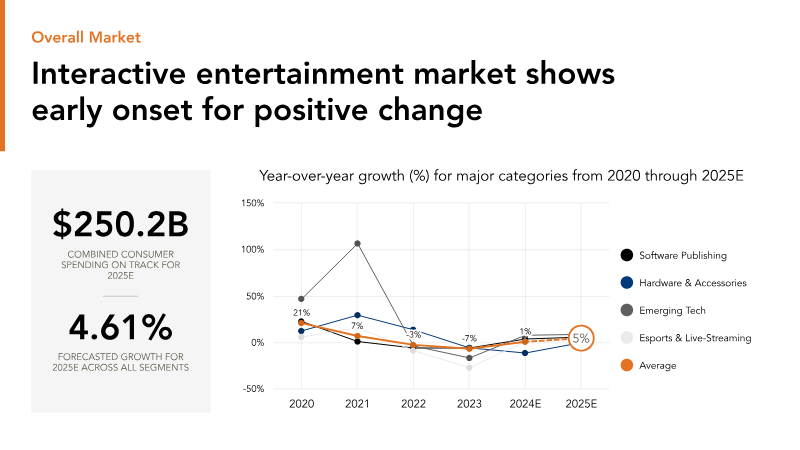
The global interactive entertainment market is poised for a recovery in 2025, with total consumer spending projected to reach $250.2 billion, representing a 4.6% year-over-year growth.
- The global interactive entertainment market is projected to reach $250.2 billion in 2025, marking a 4.6% year-over-year recovery.
- Software publishing remains the dominant revenue driver at $196 billion, with mobile gaming leading the sector at $115.7 billion despite rising user acquisition costs.
- The console hardware sector is in a significant downturn, evidenced by a 31% decline in revenue during 2024 as the current cycle concludes.

The State of Video Gaming: 2025
The global video game industry is currently undergoing a structural correction following a decade of rapid expansion that concluded in 2021.
- The video game industry is undergoing a structural correction characterized by a 12% decline in real-term content spending following the post-2021 plateau of previous growth engines.
- Market polarization has intensified as AAA production budgets reach $500 million, causing revenue and engagement to concentrate within established franchises while crowding out new releases.
- Chinese developers have significantly expanded their global footprint, increasing their share of non-domestic content spending from 0.5% to 12.5% over the last 13 years.

TWIG #295 GTA UGC Future, the Borderlands Movie, and VR Headset Wars
The global gaming industry is currently navigating a period of strategic recalibration, characterized by moderate growth projections of 4–5% for 2025 and a total market valuation estimated between $186 and $187 billion.
- The global gaming market is projected to grow by 4–5% in 2025, reaching a total valuation between $186 billion and $187 billion.
- Take-Two Interactive is anchoring its long-term financial outlook on the 2025 release of GTA 6, prioritizing core IP integrity over speculative platform expansion.
- High-budget transmedia and mobile adaptations are struggling, evidenced by the commercial failure of the Borderlands film and the underperformance of Star Wars: Hunters.