Tycoon Management reports and market data
6 game industry reports, presentations and talks about tycoon management from writers such as PocketGamer.biz, Deconstructor of Fun and Two & a Half Gamers, newest from 2026. Every document has a summary and key insights with the page they come from.
Documents
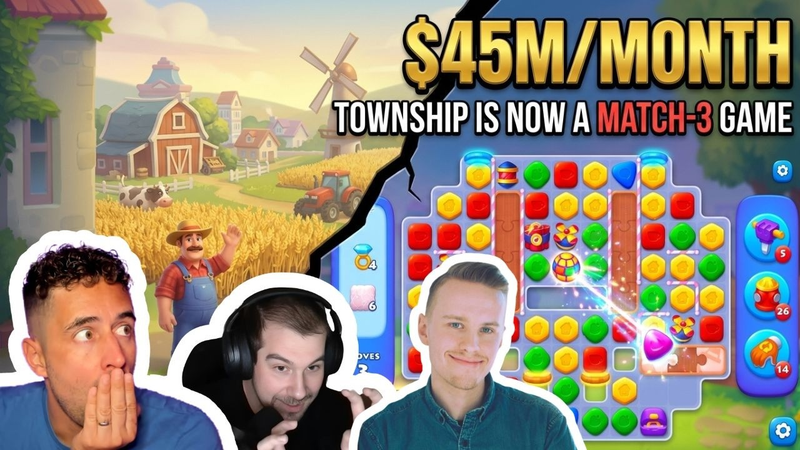
💰🚜 How Playrix turned a 17-Year-Old Tycoon into a $45M/Month UA & Match-3 engine
The longevity and financial success of the mobile title Township demonstrate the effectiveness of evolving legacy tycoon games into sophisticated, multi-core revenue engines.
- Playrix generates $45 million in monthly revenue from Township by evolving the 17-year-old title from a traditional farming simulator into a complex, match-three-driven monetization engine.
- The studio successfully repurposed legacy gameplay loops as onboarding funnels for high-LTV (lifetime value) monetization models, prioritizing energy-driven exploration and merge mechanics over lower-monetizing mini-games.
- To maintain long-term profitability, the studio overhauled the game's economy to tighten currency inflation, ensuring player progression remains strictly tied to the match-three core.
Cyprus LIVE #4 How a Metal Band Inspired a Wild Game Idea
Lord of Metal, a management simulation game developed by Horns Up Games in collaboration with the Swedish metal band Sabaton, aims to capture the emotional intensity and logistical complexity of heavy music festivals.
- Horns Up Games is developing 'Lord of Metal,' a management simulation game in collaboration with the Swedish metal band Sabaton that focuses on the logistical complexities of organizing large-scale music festivals.
- The game targets an underserved demographic of metal fans in their 30s and 40s by offering a strategic, non-rhythm-based experience that emphasizes crisis management and backstage operations.
- Development is informed by qualitative research and interviews with industry professionals, including stage technicians and security personnel, to ensure authentic representation of live music production.
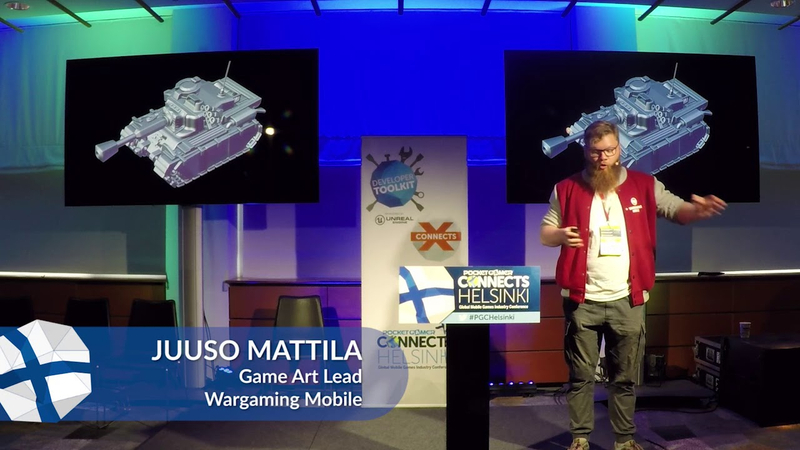
How to build 100 tanks with about three people
The development of a mobile game featuring a high volume of collectible assets requires a specialized production pipeline to maintain quality while operating with a small team.
- A three-person art team can produce 150 unique tank assets by utilizing a modular kit-bashing workflow instead of hand-crafting each unit from scratch.
- Production time per tank is reduced to approximately one day by assembling units from a library of interchangeable components like hulls, turrets, and armor plates.
- The team defines 'tank families' through shared visual guidelines, allowing them to create new units by reconfiguring existing parts rather than generating individual concept art for every asset.
10 million players, weekly updates – A player-centric, fast and agile approach
Fluffy Fairy Games, a Berlin-based mobile developer, utilizes a lean, agile development methodology to manage its idle game portfolio.
- Fluffy Fairy Games maintains a 70% to 75% day-one retention rate by prioritizing core gameplay mechanics over non-essential features like high-fidelity assets or social systems during initial development.
- The studio operates on a games-as-a-service model, utilizing weekly development sprints to deliver continuous content updates rather than relying on long-term, monolithic development cycles.
- As of late 2017, the company achieved 50 million downloads, 9 million monthly active users, and 10 million in annual revenue through its portfolio of idle titles.
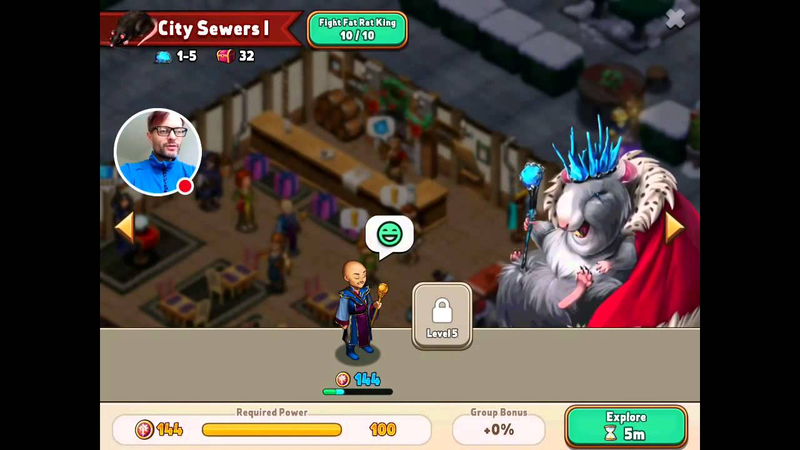
Integrating crafting, questing and city-building, is Shop Heroes too complex?
Shop Heroes functions as a complex free-to-play mobile title that integrates crafting, resource management, questing, and city-building mechanics.
- Shop Heroes utilizes a multi-layered design that integrates crafting, resource management, questing, and city-building to drive long-term player retention.
- The game’s progression is gated by level and resource requirements, necessitating consistent daily play to unlock advanced blueprints and high-level quests.
- Communal town building and investment systems serve as the primary social drivers for player engagement and community development.
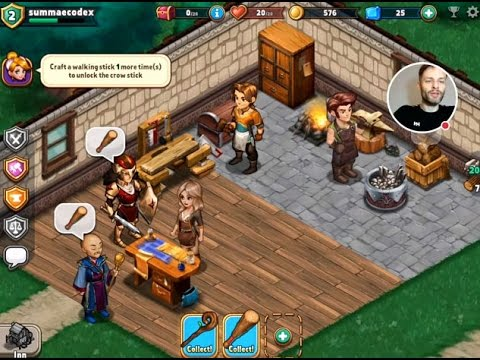
FTUE: Shop Heroes
Shop Heroes, a free-to-play mobile crafting RPG developed by the Canadian studio Cloudcade, utilizes a tutorial-heavy onboarding process to introduce players to its core loop of resource management and shop simulation.
- Cloudcade’s Shop Heroes utilizes a tutorial-heavy onboarding process that restricts player agency during the first ten minutes to ensure mastery of the core economic loop.
- The game’s primary retention strategy relies on social integration, specifically facilitating player-to-player resource sharing to encourage long-term engagement.
- The gameplay loop transitions from basic crafting of items like bone knives and short swords to complex systems involving questing, character equipment management, and shop logistics.