1 free read left. Create a free account for unlimited reading + AI research.
Create free account
10 million players, weekly updates – A player-centric, fast and agile approach
Key insights
7 takeaways- 01As of late 2017, the company achieved 50 million downloads, 9 million monthly active users, and 10 million in annual revenue through its portfolio of idle titles.
- 02Fluffy Fairy Games maintains a 70% to 75% day-one retention rate by prioritizing core gameplay mechanics over non-essential features like high-fidelity assets or social systems during initial development.
- 03The studio operates on a games-as-a-service model, utilizing weekly development sprints to deliver continuous content updates rather than relying on long-term, monolithic development cycles.
- 04Operational efficiency is driven by a single-piece workflow where developers handle coding and testing in the same cycle, supported by parallel QA processes to avoid administrative bottlenecks.
- 05Deployment follows a phased rollout strategy, starting with a small segment of Android users to monitor technical stability via crash reporting before expanding to the full user base and iOS.
- 06Future content development is informed by a player-centric feedback loop that aggregates qualitative data from app stores, social media, and direct user emails.
- 07The studio employs a hybrid revenue model where advertising accounts for 50% to 55% of total income, reflecting a focus on high-engagement, accessible mechanics.
Ask AI about this video
Transcript
[Music] [Music] so hey I'm Janusz I'm Co CEO and founder of fluffy furry games fluffy fur games were pretty new company based in Berlin just two years old we're doing idle mobile games it's going pretty pretty good so far we have like 40 40 plus people working at the company right now still looking for four new talent to do more games more awesome games and to support our current games those are the current ones so you might have heard of oil- a cocoon or of idle factory tycoon
just out of curiosity anybody played one title here oh I see there's still a bit of potential left so right now we have like 50 million downloads oh those those are the numbers for like last year December so 15 million downloads at all nine million year nine million monthly active users and kind of like 10 million of revenue for last year so for us as a company was those two titles is going pretty good I don't mind a tycoon still like in hidden soft-launched so it's not under our fluffy furry Games account but you might seen it in the App Store so today I want to talk about like fast and agile development and like lean approach to two games it's a bit of history when we
first released our lion tycoon it was July 2016 just after like two months of development with just five guys back then sitting sitting in my student apartment but since then like we crew a lot in terms of revenue and also in terms of like size of the team in all in all we did like 40 updates in a time and we really really expanded the game with what new content new mechanics better graphics all that and we call our approach to gaming as games as a service so usually when we're not a Studios developer game it's like two years of development then put it out of the market in the market and then maybe doing like now and then a live event something like that what we do is like really pushing it and expanding the game
week by week games as service as I said so what kind of process are we using using for that it's called lean development so basically it's the the idea comes from Eric Ries the lean startup so who heard of that book before okay who actually read it okay so maybe that's a new topic for you guys so Eric Reese I guess it's you wrote the book kind of like 2011 or something keep always in mind like games are hit driven business and the faster you can find out okay this game doesn't work the lower the costs for again new game and like all in all the the message is that the most important thing and their whole
lean development thing is to say no to lots of stuff right and this might seem obvious but in reality it's pretty hard so when we first started the game we just like had five guys right so not so much engineering power almost no money and so it was like okay let's don't do high quality 3d assets because we couldn't do it we also started with no social features because they don't matter if you have like just a basic game no localization so it was just English picton are now we're support like 20 languages but it's still something that comes way later in a game development circle no in-app purchases so we didn't make money in the first few weeks with in-app purchases because there's like just not relevant to test if the game works or not no ed mediation this is
also something I saw that many developers think about but it's something for like way later stage no long-term motivation so when we release the app it was fun for like three days and then it's like just nothing to do right but it was enough to to just see that people liked the game or to see that people don't like the game and yeah no cloud save so people lost their game when they uninstalled it or switch devices and it was really a pain in the first few few weeks and like what we really really believe it's that in a game what matters the most is the core gameplay and we think you can measure the core gameplay with day 1 retention so we had like 75 with our minor tech who and we kind of have like 70 with iron factory tycoon and this is
like normally there's much yes in a whole retention metric stuff but this is us organic so we didn't fish for like the super good users it's just like the organic baseline and we believe that everything else can be polished later so if you're doing a game and start a game you should really really focus in there in the first few days and assured it's a good retention like those 70 75 percent that is it's quite high and this is also due to like to Shara it's a I'll kick ass alright so games tend to be like a bit higher on those genres with the retention so how to do it so our update policy is like okay one update means one sprint and then means one week basically sometimes it's like four days sometimes it's like six seven days but more or
less we keep - we try to aim for like five days and this means also like you have to plan this trend you have to develop it and to test it just in like a few days we use for like new updates some kind of scrum was very small cycles but one week that means okay we have the game designers they usually work ahead of it we have game artists so they they try to produce assets for four features before the developers start coding so everything is ready normally you have to do like one or another adjustment but do you really need to do it like before you actually start and of course we have the dev team I'd normally in in those
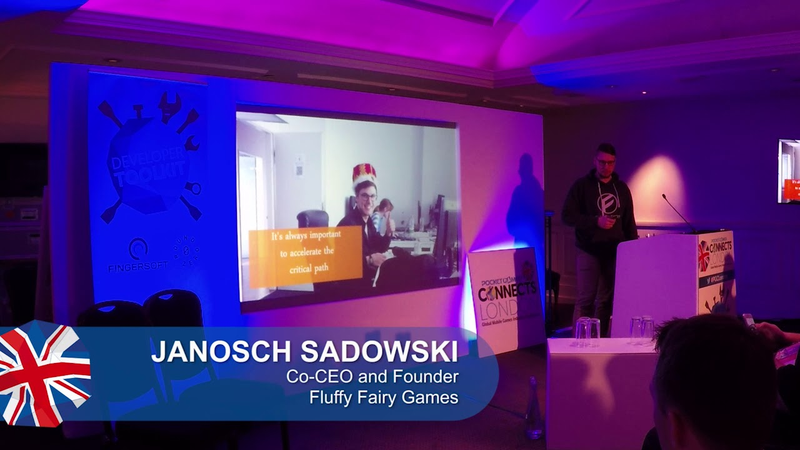
companies it's it's the resource that's that's pushing really ahead and those guys should not be blocked by any other team and should really really focus on developing not like don't do office stuff for anything else and then of course QA QA has to start testing during the development to find those those bugs and not just like on the end of the Sprint constant everything else gets slowed down yeah so this is this is like this is Ruben yes this ground on and it was to the picture was taken when he was critical path so he's like the person in the in the project in the game he needs to finish because like everybody else can't work without him and it's really really too important to find that person or to find the team
that's now the critical path and try to accelerate it because like the those guys need to accelerate or that the project will be delayed to update will be delayed what's what's also important is like the single piece workflow idea so it's really really important to focus just on one task or is it for example JIRA in the background so every developer has one task and he's like developing in it testing it and then it's finished when we started the company it was often like people developing on like three four tickets or it's like okay I'm developing this ticket do the testing later and develop the next ticket that also slows you down right if you have if you multitask stuff if you do tasks at a later stage if you don't focus on testing right now but do it later
that will slow you down also another great thing in the whole like development development cycle is when we do an update once a week we always started with Android because there's like this stage for a lot thing so we started with like one or five percent depending on app update how critical it is just to test like is it is it technically okay so we see our box very early with our reporting tool we use crashlytics for it mainly crashlytics then like one or two days later we were going up for 20% and watch out for feedback from the if you did like a bed update because we design anything we design something wrong or didn't thought about something in a in because of like that the bed
mechanics or something like that and then normally like after four days we're at 100% on Android so we see okay this is technically stable people off the update and now we're going 100% and then we also release an iOS so it's it's a bit later on iOS but they don't have Thursday for a thing like another very important part is to be very very player centric and to connect to players I mean like there's easy tools to do that we try to reply to every message we get on Google Play or on on the App Store normally those guys give really good feedback so he's what he was like please make some sort of research to make
progress faster and it was in the early days and we did like some sort of research lab to those success suggestions also like Facebook Facebook is a very good channel to connect to players and get their feedback for example this guy was like create a system where you can send an order of Cole this one we actually didn't do but it's a test case for potential hires for an engineering position and of course like we're getting I guess the community manager said to me last week one male for per minute on for for idle - tycoon and it says like and this may make more islands and let us go to space so I mean it's like a legit legit comment so of course we we did more islands than and a space event mine is
come guest next week and then also like we get all those like qualitative feedback messages on facebook emails ratings and Google Play on the App Store and then we like once a week we aggregate that information in a wok more quantitative way so for example here we have like close to 400 reports and most of those reports say okay that's like a reset issue people lose their safe game and the average rating is like one point six three I guess should be the number so this is a problem that many people have and that that really is bad for our rating overall so this is a thing we should we should take care of yeah and
we see like how is all that distributed okay this was my short presentation about how we do the development and how we do our development cycle I'm happy to to ask any questions you might have had okay thank you so we tried that every developer has like their stuff after they write the code they do testing and then and in
parallel we always has like have like dedicated a dedicated QA team so that's important to have any other questions hey I don't know if you can say anything about that but how does because you have ads and you have apps how does that kind of split up with your user base since it's quite over casual game and you you mean like how many people yeah like our Bureau of your revenue from ads and apps how does that kind of split up between both of them yeah so it's kind of like 50 to 55 percent ads in terms of revenue so we are a bit more heavy on ads but it's because it's to implement ads or to design a mechanic behind ads it's way more easier to design like a hole in a
purchase economy [Music] [Music]
Summary
Fluffy Fairy Games, a Berlin-based mobile developer, utilizes a lean, agile development methodology to manage its idle game portfolio. With titles like Idle Miner Tycoon and Idle Factory Tycoon, the company has achieved significant scale, reporting 50 million downloads, 9 million monthly active users, and 10 million in annual revenue as of late 2017. The core philosophy centers on a games-as-a-service model, prioritizing rapid, weekly updates over long-term, monolithic development cycles.
The company’s approach is rooted in the principles of lean startups, emphasizing the importance of identifying core gameplay viability early while aggressively eliminating non-essential features. During initial development, the team intentionally omits elements like high-fidelity 3D assets, social features, localization, and in-app purchases to focus exclusively on core mechanics. Success is measured primarily through organic day-one retention rates, which the studio maintains at approximately 70 to 75 percent. By treating the game as a service, the studio continuously expands content through weekly sprints, ensuring that developers remain unblocked by administrative tasks and that QA testing occurs in parallel with development.
Operational efficiency is maintained through a single-piece workflow where developers focus on one task at a time, moving from coding to testing within the same cycle. Deployment follows a phased rollout strategy, beginning with a small percentage of Android users to monitor technical stability via crash reporting before scaling to the full user base and iOS. This technical rigor is balanced by a player-centric feedback loop, where the studio aggregates qualitative data from app stores, social media, and direct emails to inform future content updates. Revenue is generated through a hybrid model, with advertising accounting for 50 to 55 percent of total income, reflecting the studio's focus on accessible, high-engagement mechanics.
















Comments