Steam statistics and market reports
Documents
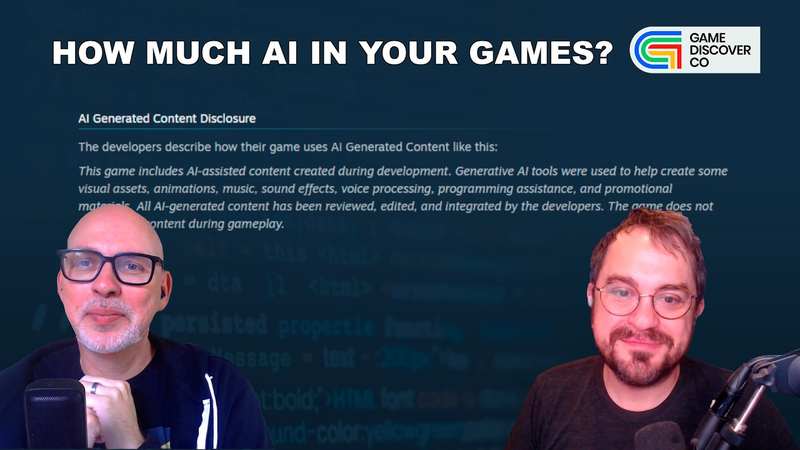
How much AI do players want in their games?
Steam’s refund policy remains a cornerstone of consumer confidence in the PC gaming market, effectively balancing developer risk with player protection despite the volatility inherent in early-access releases.
- A GameDiscoverCo survey indicates that player sentiment toward AI in games is highly divisive, with approximately 43% of respondents expressing openness to AI usage while roughly 31% hold negative views.
- Steam is actively vetting games for AI content, occasionally identifying AI-generated assets in titles where developers were unaware their subcontractors had used such tools.
- Apple Arcade has shifted its strategy to commissioning only 10 to 12 games per year, a significant reduction from its initial launch phase which featured $500 million in 100% commission-based titles.

His Dream Game Crashed And Burned... But He Sold 1 MILLION Copies... (w/ Indie Game Joe) — Ep 72
The independent game development landscape requires a fundamental shift in perspective, where marketing is not a post-production task but an intrinsic element of game design.
- Indie Game Joe’s 'Don't Scream' franchise has achieved a combined total of 1 million copies sold, despite significant technical challenges and negative launch-day reviews for the sequel, 'Don't Scream Together'.
- The 'Don't Scream' sequel, 'Don't Scream Together', has reached 600,000 copies sold and continues to maintain daily sales volume despite initial community frustration over bugs and microphone calibration issues.
- Effective marketing hooks must function as a 'promise' of a specific player fantasy; when a hook is disconnected from the actual gameplay experience, it leads to poor reception and high refund rates.

Valve's 14-Year Journey To Make The Steam Machine
Valve’s 14-year effort to establish a living room PC presence has evolved from an initial failure into a strategic, long-term initiative centered on the SteamOS ecosystem.
- Valve’s Steam Machine initiative, which began in 2012 as a response to the perceived decline of PC gaming, has finally reached a functional state after 14 years of development.
- The current Steam Machine launch is hampered by an AI-fueled memory and storage crisis, resulting in a starting price of $1,050, significantly higher than Valve’s original intent for an entry-level device.
- The success of the project is driven by the maturation of Proton, a compatibility layer that allows Windows-based games to run seamlessly on the Linux-based SteamOS.
Live Q&A: Steam Next Fest, AI Slop, Getitng wishlists
The independent game development landscape currently offers a unique window of opportunity, characterized by a high demand for quality titles that prioritize gameplay depth over excessive production values.
- The most critical marketing decision for Steam success is genre selection, as Steam's PC-centric player base generally under-indexes on fast-twitch, arcade-style shooters in favor of deep, slow-paced, or management-heavy titles.
- Steam players prioritize original visual experiences; using store-bought assets is a significant deterrent in genres like Metroidvanias, RPGs, or Souls-likes where exploration of a unique world is a core expectation.
- Avoid launching immediately after Steam Next Fest, as the high volume of developers attempting this strategy creates excessive competition that diminishes individual visibility.
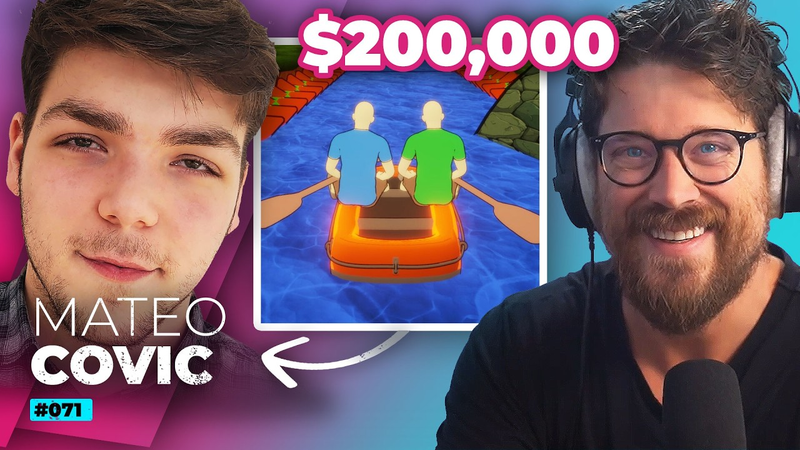
His Dream Game Flopped... And Then Made $200,000+ In 2 Months (w/ Mateo Covic) — Ep 71
The modern indie game landscape increasingly rewards a bifurcated development strategy that balances high-fidelity, ambitious projects with rapid, viral-focused titles.
- Mateo Covic's 'friend slop' game, Paddle Paddle Paddle, generated over $200,000 in revenue within two months, significantly outperforming his previous niche projects.
- Multiplayer 'friend slop' games currently trend well on Steam because they offer casual, accessible fun that appeals to streamers and their audiences, unlike more complex or niche titles.
- Effective marketing for Paddle Paddle Paddle relied on a publisher-led strategy that included professional cover art, targeted influencer outreach, and building a community around a demo prior to launch.
The best game at Steam Next Fest June 2026: Cat Mail Co
Cat Mail Co. emerged as a definitive success during the June 2026 Steam Next Fest, securing over 45,000 wishlists and achieving a prominent position on the platform’s Popular Upcoming list.
- Cat Mail Co. achieved significant commercial success following the June 2026 Steam Next Fest, securing over 45,000 wishlists and strong post-launch sales.
- Job simulation games provide a high-engagement, low-friction alternative to complex RPGs or platformers, allowing developers to scale content efficiently through repeatable, system-based gameplay loops.
- The game's design demonstrates that developers can achieve high replayability and player satisfaction without relying on extensive, resource-heavy narrative backstories or complex quest chains.

Let's Review Your Games — Ep. 057
Indie game development often hinges on the delicate balance between innovative mechanics and intuitive player guidance.
- Puzzle games must clearly establish gameplay rules and interaction mechanics early on to ensure players feel they have earned their progress rather than having solutions fall into their laps.
- Avoid 'pixel hunting' mechanics where players must randomly hover their mouse over the environment to identify interactive objects; instead, clearly communicate what can be picked up or manipulated.
- The core game loop should start with accessible, intuitive tasks that teach the player the mechanics before introducing more obtuse or complex puzzles in later stages.
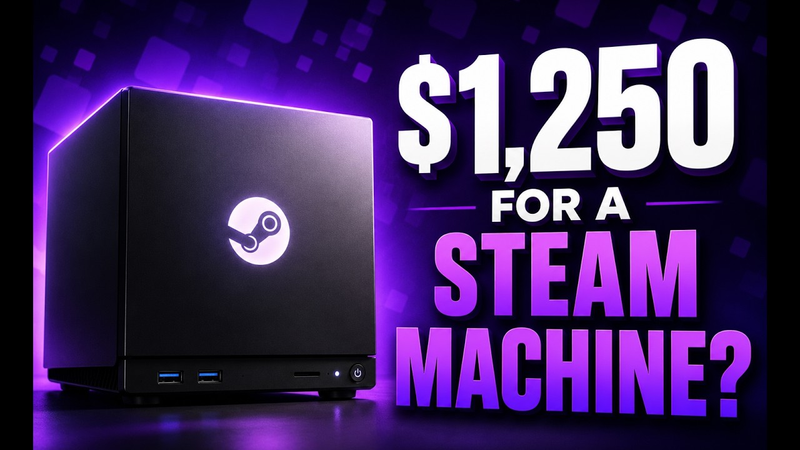
Steam Machine... Nobody Knows Who It's For
The recent pricing announcement for the latest iteration of the Steam Machine has positioned the hardware as a non-starter for the vast majority of the gaming market.
- The Steam Machine is priced between $1,000 and $1,250, excluding the controller, making it significantly more expensive than current consoles like the PlayStation 5.
- The hardware is limited to mid-range PC performance, often failing to reach 4K resolution and capping out at 1440p.
- SteamOS compatibility issues prevent the device from running major titles that utilize anti-cheat software or exist outside the Steam ecosystem, such as Fortnite, Valorant, and GTA VI.

Let's Review Your Games — Ep. 056
Indie game development often hinges on the delicate balance between atmospheric immersion and mechanical clarity.
- A high-quality, responsive menu system significantly impacts player perception, with the reviewer noting a willingness to pay $15 for a game based solely on the quality of its menu and sound design.
- Inconsistent world scale, such as railings being neck-high or objects being disproportionately sized, negatively affects player immersion and should be addressed to maintain a cohesive environment.
- Player character controllers must feel solid and grounded; adding visual feedback like ripples or decals underfoot is essential to prevent movement from feeling 'floaty' in water-based or platforming segments.
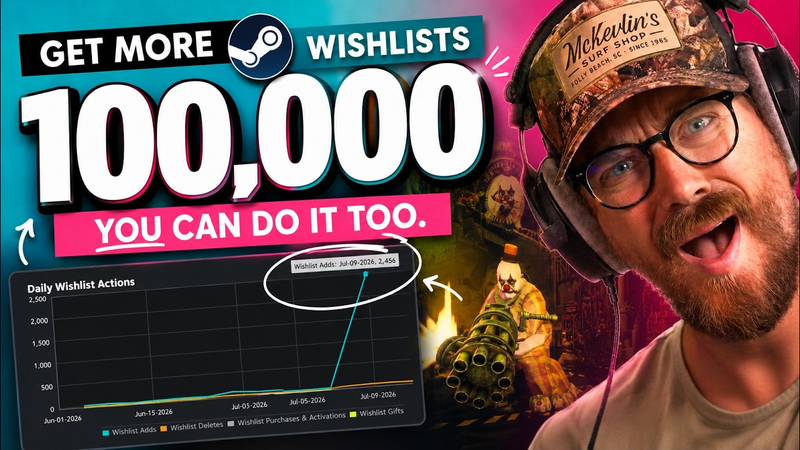
My Game Just Got 100,000 Wishlists... Here's How To Do It
Achieving 100,000 wishlists on Steam requires a multifaceted strategy that prioritizes algorithmic visibility and clear market positioning.
- Steam's internal algorithm is the primary driver for high-volume wishlists, particularly when external traffic from events like Steam Next Fest signals to the platform that a game is gaining traction.
- The 'Trinity Hook' framework—consisting of a visual hook, a mechanical hook, and a story hook—is essential for capturing user attention quickly on a Steam page, which is critical for converting page visits into wishlists.
- Leveraging Steam Next Fest by launching a demo and coordinating streamer coverage is a highly effective strategy for climbing the platform's charts and generating significant wishlist growth.

Let's Review Your Games — Ep. 055
The survival game Polyaris demonstrates significant potential through its high-quality character controller and immersive atmosphere.
- Effective onboarding is critical for survival games, as players may struggle with basic mechanics like inventory management, fire-starting, and healing if they are not explicitly taught.
- Games that offer high-quality character controllers and intuitive movement mechanics, such as skiing, significantly improve player engagement and initial impressions.
- Developers should provide players with early, frequent 'wins' in a demo to maintain momentum rather than allowing them to wander aimlessly or become overwhelmed by complex systems.
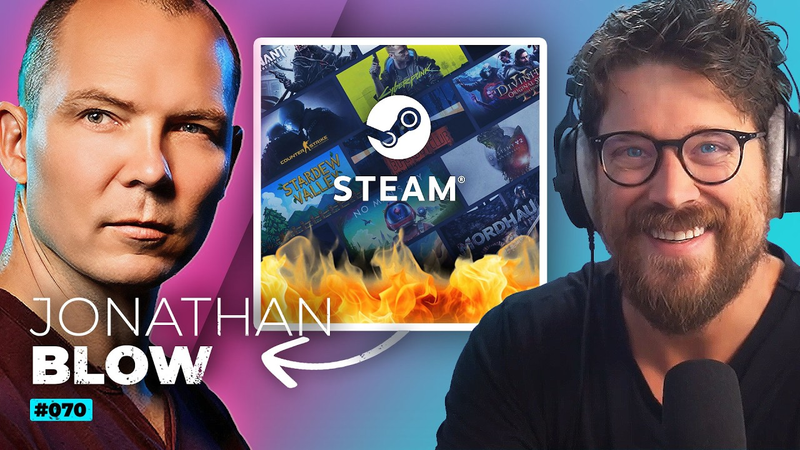
Is The Indie Game Industry Broken? (w/ Jonathan Blow) — Ep 70
The contemporary video game industry is experiencing a significant structural shift characterized by the decline of traditional AAA dominance and the rise of independent development.
- The cost of game development has increased by an estimated factor of 18 since 2005, driven by a combination of tripled salaries, tripled team sizes, and development cycles that take twice as long.
- AAA studios are increasingly struggling to maintain quality due to bureaucratic bloat, creating a market vacuum that has allowed independent developers to capture significant market share with high-quality single-player titles.
- Jonathan Blow’s 10-year development project, 'Order of the Sinking Star,' demonstrates that building custom engines and scripting languages—while inefficient from a traditional business perspective—can build a unique brand identity that differentiates a developer in a crowded market.